Patios & Hardscaping
Paver and bluestone patios, walkways, steps and fire pits built on a base that holds up to New England freeze–thaw movement.
Explore patios & hardscapingPeabody • Essex County • North Shore
Connect with local landscaping professionals for patios, retaining walls, new lawns, landscape design, drainage and seasonal yard care throughout Peabody and the North Shore.
Prefer to speak directly? Call (877) 537-6896 for immediate matching.
Match with vetted, independent Peabody & North Shore pros
✓ 100% Free & Confidential✓ No Obligation✓ Fast Response
Peabody-focused
Built around one city and the towns that border it, not a national directory.
Seven service categories
Hardscape, walls, design, lawns, drainage and seasonal cleanups.
Simple phone matching
One call, one conversation, no forms or account to create.
North Shore coverage
Peabody plus Salem, Danvers, Beverly, Marblehead and eight more towns.
Services
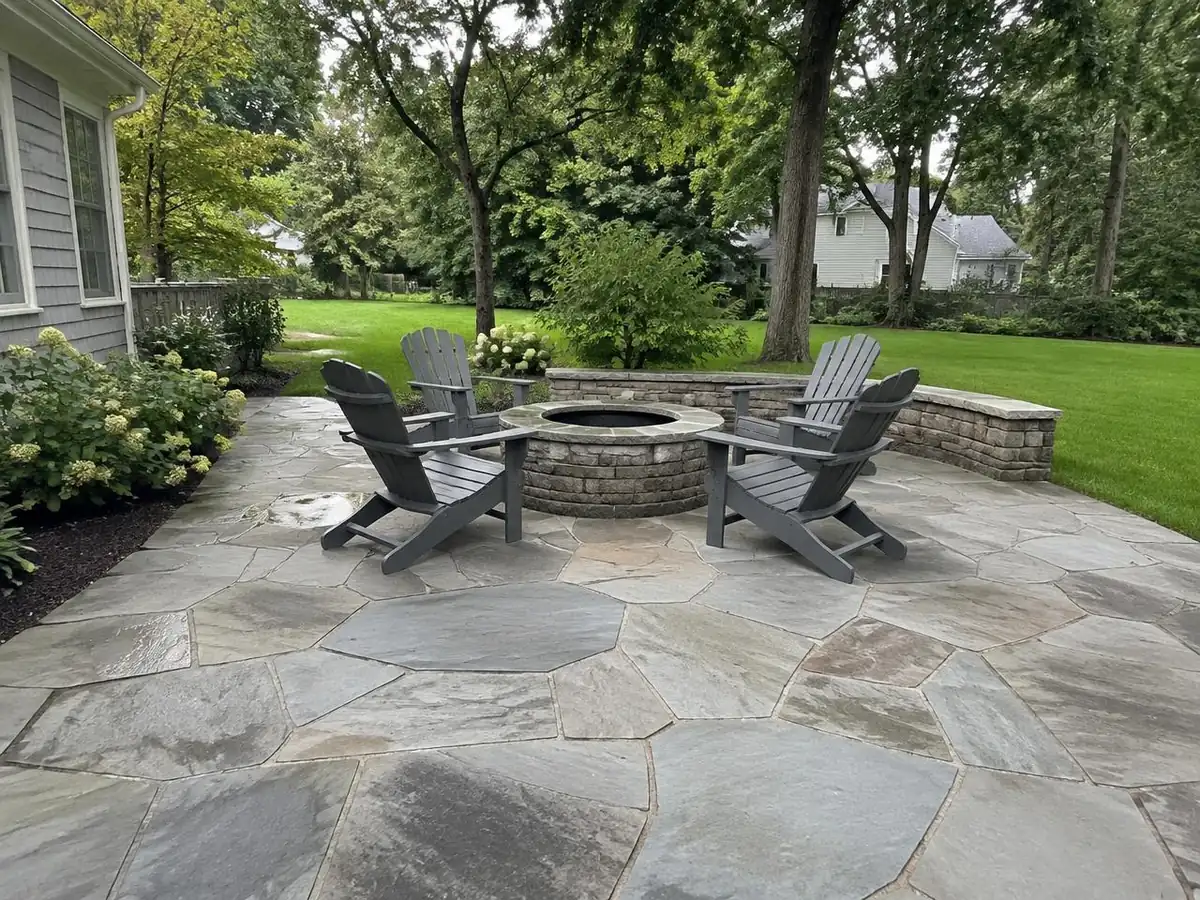
Paver and bluestone patios, walkways, steps and fire pits built on a base that holds up to New England freeze–thaw movement.
Explore patios & hardscapingSegmental block, granite and dry-stack fieldstone walls engineered with drainage stone, perforated pipe and geogrid for sloped Essex County lots.
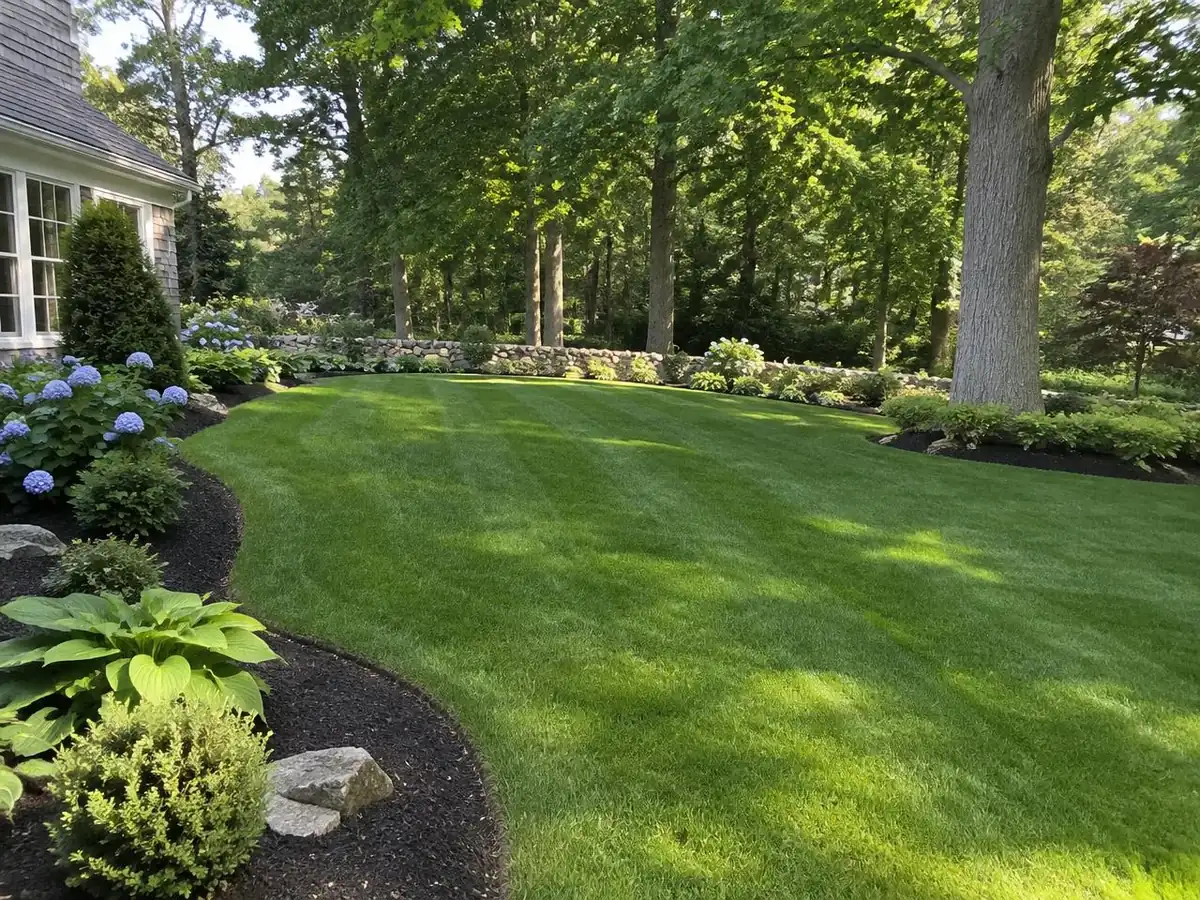
Explore retaining wallsPlanting plans, grading and hardscape layouts drawn for USDA zone 6b conditions and the way your household actually uses the yard.
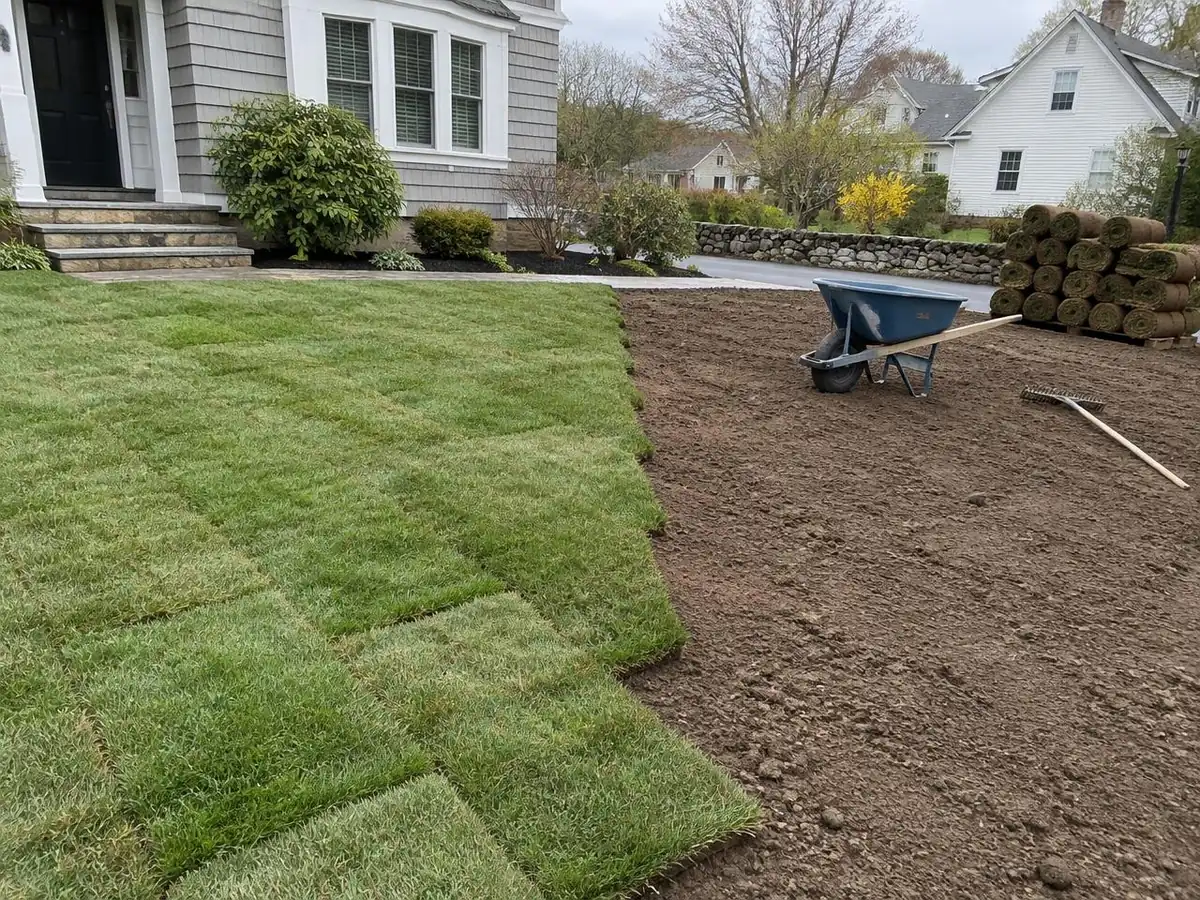
Explore landscape designNew lawns from cool-season sod or hydroseed, with loam, grading and soil prep done before a single roll goes down.
Explore sod installationWeekly mowing and edging plus the renovation work — aeration, overseeding, fertilization and irrigation checks — that thickens a thin lawn.
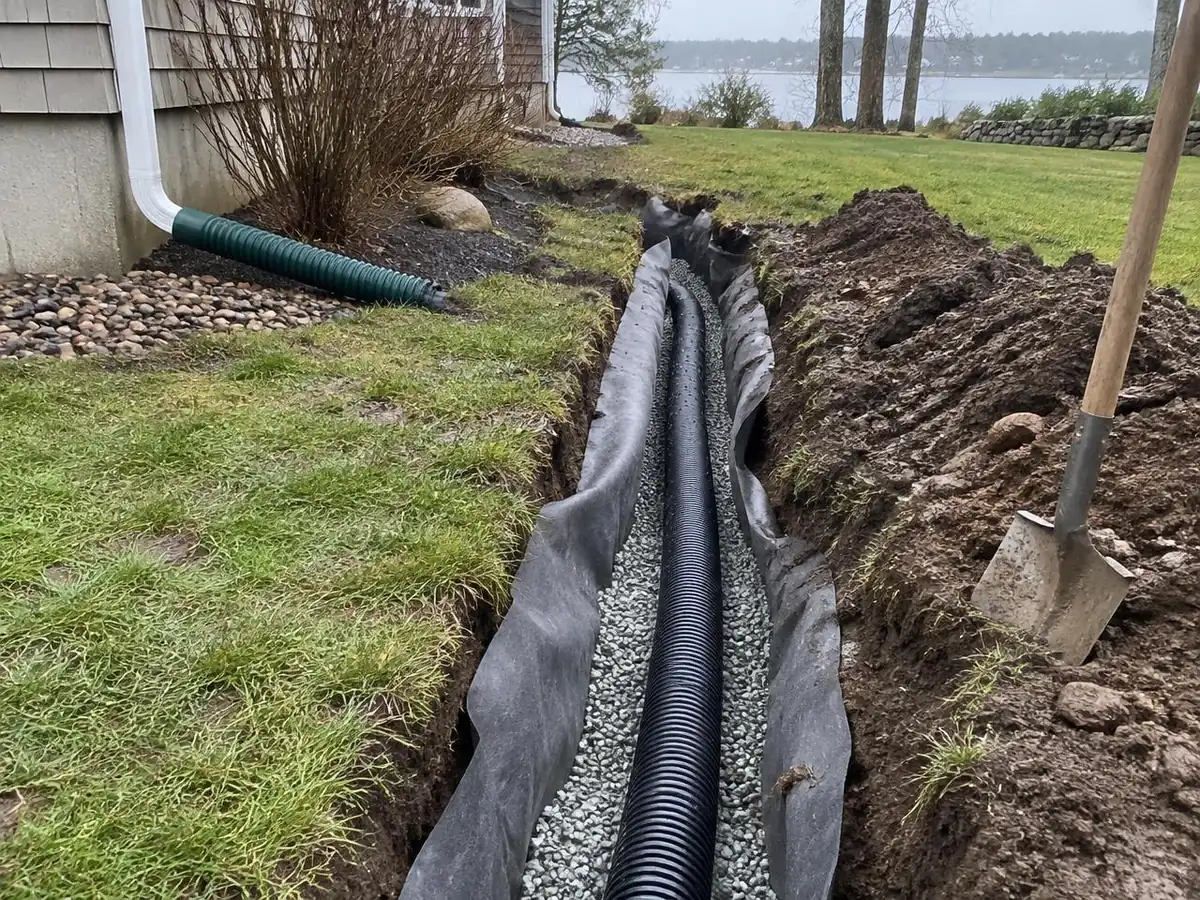
Explore lawn care & mowingFrench drains, dry wells, swales, downspout extensions and regrading that move surface water away from foundations and soggy lawn areas.
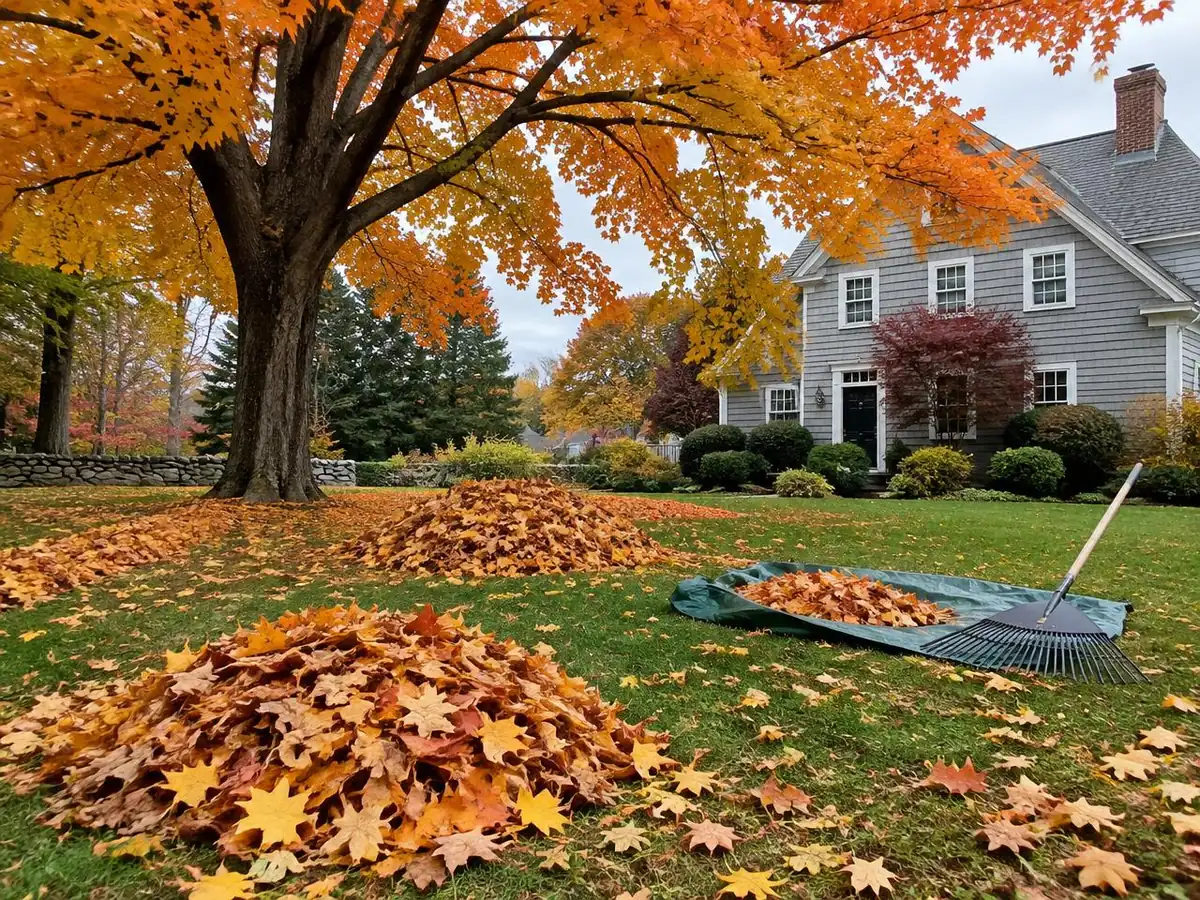
Explore yard drainageSpring bed cleanups and mulch, plus fall leaf cleanup, hedge trimming and debris removal timed to Peabody's collection calendar.
Explore spring & fall cleanup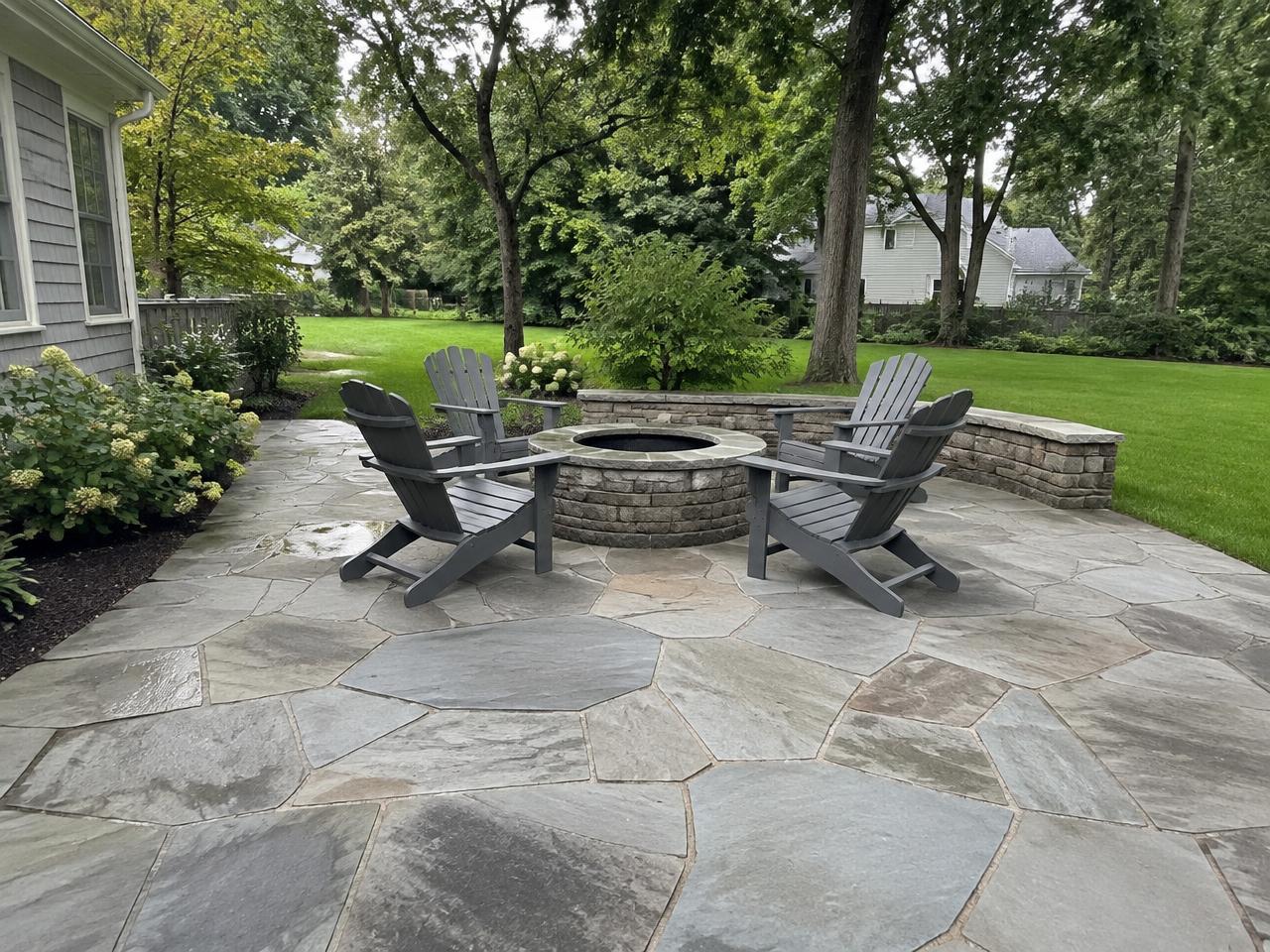
Featured
A patio in Peabody lives or dies on what is under it. Freeze–thaw cycles lift poorly built pavers every winter, so the excavation, compacted base and drainage matter more than the surface you pick.
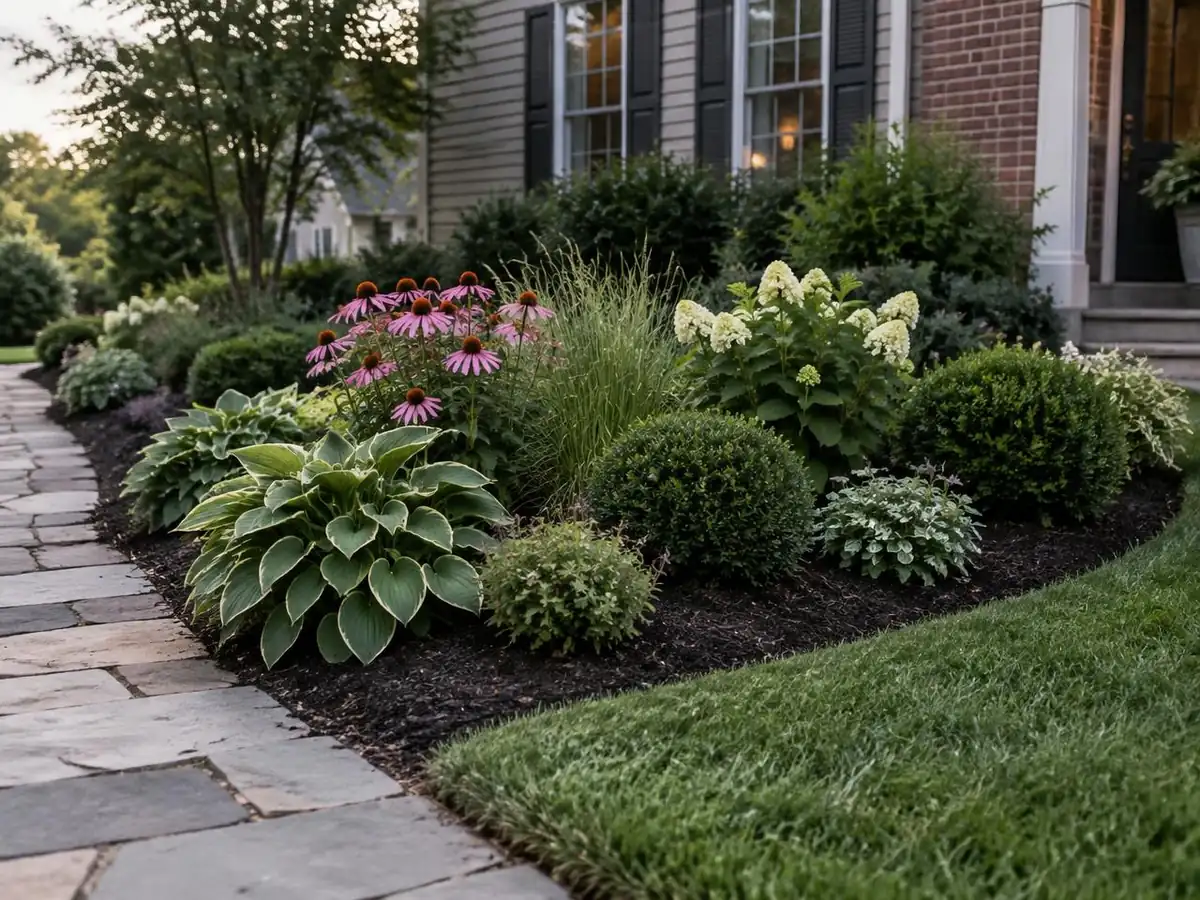
Most local projects fall into a handful of surfaces: concrete pavers for the widest range of patterns and the easiest repairs, bluestone for the flat, formal look that suits older Peabody homes, and irregular natural stone for something softer. The same crews typically build the walkway from the driveway, the steps up to a back door, a fire pit, and the low-voltage lighting that makes the space usable after dark.
Joint sand, edge restraint and pitch decide how it looks in year five. Polymeric sand locks joints against washout and weeds; a consistent pitch keeps water off the surface instead of sitting on it and freezing.
Featured
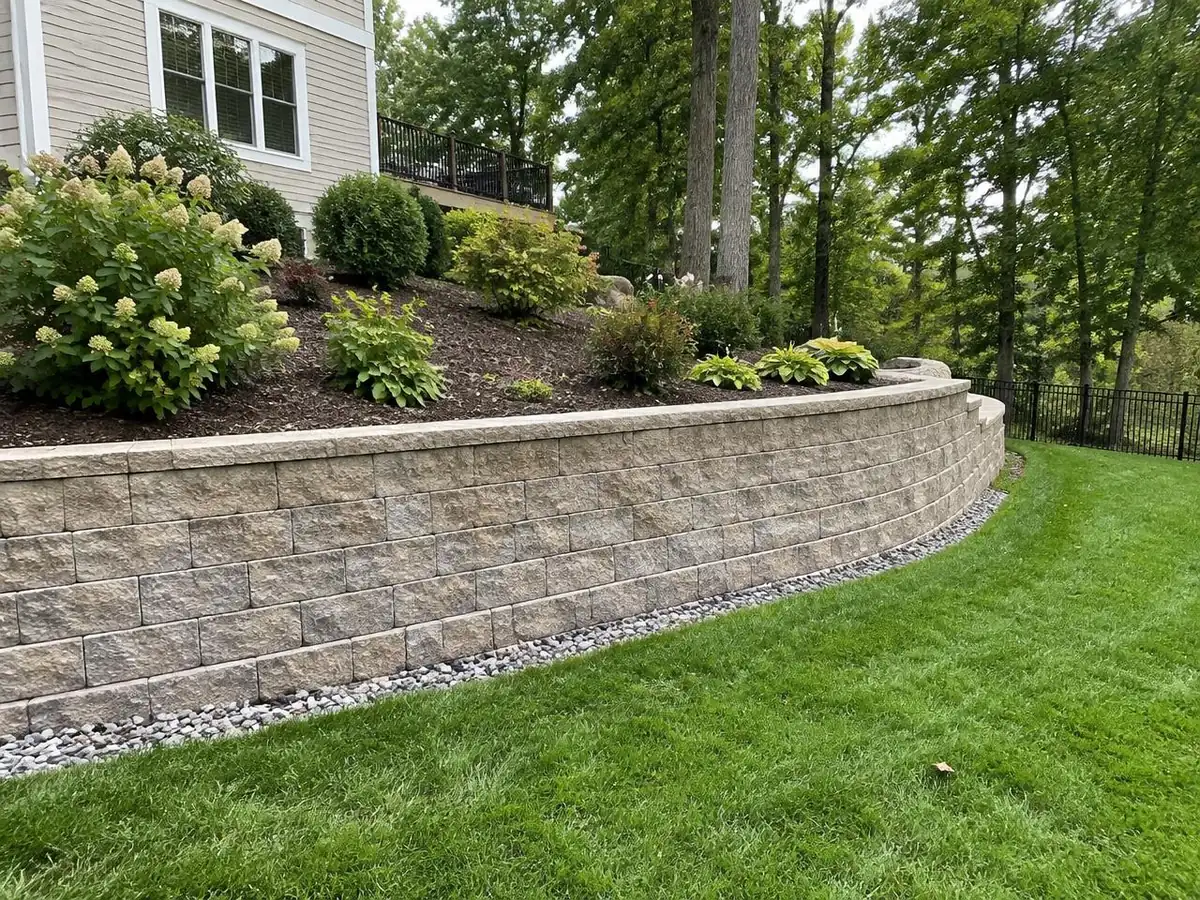
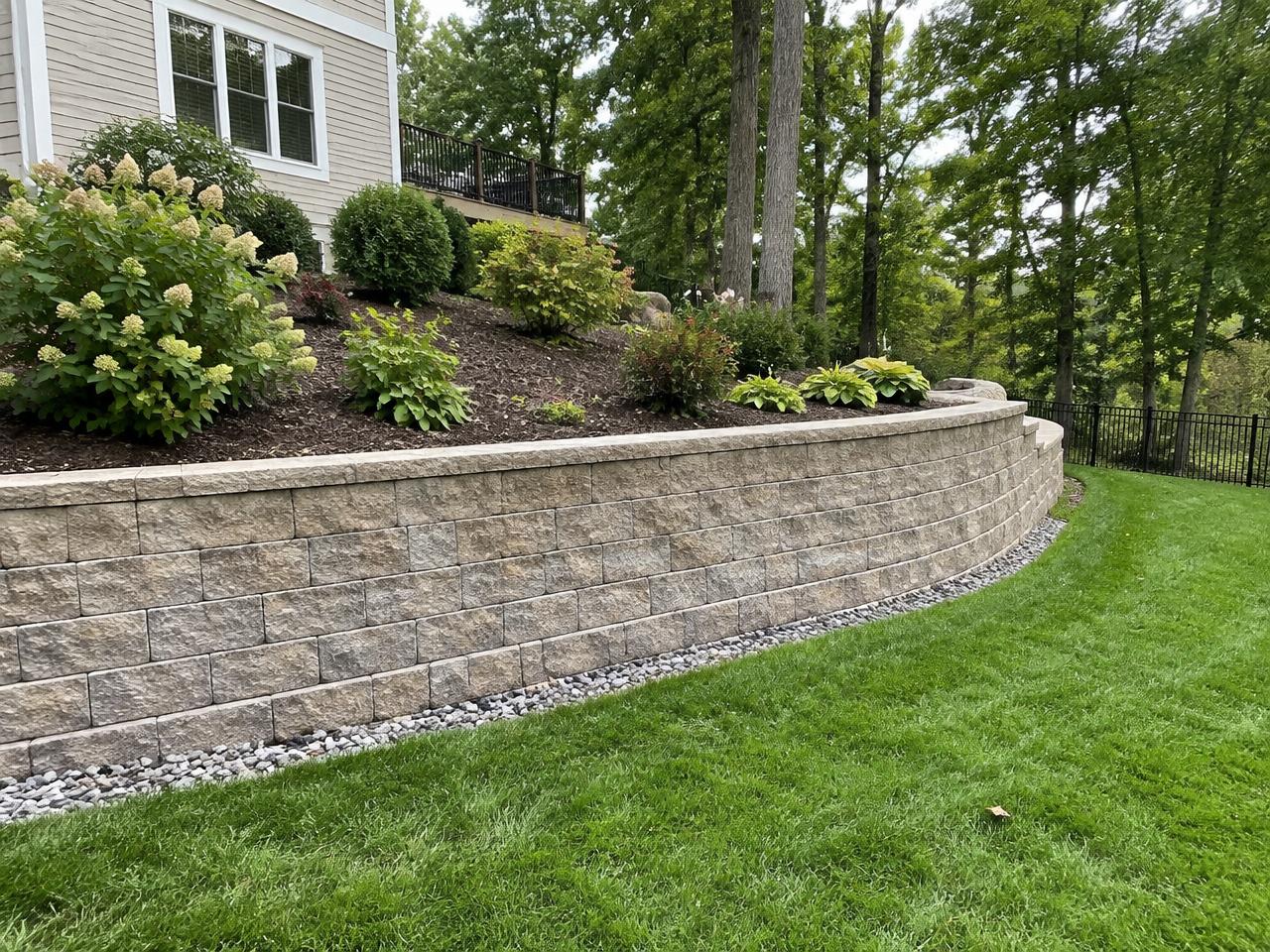
Walls solve grade, not decoration. On Peabody's rolling, stony lots they hold a slope back from a driveway, stop erosion below a wooded edge, flatten a usable yard, or terrace a hill into planting beds.
What fails is almost never the block. It is water behind the wall and movement underneath it. Saturated soil pushes with real force, and a winter of freeze–thaw will find any wall built without drainage stone, a perforated pipe with an outlet, filter fabric and a compacted base below frost-affected ground.
Materials range from segmental interlocking block to granite, dry-stack fieldstone and mortared stone, and taller or surcharged walls often need geogrid reinforcement stepped back into the slope. Permit thresholds apply once a wall gets tall — see the retaining wall page for the details.
Local conditions
Peabody sits in USDA hardiness zone 6b on glacial till soils, with winters that cycle above and below freezing. Those three facts — cold-hardiness limits, stony and sometimes ledge-bound ground, and repeated frost movement — decide what survives, what can be dug, and how hardscape has to be built.
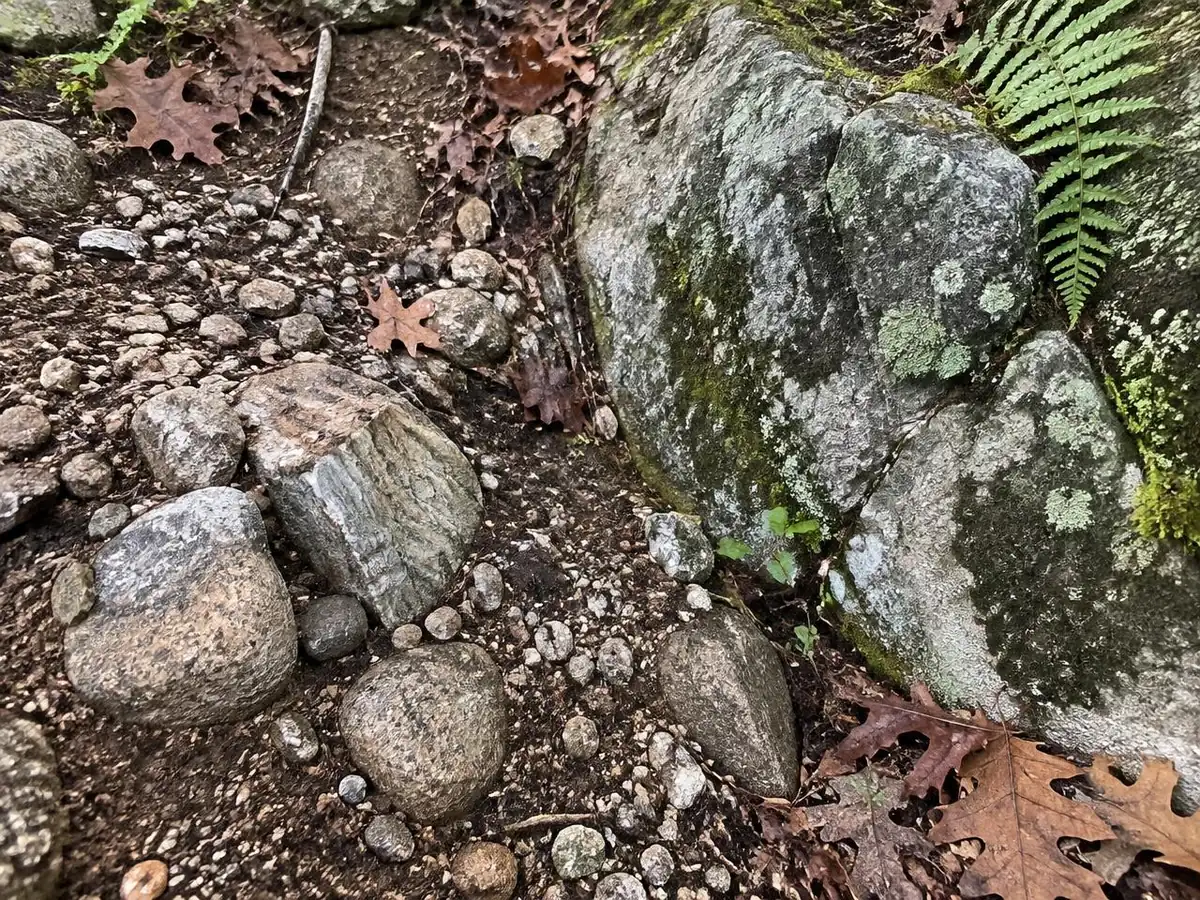
Upland soils across Essex County are glacial till derived from granite and gneiss. The Essex series mapped in this region is a sandy, well-drained subglacial till that can run anywhere from about 5 to 35 percent rock fragments by volume. In practice that means cobbles in every trench, occasional boulders that change a day's plan, and shallow ledge on some lots that rules out a deep excavation entirely. It also means loam usually has to be brought in for a new lawn rather than found on site.
ZIP 01960 falls in zone 6b on the 2023 USDA plant hardiness map, with average extreme winter lows around −5°F to 0°F. The last spring frost typically lands in the first ten days of May and the first fall frost in the last third of October. That is the real planting and sod calendar here, and it is why a "spring install" in April is often a soil-temperature problem rather than a scheduling one.
Coastal New England winters swing across the freezing point repeatedly instead of staying frozen. Water in the ground expands, lifts, and settles again — the mechanism behind heaved walkway slabs, tipped wall caps and cracked steps. It is the single strongest argument for a properly compacted, free-draining base and for drainage behind any wall.
Peabody draws on the Ipswich River system and has imposed mandatory outdoor water restrictions in recent seasons, most recently a Phase II schedule announced in May 2026 limiting sprinkler use to alternating days by street address and to early morning and evening windows. That directly affects when new sod or new planting can be established, so confirm current rules before scheduling a lawn install.
Sources: USDA Official Soil Series Description (Essex series); 2023 USDA Plant Hardiness Zone Map for ZIP 01960; Massachusetts State Building Code 780 CMR; City of Peabody Public Services water restriction notices. Last reviewed:
Peabody
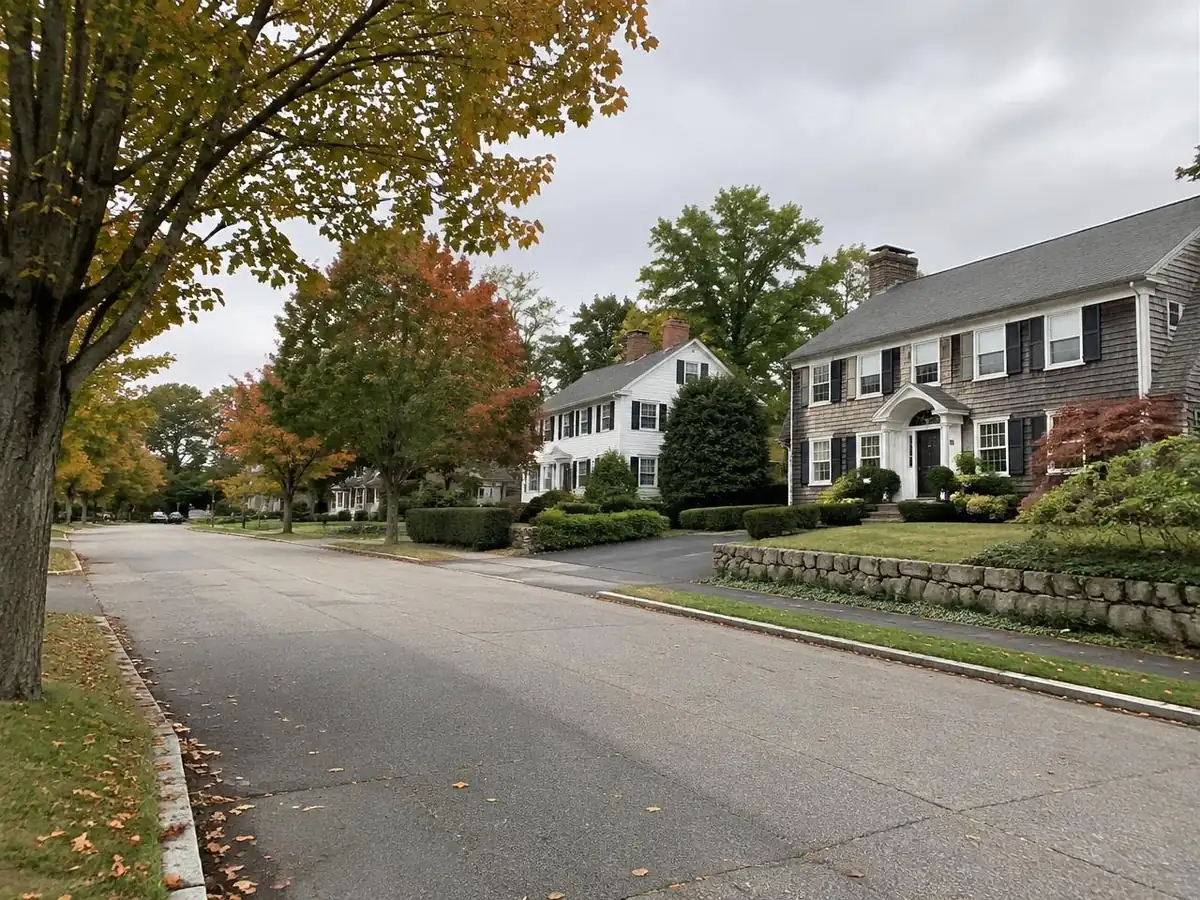
Peabody covers roughly 17 square miles, and a yard in one part of the city has little in common with a yard in another. West Peabody runs to larger post-war lots with deep lawns and mature oaks, where lawn renovation, irrigation and drainage dominate. South Peabody and the streets around Proctor mix older homes on tighter parcels, often with a sloped driveway or a short wall already in place.
Downtown around Peabody Square and the Washington Street Historic District brings small, closely built lots where access, scale and material choice matter more than square footage. Closer to Brooksby Farm and the Independence Greenway, properties back onto conservation land and wooded edges — shade, leaf load and runoff from above are the recurring issues. Along the Route 1, Route 114 and Route 128 corridors, road noise and salt spray push planting choices toward tougher, screened buffer plantings.
Budget
| Work | Typical range | What moves the number |
|---|---|---|
| General landscaping | $4 – $12 / sq ft | Varies with materials, access and how much excavation is involved |
| Small jobs, hourly | $50 – $100 / hr | Cleanups, planting, minor repairs and punch-list work |
| Design and install project | $3,000 – $15,000 | Planting plan plus hardscape or lawn work on a typical residential lot |
| Ongoing maintenance | $100 – $200 / month | Seasonal mowing and bed care programs |
How it works
One call reaches our matching line for Peabody and the surrounding North Shore towns.
Describe the yard, the problem and rough timing — a sinking patio, a failing slope, a bare lawn.
We hand the details to an independent landscaping professional who works in your town and does that type of work.
You talk pricing, scheduling and scope directly with that professional. No obligation to move forward.
Service area
Historic in-town lots, tight access and coastal wind off Salem Harbor.
Landscaping in SalemMid-century subdivisions with wide lawns and Route 1 / Route 114 access.
Landscaping in DanversEverything from compact Ryal Side yards to estate grounds in Beverly Farms.
Landscaping in BeverlyLedge, salt spray and steep harbor-facing grades on small historic lots.
Landscaping in MarbleheadWooded half-acre-plus lots where shade, drainage and slope drive the plan.
Landscaping in LynnfieldTerraced oceanfront streets needing salt-tolerant planting and solid walls.
Landscaping in SwampscottLarger rural parcels with wetland buffers along the Ipswich River.
Landscaping in MiddletonCountry properties, farm soils and long gravel or paver drive approaches.
Landscaping in TopsfieldConservation-minded lots near Wenham Lake with strict water protections.
Landscaping in WenhamHamilton and South Hamilton estates, paddocks and mature tree canopy.
Landscaping in HamiltonHomeowner information
Regulatory details summarized from the Massachusetts State Building Code (780 CMR), City of Peabody Inspectional Services and Conservation Commission guidance, Dig Safe, the Massachusetts Office of Consumer Affairs HIC program and 330 CMR 31.00. Rules and thresholds change — confirm current requirements with the city before starting work. Last reviewed:
Answers
Published cost data for Peabody puts general landscaping at roughly $4 to $12 per square foot, small hourly jobs at $50 to $100 per hour, and a full design-and-install project at about $3,000 to $15,000 depending on size and materials. Hardscape work sits at the upper end because of excavation and base preparation.
Patios and hardscaping, retaining walls, landscape design, sod and new lawn installation, lawn care and mowing, yard drainage, and spring and fall cleanups. Those seven cover nearly everything Peabody homeowners call about outside of snow and tree removal.
Generally yes once the wall exceeds four feet measured from the bottom of the footing to the top of the wall, or if it supports a surcharge such as a driveway or slope above it. That threshold comes from the Massachusetts State Building Code (780 CMR); confirm your specific wall with Peabody Inspectional Services at 24 Lowell Street before work starts.
Spring and early fall are the workable windows. Cool-season sod roots best when soil is warm and air temperatures are moderate, which in zone 6b generally means after the early-May frost window and again from late August into September, before the late-October first frost.
Cool-season grasses: Kentucky bluegrass, tall fescue, perennial ryegrass and fine fescue, usually as a blend. Tall fescue handles heat and drier soils, bluegrass knits together and repairs itself, and fine fescue tolerates the shade cast by mature oaks and maples.
Start with grade and downspouts, then add subsurface drainage only if water still sits. That order — regrade away from the foundation, extend downspouts, then install a French drain, dry well or swale — solves most soggy-lawn and wet-basement complaints without over-building.
Hardscaping is the built, non-living part of a landscape: patios, walkways, steps, driveways, retaining and seat walls, fire pits, and the base and drainage layers underneath them. Planting, lawn and mulch are the softscape counterpart.
Match the contractor to the work. Ask who does the installation, how the base or drainage is built, what happens if the ground settles, and — for exterior retaining walls — whether they hold Massachusetts Home Improvement Contractor registration. Get the scope in writing before any deposit.
Peabody has operated under mandatory outdoor water restrictions, most recently a Phase II schedule announced in May 2026 limiting irrigation to alternating days by address and to early morning and evening hours. Restrictions change through the season, so confirm current limits with Peabody Public Services before setting an irrigation controller.
Published industry estimates commonly put well-executed landscaping at a 5 to 20 percent effect on home value. On the North Shore, functional work — solid walls, dry yards, a usable patio — tends to hold value better than decorative planting alone.
Tell a local professional what you need and discuss your next step. Patios, walls, lawns, drainage and seasonal work across Peabody and the North Shore.
Get connected with an independent local landscaping professional. Calls go to (877) 537-6896.
Peabody & North Shore
Talk to a local pro