Peabody • Essex County
Sod Installation in Peabody, MA
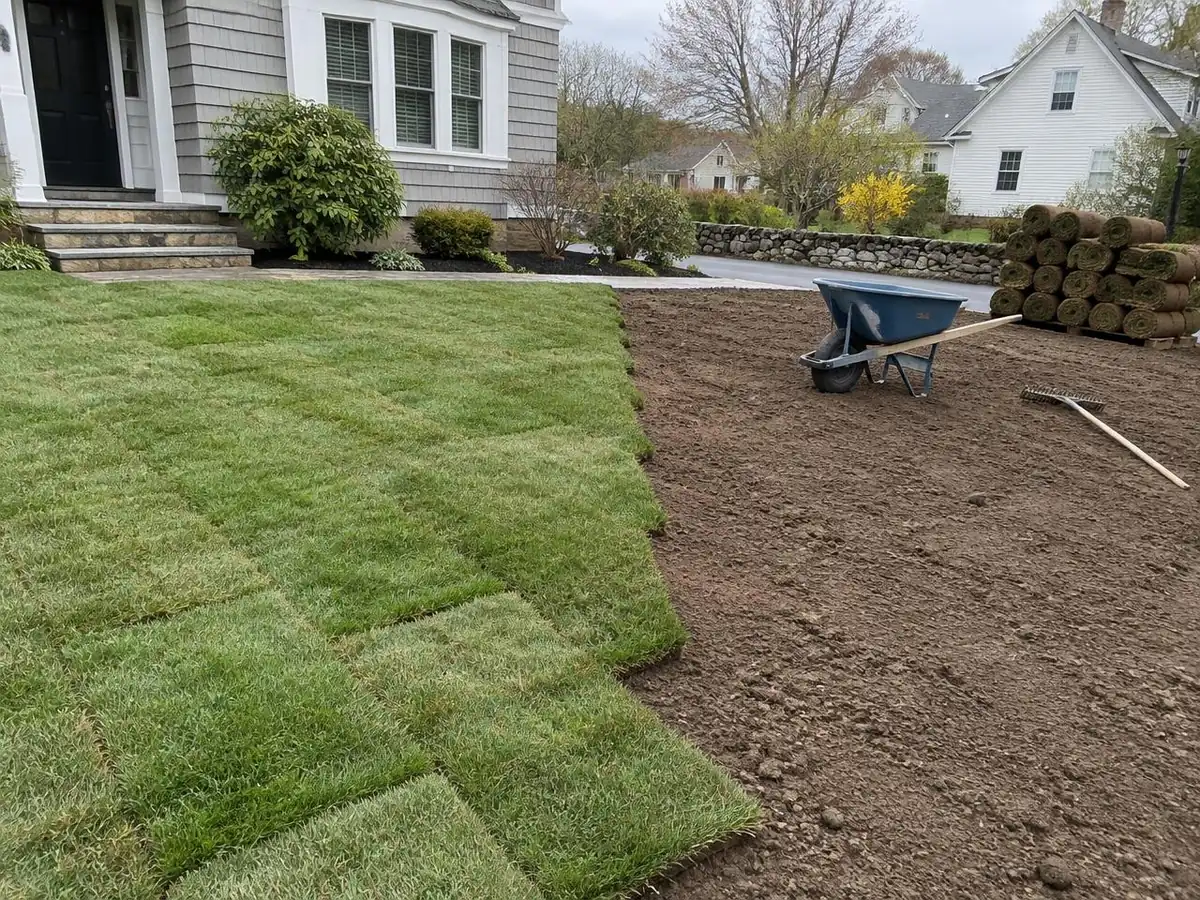
Options
Sod vs. seed vs. hydroseeding
Sod, seed and hydroseeding all produce a cool-season lawn, but they establish at very different speeds and suit different situations. Sod gives an immediate, walkable lawn; seed costs less but takes a season to fill in; hydroseeding sits between the two and holds well on slopes.
None of these methods is universally "better" — the right choice depends on timing, budget and the shape of the yard. A steep bank that would wash out loose seed is a good candidate for hydroseeding's tackifier mulch. A front yard that needs to look finished for a sale or an event is a better fit for sod. A large back lawn on a flexible timeline can often be seeded for less.
| Method | How it establishes | Best fit |
|---|---|---|
| Sod | Rooted within weeks | Pre-grown turf laid over prepared loam; usable lawn almost immediately, higher material cost |
| Seed | Germinates in days, fills in over a season | Lowest material cost; needs protection from foot traffic, birds and drying out while it establishes |
| Hydroseeding | Germinates faster than dry seed, fills in over weeks | Seed, mulch and tackifier sprayed as a slurry; good for slopes and larger areas where seed alone would wash or blow away |
Site prep
What happens before sod goes down
Site prep decides whether a new lawn thrives or struggles: removing the old lawn and debris, grading the yard so water runs away from the foundation, and bringing in enough screened loam over the native till to give roots something to grow into.
The old lawn and any construction debris get stripped or tilled under first. Grading comes next, and it is not optional on Peabody's glacial till lots — a slight pitch away from the house keeps roof and surface water from pooling against the foundation instead of shedding toward the street or a low point in the yard. Where soil is thin or full of cobbles, screened loam is brought in to reach a workable depth for root growth, since the native Essex-series till common across the county can run 5 to 35 percent rock by volume and is rarely deep or loose enough on its own.
A soil test at this stage checks pH and nutrient levels. Cool-season grasses generally prefer a slightly acidic to neutral soil, and where a test shows the soil running too acidic, lime is worked in before the loam is finish-graded. Skipping this step is one of the more common reasons a new lawn looks thin or yellow within its first year even though the installation itself looked fine.
Grass types
Which cool-season grass fits your yard
Peabody lawns are almost always a blend of cool-season grasses matched to sun and shade: Kentucky bluegrass and perennial ryegrass for open, sunny areas, tall fescue where drought tolerance matters, and fine fescue for the shade under mature oaks and maples.
- Kentucky bluegrass
- Dense, self-repairing sod grass for full-sun front and side yards; the backbone of most sod blends.
- Tall fescue
- Deep-rooted and more drought- and wear-tolerant; good for yards that see kids, dogs or dry summer stretches.
- Perennial ryegrass
- Establishes quickly and is often mixed in to speed up a new lawn's early fill-in.
- Fine fescue
- The shade specialist — the grass most likely to hold on under the tree canopy common on wooded Peabody lots.
Timing
When to install in zone 6b
Peabody sits in USDA zone 6b, where the last spring frost typically falls around May 1–10 and the first fall frost around October 21–31 — those dates bracket the two realistic sod windows, with late summer into early fall generally the stronger of the two.
A spring install has to get established before the stress of summer heat sets in, which means starting once the ground has warmed past the early-May frost window rather than the moment the calendar says spring. A fall install laid in late August or September has cooler air temperatures, more reliable rainfall and less weed competition working in its favor, and it gets a full spring of growth before facing its first summer.
Establishment
Watering a new lawn in — and around restrictions
New sod needs the root zone kept consistently moist until roots knit into the soil below, then tapered gradually as the lawn matures — but Peabody homeowners also have to plan that watering around the city's outdoor water restrictions rather than against them.
There is no single watering schedule that fits every lawn — weather, grass type and soil all change how quickly the root zone dries out, so an installer will set expectations for your specific project rather than a generic number of minutes per day. The underlying principle stays the same throughout establishment: don't let the root zone dry out, and back off gradually once roots have taken hold, rather than watering heavily forever.
Peabody has operated under mandatory outdoor watering restrictions, most recently a Phase II schedule announced in May 2026 that limits irrigation to alternating days by address with morning and evening windows; hand watering has generally remained allowed even under restrictions, which matters for a newly sodded lawn that needs more frequent attention than a sprinkler schedule alone may permit. Rules and stages change through the season, so confirm the current stage with Peabody Public Services before finalizing an install date.
Source: City of Peabody Public Services outdoor water use notices, administered under a MassDEP water management permit. Confirm current restrictions directly with the city.
Updated:Fertilizer rule
Phosphorus and Massachusetts fertilizer law
Massachusetts limits phosphorus fertilizer under 330 CMR 31.00 to situations where a soil test within the past three years shows a need for it, or where a lawn is newly established — which is exactly the case for a fresh sod installation.
That is why the soil test at the start of a sod project does double duty: it tells the installer what the lawn needs and it satisfies the documentation the fertilizer rule is built around. After the new-lawn exemption period passes, future fertilizer applications on the same lawn generally need to go back to phosphorus-free products unless another soil test shows a deficiency.
Source: Massachusetts fertilizer regulation 330 CMR 31.00. Confirm current requirements before applying phosphorus fertilizer.
Getting started
First mow and first fertilization
The first mow should wait until the sod has rooted enough to resist being pulled up, and the first fertilization is usually a starter application timed to the install rather than a routine seasonal feeding.
| Task | Timing | Notes |
|---|---|---|
| First mow | Once rooted and dry | A sharp blade set high, mowing only after the lawn is dry and has knit in enough to resist being pulled up |
| First fertilization | Starter application at install, follow-up later | Under 330 CMR 31.00, phosphorus is allowed for a new lawn or with a recent soil test showing a need |
Recent Work
Sod Installation & New Lawns in Peabody, MA
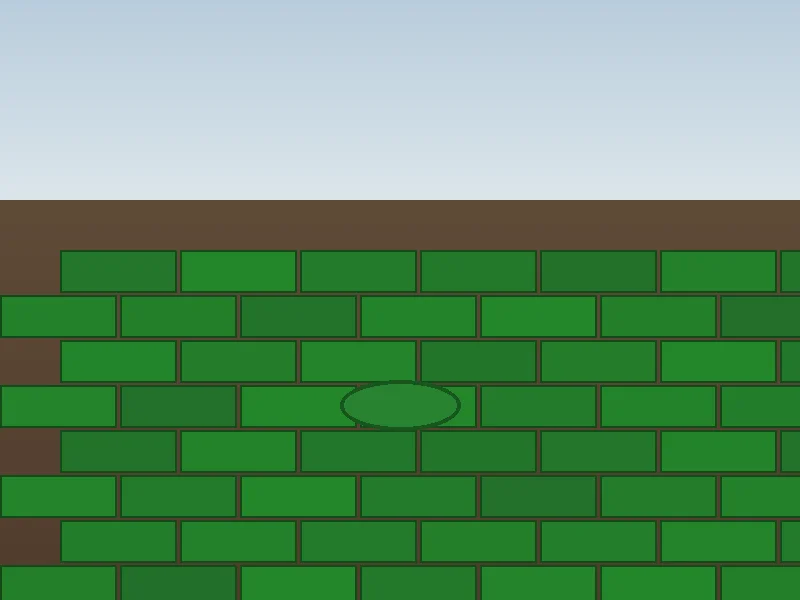 Sod Installation
Unrolling farm-fresh Kentucky bluegrass and fescue sod over 4 inches of screened loam.
 Grading & Loam
Subgrade leveling and screened topsoil spreading to eliminate dips and rocky bumps.
 Rolled Turf
Newly laid cool-season turf rolled for seamless root-to-soil contact in South Peabody.
 Hydroseeding
Hydroseeding application over prepared slope for cost-effective erosion control.
Related landscaping services
Lawn Care & Mowing
Weekly mowing and edging plus the renovation work — aeration, overseeding, fertilization and irrigation checks — that thickens a thin lawn.
Yard Drainage
French drains, dry wells, swales, downspout extensions and regrading that move surface water away from foundations and soggy lawn areas.
Landscape Design
Planting plans, grading and hardscape layouts drawn for USDA zone 6b conditions and the way your household actually uses the yard.
See what typical projects run in the Peabody landscaping cost guide, browse more answers on the landscaping FAQ page, or check the towns we cover on the service areas page.
Answers
Sod installation FAQs
01When is the best time to install sod in Massachusetts?
Late summer into early fall — roughly late August through September, ahead of Peabody's typical first frost around October 21–31 — is usually the strongest window because soil is warm and weed pressure is lower. Spring works too, generally once the risk of a hard frost has passed in early May, but sod laid in spring has to compete with summer heat before it is fully rooted.
02How long until you can walk on new sod?
Light foot traffic is usually fine after the first couple of weeks once the roots have started to knit into the soil below, but that varies with weather, grass type and how consistently the root zone has been kept moist. A local installer can tell you when your specific lawn has rooted in enough for normal use.
03Is sod better than seed?
Sod gives an established, walkable-looking lawn almost immediately and resists erosion and weed invasion better while it roots in. Seed and hydroseeding cost less up front and can match a wider range of grass blends, but they take weeks longer to fill in and need more careful early watering and protection.
04What type of grass works well in Peabody?
Cool-season blends dominate here: Kentucky bluegrass for dense, self-repairing turf in full sun, tall fescue for drought and wear tolerance, perennial ryegrass for a fast-establishing companion grass, and fine fescue for the shade cast by mature oaks and maples on many Peabody lots.
05Do I need a soil test before installing sod?
It is the standard first step. A soil test tells the installer the existing pH and nutrient levels so lime and starter fertilizer can be applied correctly, and under Massachusetts' phosphorus rule a recent soil test — or the fact that this is a new lawn — is also what allows a phosphorus-containing fertilizer to be used at all.
06Can I install sod myself?
Small patch repairs are manageable for many homeowners, but full-yard installs involve grading, loam depth and roll-to-roll seams that are easy to get wrong. A poorly graded base shows up later as low spots that hold water or a lawn that pitches water toward the foundation instead of away from it.
07Will new sod be affected by Peabody's water restrictions?
Possibly, since establishment watering is the most water-intensive part of a new lawn. Peabody's outdoor watering rules have included alternating-day schedules by address with morning and evening windows, and hand watering has generally remained allowed even during restrictions — but confirm the current stage with Peabody Public Services before you plan an install.
08How much sod does a typical Peabody yard need?
It depends entirely on the square footage being replaced, which varies lot to lot — a local installer measures the site and grading needs before quoting a project, since sod is typically sold and installed by the square foot rather than at a flat rate.
Ready to talk about a new lawn?
Tell us about your yard and timeline. We'll connect you with a local landscaping professional who installs sod and new lawns in Peabody.
Get connected with an independent local landscaping professional. Calls go to (877) 537-6896.