Peabody • Essex County
Lawn Care & Mowing in Peabody, MA
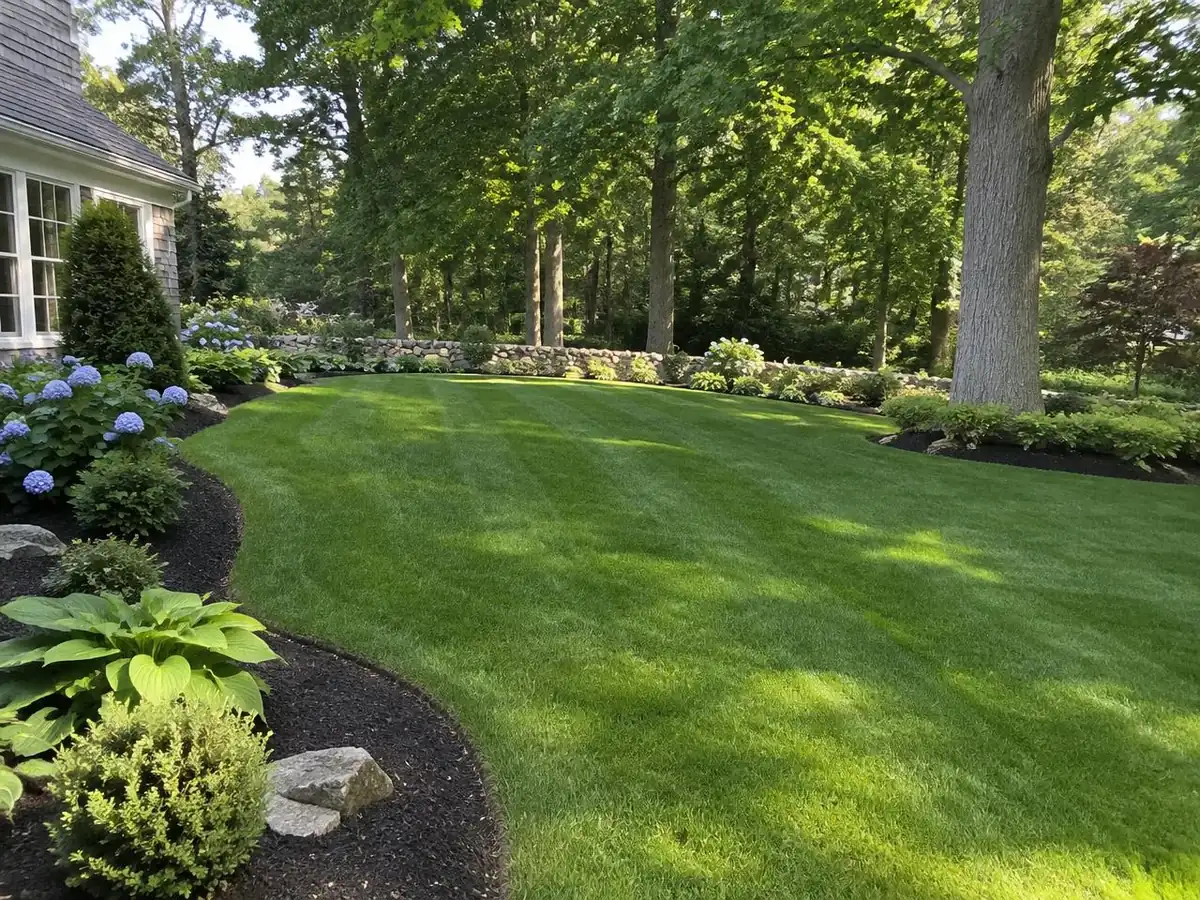
Weekly service
Mowing and edging done right
Good mowing is about height and consistency, not just frequency — cutting no more than about a third of the blade at a time and keeping mower height appropriate for cool-season grass protects the lawn from the scalping that invites weeds and drought stress.
Weekly mowing during active spring and fall growth, with edging along beds, walkways and the driveway, keeps a lawn looking finished and lets small problems — a thin patch, an emerging weed patch, a soggy corner — get caught early. Mowing too short, especially during summer heat, is one of the most common self-inflicted lawn problems in this area: it exposes soil to sun and stress at the exact time the lawn can least afford it.
Renovation
Aeration, overseeding, dethatching and topdressing
Thin or compacted lawns generally need more than mowing to recover — core aeration relieves soil compaction, overseeding fills in bare and thin patches, dethatching removes the buildup that blocks water and nutrients, and topdressing with screened compost improves the soil over time.
- Core aeration
- Pulls small plugs from compacted soil so air, water and fertilizer reach the roots; typically done in spring or fall.
- Overseeding
- Introduces new cool-season grass seed into an existing lawn, usually right after aeration for good seed-to-soil contact.
- Dethatching
- Removes the layer of dead grass and organic debris that builds up at the soil surface and can choke out healthy turf.
- Topdressing
- A thin layer of screened compost or loam spread over the lawn to improve soil structure and support new seed.
Fertilization
Fertilizing under Massachusetts' phosphorus rule
Massachusetts regulation 330 CMR 31.00 restricts phosphorus fertilizer to lawns with a soil test from the past three years showing a need for it, or to newly established lawns — most established Peabody lawns are fertilized with phosphorus-free products instead.
In practice this means a soil test is the starting point for any fertilization plan, not an optional extra. It tells a lawn care professional what the soil actually needs, whether that is nitrogen, potassium, lime for pH, or in the exempted cases, phosphorus. Applying the wrong product wastes money and, in the case of phosphorus runoff, can contribute to problems in nearby waterways.
Source: Massachusetts fertilizer regulation 330 CMR 31.00. Confirm current requirements before applying phosphorus fertilizer.
Common issues
Weeds, moss and shade on tree-heavy lots
Peabody's mature oak and maple canopy creates the shade, moisture and compacted soil conditions that let moss and shade-tolerant weeds take hold where turf is struggling — the fix usually starts with the underlying condition, not a one-time treatment.
A shaded lawn under a large maple rarely thickens up the same way a full-sun lawn does, no matter how much fertilizer goes down. Fine fescue tolerates shade better than bluegrass, and thinning tree canopy or accepting a groundcover alternative in the deepest shade is sometimes the more realistic answer than fighting for turf. Moss specifically tends to point to compaction or low pH, both of which aeration and a soil-test- guided lime application can address over a season or two.
Irrigation
Keeping a sprinkler system running — and compliant
Irrigation maintenance covers system checks, zone adjustments, controller programming and rain sensor calibration, plus seasonal spring start-up and fall blow-out — all of it planned around Peabody's outdoor watering restriction windows rather than against them.
A spring start-up checks each zone for broken heads, leaks and even coverage after a winter underground, and resets the controller for the season. A fall blow-out clears water out of the lines with compressed air before a hard freeze so pipes and valves don't crack — skipping this step is a common cause of spring repair calls. Rain sensors and smart controllers help a system water only when needed, which also matters for staying inside restricted days and hours.
Peabody's most recent Phase II outdoor watering rules, announced May 2026, limit sprinkler use to alternating days by address within set morning and evening windows, and have generally still allowed hand watering. Because stages and rules change through the season and with rainfall conditions, confirm the current status with Peabody Public Services before setting a controller's schedule.
Source: City of Peabody Public Services outdoor water use notices, administered under a MassDEP water management permit.
Updated:Calendar
A season-by-season look at lawn care
| Season | Typical work | Notes |
|---|---|---|
| Spring | Aeration, overseeding, first mowings, spring cleanup handoff | Soil test and starter fertilizer decisions happen here; irrigation start-up once frost risk passes |
| Early summer | Weekly mowing, edging, weed monitoring | Mowing height goes up slightly to help turf handle heat and lower rainfall |
| Late summer | Reduced mowing frequency, irrigation checks | Cool-season grass growth slows; this is also prime time to plan a fall sod or seed project |
| Fall | Aeration and overseeding window, fertilization, leaf management begins | The best growing window of the year for cool-season lawns in zone 6b |
| Late fall | Final mowings, irrigation blow-out, dormant fertilization if planned | System winterization needs to happen before the first hard freeze |
Cost
What ongoing lawn care runs
Published cost data from HomeGuide puts ongoing residential lawn maintenance at roughly $100 to $200 per month, though the actual price depends on lawn size, mowing frequency and which renovation or irrigation services are included in a program.
Updated:Recent Work
Lawn Care & Turf Maintenance in Peabody, MA
 Core Aeration
Mechanical core aeration relieving compaction in dense North Shore subsoils.
 Overseeding
Fall overseeding with cool-season fescues to thicken thin lawn sections.
 Lawn Mowing
Weekly mowing and crisp edging programs across West Peabody neighborhoods.
 Fertilization
Phosphorus-free seasonal lawn fertilization program compliant with 330 CMR 31.00.
Related landscaping services
Sod Installation
New lawns from cool-season sod or hydroseed, with loam, grading and soil prep done before a single roll goes down.
Spring & Fall Cleanup
Spring bed cleanups and mulch, plus fall leaf cleanup, hedge trimming and debris removal timed to Peabody's collection calendar.
Yard Drainage
French drains, dry wells, swales, downspout extensions and regrading that move surface water away from foundations and soggy lawn areas.
Full pricing context is in the Peabody landscaping cost guide, more answers are on the FAQ page, and coverage details are on the service areas page.
Answers
Lawn care FAQs
01How often should my lawn be mowed in Peabody?
Weekly during the active spring and fall growing seasons is typical for cool-season lawns here, tapering to every 10–14 days during the summer slowdown. The right frequency actually depends on growth rate, not the calendar — mowing before a lawn gets too tall keeps you from cutting more than about a third of the blade at once.
02Why does my lawn look scalped after mowing?
Scalping happens when too much leaf blade is removed at once, usually because the mower deck is set too low or mowing was skipped for too long. Cool-season grasses like bluegrass and fescue store energy in the remaining blade, so cutting too short stresses the plant and opens the door to weeds and drought damage.
03What is core aeration and does my lawn need it?
Core aeration pulls small plugs of soil out of the lawn to relieve compaction and let air, water and nutrients reach the root zone. Lawns on Peabody's dense glacial till, or lawns that see heavy foot traffic, tend to benefit most, and aeration is usually paired with overseeding in the same visit.
04Can I use phosphorus fertilizer on my lawn?
Only with a soil test from within the past three years showing a need for it, or on a newly established lawn — that is the rule under Massachusetts regulation 330 CMR 31.00. Established lawns without a documented need generally get phosphorus-free fertilizer instead.
05Why is there moss in my lawn?
Moss usually moves in where grass is struggling — heavy shade, compacted or poorly drained soil, and low soil pH are the common causes on Peabody's tree-heavy lots. Treating the moss itself is a short-term fix; correcting the shade, compaction or pH is what keeps it from coming back.
06How much does lawn care cost per month?
Published cost data puts ongoing residential lawn maintenance in the roughly $100 to $200 per month range, according to HomeGuide, though the actual price depends on lawn size, mowing frequency and what other services — aeration, fertilization, irrigation checks — are bundled in.
07When should I turn my irrigation system on and off for the season?
Spring start-up typically happens once hard freezes have passed, and the fall shutdown — a full blow-out of the lines — needs to happen before the first hard freeze so water left in the pipes doesn't freeze and crack them. A local irrigation technician can time both to the current forecast rather than a fixed date.
08Does Peabody have watering restrictions I need to follow?
Yes — Peabody has put mandatory outdoor watering restrictions in place in recent years, including a Phase II schedule announced in May 2026 limiting irrigation to alternating days by address within set morning and evening windows. Confirm the current stage with Peabody Public Services before setting a controller schedule.
Want a lawn care program that actually fits your yard?
Tell us about your lawn's size, shade and current condition. We'll connect you with a local lawn care professional in Peabody.
Get connected with an independent local landscaping professional. Calls go to (877) 537-6896.