Peabody • Essex County
Spring & Fall Cleanup in Peabody, MA
Transparent Referral Disclosure: Landscaping Peabody MA is a complimentary referral network connecting homeowners with independent local landscaping contractors and seasonal property maintenance crews in Peabody, MA. We do not own commercial leaf vacuums, trucks, or landscaping equipment, nor do we directly employ cleanup crews or manage municipal waste facilities. All project estimates, seasonal schedules, and pricing agreements are established directly between homeowners and participating independent providers.
Service scope
Service scope: what seasonal cleanup covers — and what it doesn't
Seasonal yard cleanups focus on transitional property resets in spring and autumn — clearing fallen sticks, raking winter debris, blowing and vacuuming leaves, edging beds, refreshing mulch, and trimming ornamental grasses; ongoing weekly mowing, major tree felling, and snow plowing are separate services.
Seasonal cleanups are heavy-duty, one-time or multi-visit property overhauls designed to prepare your landscape for the upcoming season. Understanding what is included helps ensure you book the right service:
- Spring & fall yard cleanup (covered here)
- Fallen stick and branch pickup, lawn leaf raking and vacuuming, perennial cutbacks, spade-cut bed trenching, dark bark mulch refreshing, and organic debris disposal.
- Recurring weekly lawn maintenance (separate service)
- Routine weekly mowing, string trimming around fence lines, and hardscape edge shearing throughout the active June-to-September growing season.
- Large tree removal & arborist work (out of scope)
- Felling mature trees, crane operations, hazardous limb climbing, and stump grinding. Handled exclusively by licensed, insured commercial tree services.
- Snow plowing & winter management (out of scope)
- Commercial winter snow plowing, driveway salting, and walkway clearing during sub-freezing months.
Seasonal focus
Spring reset vs. fall winterization: two distinct seasonal needs
Spring cleanups focus on property renewal — clearing winter storm debris, cutting back dormant perennials, edging beds, and mulching before weeds germinate; fall cleanups focus on high-volume leaf removal, cutting back spent annuals, and preventing wet leaf mats from smothering turf crowns under snow.
While both visits restore property cleanliness, spring and autumn present distinct horticultural priorities across Essex County:
Typical spring reset window (early April to mid-May, weather permitting)
Winter leaves behind fallen tree branches, gravel washed onto turf edges by snowplows, and matted leaf pockets that survived the autumn. A professional spring cleanup sweeps away these winter remnants, uncovers turf crowns, and gives garden beds a sharp re-edging. In Essex County, this work is typically scheduled between early April and mid-May once subsoils have dried sufficiently to support equipment and foot traffic without compaction. Applying fresh bark mulch moderates soil temperatures, conserves moisture, and smothers early weed seeds before the summer heat arrives.
The fall leaf winterization window (mid-October to early December, weather permitting)
In autumn, managing leaf volume becomes the dominant chore. In tree-dense Peabody neighborhoods—particularly near Brooksby Farm, Proctor, and the Independence Greenway—mature oaks and maples drop thousands of pounds of foliage. A comprehensive fall cleanup removes this dense canopy from lawn surfaces, preventing winter suffocation and reducing turf disease risks while cutting back spent herbaceous perennials so beds enter winter neat and healthy. Fall cleanups typically span from mid-October through early December, adapting dynamically to the pace of leaf drop and ground freeze.
| Seasonal Focus | Typical Timing Window | Core Lawn & Bed Objectives | Key Services & Inclusions |
|---|---|---|---|
Agronomic leaf care
Lawn leaf management: when to mulch vs. when to remove
Light, dry leaf layers can often be beneficial when finely shredded with a mulching mower to recycle organic nutrients into turf soil; however, thick, wet, and matted leaves should generally be removed to prevent smothering grass crowns and elevating snow mold disease risks.
Homeowners often wonder whether they should rake every leaf or simply mow over them. Agronomic research from UMass Extension highlights clear decision-based guidelines:
When mulching leaves benefits your lawn
When leaf cover is light, dry, and distributed evenly, running a sharp mulching mower shreds the foliage into tiny dime-sized flakes without clumping. These small particles sift down between grass blades to the soil surface, where earthworms and soil microbes rapidly break them down. Mulching light leaf loads adds valuable organic carbon, potassium, and trace nutrients directly back into the turf root zone without requiring disposal bags or hauling fees.
When heavy leaf blankets must be removed
When leaf drop is heavy—especially under large red oaks, Norway maples, and pine groves—mulching mowers become overwhelmed. Instead of fine flakes, the mower leaves thick, soggy clumps of shredded pulp. If left on the lawn over winter, wet leaf mats form an airtight, impermeable blanket. This layer blocks vital sunlight, suffocates cool-season grass crowns (Kentucky bluegrass and fescues), and creates damp, smothered conditions that may contribute to turf disease risks, including gray snow mold (Typhula incarnata) and pink snow mold (Microdochium nivale). By spring, smothered turf areas can turn into thinned or dead patches requiring costly reseeding or sod repair. In heavy-canopy yards, full leaf removal via commercial blowers and vacuums is generally recommended.
Ecological balance
Ecological considerations: supporting pollinators while protecting lawns
A balanced cleanup approach protects turf health by clearing heavy leaf mats from lawns, while supporting native pollinators by leaving light leaf blankets in naturalized woodland borders and delaying perennial cutbacks until spring temperatures consistently exceed 50°F.
Modern landscape stewardship balances clean property aesthetics with environmental care. Organizations like the Xerces Society and pollinator conservationists emphasize that leaf litter and standing perennial stems serve as critical winter habitat:
- Overwintering native bees and caterpillars: Many native solitary bees nest in the hollow stems of ornamental grasses, coneflowers, and bee balm. Similarly, the pupae and chrysalises of native butterflies and beneficial predatory insects overwinter hidden beneath dried leaves in planting beds.
- The 50°F spring guideline: Some pollinator-friendly gardening guidance recommends delaying intensive bed cleanup and perennial cutbacks until daytime spring temperatures consistently reach 50°F (typically mid-to-late April in Essex County). This rule-of-thumb allows overwintering native bees, caterpillars, and beneficial insects sheltering in leaf layers and hollow stems more time to emerge safely, while allowing property owners to proceed with necessary debris clearing on open turf that requires early spring sunlight.
- The zoned cleanup compromise: A practical strategy is to maintain a strict, pristine cleanup across open turf, walkways, driveways, and foundation beds to prevent disease and preserve curb appeal, while leaving a light mulch of leaves in outer wooded borders, under large shade tree groves, or in naturalized native plant beds.
Horticultural timing
Pruning & perennial cutbacks: timing cuts to plant biology
Shrubs that bloom on old wood (like forsythia, azaleas, and bigleaf hydrangeas) must only be pruned immediately after spring blooms fade to protect flower buds; late-summer bloomers (like panicle hydrangeas) flower on new wood and can be pruned during late-winter dormancy.
Indiscriminate shearing during spring or autumn cleanups is one of the most common causes of lost flowering displays. Proper pruning respects the biological flowering cycles of different ornamental species:
Old-wood spring bloomers (prune after flowering)
Deciduous shrubs such as forsythia, lilacs, azaleas, rhododendrons, and bigleaf hydrangeas (Hydrangea macrophylla) develop their flower buds during the previous summer. If an eager crew shears these shrubs during a fall cleanup or an early spring cleanup, they cut away all of the dormant flower buds, leaving bare green foliage with zero flowers. These varieties should only be shaped and trimmed in late spring or early summer, right after their blossoms fade.
New-wood summer bloomers (prune in late winter / early spring)
Shrubs that produce blossoms on new spring growth—including panicle hydrangeas (Hydrangea paniculata), smooth hydrangeas (Hydrangea arborescens 'Annabelle'), butterfly bush, and rose of Sharon—can be pruned back by one-third to one-half while dormant in late winter or early spring. This stimulates vigorous new upright canes that produce massive summer flower heads.
Perennial cutback and ornamental grass care
Herbaceous perennials with mushy or diseased foliage (such as hostas and peonies) should be cut back to ground level in autumn to prevent fungal spores and slug eggs from overwintering. Conversely, sturdy seed-bearing perennials (like coneflowers and black-eyed Susans) and architectural ornamental grasses can be left standing through winter to provide winter garden texture and bird food, before being cleanly cut back to 3 to 4 inches above the ground during spring cleanup.
Safety & scope boundary: Seasonal cleanup pruning covers landscape shrubs, low ornamental trees, and hedge borders. Hazardous tree felling, large branch removal near utility lines, and high-canopy climbing require a licensed commercial arborist with aerial equipment and specialized liability coverage.
Garden bed care
Spade-cut bed edging and natural bark mulch application
A crisp spade-cut trench establishes a sharp vertical separation between lawn and garden beds, while applying 2 to 3 inches of natural shredded bark mulch suppresses weeds, retains moisture, and moderates soil temperatures without suffocating tree root flares.
Proper bed finishing during a spring cleanup elevates property curb appeal while protecting plant root systems:
The value of clean spade-cut bed trenching
Rather than installing cheap plastic edging that heaves out of the ground during New England freeze-thaw cycles, professional landscapers hand-edge beds with sharp spade shovels or mechanical bed edgers. Cutting a smooth 2- to 3-inch deep trench with a 90-degree vertical grass wall creates a defined shadow line along walkways, lawn perimeters, and foundation beds. This trench prevents aggressive turf roots from creeping into planting beds and catches stray mulch before it washes onto turf. For homeowners comparing border materials, explore our comprehensive guide on flower bed edging ideas and materials.
Mulch depth, existing layers, and avoiding harmful "mulch volcanoes"
Natural shredded bark mulch—such as dark hemlock, spruce, or pine bark—breaks down slowly, enriching sandy till subsoils with organic matter. Mulch depth must account for existing bed conditions, soil drainage, and plant types, maintaining an overall target depth of 2 to 3 inches. When beds already carry a decomposed base from previous seasons, a light 1- to 2-inch top-dressing is often ideal. Applying excess mulch (over 3 inches total) can suffocate roots and impede water penetration. Furthermore, mounding mulch high against tree bark (the dreaded "mulch volcano") suffocates the root flare, traps moisture against the bark, promotes trunk rot, and invites rodent damage. Professional installers pull mulch back 3 to 4 inches from trunks, creating a clean collar where root flares remain exposed to fresh air. Homeowners can calculate exact yardage and top-up requirements across multiple garden beds using our interactive mulch calculator.
Pricing & budgets
Seasonal cleanup costs in the Peabody area: regional planning rates and cost drivers
Seasonal yard cleanups in Massachusetts typically range from $175 to $400 for small properties under 1/4 acre, $300 to $700 for average 1/4 to 1/2 acre lots, and $500 to $1,500+ for large or heavily wooded 1/2+ acre estates; hourly crew rates average $100 to $160 per crew-hour, with commercial debris disposal adding $75 to $225+ per truckload depending on provider and disposal method.
Cleanup costs depend on property square footage, tree canopy density, the volume of accumulated organic debris, and whether debris is bagged on-site or hauled away. Below are regional New England planning benchmarks:
| Cleanup Scope / Property Size | Typical Planning Range | Scope Details & Key Cost Drivers |
|---|---|---|
Planning cost ranges derived from regional New England property service surveys, HomeGuide Massachusetts estimates, Angi project averages, and commercial landscape contractor pricing. These figures represent budgeting guidelines; exact written quotes depend on yard acreage, tree density, slope steepness, bed area, and disposal method.
Updated:Key variables influencing your cleanup estimate
- Mature tree density: An open 1/2-acre lawn with few trees requires significantly less labor than a 1/4-acre yard surrounded by mature red oaks and sugar maples that drop heavy leaf volumes for six consecutive weeks.
- Garden bed area: Properties with extensive perennial borders, intricate shrub lines, and large mulched islands require substantial manual hand-weeding and detailed edging, increasing labor hours.
- Debris disposal method: Packing leaves into brown paper yard-waste bags for municipal curbside pickup saves disposal fees, whereas loading leaves and brush into commercial trailers for off-site composting incurs transport and tipping fees.
- Property accessibility: Narrow backyard gates, steep slopes, rocky outcroppings, and fenced enclosures prevent large commercial vacuums from entering, requiring manual tarping and raking.
For complete landscape project budgeting beyond seasonal cleanups, visit our dedicated Peabody Landscaping Cost Guide.
Waste management
City of Peabody yard-waste collection vs. private cleanup services
The City of Peabody provides scheduled curbside yard-waste collection weeks in spring and fall for brown paper bags and bundled brush, whereas private commercial cleanup crews provide hands-off property raking, blowing, bed edging, and optional direct debris hauling (or on-site bagging, depending on provider and agreed project scope).
Peabody homeowners have two primary avenues for managing organic yard debris. Understanding how municipal collection interacts with professional services helps you choose the most efficient approach:
City of Peabody municipal collection rules
The City of Peabody Department of Public Services (50 Farm Ave, 978-536-0600) operates a seasonal yard-waste program:
- Designated collection weeks: Curbside pickup occurs only during designated weeks in spring and autumn. Because collection schedules and eligible dates change each year, homeowners should always check the City of Peabody's current calendar for verified dates.
- Approved containers: Leaves and grass clippings must be placed in biodegradable brown paper yard-waste bags or open barrels. Plastic garbage bags are strictly prohibited and will not be collected.
- Brush bundling requirements: Branches and sticks must be securely tied with twine into bundles no longer than 4 feet in length and no more than 2 inches in diameter.
- Farm Avenue drop-off: Residents with a valid municipal sticker can transport yard waste directly to the Farm Ave facility during operating hours.
For complete details on city collection schedules, container rules, and drop-off hours, read our detailed Peabody Yard Waste Pickup Guide.
How professional cleanup crews streamline debris removal
Raking, bagging, and dragging 40 heavy paper bags to the curb is exhausting and time-consuming. Participating professional crews handle the heavy lifting: blowing out tight shrub corners, raking lawns clean, and managing debris according to homeowner preference and provider scope—either packing material neatly into brown paper bags for curbside municipal pickup, or loading debris into commercial trailers and hauling it away to regional composting facilities.
How it works
The seasonal cleanup process: what to expect from independent crews
A professional seasonal cleanup follows a structured six-step workflow: property assessment, lawn stick and leaf clearing, perennial cutbacks and shrub trimming, spade-cut bed trenching, natural bark mulch application, and complete hardscape blowing with debris hauling.
- 01
Seasonal property inspection and scope assessment
An independent landscape contractor evaluates your property to identify high-debris zones, bed borders, perennial varieties, and whether debris will be bagged curbside or hauled off-site.
- 02
Lawn debris clearing and leaf blowing/vacuuming
Crews clear fallen winter branches, pinecones, and sticks from the turf, followed by commercial backpack blowing and leaf vacuuming to remove smothered leaf layers from lawns and corners.
- 03
Perennial cutback and selective seasonal shrub trimming
Spent perennial foliage and ornamental grasses are cut back according to seasonal timing, while new-wood flowering shrubs or overgrown hedge borders receive careful shaping.
- 04
Hand-trenched spade bed edging and weed removal
A clean 2- to 3-inch vertical trench is cut along garden bed borders to prevent turf invasion and create crisp shadow lines along walkways, patios, and foundations.
- 05
Premium natural bark mulch application
Natural shredded hemlock or pine bark mulch is installed 2 to 3 inches deep across open beds, keeping mulch pulled several inches back from tree trunks to prevent root flare rot.
- 06
Hardscape cleanup and debris management
All driveways, patios, and walkways are blown clean of stray mulch and dirt, and collected organic debris is either neatly packed into brown paper bags or hauled away in commercial trailers.
Examples
What spring and fall cleanup work looks like
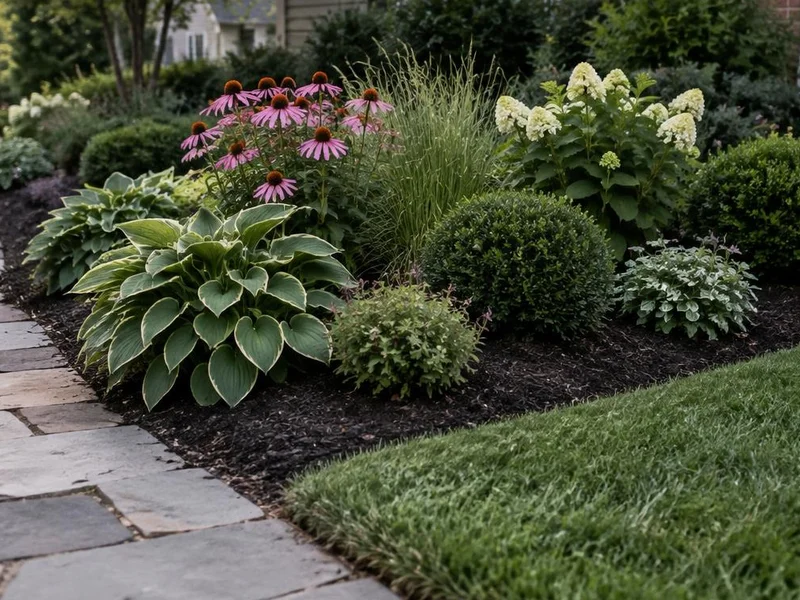 Spring Bed Mulch
Natural dark hemlock bark mulch applied over weeded and edged perennial beds.
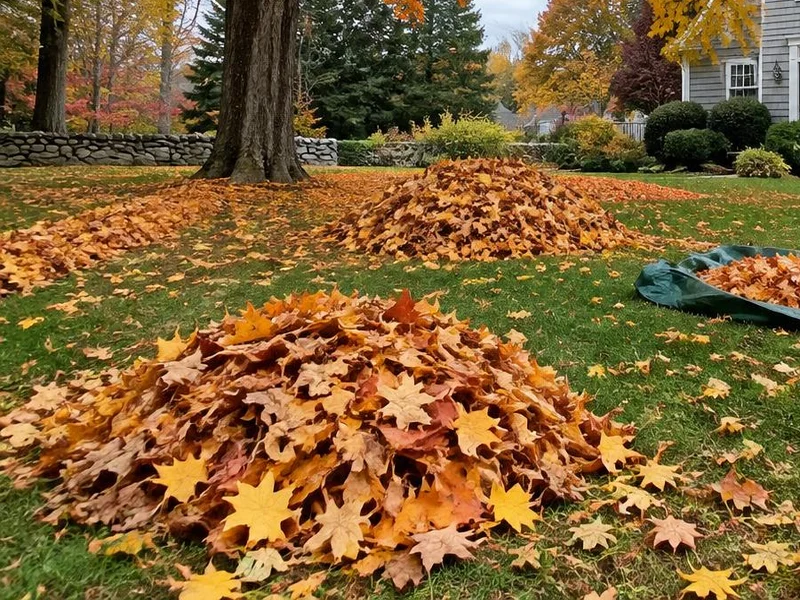 Leaf Removal
Thorough leaf clearing and turf dethatching timed with seasonal collection dates.
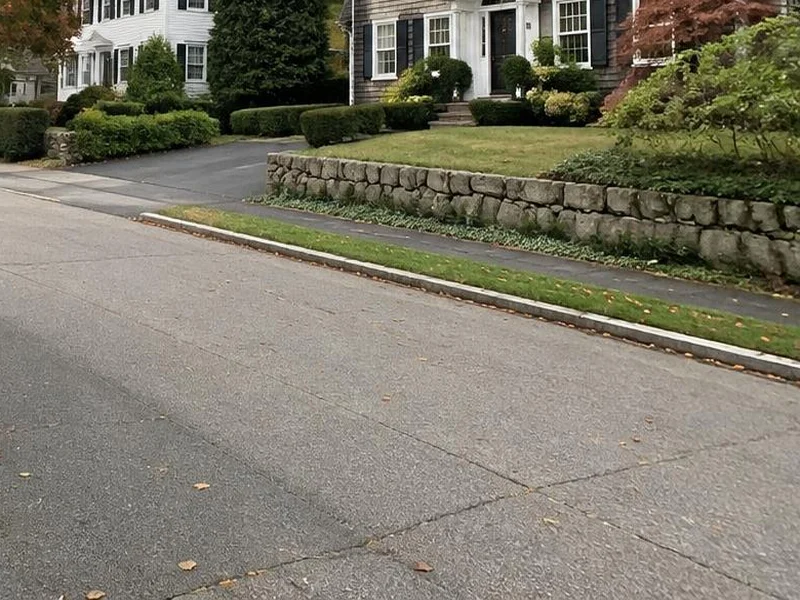 Shrub Pruning
Seasonal shearing, shaping, and deadwood removal for shrubs and hedges.
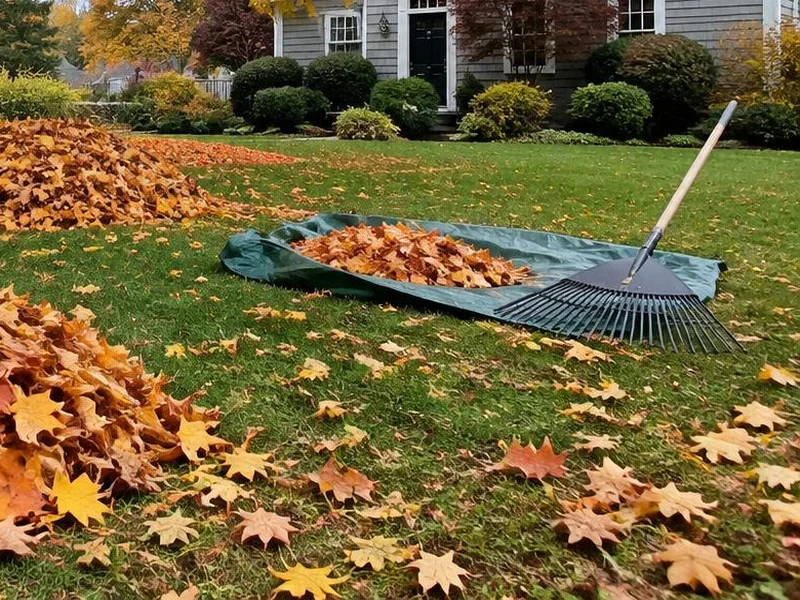 Debris Removal
Branch chipping, seasonal yard debris hauling, and clean property finish.
Illustrative photos — not projects performed by this site.
Related landscaping services
Lawn Care & Mowing
Weekly mowing and edging plus the renovation work — aeration, overseeding, fertilization and irrigation checks — that thickens a thin lawn.
Landscape Design
Planting plans, grading and hardscape layouts drawn for USDA zone 6b conditions and the way your household actually uses the yard.
Sod Installation
New lawns from cool-season sod or hydroseed, with loam, grading and soil prep done before a single roll goes down.
Yard Drainage
French drains, dry wells, swales, downspout extensions and regrading that move surface water away from foundations and soggy lawn areas.
Coordinating cleanups with other landscaping services
Once your property is cleaned up and reset in spring, establish an ongoing weekly mowing and fertilization routine on our Lawn Care & Mowing Peabody MA page. If your spring cleanup reveals bare, winter-killed turf patches or severe dog wear, explore rapid lawn repair on our Sod Installation Peabody MA page.
For homeowners planning to add new perennial borders, stone walkways, or outdoor living features during the cleanup visit, explore our Landscape Design Peabody MA guide. If standing spring snowmelt or soggy backyard spots make cleanups difficult, see our French drain and swale solutions on our Yard Drainage Peabody MA page.
Participating cleanup crews serve residential properties throughout Peabody and neighboring North Shore communities including Salem, Danvers, Beverly, Marblehead, and Lynnfield. For additional answers on seasonal scheduling, visit our FAQ page or see how our referral service works.
Answers
Frequently asked questions about spring & fall cleanups in Peabody
01What is included in a professional spring yard cleanup in Peabody?
A comprehensive spring cleanup resets your property after winter. It typically includes clearing fallen tree limbs, storm branches, and sticks from turf; raking out winter leaf mats and gravel debris along driveway borders; cutting back dead perennial stems and ornamental grasses; weeding planting beds; spade-trenching crisp bed edges; and applying a fresh 2- to 3-inch layer of natural shredded bark mulch.
02What is included in a fall yard cleanup and leaf removal service?
Fall cleanups focus on managing heavy foliage drop and preparing your lawn for winter dormancy. Key tasks include blowing and raking fallen leaves from lawns, garden beds, and hardscapes; vacuuming or mulching leaf piles; cutting back frost-damaged annuals and herbaceous perennials; performing light structural pruning on dormant shrubs; and clearing lawn surfaces to prevent suffocating wet leaf mats under winter snow.
03When is the best time to schedule spring cleanup in Massachusetts?
Spring cleanups are typically scheduled once the ground has completely thawed and dried enough to support foot traffic without compacting soil—typically from early April through mid-May across Essex County, weather permitting. Working in waterlogged or muddy March soil can cause turf rutting and damage emerging perennial crowns. In addition, some pollinator-friendly gardening guidance recommends delaying intensive bed cleanup until daytime temperatures consistently exceed 50°F to give overwintering native insects sheltering in leaf litter and hollow stems more time to emerge.
04When should fall cleanup and leaf removal take place?
Fall cleanups typically run from mid-October through late November or early December, aligning with peak leaf drop across Essex County, weather permitting. Because mature oak and maple canopies drop foliage in waves over several weeks, many homeowners schedule two visits: an initial mid-season pass in late October to keep turf clear, and a final cleanup in November before the ground freezes or persistent snowfall arrives.
05Should fallen autumn leaves be mulched into the lawn or hauled away?
It depends on leaf volume, moisture, and turf density. Light, dry leaf cover can often be finely shredded with a commercial mulching mower without clumping, recycling nitrogen, potassium, and organic matter into the soil. However, heavy, wet, and matted leaves—common on wooded Peabody lots near Brooksby Farm and the Independence Greenway—should generally be removed. Leaving thick, soggy leaf blankets over winter blocks sunlight, restricts airflow, and creates damp, smothered conditions that may contribute to turf disease risks like gray snow mold (Typhula incarnata) or pink snow mold (Microdochium nivale).
06When is the right time to prune flowering shrubs and cut back perennials?
Pruning timing depends strictly on whether shrubs bloom on old or new wood. Spring-flowering shrubs (like forsythia, azaleas, rhododendrons, lilacs, and bigleaf hydrangeas) form buds during the previous summer and should only be pruned immediately after their spring blooms fade. Late-summer bloomers (like panicle hydrangeas and butterfly bush) flower on new seasonal wood and can be shaped during late winter or early spring dormancy. Perennials are cut back once foliage dies back, though hollow stems can be left through winter for pollinator shelter.
07How thick should bark mulch be applied in spring garden beds?
Mulch should generally be maintained at an overall depth of 2 to 3 inches across open garden beds, taking into account any existing decomposed base. If old mulch remains thick, a lighter 1- to 2-inch top-dressing is often sufficient. Applying excess mulch (over 3 inches total) can suffocate plant roots, repel water, and foster fungal growth. Mulch must also be kept pulled back 3 to 4 inches from tree trunks and woody shrub stems; mounding mulch against bark (known as a 'mulch volcano') traps moisture, encourages bark decay, and invites burrowing pests.
08How much does a spring or fall yard cleanup cost in Massachusetts?
In Massachusetts, seasonal yard cleanups typically range from $175 to $400 for small suburban yards (under 1/4 acre), $300 to $700 for average residential properties (1/4 to 1/2 acre), and $500 to $1,500+ for large or heavily wooded 1/2+ acre estates with dense tree canopy. Hourly crew rates generally average $100 to $160 per hour for a 2- to 3-person commercial crew, while off-site debris hauling and tipping fees add $75 to $225+ per truckload if materials are not bagged for curbside pickup.
09Does seasonal cleanup include debris hauling or curbside bagging?
Both options are commonly available depending on homeowner preference, the specific provider, and the quoted project scope. Depending on the agreed scope, participating contractors can pack organic debris into brown paper yard-waste bags and neatly arrange them at your curb for City of Peabody collection weeks, or load leaves, brush, and clippings into commercial trailers and haul them directly to a licensed regional compost facility for an additional disposal fee.
10Do participating cleanup providers offer tree removal, arborist work, or snow plowing?
No. This service focuses strictly on seasonal yard cleanups, leaf removal, hedge trimming, garden bed edging, mulching, and light organic debris clearing. Large-scale hazardous tree felling requires a licensed commercial arborist, and winter snow plowing is an independent trade outside the scope of landscape cleanups.
Ready to get your yard cleaned up for the season?
Tell us whether you need a spring property reset, bed mulching, or heavy autumn leaf removal, and connect with an independent local landscaping crew in Peabody, MA.
Get connected with an independent local landscaping professional. Calls go to (877) 537-6896.