Coastal Landscaping · Seaside Architecture
12 Coastal Garden Design Ideas: Salt-Tolerant Plants, Dunes & Boardwalks
What is the most effective approach to designing a successful coastal garden?
The secret to an enduring coastal garden is partnering with maritime elements rather than fighting them: anchor beds with salt-spray hardy native beach grasses, rugged fieldstone boulders, and beach roses, integrate permeable crushed stone or timber boardwalks that withstand coastal flooding, and layer flexible ornamental grasses that sway gracefully in ocean gales.
Ecological Guidelines
The 4 Golden Rules of Maritime Landscape Architecture
Design Gallery
12 Inspiring Coastal Landscaping Design Ideas
Dune-Inspired Native Grass & Wildflower Garden
Embracing natural coastal topography with sculpted sand dunes, American beach grass (Ammophila breviligulata), and seaside goldenrod stabilizes sandy soil against maritime gales. These deep-rooted salt-tolerant perennials withstand direct ocean salt spray while creating billowy organic movement that mirrors New England shorelines.
Professional Coastal Specs & Plant Pairings
- American beachgrass rhizomes trap windblown sand, naturally building stable protective soil berms
- Pair with seaside goldenrod and beach pea (Lathyrus japonicus) for late-summer pollinator nectar
- Requires zero supplemental fertilization once established in lean sandy loam
- • Extreme salt-spray and drought tolerance
- • Controls wind and stormwater soil erosion
- • Authentic Massachusetts coastal aesthetic
- • Spreads rapidly via rhizomes; requires root barriers near formal turf
- • Prone to foot traffic damage if walked on frequently
Mediterranean-Style Gravel & Lavender Coastal Courtyard

Mediterranean coastal gardens excel in maritime settings where maritime breezes keep humidity moving across gravel-mulched terraces. Combining drought-tolerant Munstead lavender, prostrate rosemary, and olive-green olive trees in glazed clay urns creates a scented, sun-drenched sanctuary with minimal maintenance.
Professional Coastal Specs & Plant Pairings
- Crushed pea gravel mulch reflects radiant warmth while preventing fungal root rot during humid August spells
- Grows exceptionally well in sharp-draining, slightly alkaline coastal sandy loam
- Aromatic foliar essential oils deter deer, rabbits, and salt marsh insects naturally
- • Intense aromatic fragrance and pollinator magnet
- • Thrives in lean, nutrient-poor soil
- • Near-zero supplemental watering needed
- • Demands full 8+ hours of uninterrupted solar exposure
- • Must have flawless soil drainage to survive wet winter freezes
Hardy Tropical-Look Foliage Coastal Garden
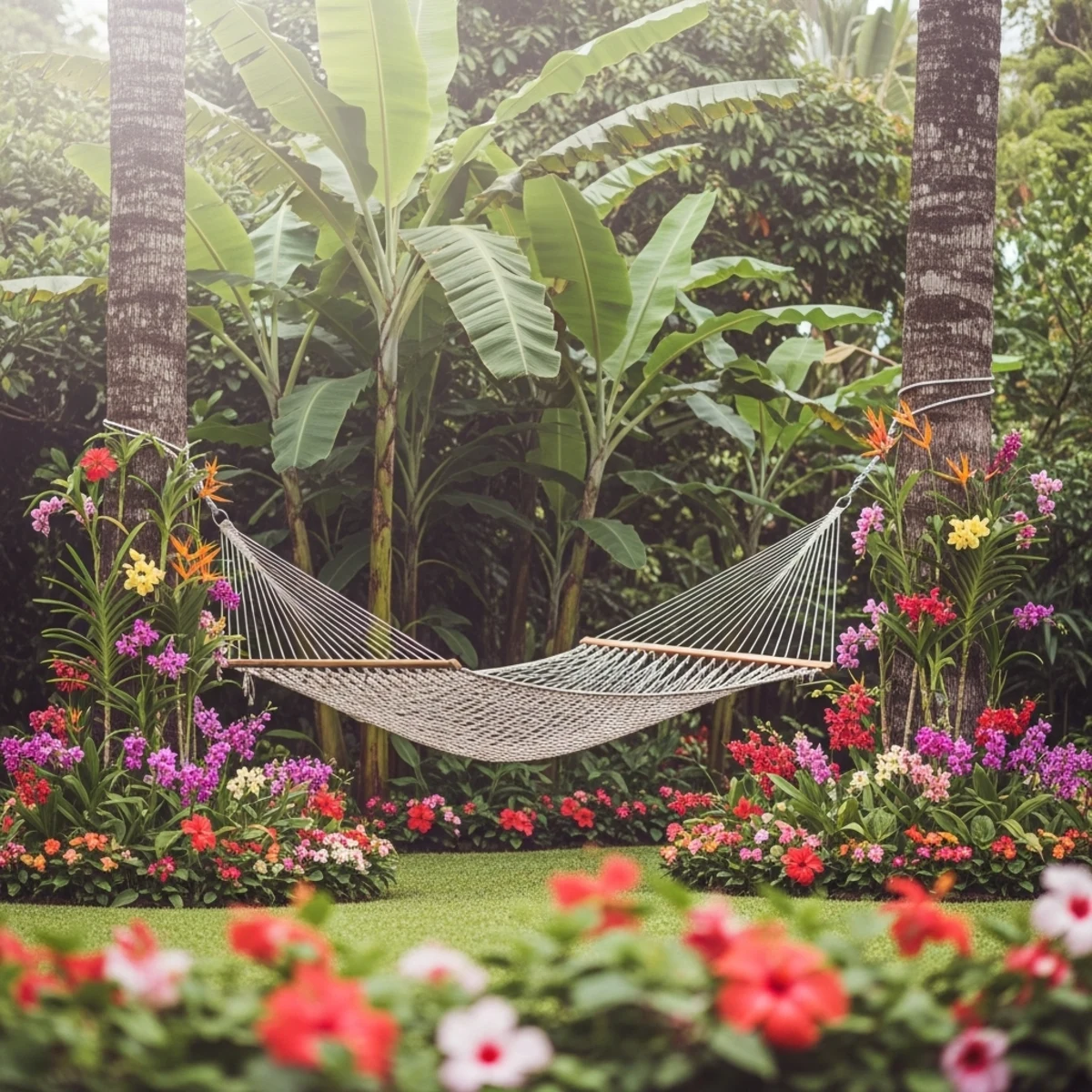
Create an exotic resort vibe in Zone 6b by selecting cold-hardy perennials that mimic tropical rainforests. Pairing broadleaf hardy fiber bananas (Musa basjoo), bold castor beans, and variegated Japanese silver grass against sheltered patio walls gives New England coastal homeowners dramatic architectural drama without annual replanting.
Professional Coastal Specs & Plant Pairings
- Musa basjoo roots easily survive subzero temperatures when mulched with 12 inches of straw in November
- Bold paddle-shaped foliage provides maximum contrast against fine-textured maritime conifers
- Position in wind-sheltered courtyards to prevent high ocean winds from shredding delicate leaf blades
- • Stunning architectural focal point
- • Fast summer growth rate (6 to 10 feet per season)
- • Unexpected tropical resort aesthetic in Massachusetts
- • Foliage shreds in unshielded coastal nor'easter winds
- • Demands heavy winter straw or compost crown mulching
Seaside Rockery with Glacial Boulders & Alpine Sedums
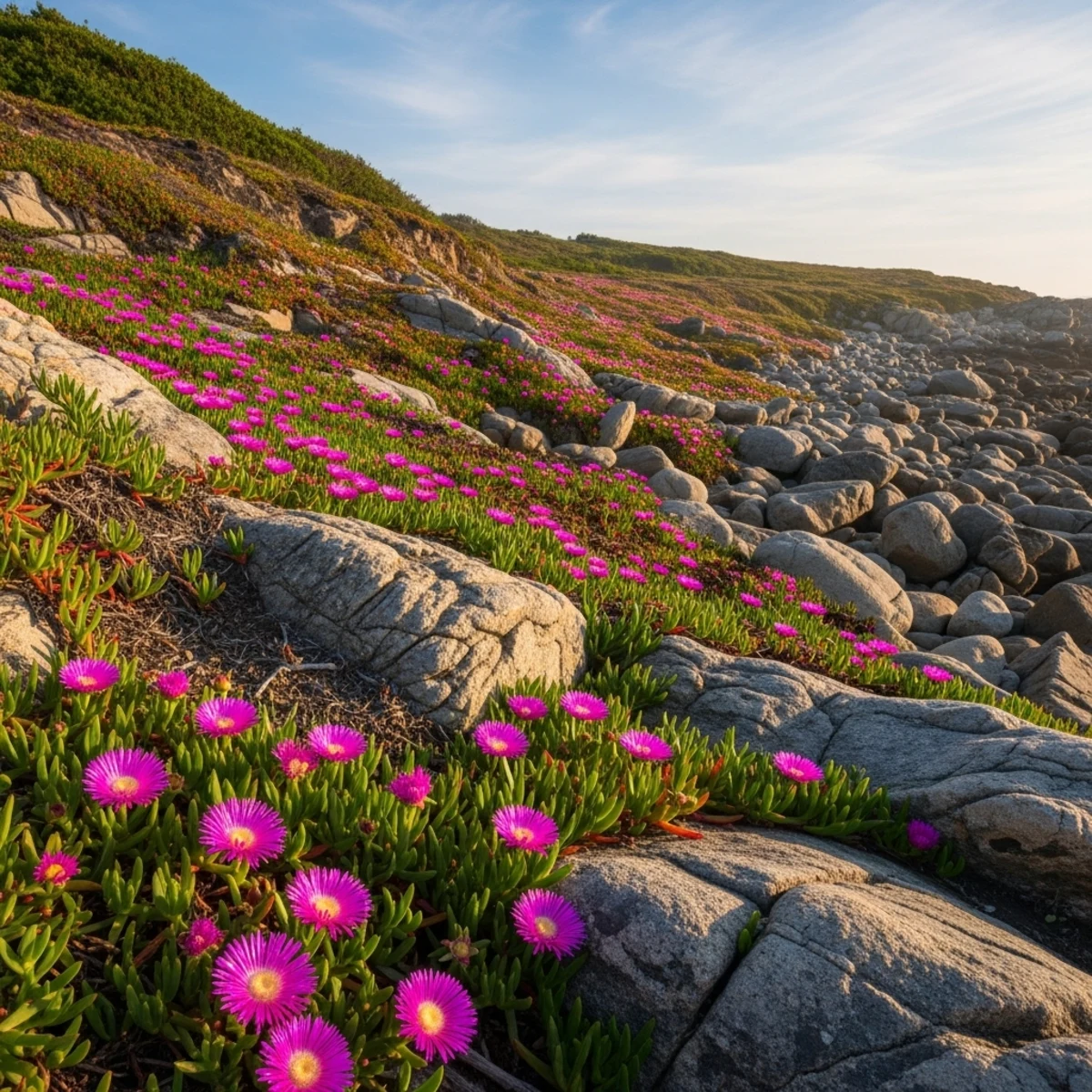
Integrating native glacial granite boulders, smooth ocean cobbles, and rugged fieldstones replicates the rocky shorelines of Cape Ann and Marblehead. Planting drought-defying creeping sedums, thrift (Armeria maritima), and alpine perennials within stone fissures creates a rugged, maintenance-free coastal rockery that never needs mowing.
Professional Coastal Specs & Plant Pairings
- Natural granite fieldstones absorb daytime solar heat, radiating warmth to tender roots during cool ocean nights
- Armeria maritima (Sea Thrift) produces bright pink spherical pom-pom blooms from May through July
- Gravel-filled crevices naturally choke out persistent broadleaf weeds
- • Zero mowing, fertilizing, or edging required
- • Indestructible against winter freezing and salt runoff
- • Sculptural year-round rocky structure
- • Heavy machinery required to position multi-ton granite boulders
- • Initial gravel excavation labor
Coastal Cottage Garden with Hydrangeas & Beach Roses
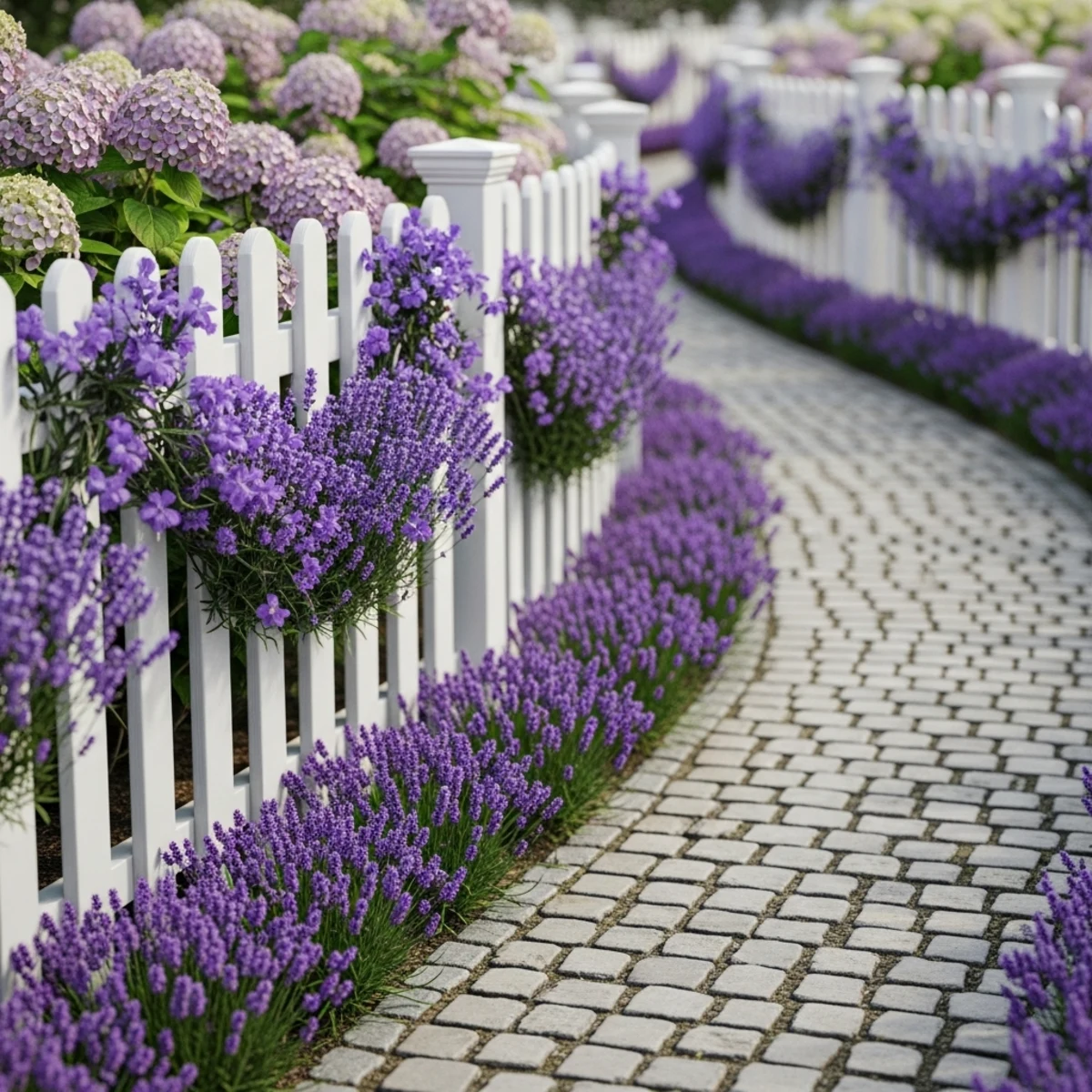
The quintessential New England coastal garden blends mophead blue hydrangeas (Hydrangea macrophylla) with fragrant salt-spray beach roses (Rosa rugosa) along weathered cedar picket fences. These resilient shrubs soak up maritime morning fogs, bursting into billowing clouds of pink, white, and indigo blossoms all summer long.
Professional Coastal Specs & Plant Pairings
- Rosa rugosa produces fragrant blossoms followed by vitamin-C rich bright red hips in autumn
- Acidic Essex County soils naturally induce deep royal blue coloration in macrophylla hydrangeas
- Rugosa roses resist black spot fungus, Japanese beetles, and direct maritime salt spray effortlessly
- • Iconic North Shore and Cape Cod cottage curb appeal
- • Continuous flowering from June through October
- • Tolerates high salt spray directly off the ocean
- • Hydrangeas wilt rapidly during extended dry spells without drip irrigation
- • Rugosa rose canes have dense thorns requiring leather gloves
Elevated Boardwalk Garden Pathway Over Coastal Plantings

An elevated timber boardwalk meandering through billowy dune grasses and seaside perennials invites visitors to experience the landscape without disturbing fragile root systems. Built from rot-resistant Eastern white cedar or black locust planks, boardwalk paths float gracefully above wet coastal soils and shifting sands.
Professional Coastal Specs & Plant Pairings
- Elevated construction allows natural rainwater drainage and dune migration beneath walkways
- Cedar planks naturally weather to a distinguished silver-grey driftwood patina
- Provides comfortable barefoot walking surfaces that stay cool under midsummer sun
- • Protects sensitive coastal soil and root systems
- • Overcomes soggy marsh ground or shifting loose sand
- • Timeless nautical aesthetic
- • Higher lumber material investment than gravel paths
- • Requires helical pier or post-hole foundation footings
Beachfront Fire Pit Garden with Adirondack Seating
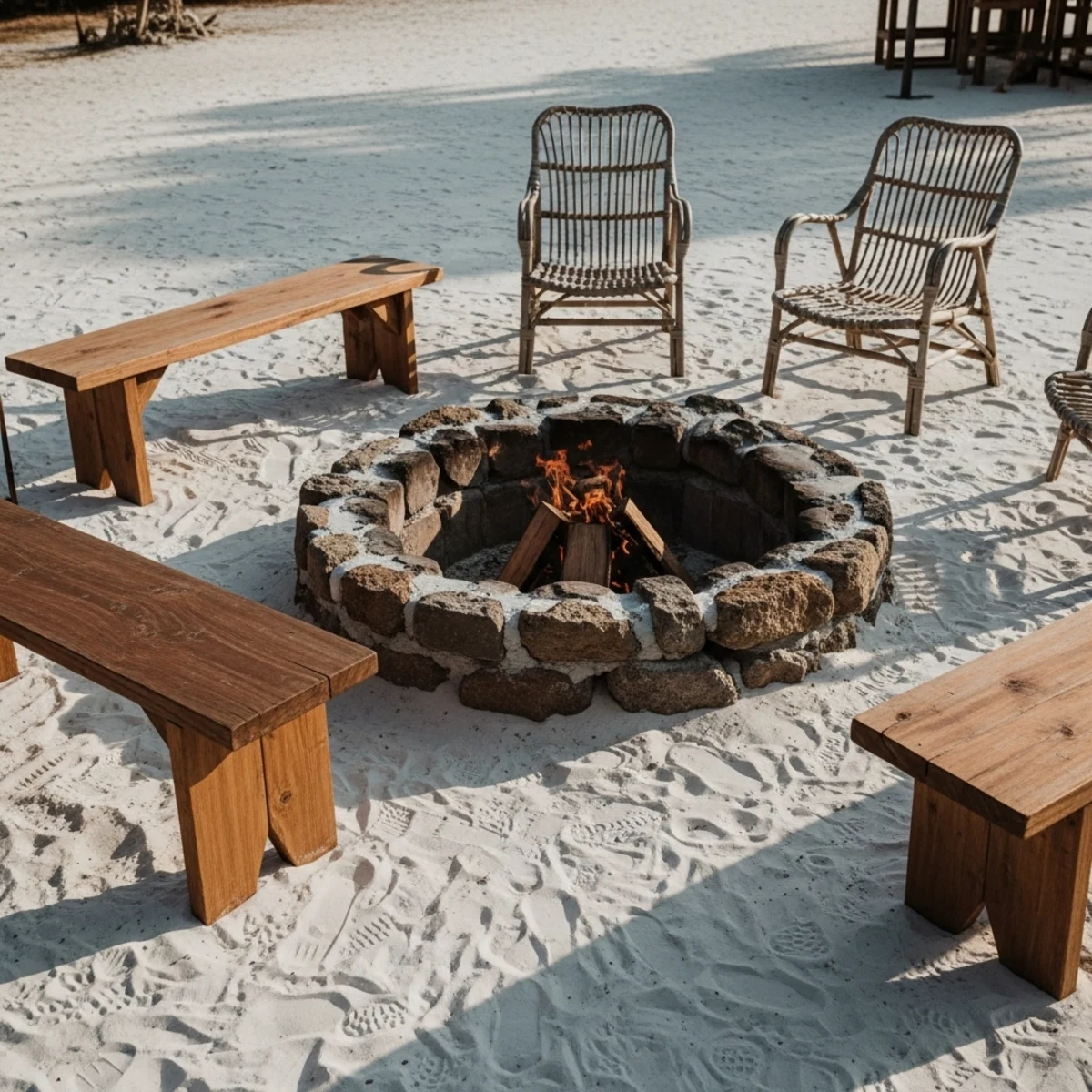
Coastal evenings bring brisk ocean breezes and crisp night air, making a sunken stone fire pit the ultimate gathering hub. Encircled by durable poly-lumber Adirondack chairs set into a bed of crushed oyster shells or pea stone, a beachfront fire pit extends outdoor entertaining deep into chilly autumn months.
Professional Coastal Specs & Plant Pairings
- Position downwind from prevailing coastal breezes and away from dry dune grasses for fire safety
- Use heavy glacial fieldstone or cast concrete blocks with steel fire inserts to withstand saltwater corrosion
- Crushed oyster shell groundcover adds luminous white brightness that reflects firelight beautifully at night
- • Extends seasonal coastal living from April through Thanksgiving
- • Magnetic social destination for sunset wine and roasting marshmallows
- • Crushed shell permeable patio prevents standing puddle water
- • Must follow municipal coastal open-burning setback regulations
- • Poly-lumber chairs should be heavy enough to resist coastal gale gusts
Minimalist Zen Coastal Garden with Raked Sand & Boulders
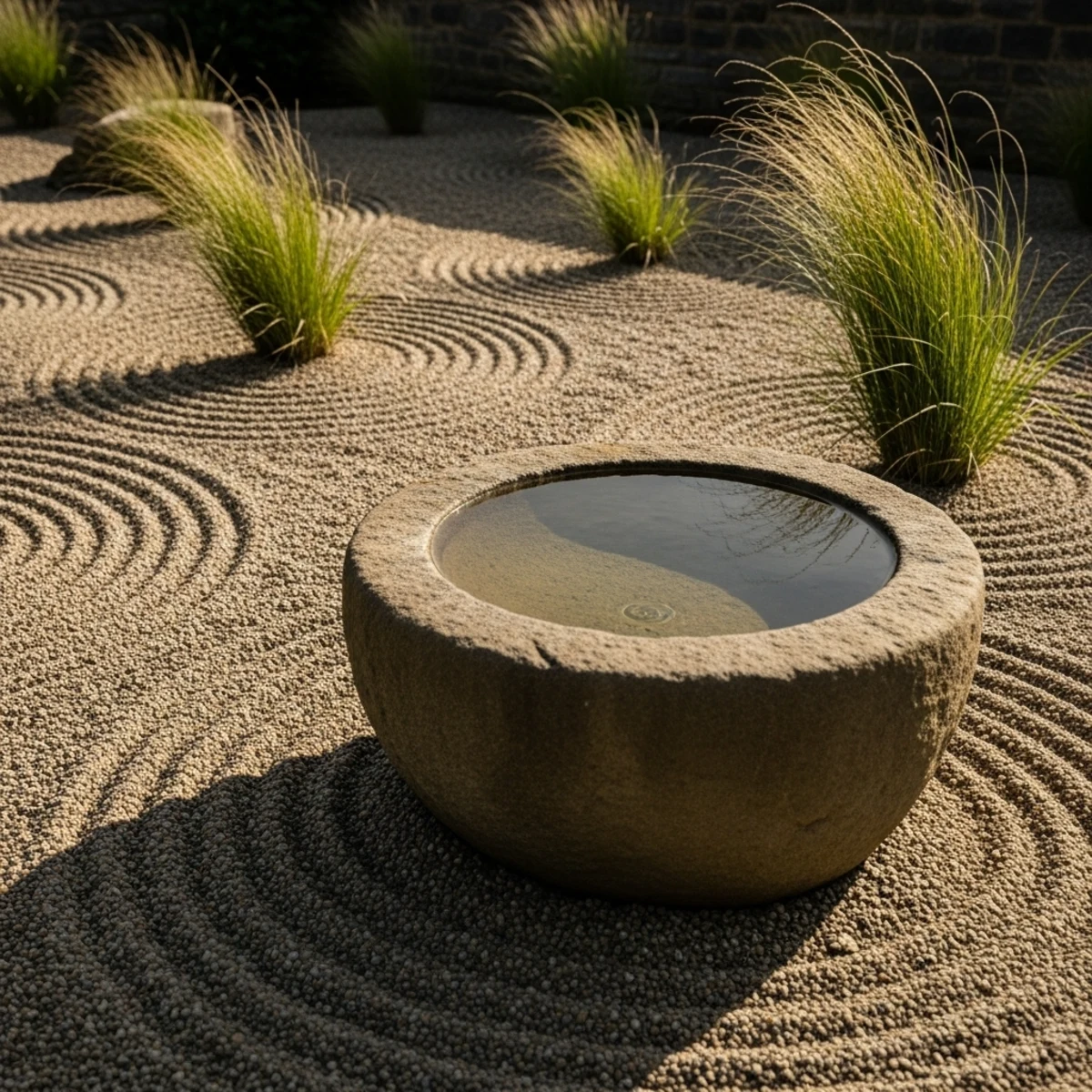
Drawing inspiration from Japanese dry-landscape traditions, a coastal zen garden uses raked decomposed granite and sculptural coastal pine (Pinus mugo) to evoke the ocean's rolling waves. This contemplative, low-maintenance design creates a tranquil sanctuary that harmonizes with expansive coastal horizon views.
Professional Coastal Specs & Plant Pairings
- Raked crushed granite symbolizes ocean currents and requires only monthly maintenance
- Dwarf mugo pines and Japanese black pines naturally tolerate salt spray and wind shearing
- Pairs beautifully with basalt stone fountains or stone lanterns
- • Ultra-low water and fertilizer requirements
- • Minimalist, meditative atmosphere
- • Immune to coastal wind and salt damage
- • Raking patterns need periodic grooming after severe rainstorms
- • Fallen leaves must be blown or hand-plucked from gravel
Wildlife & Pollinator-Friendly Maritime Coastal Garden
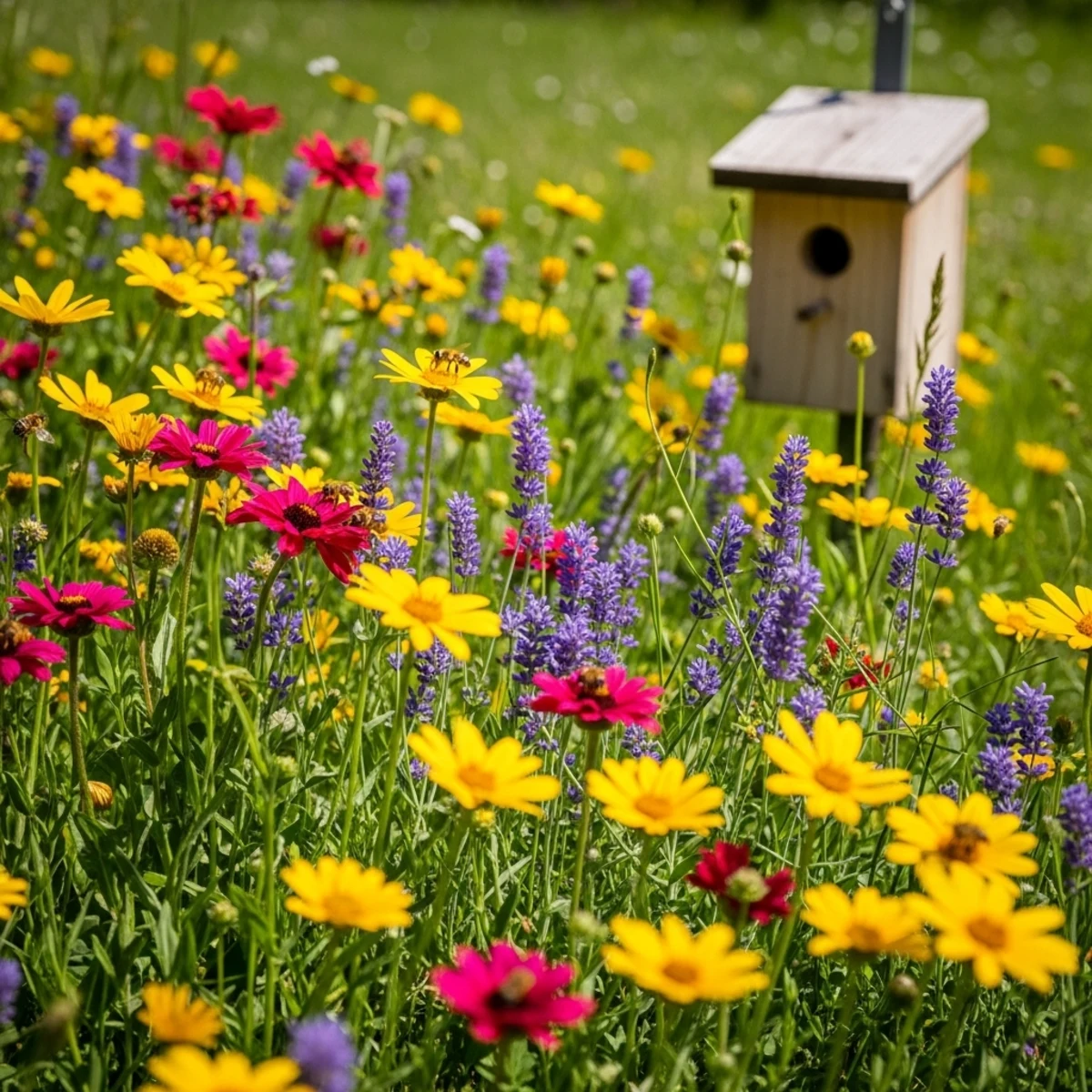
Support migrating monarchs, coastal seabirds, and native bumblebees with a resilient maritime wildflower garden. Incorporating orange butterfly weed (Asclepias tuberosa), purple coneflower (Echinacea purpurea), and New England aster (Symphyotrichum novae-angliae) creates an ecological haven that thrives in lean sandy soils.
Professional Coastal Specs & Plant Pairings
- Asclepias tuberosa thrives in pure sand, supporting monarch caterpillars on their coastal migration flyway
- Leave dried coneflower and aster seedheads intact throughout winter to feed goldfinches and sparrows
- Deep taproots reach subterranean groundwater, making plants completely drought-resilient
- • Critical ecological support for native coastal pollinators and birds
- • Self-sowing perennial meadow that returns vigorously every year
- • Vibrant summer and autumn color display
- • Can look somewhat wild or untamed in late winter before spring cutback
- • Must avoid broadleaf chemical insecticides
Glazed Ceramic Coastal Container Garden for Patios & Decks
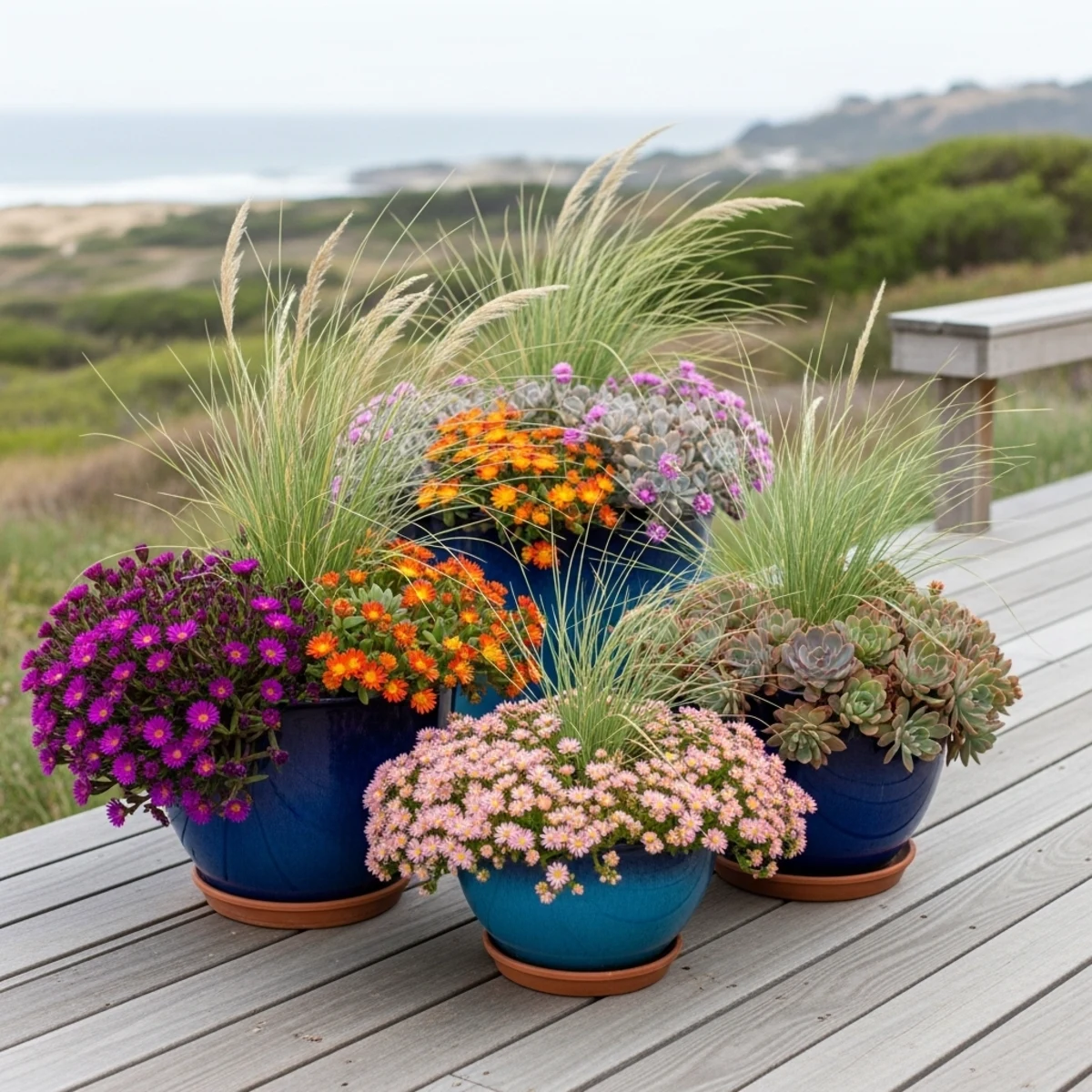
For seaside cottages with compact decks or rocky perimeters, groupings of heavy glazed ceramic planters provide instant floral vibrancy. Rich cobalt blue, ocean turquoise, and sandy terracotta vessels filled with zonal geraniums, trailing sweet potato vine, and upright blue fescue bring resort luxury to any patio.
Professional Coastal Specs & Plant Pairings
- Heavy glazed stoneware resists tipping over during stiff 40-mph ocean gust warnings
- Allows gardeners to customize rich potting soil, bypassing hostile rocky or alkaline yard soils
- Elevate pots on terracotta 'pot feet' to ensure unimpeded drainage and prevent winter freeze cracking
- • High-impact movable color that can be reorganized seasonally
- • Bypasses poor coastal native soils completely
- • Prevents aggressive coastal plant roots from invading turf
- • Container soil dries out rapidly in ocean breezes; requires daily summer watering
- • Ceramic pots must be protected or stored indoors before hard subzero freezes
Minimalist Coastal Gravel & Ornamental Grass Border
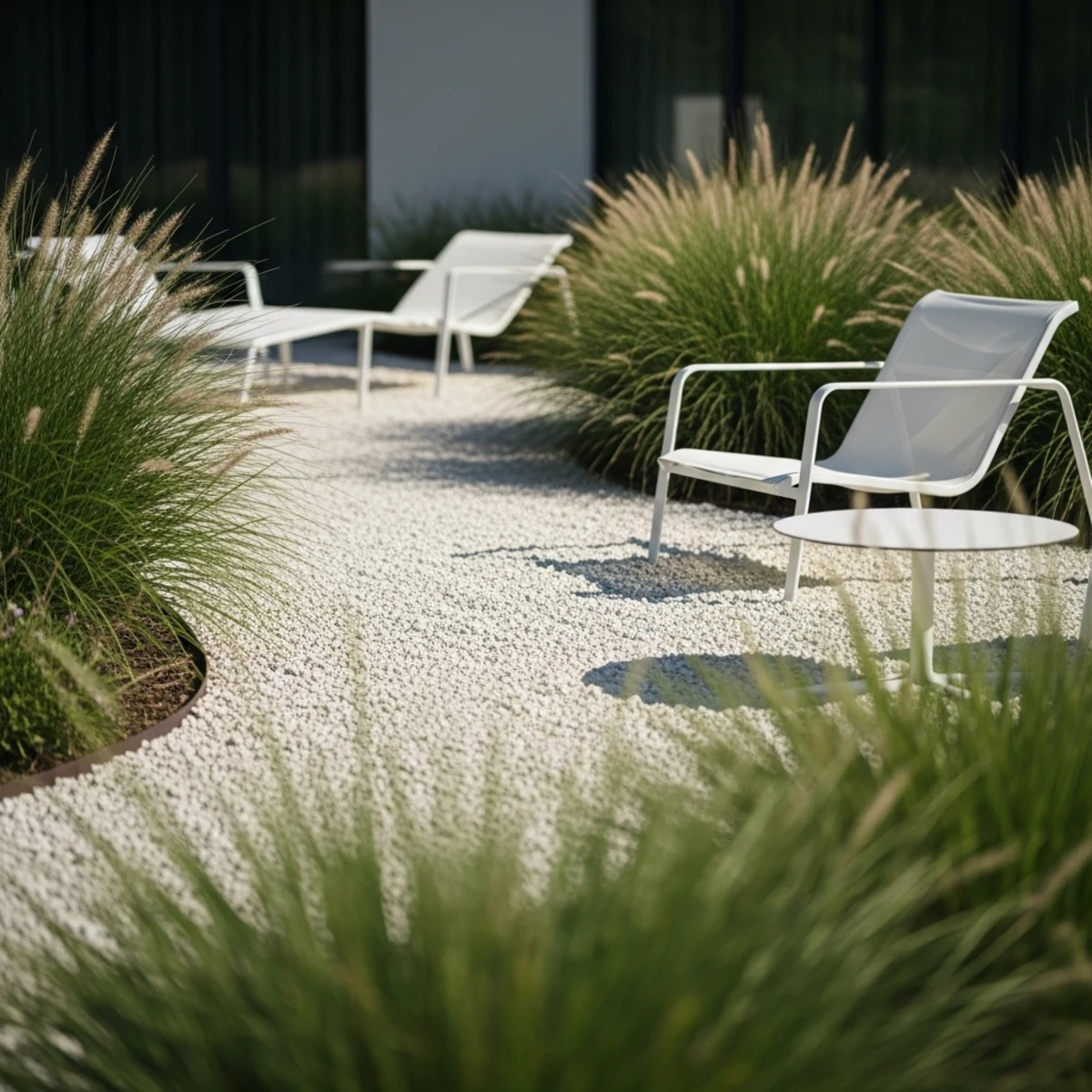
Sleek, architectural, and calming, a minimalist coastal gravel border pairs monochromatic crushed quartz or blonde river stone with massed ornamental grasses like blue oat grass (Helictotrichon sempervirens) and switchgrass (Panicum virgatum). The feathery foliage rustles softly in coastal breezes, providing auditory relaxation.
Professional Coastal Specs & Plant Pairings
- Rigid steel or aluminum landscape edging maintains a razor-sharp division between gravel beds and turf
- Switchgrass varieties like 'Shenandoah' turn brilliant burgundy in autumn and stand tall under winter snow
- Permeable gravel mulch absorbs heavy coastal downpours, eliminating standing surface water
- • Sophisticated modern architectural aesthetic
- • Near-zero maintenance—requires only a single spring cutback
- • Exceptional wind tolerance; stems bend without breaking
- • Crushed gravel beds require pre-installation commercial weed barrier fabric
- • Blonde quartz gravel can cause solar glare in unshaded southern exposures
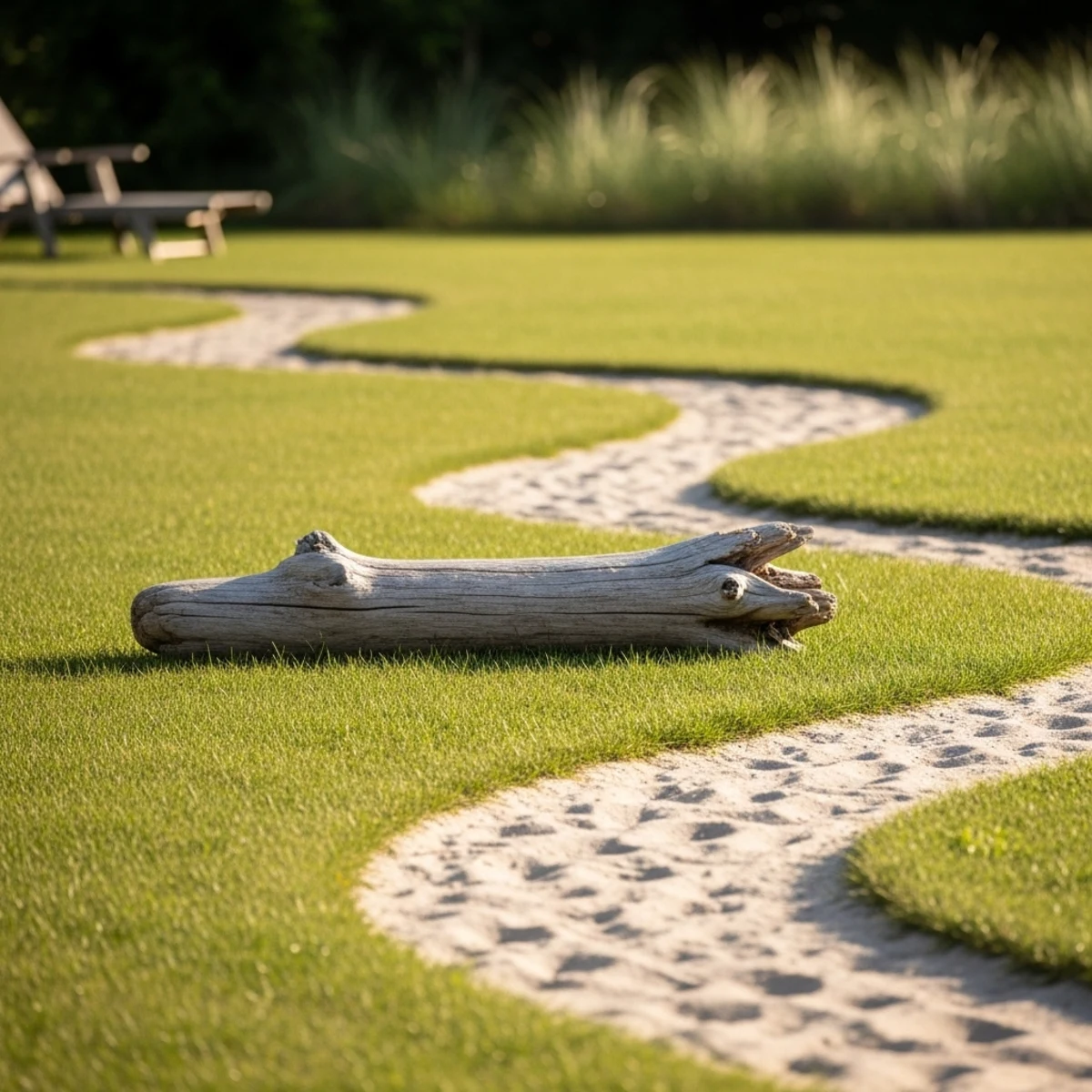
Driftwood & Clam Shell Sculptural Accent Garden
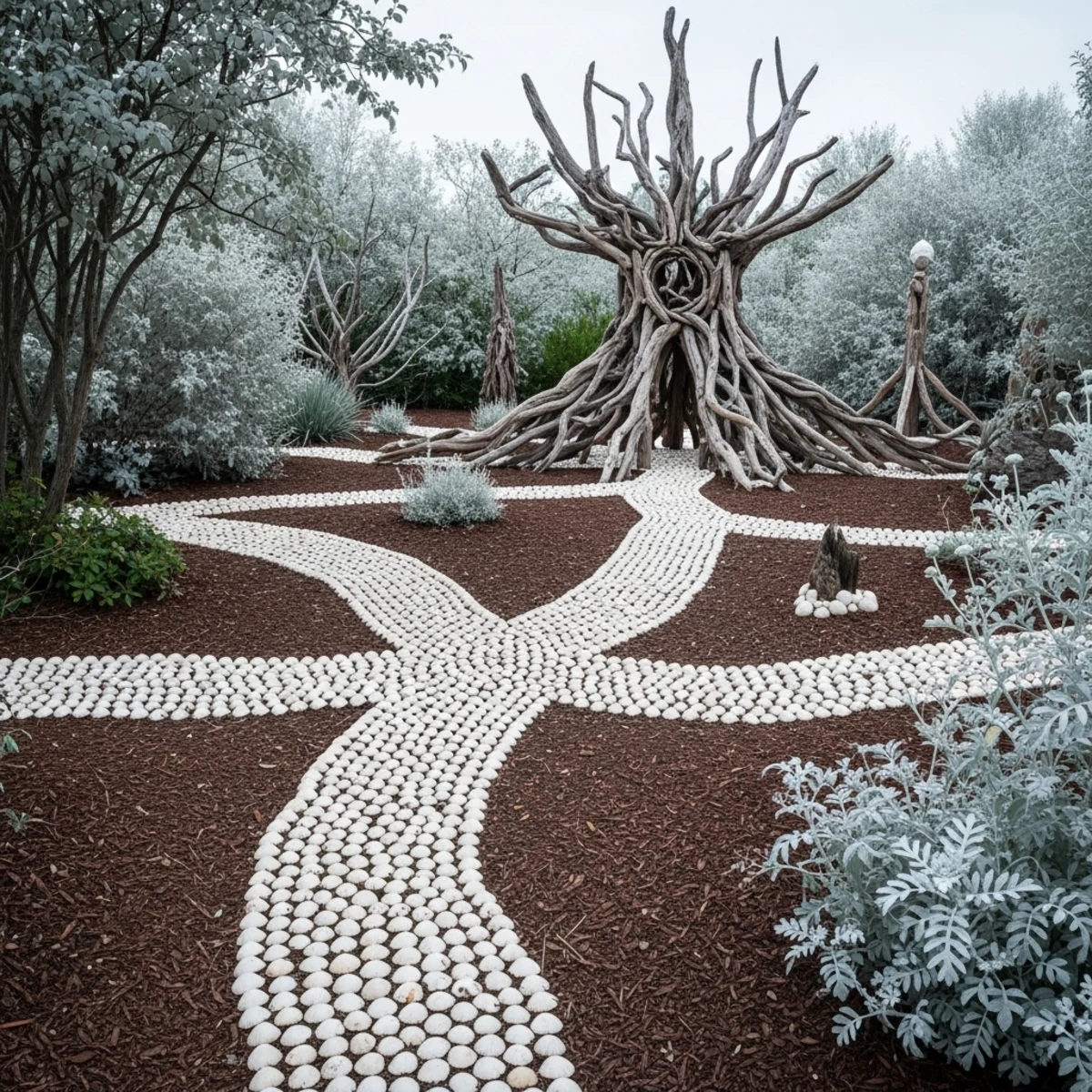
Incorporate authentic ocean treasures directly into your planting beds by styling sun-bleached driftwood logs, anchor chains, and crushed quahog clam shells as organic garden sculpture. Nestling weathered grey timber alongside flowering sedums and sea kale creates an artisanal landscape that tells the story of maritime heritage.
Professional Coastal Specs & Plant Pairings
- Salt-cured driftwood is naturally preserved against rot, enduring for decades in garden beds
- Crushed local clam and oyster shells slowly release calcium carbonate into acidic soil, buffering pH levels
- Creates natural architectural nooks that shelter beneficial predatory garden insects and coastal toads
- • Zero materials cost when responsibly gathered or salvaged
- • 100% unique, bespoke artistic character
- • Celebrates authentic New England seafaring culture
- • Ensure salvaged driftwood is rinsed of excess surface salt before placing near tender perennials
- • Must verify local beach collection regulations
Material Benchmarks
Coastal Garden Plant & Material Specification Matrix
| Landscape Element | Salt Spray Tolerance | Wind Rating | Soil Preference | Maintenance Demand |
|---|---|---|---|---|
| American Beachgrass | Extreme (Oceanfront) | 60+ mph | Pure Sand / Dune | Zero (Self-spreading) |
| Beach Rose (Rosa rugosa) | High (Direct spray) | 50+ mph | Sandy Loam / Rocky | Low (Annual pruning) |
| Bigleaf Hydrangea | Moderate (Leeward only) | 35 mph (Sheltered) | Rich Moist Loam | Moderate (Irrigation) |
| Elevated Cedar Boardwalk | High (Salt air rot proof) | Severe surge rated | Helical Pier Piers | Very Low (Natural patina) |
| Glacial Granite Rockery | Indestructible | Hurricane proof | Any Drainage Base | Zero (Lifetime asset) |
Answers
Frequently asked questions
01What flowering shrubs tolerate direct ocean salt spray in coastal Massachusetts?
Rugosa rose (Rosa rugosa), bayberry (Myrica pensylvanica), coastal sweetpepperbush (Clethra alnifolia), blue mophead hydrangeas, and inkberry holly (Ilex glabra) are the most salt-tolerant flowering shrubs for Essex County coastal shorelines. They withstand both airborne salt spray and sandy, wind-blown soils.
02How do you improve sandy, fast-draining coastal soil for garden plants?
Incorporate 3 to 4 inches of well-aged organic leaf compost, composted seaweed, and composted manure into the top 10 inches of native sandy soil. Organic matter significantly increases water-holding capacity and cation exchange capacity (CEC), while a 3-inch layer of organic cedar or hemlock mulch retains moisture.
03How can I prevent shifting sand and soil erosion on a coastal waterfront slope?
Stabilize coastal slopes by planting deep-rooted native rhizomatous grasses like American beach grass (Ammophila breviligulata) and switchgrass (Panicum virgatum), reinforced with biodegradable coconut coir erosion control matting and natural glacial granite boulders to anchor the embankment.
04What materials survive coastal saltwater corrosion best for garden hardscaping?
Native Massachusetts granite boulders, cleft-face bluestone flags, Grade 316 marine stainless steel fasteners, and rot-resistant timbers like black locust and Eastern white cedar withstand marine salt exposure for decades without spalling or rotting.
05Can bigleaf hydrangeas survive coastal winter gales in Peabody and the North Shore?
Yes, provided they are sheltered from desiccating northwest winter gale winds. Plant bigleaf hydrangeas on the leeward (south or east) side of structures or behind evergreen windbreaks, and wrap dormant canes in breathable burlap during severe coastal nor'easters to protect overwintering flower buds.
06Are crushed clam and oyster shells good to use as a garden mulch or patio surface?
Crushed shells make an exceptional permeable, high-traction surface for coastal paths and fire pit patios. They naturally reflect ambient twilight light and slowly release beneficial calcium carbonate into acidic coastal soils, helping buffer soil pH naturally.
07What ornamental grasses thrive in coastal wind without staking?
Feather reed grass ('Karl Foerster'), switchgrass ('Northwind' and 'Shenandoah'), blue oat grass (Helictotrichon sempervirens), and prairie dropseed have strong, flexible stems that bend gracefully in coastal wind gusts without breaking or flattening.
08How do coastal gardens protect local water quality and marine ecosystems?
Native coastal gardens utilize deep root systems to filter stormwater runoff, absorbing nitrogen and phosphorus before it enters coastal estuaries and harbors. By eliminating synthetic chemical fertilizers, they prevent toxic coastal algae blooms.
Ready to Build an Enduring Coastal Landscape on the North Shore?
From Marblehead seawalls and dune restoration to Salem and Peabody coastal gardens, our architects engineer beautiful seaside living spaces.
Get connected with an independent local landscaping professional. Calls go to (877) 537-6896.