17 Backyard Fire Pit Ideas: Stone Patios, Sunken Seating & Gas Features
The foundation of a successful New England fire pit is engineering for climate resilience and fire safety: pair native freeze-thaw resistant stone like granite or bluestone with an ASTM-rated refractory firebrick inner core, excavate an 8-inch crushed stone drainage base to prevent water pooling, and verify municipal 527 CMR setback clearances from structures before breaking ground.
The 4 Pillars of Safe & Enduring Fire Pit Construction
Constructing an outdoor fire feature in Essex County requires balancing aesthetic luxury with Massachusetts fire safety codes (527 CMR 1.00) and severe freeze-thaw soil mechanics. Adhering to these four masonry principles guarantees a safe, smoke-efficient gathering space that endures for decades.
Classic Stone Circle Firepit with Glacial Fieldstone
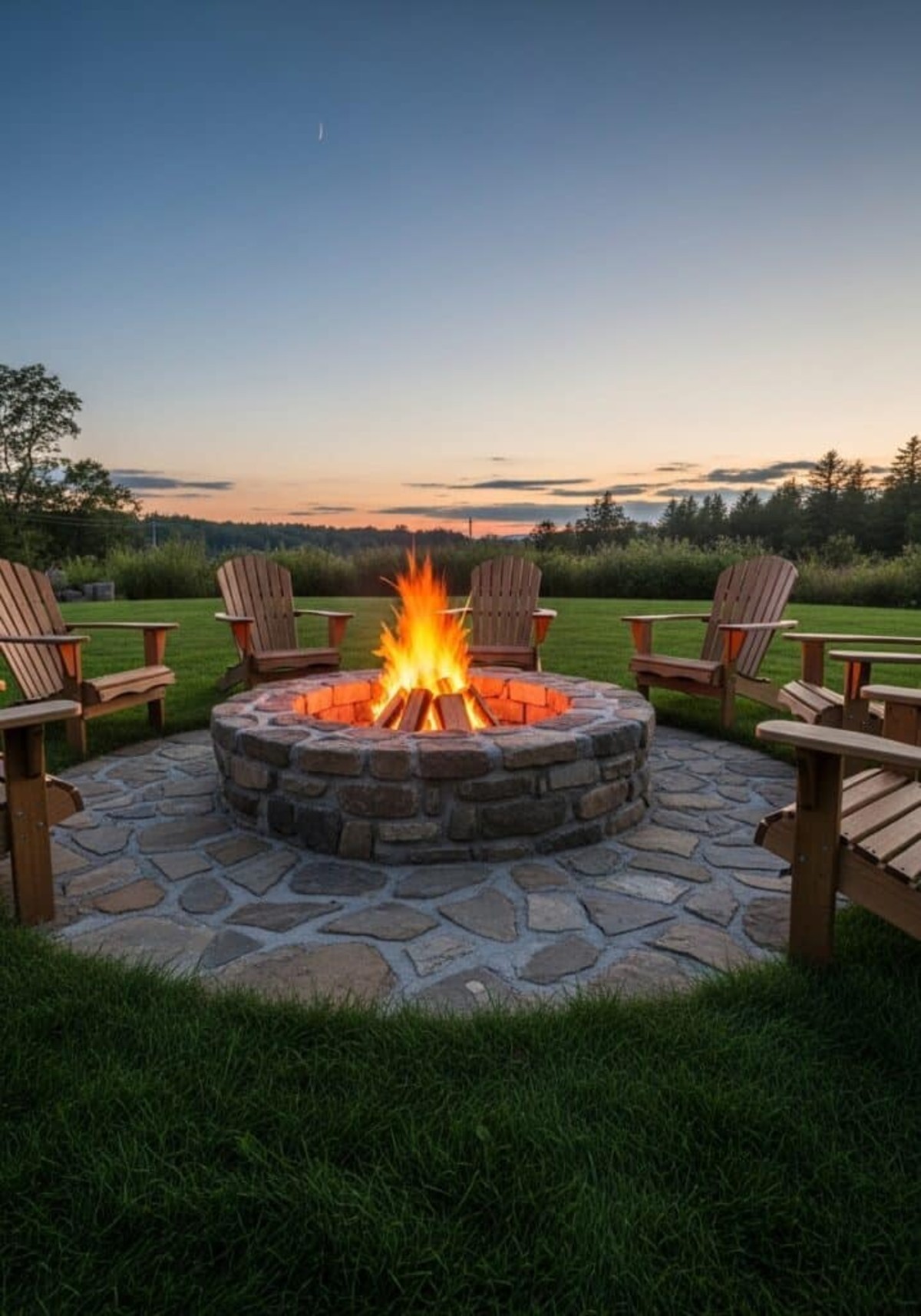
A circular natural stone fire pit evokes campfire charm while delivering superior heat distribution. Utilizing native Massachusetts granite fieldstones or dry-stacked bluestone blocks creates an organic focal point that blends into Essex County landscapes. Lining the inner core with refractory firebricks protects exterior stone from thermal cracking.
Professional Masonry Specs & Best Practices
- Inner diameter of 36 to 44 inches allows ideal wood combustion while maintaining safe reach
- Line interior wall with ASTM C27 high-heat firebrick laid in refractory cement
- Include a 4-inch base of washed crushed trap rock for proper rainwater drainage
- • Authentic New England masonry aesthetic
- • 360-degree radiant heat for large social gatherings
- • Extremely durable against freeze-thaw cycles
- • Wood smoke can shift with wind currents
- • Requires regular ash cleanout and dry firewood storage
Sunken Firepit Lounge with Built-In Curved Retaining Wall
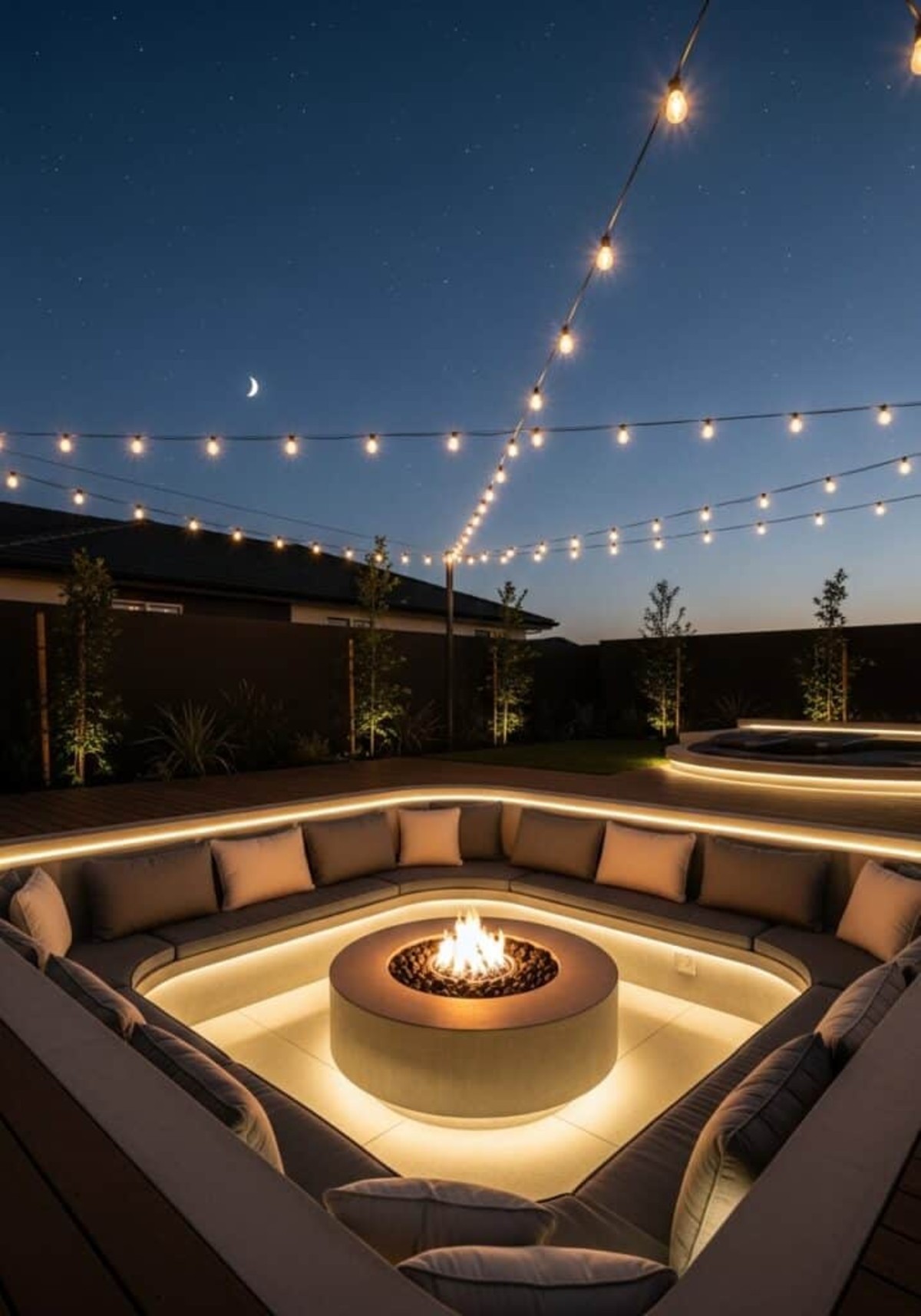
Sunken fire pit lounges create an intimate courtyard experience sunken 18 to 24 inches below lawn grade. The surrounding retaining wall serves double-duty as continuous curved bench seating and acts as an effective windbreak against gusty coastal breezes.
Professional Masonry Specs & Best Practices
- Incorporate dedicated French drain lines to eliminate standing rainwater during autumn nor'easters
- Cap retaining seating walls with 2-inch smooth thermal-finish bluestone for comfortable sitting
- Install low-voltage LED under-cap lighting beneath seat lips for evening ambiance
- • Shielded from prevailing coastal winds
- • Built-in seating accommodates 10–14 guests effortlessly
- • Distinct architectural destination within the backyard
- • Higher excavation and grading costs
- • Demands engineered drainage to prevent water pooling
Portable Metal Fire Bowl with Heavy-Duty Steel Base
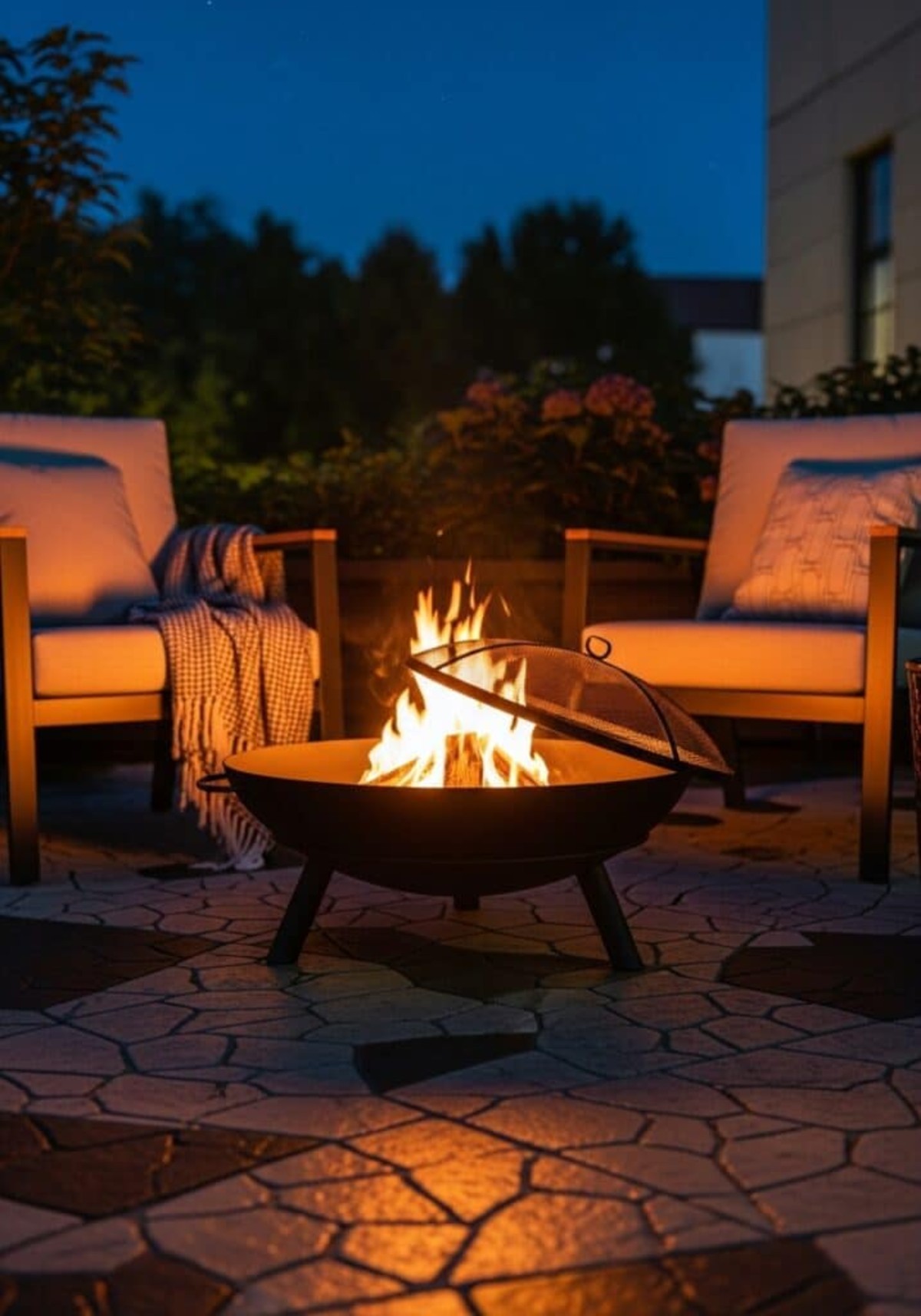
For homeowners seeking flexibility without permanent excavation, heavy-gauge Corten steel or cast-iron fire bowls offer outstanding portability and rapid heat generation. Over time, Corten steel forms a protective rust patina that resists further atmospheric corrosion.
Professional Masonry Specs & Best Practices
- Select 1/4-inch thick steel or cast iron to prevent burn-through and warping
- Always place on fireproof paver pads or stone terraces to protect timber decking or lawns
- Lightweight models can be repositioned depending on seasonal wind directions
- • Zero permanent excavation or masonry required
- • Quick setup and relocation flexibility
- • Corten patina provides modern rustic character
- • Smaller fuel capacity requires frequent log replenishment
- • Outer metal surface gets dangerously hot to the touch
Rustic Brick Firepit with Sand-Set Paver Apron
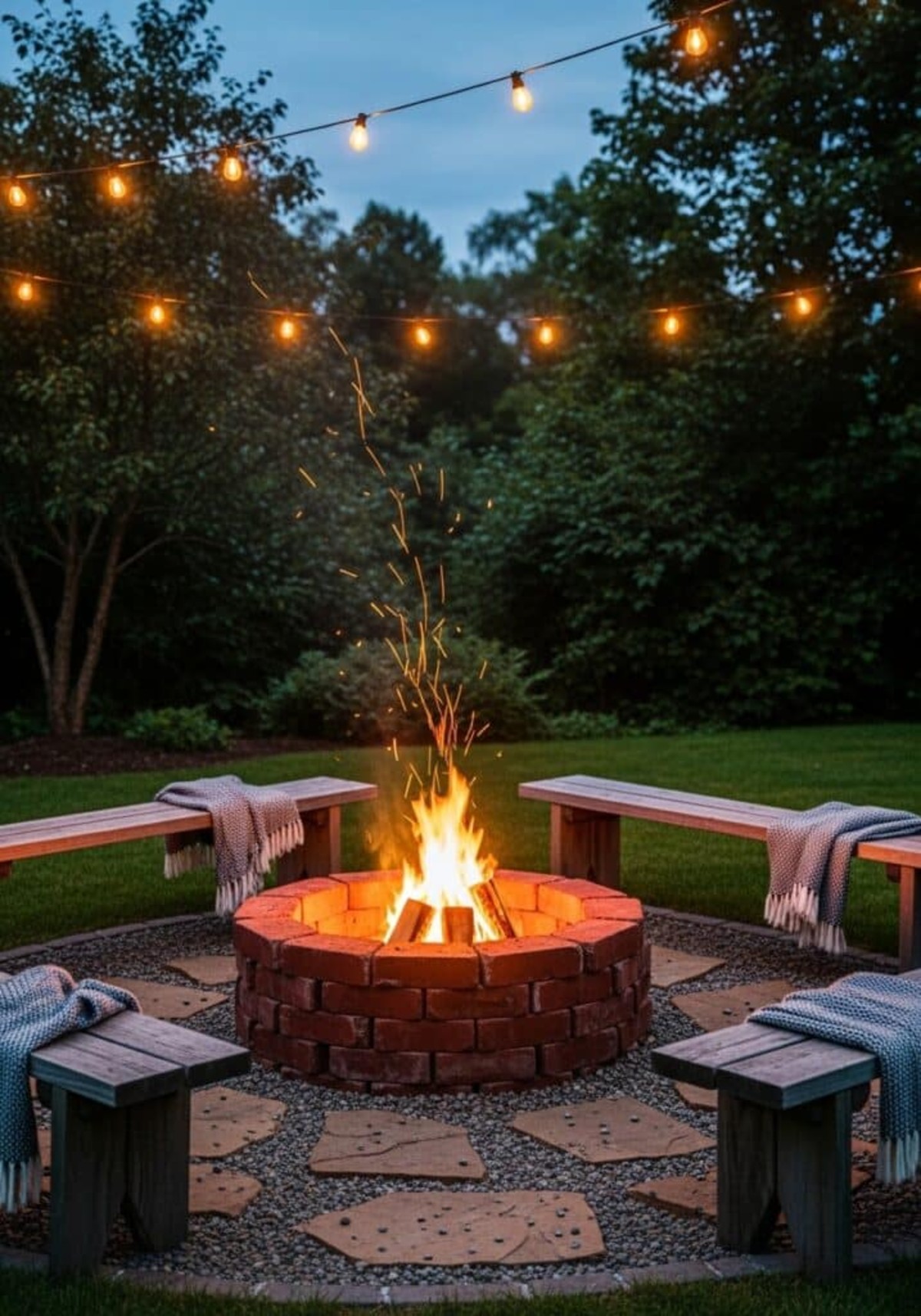
Traditional clay brick fire pits harmonize beautifully with colonial and craftsman architecture. Constructing the outer ring with historic reclaimed pavers or architectural clay pavers creates a timeless New England warmth.
Professional Masonry Specs & Best Practices
- Always separate outer decorative clay bricks from direct flames with an interior firebrick ring
- Lay surrounding patio apron in herringbone or basketweave pattern for classic appeal
- Sweep polymeric sand between paver joints to lock stones and stop weed infiltration
- • Seamlessly complements New England architectural styles
- • Budget-friendly DIY masonry project
- • Rich warm earthy tones
- • Standard red building bricks spall under direct intense flames without firebrick lining
- • Mortar joints can age over 15+ years
Modern Linear Gas Fire Table for Entertaining
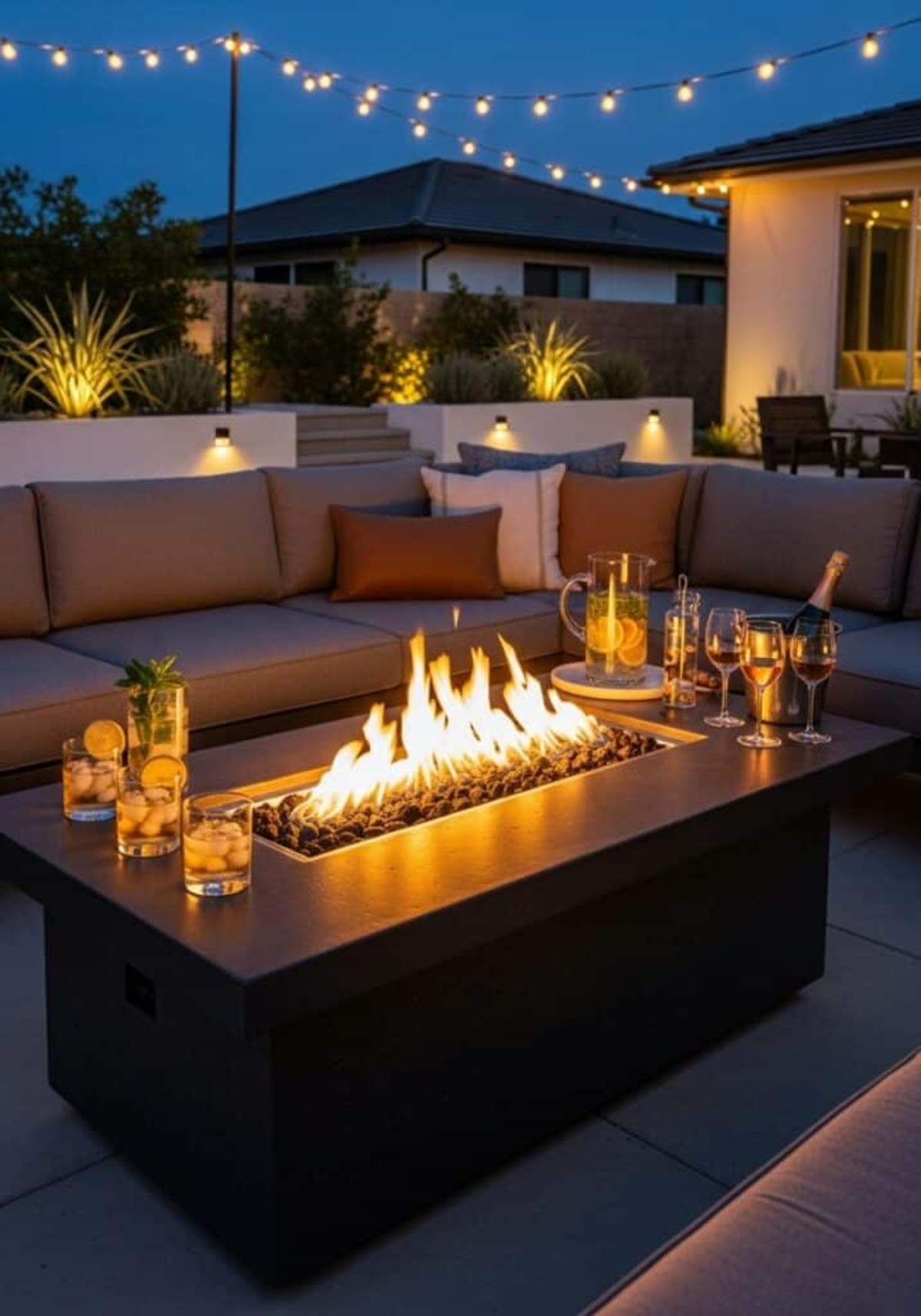
Linear gas fire tables provide instant push-button flame without smoke, sparks, or ash cleanup. Fueled by natural gas or hidden propane tanks, their wide perimeter ledge functions as an outdoor coffee table for appetizers and drinks.
Professional Masonry Specs & Best Practices
- Output ratings of 50,000 to 80,000 BTUs deliver cozy warmth on 50°F North Shore evenings
- Tempered glass wind guards steady flame appearance and shield table drinks from heat
- Fill burner tray with reflective fire glass or black lava rock for upscale sparkle
- • Instant on/off operation with zero smoke blowing into guests' eyes
- • Perimeter ledge serves as drink and dining table
- • Allowed in municipalities with strict open-wood-burning restrictions
- • Requires dedicated gas plumbing or propane tank refills
- • Provides lower maximum heat output compared to roaring wood fires
DIY Cinder Block Firepit with Stucco or Stone Veneer
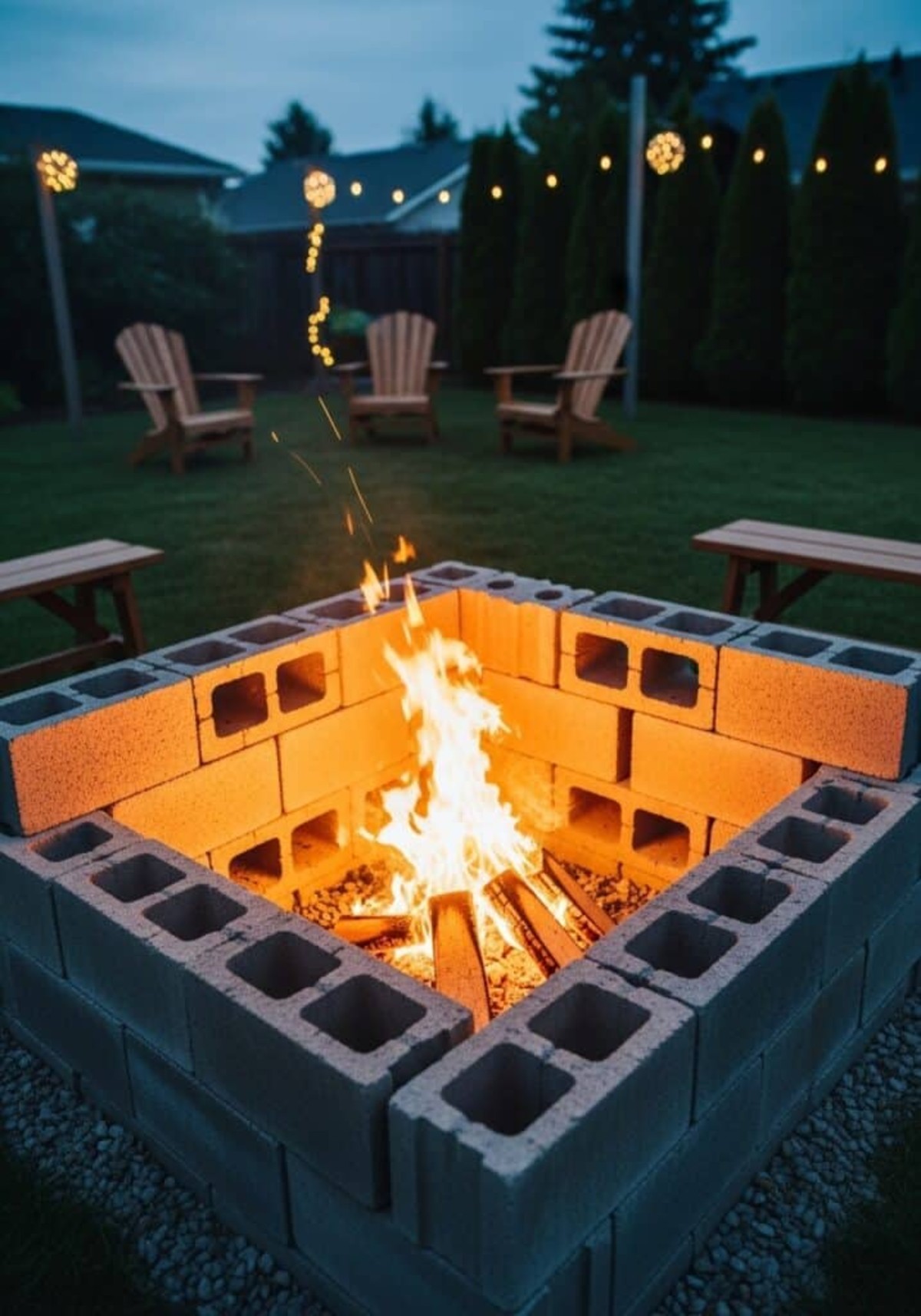
Concrete masonry units (cinder blocks) provide an inexpensive, sturdy structural core that can be finished with cultured stone veneer, natural granite thin-veneer, or smooth tinted stucco. This approach delivers a high-end custom look at a fraction of full-depth stone masonry cost.
Professional Masonry Specs & Best Practices
- Fill cinder block hollow cores with gravel or high-strength concrete for structural ballast
- Adhere exterior stone veneer with high-polymer modified thin-set mortar
- Install steel drop-in fire pit insert to protect block joints from extreme temperatures
- • Highly economical structural core
- • Unlimited exterior finish options (stone, tile, stucco)
- • Simple weekend DIY construction
- • Unfinished cinder blocks look utilitarian; requires quality veneer
- • Moisture in unsealed blocks can crack if subjected to winter freezing
Compact Small-Patio Firepit with Vertical Heat Deflector
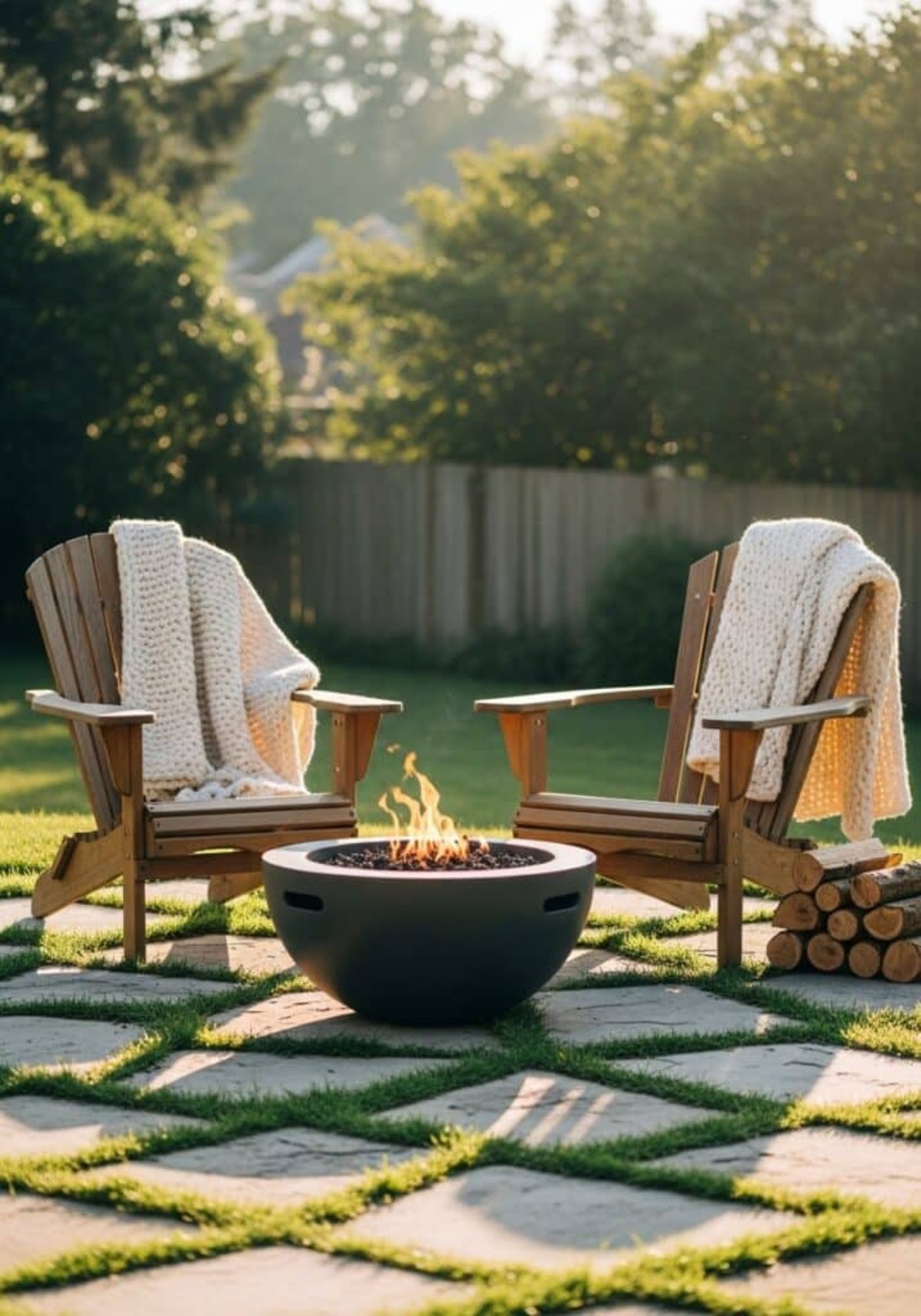
Even compact urban patios and suburban townhomes can enjoy fire features with space-efficient designs. A 24- to 30-inch round fire pit paired with nesting armchairs maximizes usable square footage without crowding walkways.
Professional Masonry Specs & Best Practices
- Maintain minimum 10-foot clearance from vinyl siding, eaves, and property fences
- Add a mesh spark screen to contain flying embers within tight yard perimeters
- Select vertical propane columns that occupy just 18x18 inches of floor space
- • Fits comfortably in small urban backyards and compact patios
- • Preserves open circulation space
- • Easy to store during deep winter snow
- • Limited heat radius suited for 3–5 people only
- • Cannot burn large timber logs
Firepit with Integrated Curved Masonry Bench
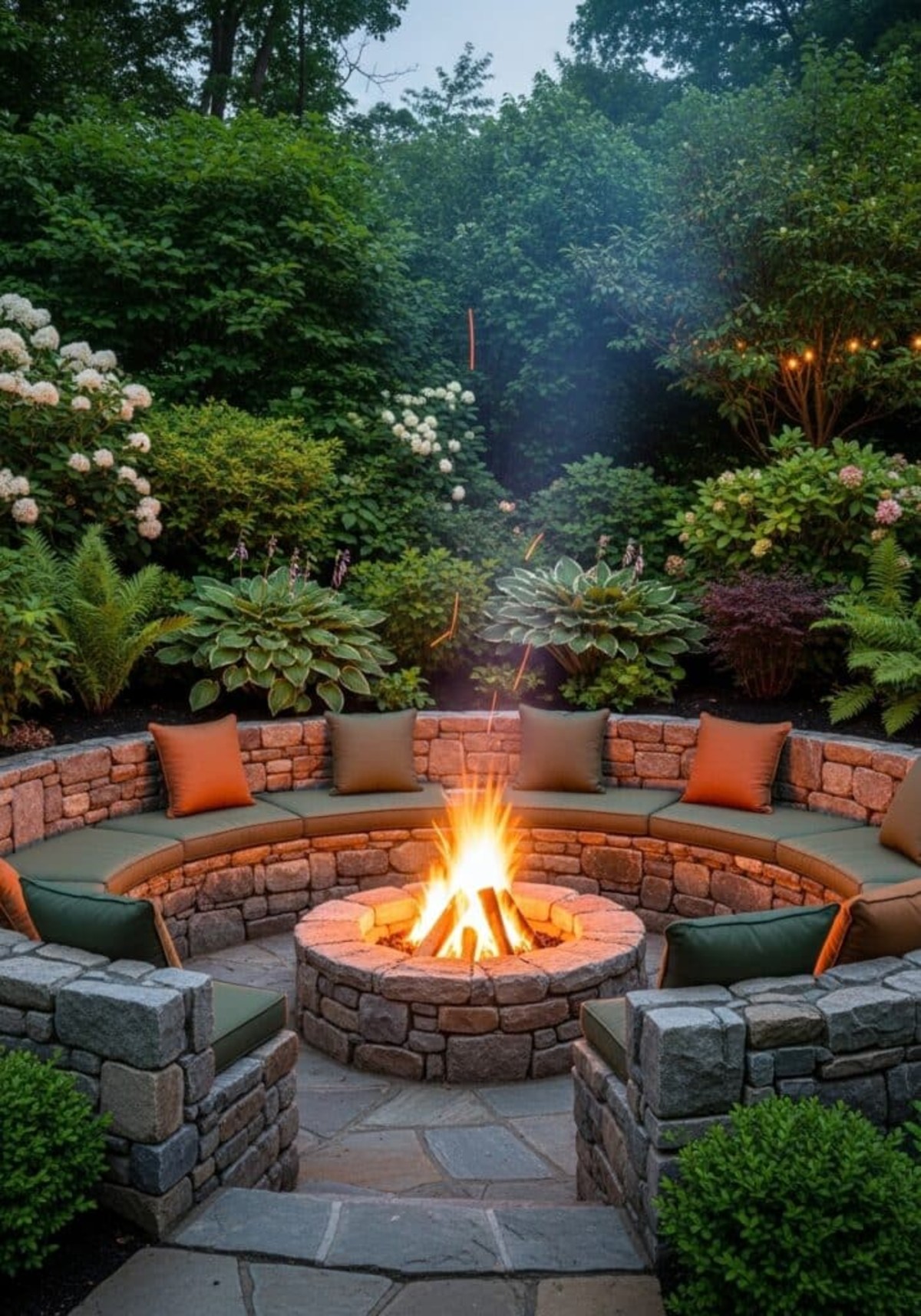
Integrating a permanent curved retaining seat wall directly around the fire pit ring creates an outdoor amphitheater. The thermal mass of the stone wall absorbs flame warmth during the evening, gently reradiating heat back toward seated guests.
Professional Masonry Specs & Best Practices
- Design bench seat height between 17 and 19 inches with a comfortable 14- to 16-inch depth
- Incorporate 2-inch seat cap overhang with drip edge to shed rain off the face stones
- Add all-weather Sunbrella cushions and outdoor throw pillows for extended seating comfort
- • Eliminates the need to buy and store patio chairs
- • Thermal stone mass retains and radiates heat long after fire dies down
- • Creates an impressive architectural estate presence
- • Permanent fixed location cannot be reconfigured
- • Requires deep frost-heave gravel footing foundation
Tabletop Fire Feature with Bioethanol or Gel Fuel
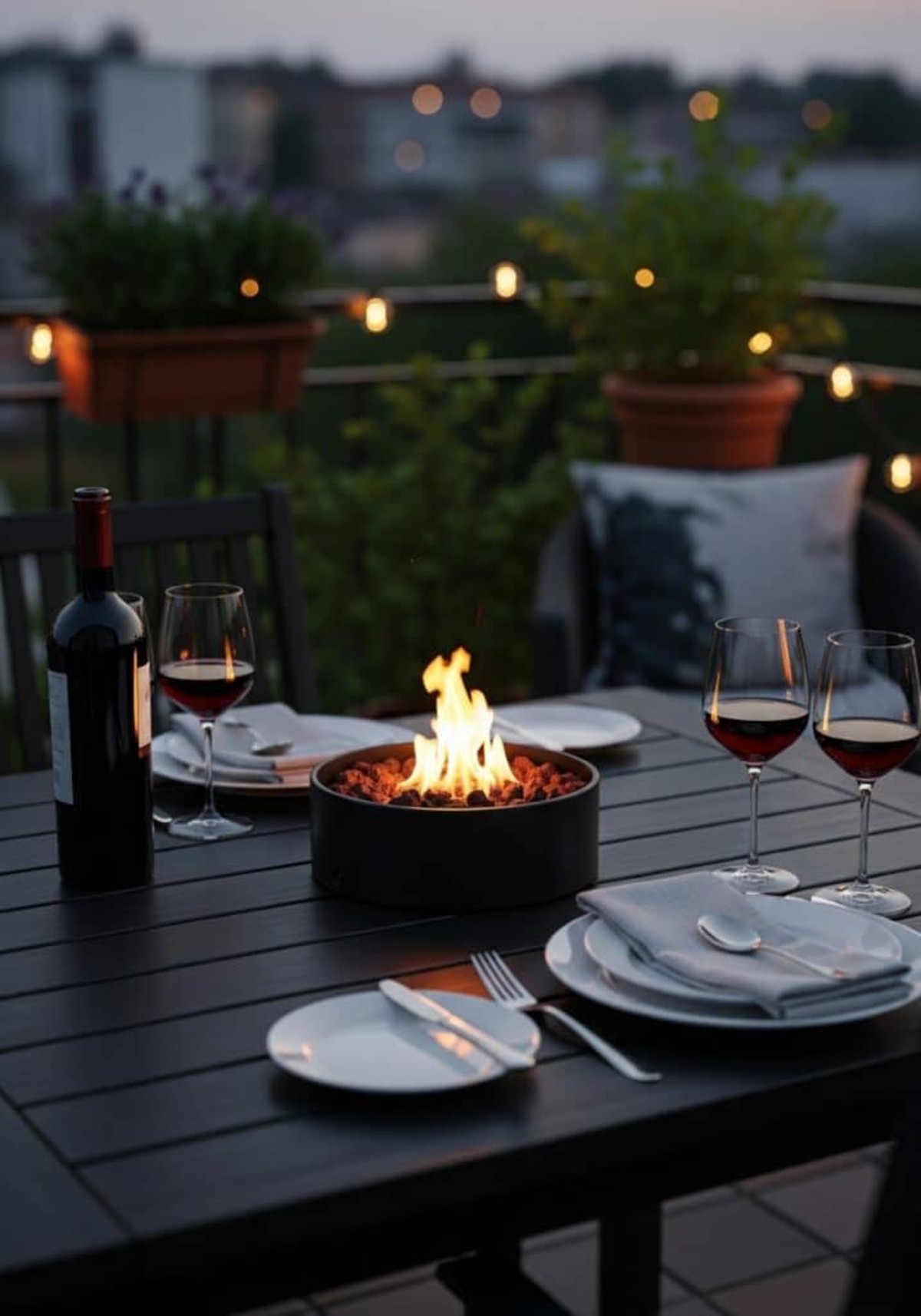
Tabletop fire bowls bring dancing flames right onto your outdoor dining table without occupying patio floor space. Bioethanol and gel fuels burn cleanly with zero smoke, odor, or soot, making them safe for covered verandas and open pergolas.
Professional Masonry Specs & Best Practices
- Clean-burning bioethanol creates zero toxic emissions and requires zero chimney flue
- Heavy ceramic or concrete bases prevent accidental tipping during dinner service
- Snuffer tools extinguish flames immediately for complete safety
- • 100% clean-burning with zero smoke or ash
- • Portable between dining tables, coffee tables, and bars
- • Safe to use under covered pergolas and awnings
- • Provides gentle ambiance rather than intense outdoor warmth
- • Bioethanol fuel cartridges must be repurchased periodically
Fire & Water Combo Feature: Spillway Meets Flame
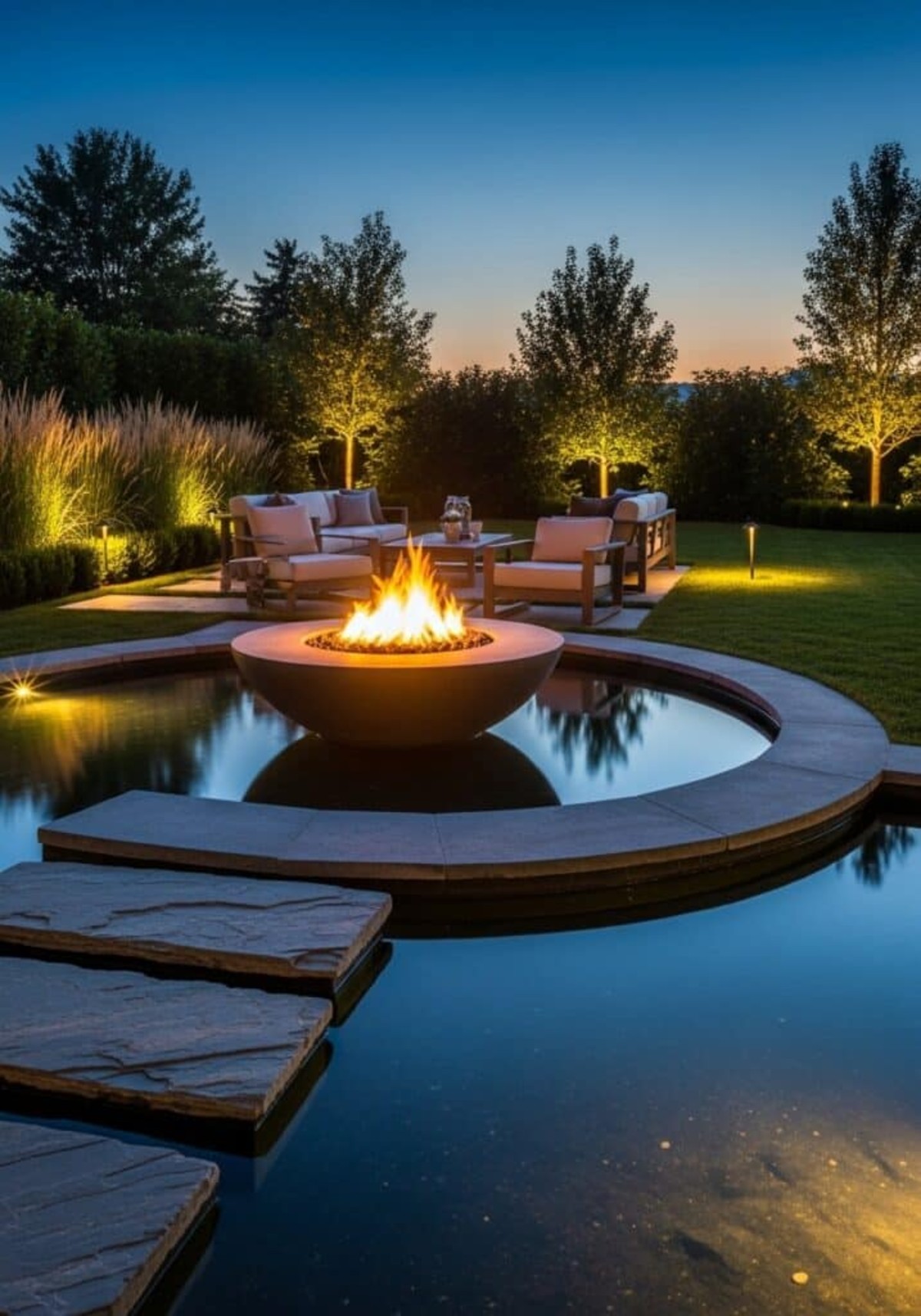
Merging roaring fire with cascading water creates an unforgettable sensory landscape centerpiece. Water flows over natural stone or copper spillways directly adjacent to a raised gas fire burner, harmonizing ambient warmth with soothing waterfall acoustics.
Professional Masonry Specs & Best Practices
- Keep water fountain splash zones isolated from gas burner trays to prevent flame blowout
- Utilize energy-efficient submersible pumps with variable flow controls
- Drain and blow out plumbing lines before the first hard Massachusetts winter freeze
- • Hypnotic visual and acoustic focal point
- • Masks street noise with tranquil falling water sounds
- • Dramatically enhances property appraisal appeal
- • Requires dual plumbing (gas supply + water recirculation)
- • Mandatory winterization maintenance to prevent pump freezing
Dedicated Hard-Piped Natural Gas Firepit
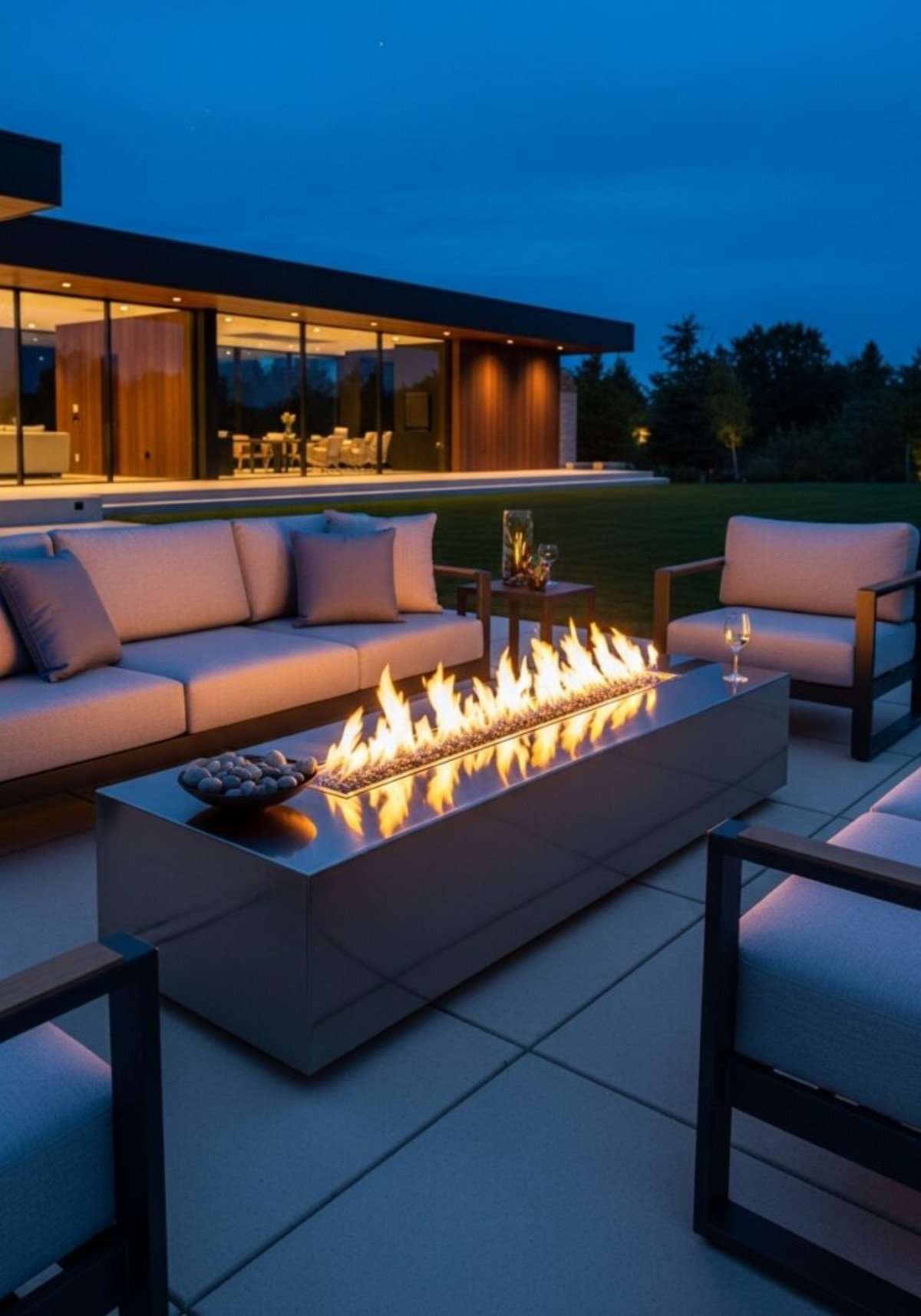
Connecting a custom masonry fire pit directly to your home's natural gas line provides unlimited fuel supply with zero propane tank swaps. Gas burners ignite instantly in sub-freezing temperatures, making winter fire gazing effortless.
Professional Masonry Specs & Best Practices
- Bury yellow poly gas piping 18 inches deep with tracer wire per Massachusetts plumbing code
- Install keyed emergency manual shutoff valve accessible within 6 feet of the fire pit
- Equip with electronic spark ignition and flame-sensing thermocouple safety modules
- • Never run out of propane fuel in the middle of a gathering
- • Low operational cost per therm compared to wood and propane
- • Flawless performance during freezing New England winters
- • Requires licensed gas fitter permitting and underground trenching
- • Higher initial infrastructure installation cost
Firepit Surrounded by Crushed Pea Gravel Terrace
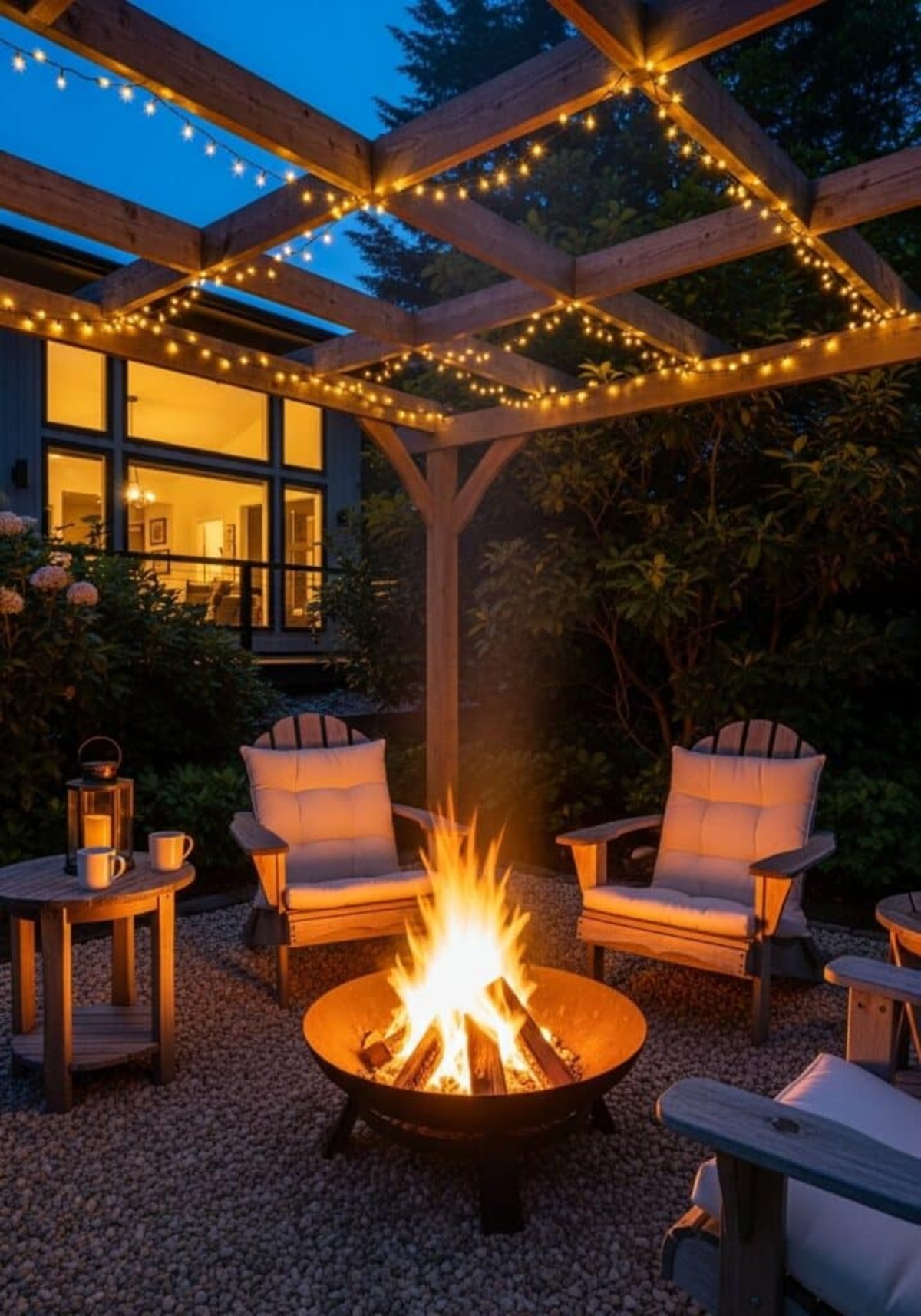
Crushed stone and pea gravel terraces deliver classic French country charm while providing a 100% fireproof perimeter. Gravel naturally drains torrential stormwater instantly, eliminating puddles and mud around the seating circle.
Professional Masonry Specs & Best Practices
- Install heavy-duty commercial woven geotextile fabric beneath gravel to permanently suppress weeds
- Contain gravel with steel or heavy aluminum landscape edging staked every 3 feet
- Use 3/8-inch rounded pea gravel or native crushed bluestone chips for comfortable walking
- • Highly cost-effective compared to concrete or flagstone paving
- • 100% permeable surface eliminates runoff and drainage problems
- • Satisfying crunch sound underfoot with rustic European appeal
- • Gravel can scatter into adjacent turf if not contained by edging
- • Snow shoveling around gravel requires gentle sweeping rather than metal plows
Firepit under an Open Cedar Pergola with Ambient Bistro Lighting
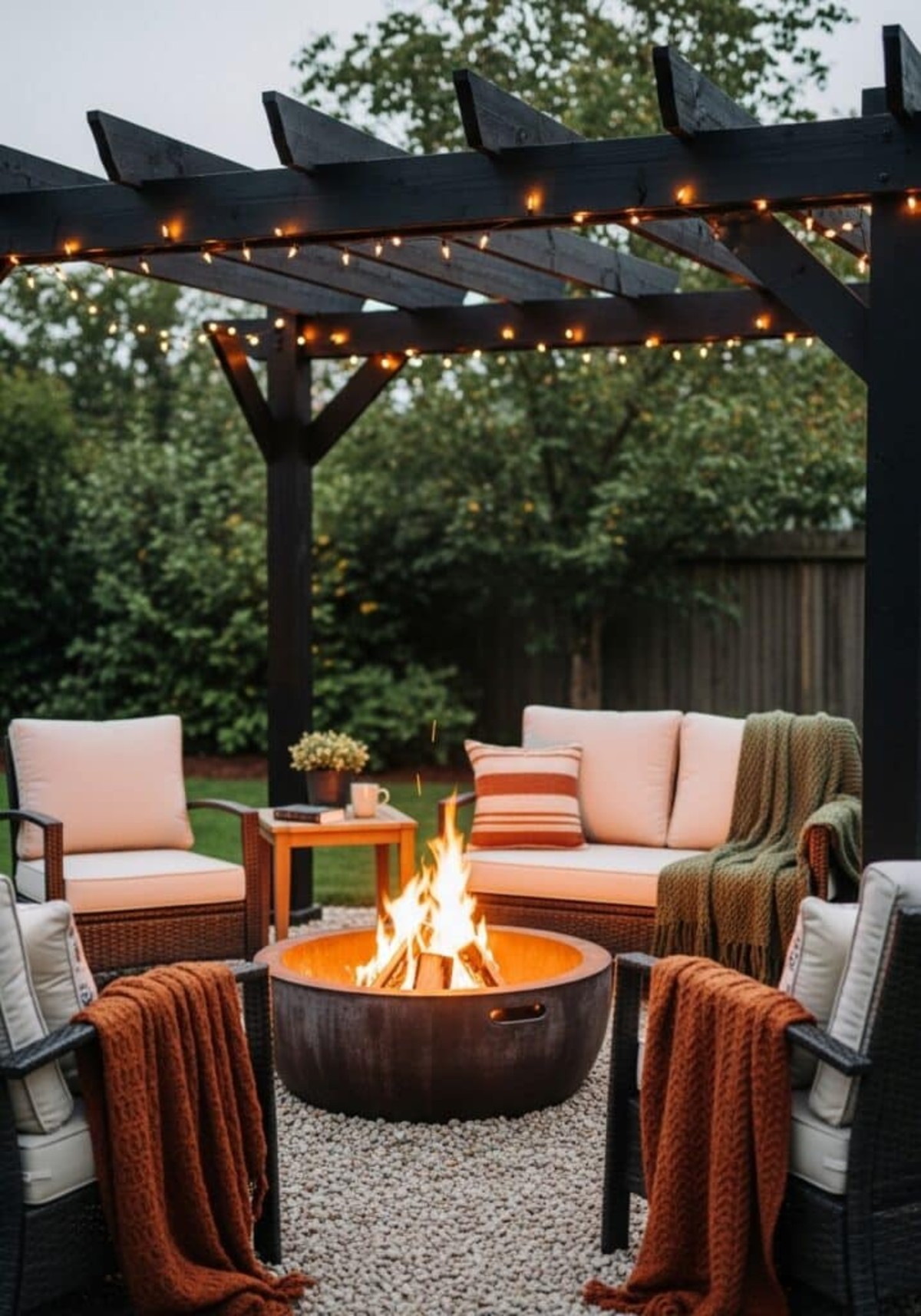
Framing a gas fire pit area beneath an open cedar or hemlock timber pergola creates an inviting outdoor living room. The open rafters preserve essential vertical clearance for smoke and heat dissipation while framing strings of warm Edison bistro lights.
Professional Masonry Specs & Best Practices
- Maintain minimum 10 to 12 feet of vertical clearance between fire burner and open pergola beams
- Only operate clean-burning gas or ethanol fire tables beneath pergolas (avoid wood-burning sparks)
- Construct pergola posts with rot-resistant Western red cedar or pressure-treated rough-sawn fir
- • Defines an intimate 'outdoor room' ceiling without closing off the sky
- • Provides support for string lighting, climbing wisteria, and privacy shades
- • Boosts vertical architectural interest in flat backyards
- • Strictly requires gas or ethanol; wood-burning sparks are a fire hazard under wooden structures
- • Pergola wood requires periodic UV-protective sealing
Sculptural Cast Concrete Bowl Firepit
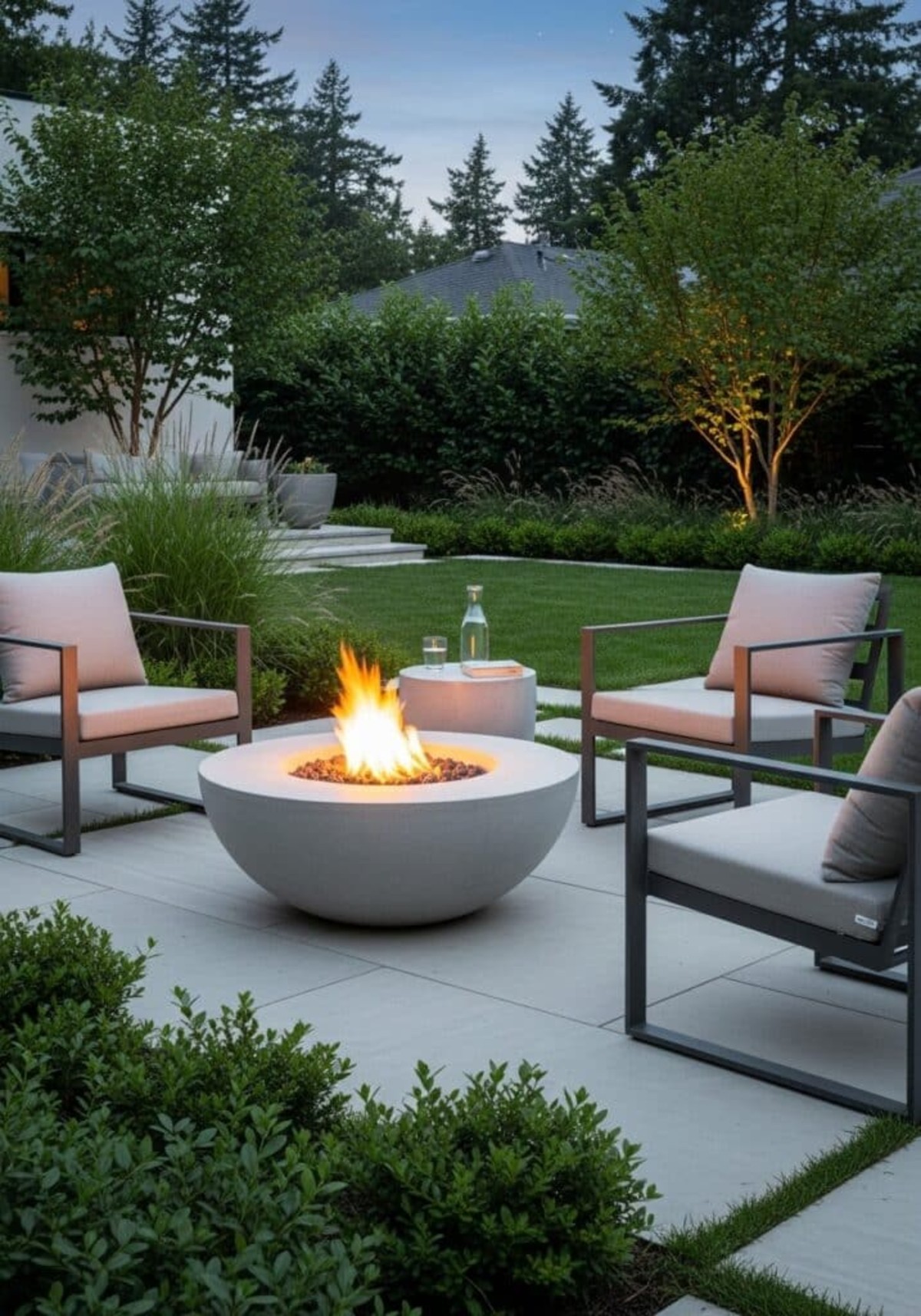
Cast architectural concrete bowls offer sleek Scandinavian minimalism. Glass-fiber reinforced concrete (GFRC) delivers superior tensile strength with reduced weight, resisting hairline cracking through harsh North Shore winter freezes.
Professional Masonry Specs & Best Practices
- Select high-performance GFRC with penetrating silane-siloxane sealer to block moisture absorption
- Pair with smooth river stones or black volcanic basalt rock for clean contemporary contrast
- Protect with custom waterproof canvas cover during December–March snowstorms
- • Ultra-clean contemporary architectural silhouette
- • GFRC construction resists freeze-thaw spalling
- • Neutral concrete tones blend with any landscape color palette
- • Heavyweight unit requires 2–3 people or equipment to position
- • Must be sealed annually to prevent moisture absorption in freezing weather
Firepit & Outdoor Kitchen Bar Combo Station
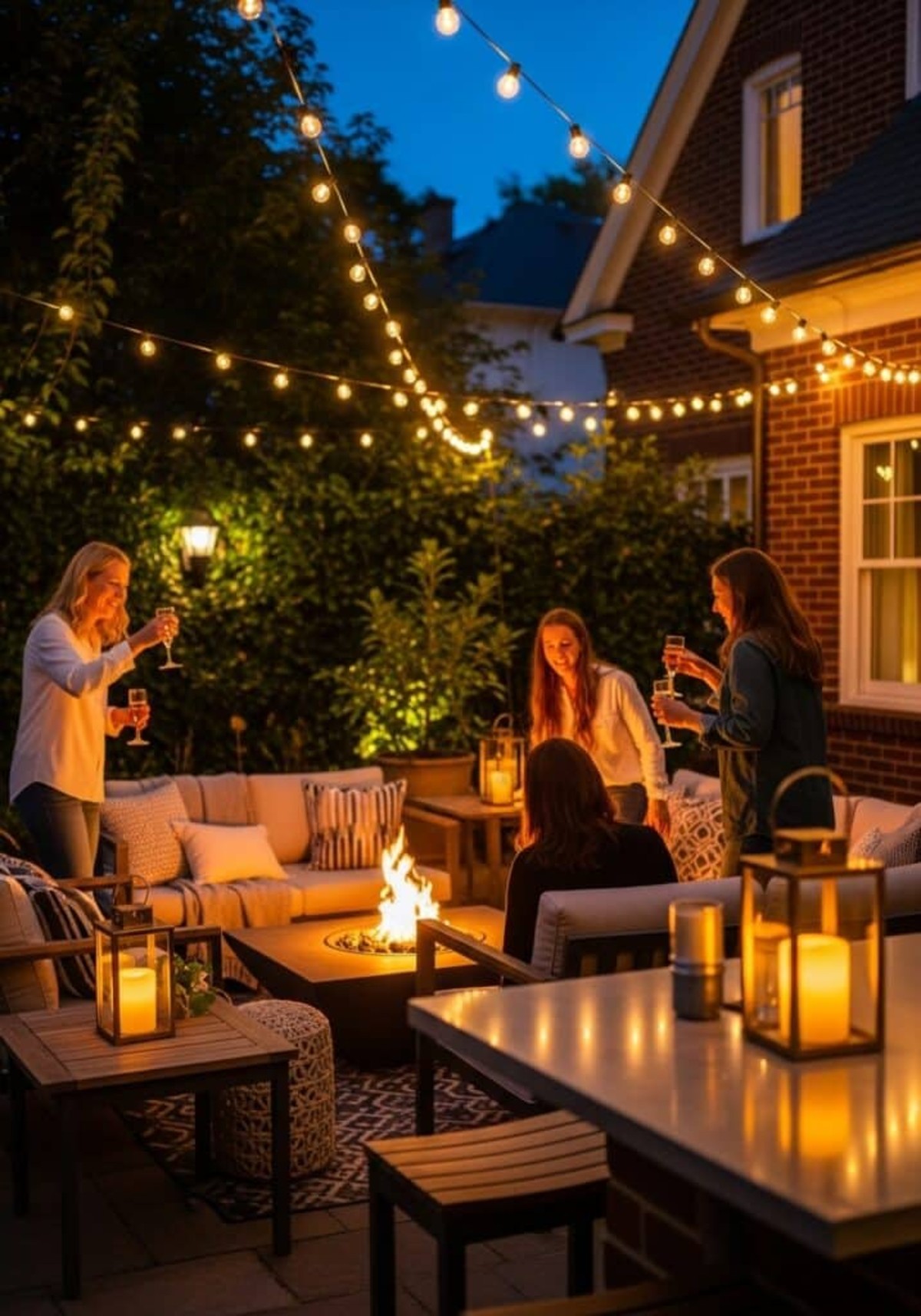
Positioning your fire pit immediately adjacent to an outdoor BBQ island and beverage bar creates the ultimate culinary entertainment hub. Guests can socialize around the warmth of the fire while conversing with the grill master.
Professional Masonry Specs & Best Practices
- Allow 6 to 8 feet of clear walkway between the grill station and fire pit perimeter
- Use matching granite or bluestone countertop materials across both features for visual cohesion
- Consolidate underground gas and electrical trenches during primary excavation to reduce utility costs
- • Seamless culinary and social entertainment hub
- • Consolidates outdoor living footprint into one cohesive zone
- • Highest return on investment for home resale value
- • Requires comprehensive master site planning and larger capital investment
- • Demands skilled trade coordination (masonry, plumbing, electric)
Handcrafted Mosaic Tiled Firepit Table
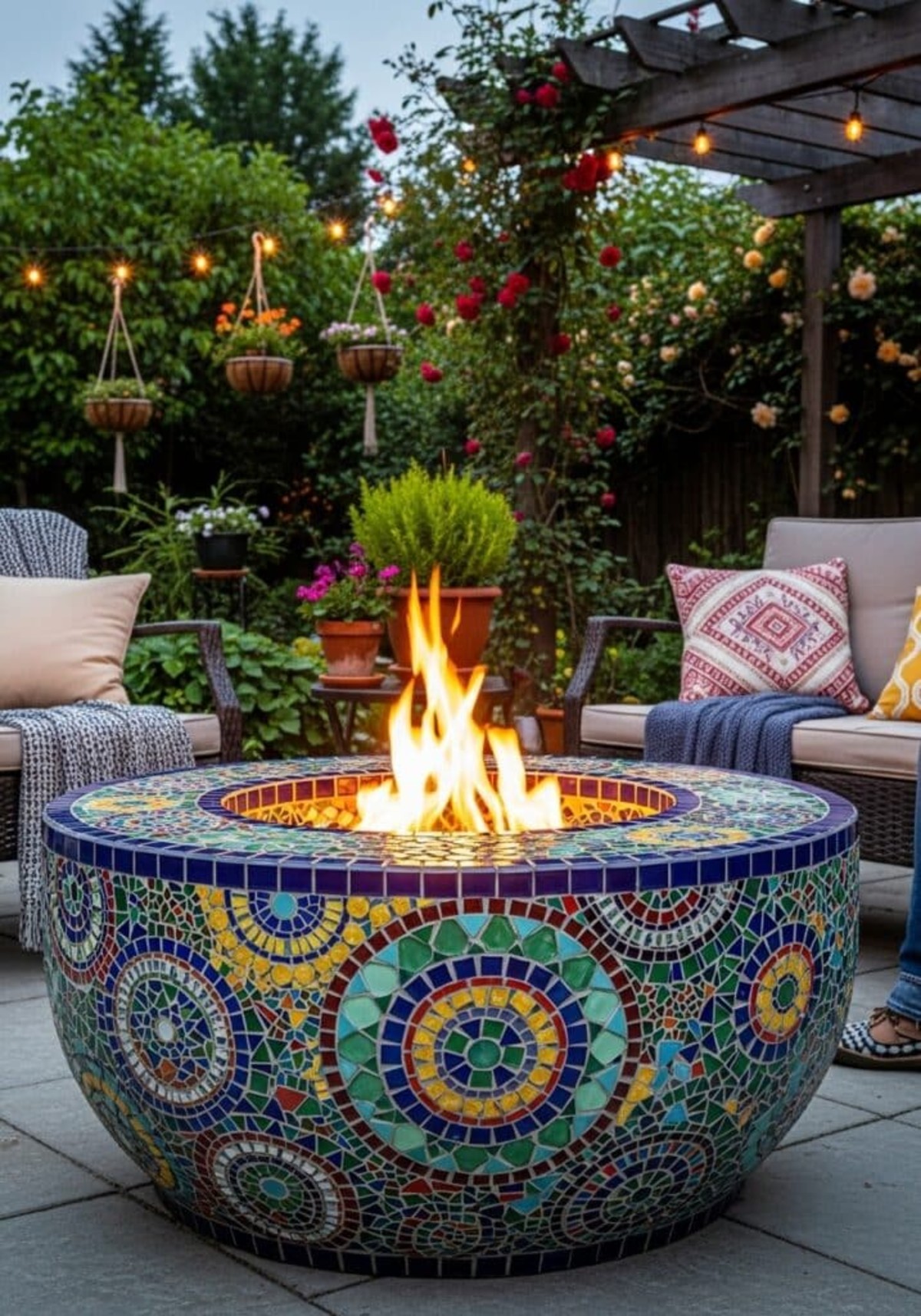
Artisanal mosaic fire pits transform functional heaters into bespoke works of art. Hand-laid frost-proof porcelain or ceramic tesserae around the outer tabletop rim introduce vibrant Mediterranean or southwestern patterns that brighten garden spaces.
Professional Masonry Specs & Best Practices
- Always select frost-proof porcelain tiles with water absorption ratings under 0.5% (impervious)
- Grout with 100% solid epoxy grout to prevent moisture penetration and freeze-thaw pop-offs
- Seal tile border thoroughly with UV-resistant impregnating stone sealer
- • Unique, one-of-a-kind artistic statement in the garden
- • Vibrant colors pop against green turf and woodland backdrop
- • Smooth tabletop rim is easy to wipe clean after outdoor dinners
- • Standard indoor tiles will shatter in winter; must verify frost-proof porcelain ratings
- • Tile installation is labor-intensive
Cozy Garden Nook Firepit Tucked into Natural Woodlands
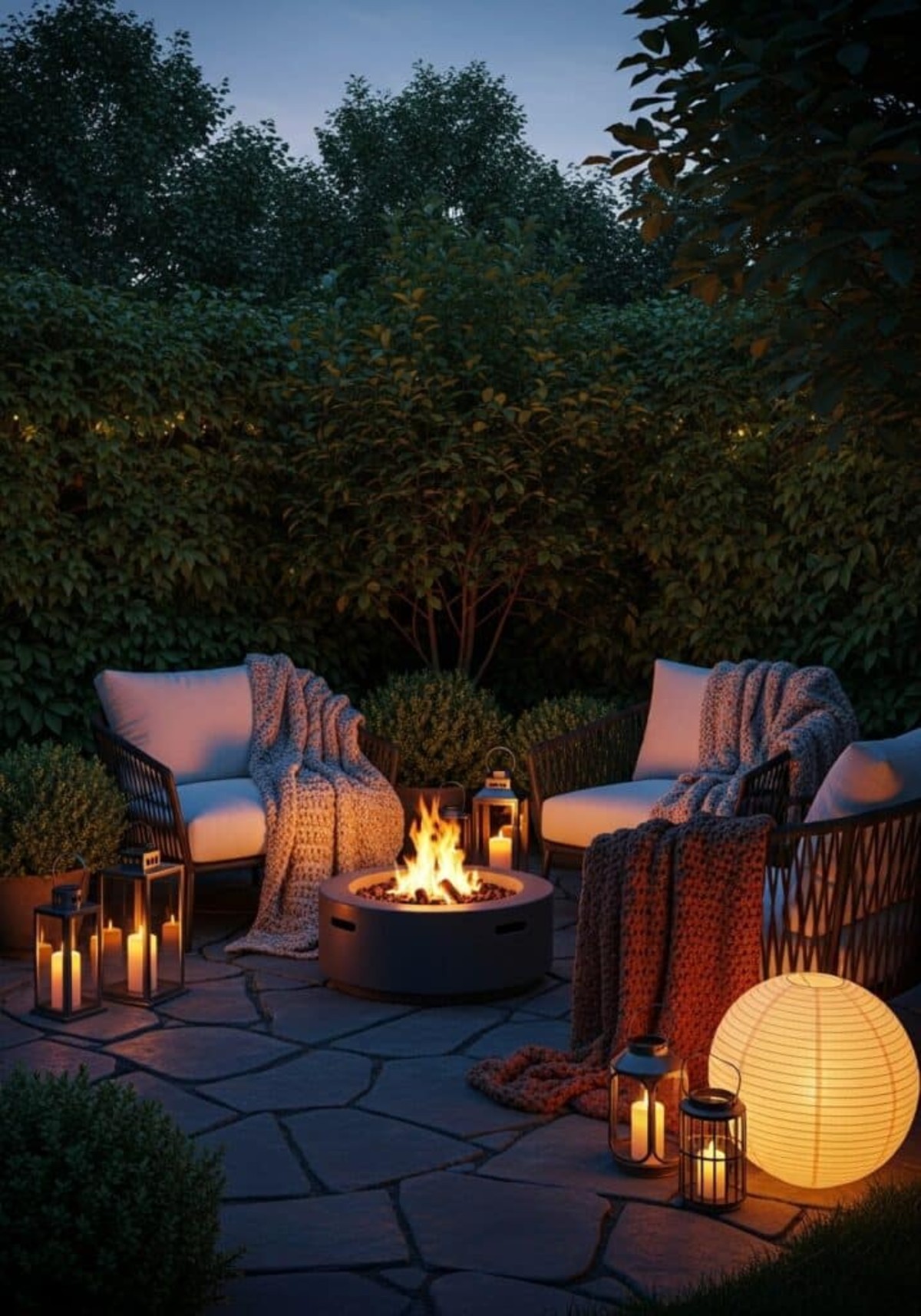
Tucking a rustic stone fire pit into a secluded corner of your property surrounded by mature evergreen trees and native ferns creates a magical woodland retreat. A meandering stepping stone path invites guests away from the main house into nature.
Professional Masonry Specs & Best Practices
- Prune overhanging tree branches to maintain at least 15 feet of open sky overhead
- Clear fallen pine needles, dry leaves, and organic debris within a 10-foot safety buffer
- Surround with native shade perennials like hay-scented ferns, mountain laurel, and hostas
- • Maximum privacy and tranquil nature connection
- • Sheltered naturally from wind by surrounding woodland canopy
- • Creates an adventurous destination walk within your own yard
- • Requires vigilant leaf and needle raking to prevent combustible ground fuel buildup
- • Must confirm local setback distances from wooded property lines
Fire Pit Fuel & Construction Systems: Cost, Heat & Maintenance Matrix
Compare material costs, heat outputs, safety setbacks, and maintenance demands across popular outdoor fire pit configurations:
| Fire Pit System | Est. Investment | Heat Output | MA Setback Distance | Primary Maintenance |
|---|---|---|---|---|
| Natural Stone Wood Ring | $1,800 – $4,500 | High (100k+ BTUs) | 25–50 ft from structures | Ash removal, dry firewood |
| Sunken Masonry Lounge | $6,500 – $16,000 | Maximum Radiant Heat | 25 ft from structures | French drain line clearing |
| Hard-Piped Natural Gas Pit | $3,500 – $8,500 | Medium (60k–90k BTUs) | 10–15 ft (Code verified) | Burner orifice check, cover |
| Propane Gas Fire Table | $600 – $2,200 | Moderate (40k–65k BTUs) | 10 ft clearance | Propane tank refilling |
| Portable Corten Fire Bowl | $350 – $950 | High Wood Flame | 25 ft clearance | Ash dump, surface wipe |
Answers
Frequently asked questions
01How far must a backyard fire pit be located from a house or property fence in Massachusetts?
Under the Massachusetts Comprehensive Fire Safety Code (527 CMR 1.00) and local municipal bylaws, outdoor open-burning fire pits must be positioned a minimum of 25 to 50 feet away from any combustible structures, dwellings, overhangs, and fences. Clean-burning natural gas and propane fire tables typically require a reduced setback of 10 to 15 feet.
Consult our licensed masonry and fire pit installation team →
02What is the best stone material to build a durable wood-burning fire pit?
Native New England granite fieldstone, quartzite, and dense bluestone are the most durable exterior masonry materials for Essex County freeze-thaw cycles. However, the inner combustion chamber MUST be lined with refractory firebrick laid with heat-resistant mortar to prevent outer stones from expanding and shattering under direct flame.
03Can a fire pit be safely built on top of a wooden deck?
Never place a wood-burning fire pit on a combustible wooden or composite deck. Natural gas or propane fire tables with certified insulated thermal base barriers can be safely installed on decks if allowed by manufacturer clearances and local building codes.
04What is the ideal interior diameter for a backyard fire pit ring?
The standard ergonomic interior diameter for a circular fire pit is 36 to 44 inches. This size accommodates standard 16-inch split hardwood logs and delivers generous 360-degree radiant heat while allowing guests to lean in comfortably without excessive smoke exposure.
05How do you ensure proper rainwater drainage inside a built-in stone fire pit?
Excavate the base at least 12 inches below grade and backfill with 6 to 8 inches of washed 3/4-inch crushed stone or trap rock. For sunken or clay-heavy soils, install an underground 4-inch perforated PVC French drain pipe to direct stormwater away from the pit.
06What are the primary advantages of natural gas fire pits over wood-burning fire pits?
Natural gas fire pits ignite instantly with the flip of a switch, produce zero smoke blowing into guests' eyes, leave no messy ash to shovel out, and can be safely operated during seasonal municipal wood-burning bans. They connect directly to your home's gas line for unlimited fuel.
07What firewood species burn hottest with the least smoke in New England?
Well-seasoned native New England hardwoods—including sugar maple, red oak, white oak, and black birch—burn significantly hotter and longer with minimal smoke compared to softwoods like pine, which spark aggressively and deposit heavy creosote.
08How does a sunken fire pit lounge handle high wind and coastal breezes?
Sunken lounges recessed 18 to 24 inches below lawn grade utilize the surrounding earth and curved masonry retaining walls as a natural windbreak. This shields the fire from gusty coastal drafts, keeping flames steady and smoke rising vertically rather than blowing sideways.
Ready to Build Your Dream Outdoor Fire Pit in Peabody, MA?
From natural stone wood rings and sunken retaining lounges to licensed natural gas fire tables, our master masons craft spaces your family will cherish.
Get connected with an independent local landscaping professional. Calls go to (877) 537-6896.