10 Best Plants to Grow Under Trees: Dry Shade Landscaping & Care Guide
The best plants to grow under trees include hostas, Japanese painted ferns, coral bells (Heuchera), bleeding hearts, and astilbes. These shade-tolerant perennials thrive in root-dense dry shade, resist shallow root competition, and require minimal digging that could harm tree health in Massachusetts USDA Zone 6b landscapes.
Engineered for low-light forest floor conditions
Withstands aggressive tree feeder roots
Natural alkaloids & textures deter pests
Quantitative Comparison
Shade Plant Specifications & Massachusetts Growing Benchmarks
| Perennial Species | Light Tolerance | Moisture Requirements | Mature Spread | Bloom Window | Deer Resistance | Top Zone 6b Cultivars |
|---|---|---|---|---|---|---|
| Hosta (Plantain Lily) | Part to Full Shade | Moderate (Drought-tolerant once established) | 18–36 inches | Mid-to-Late Summer | Low (Requires deer repellent) | Halcyon, Patriot, June |
| Japanese Painted & Wood Ferns | Dappled to Deep Shade | Moist to Average | 18–24 inches | Non-flowering (Lush Fronds) | Very High (Deer Proof) | Athyrium niponicum 'Pictum' |
| Astilbe (False Spirea) | Part Shade to Filtered Sun | Consistent Moisture | 15–20 inches | Early to Mid Summer | High | Fanal, Bridal Veil, Younique |
| Bleeding Heart (Dicentra) | Part Shade to Full Shade | Moderate Moisture | 24–30 inches | Spring (May – June) | Very High | Valentine, Luxuriant, Alba |
| Coral Bells (Heuchera) | Morning Sun to Full Shade | Low to Moderate | 12–18 inches | Late Spring to Summer | Moderate | Caramel, Palace Purple, Obsidian |
Curated Plant Selections
10 Proven Plants & Flowers for Under-Tree Gardens
Hosta (Hosta spp.)
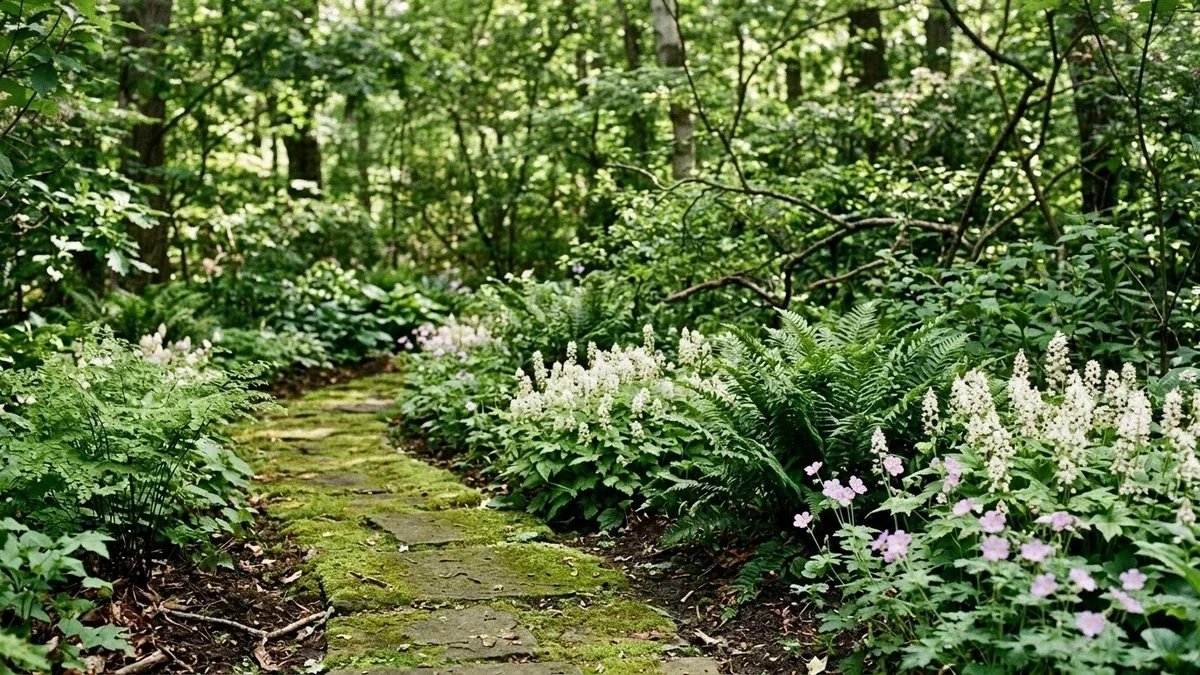
Hostas are the undisputed royalty of under-tree landscaping. Their dense, broad leaves form impenetrable rosettes that suppress weed germination, while tall lavender flower spikes attract honeybees in July. Blue-leafed cultivars like 'Halcyon' resist slug damage and retain deep waxy coloration even in deep shade.
Hardy Native & Japanese Ferns
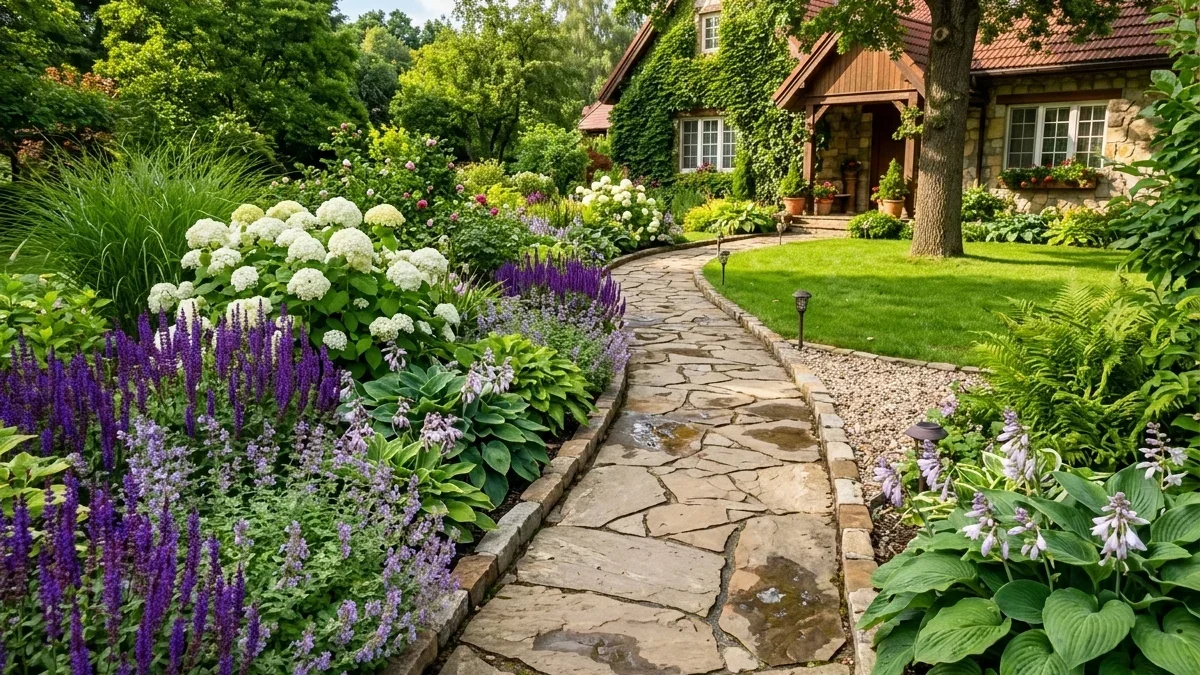
Ferns are naturally adapted to forest floors and thrive beneath the root canopies of oaks, birches, and pines. Japanese painted ferns feature metallic silver-lavender fronds with burgundy stems, while native Christmas ferns (Polystichum acrostichoides) remain evergreen throughout cold Massachusetts winters.
Astilbe (False Spirea)
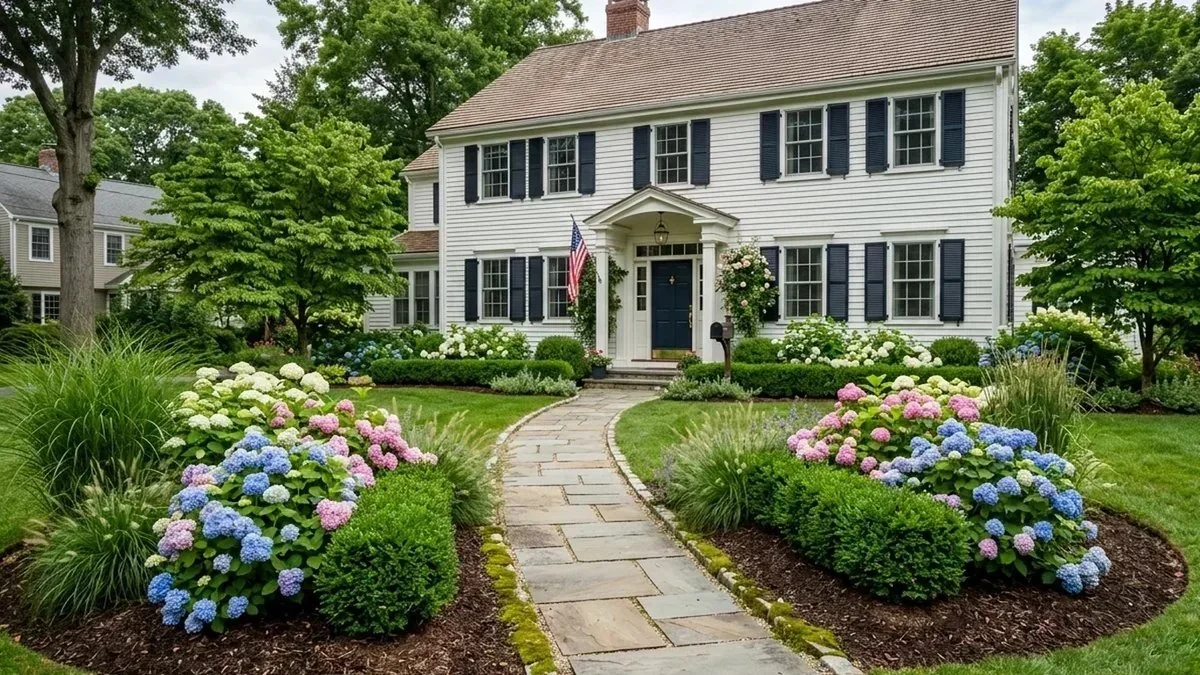
Astilbes provide spectacular vertical floral interest beneath light, open-canopy trees like honey locusts or birch. Their fern-like bronze-green foliage stays attractive all season, while erect flower panicles hold their color for 4 to 6 weeks in June and July. Plant with shredded leaf mulch to preserve soil dampness.
Old-Fashioned & Fringed Bleeding Heart
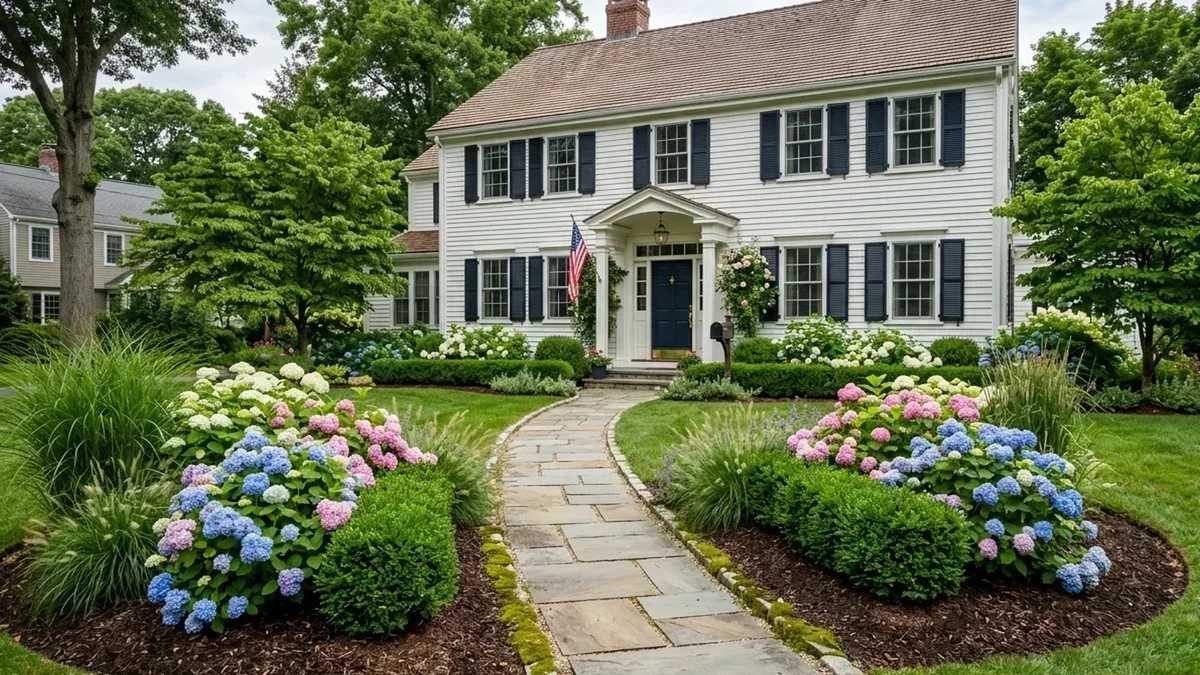
Bleeding heart (Dicentra spectabilis) is a beloved historic perennial that bursts into bloom in early May before tree canopies fully leaf out, capturing maximum springtime solar energy. The everblooming fringed variety (Dicentra eximia) continues producing flowers sporadically right through September.
Coral Bells (Heuchera spp.)
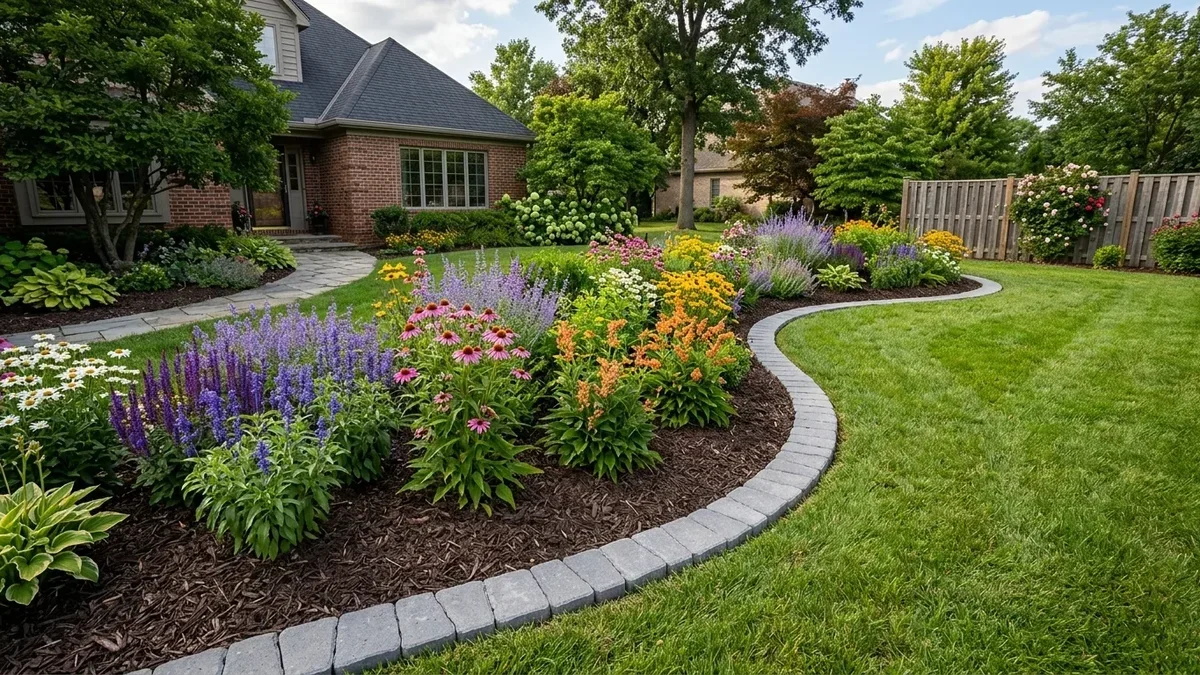
Bred for phenomenal leaf color, Heuchera thrives along the outer drip line of mature trees where dappled morning sun filters through. Their shallow root systems easily co-exist with tree roots, and in Zone 6b their mound of scalloped evergreen foliage often persists straight through mild winter months.
Spotted Deadnettle (Lamium maculatum)
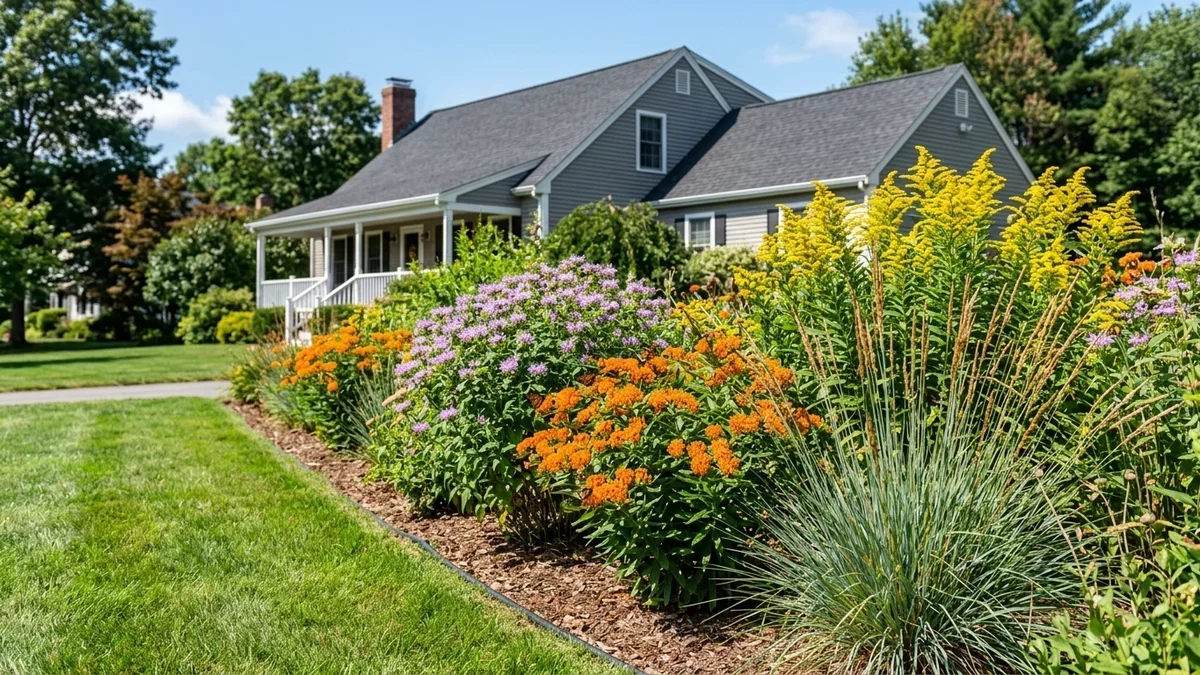
When lawn grass refuses to grow under your maple tree, Lamium is the ultimate silver groundcover solution. Varieties like 'Beacon Silver' and 'White Nancy' form dense, 6-inch-tall mats that carpet bare root zones, choke out crabgrass, and brighten dark understory corners with luminous silvery leaves.
Lungwort (Pulmonaria spp.)
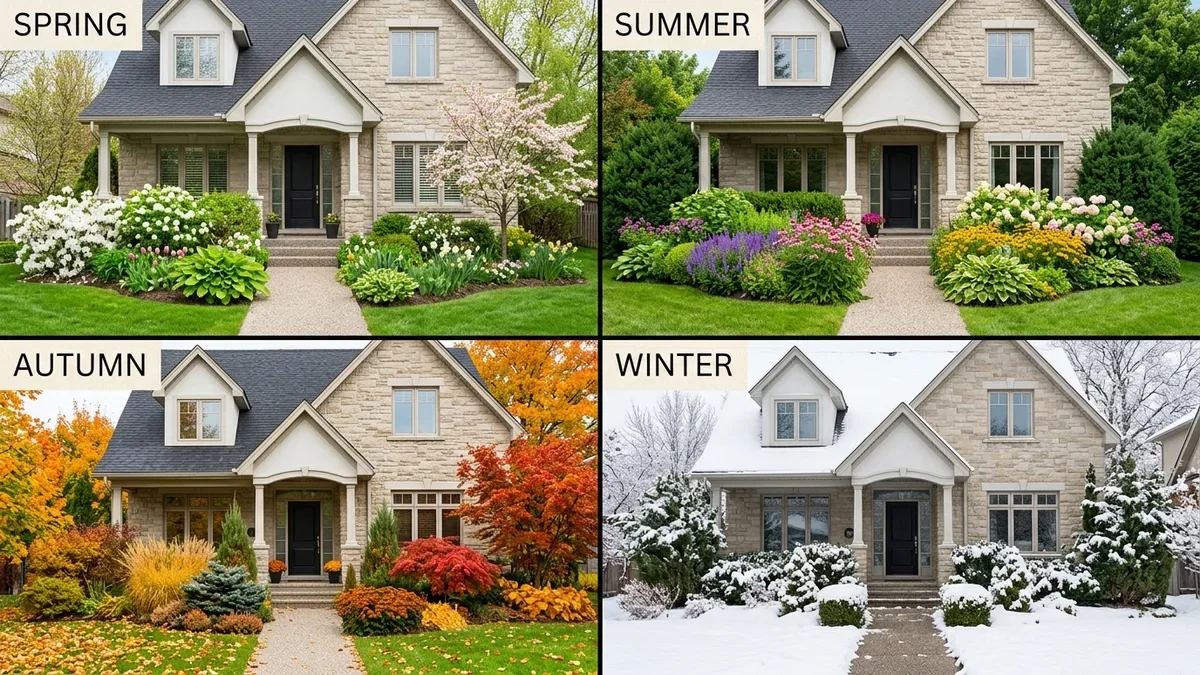
Pulmonaria is one of the very first perennials to awaken in New England spring landscapes. Its distinctive silver-speckled leaves are coated in fine stiff hairs that make them completely unpalatable to slugs, deer, and rabbits. They thrive in the moisture-rich pocket soil between large buttress roots.
Canadian Wild Ginger (Asarum canadense)
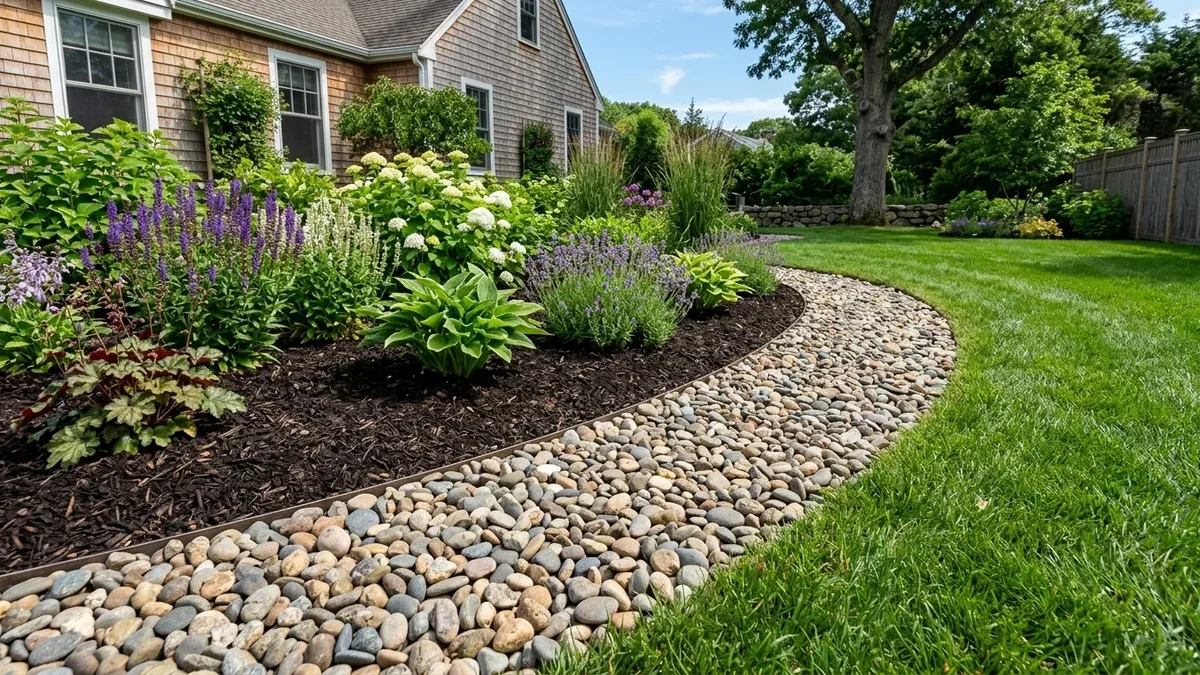
A true native Massachusetts woodland plant, wild ginger thrives in deep shade where almost nothing else survives. It creeps slowly via rhizomes, forming a dense 6-to-8-inch architectural groundcover that protects tree roots from soil erosion and moisture loss while exuding a pleasant spicy ginger fragrance.
Japanese Forest Grass (Hakonechloa macra)
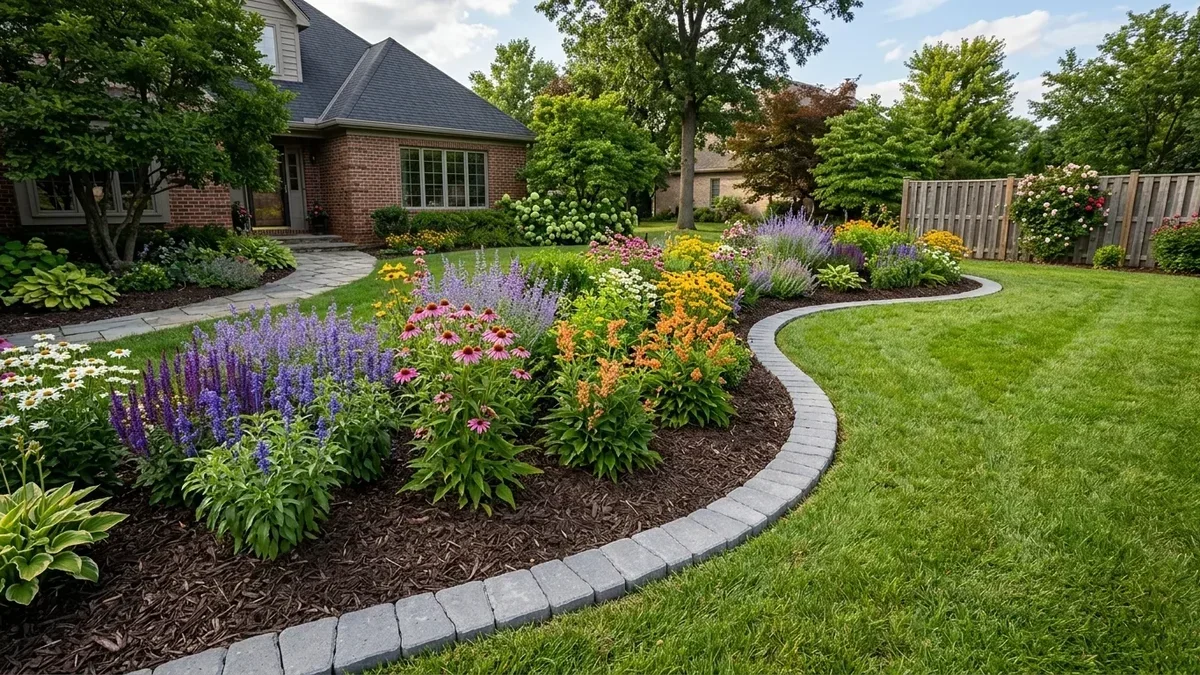
Unlike sun-loving prairie grasses, Hakonechloa is specifically adapted to shady mountain slopes. Cultivars like 'Aureola' feature bright golden-chartreuse weeping blades that spill gracefully over tree root mounds, flagstone edging, and retaining walls, turning rust-orange in late autumn.
Japanese Toad Lily (Tricyrtis hirta)
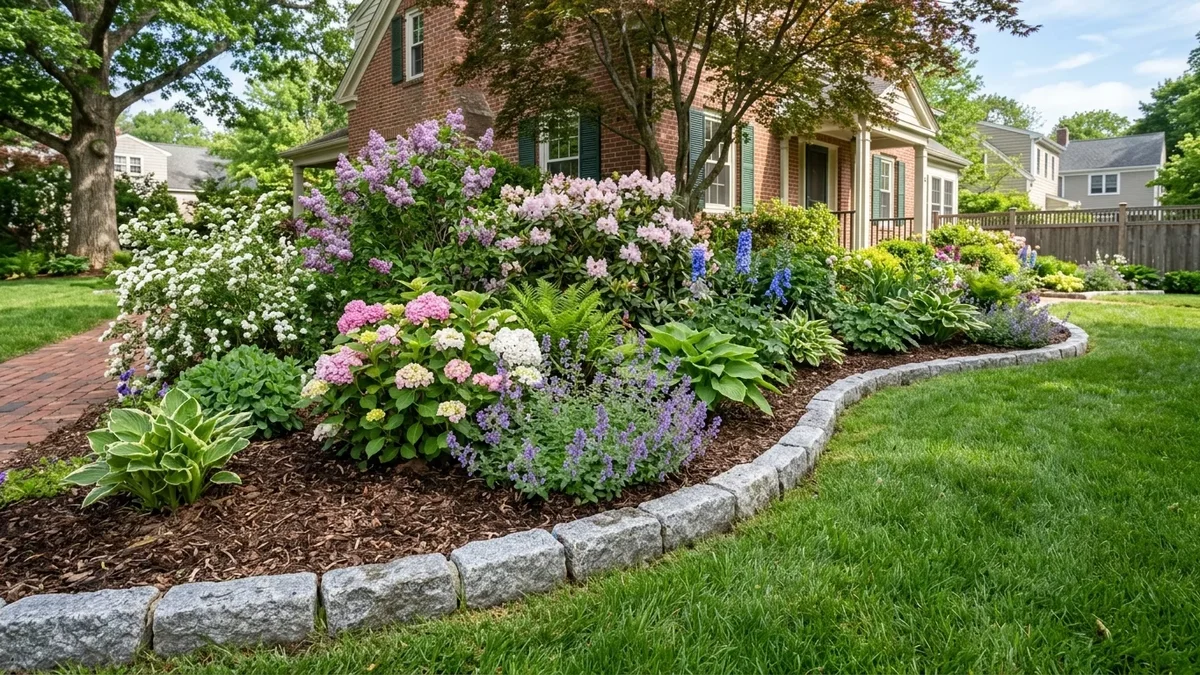
When the rest of the garden is shutting down for winter, toad lilies deliver an extraordinary late-season show. Blooming profusely along leafy arching stems from late August until the hard autumn frost, their exotic spotted flowers provide critical late-season nectar for migrating native pollinators.
Arboricultural Care
The Golden Rules of Planting Around Tree Roots
Never Sever Structural Roots
Major woody roots thicker than 1.5 inches anchor the tree against coastal nor'easters and supply hydration to the upper crown. If you encounter a thick root while digging, never cut it with an axe or saw. Simply shift your planting hole 6 to 12 inches to an open root pocket.
Keep the Root Flare Clean & Exposed
The tree root flare—where the trunk visibly widens before entering the soil—must remain fully exposed to the air. Never create a 'mulch volcano' against the trunk. Maintain a 6-inch mulch-free buffer around the trunk base and apply only 2 inches of composted pine bark across outer plant beds.
Homeowner FAQs
Frequently Asked Questions About Under-Tree Gardening
Answers
Frequently asked questions
01Will planting flowers and shrubs under a mature tree hurt its roots?
Planting small 4-inch perennial plugs or bare-root perennials between major roots will not harm a healthy mature tree. Never use a mechanical rototiller or sever structural roots thicker than 1.5 inches. Always dig planting pockets gently with a hand trowel and avoid adding more than 2 inches of topsoil over existing tree root zones.
02What makes planting under mature trees so challenging?
Gardening beneath mature trees creates 'dry shade'—a demanding microclimate where the dense tree canopy deflects rainfall while millions of shallow fibrous feeder roots aggressively absorb available moisture and nutrients before smaller companion plants can reach them.
03Can I add 6 inches of topsoil around my tree trunk to make a flower bed?
No. Burying a tree's root flare with heavy soil or deep mulch suffocates vital subterranean gas exchange and encourages girdling roots, fungal bark decay, and premature tree death. Always keep the root flare fully exposed and add no more than 1 to 2 inches of rich compost or shredded pine bark mulch.
Calculate precise compost volumes with our Topsoil Calculator →
04Which shade perennials are completely deer-resistant under trees?
Ferns (such as Christmas ferns and ostrich ferns), bleeding hearts, lungwort (Pulmonaria), and wild ginger are exceptionally deer-resistant because their foliage contains bitter natural alkaloids, textural bristles, or pungency that browsing white-tailed deer avoid.
05What are the best blooming flowers for deep shade under trees?
Astilbe, bleeding heart (Dicentra), and Japanese toad lily (Tricyrtis) produce striking floral blooms in full, deep shade. Toad lilies are especially prized because their exotic orchid-like purple blossoms appear late in September and October when most other garden flowers have faded.
06How often should new plants under trees be watered?
During their first growing season, new perennials planted under trees need deep watering 2 to 3 times per week (approximately 1 inch of water weekly). Because the host tree's roots actively compete for hydration, direct root-zone soaking with a drip soaker hose is vastly superior to overhead sprinkler irrigation.
07Can grass grow under large shade trees in Massachusetts?
Standard turfgrasses fail in dense shade under mature oak and maple trees, becoming sparse, patchy, and mossy. Planting shade-tolerant perennial groundcovers like lamium, wild ginger, or Japanese forest grass creates a lush, green carpet that thrives without mowing or intense sunlight.
Explore low-maintenance lawn alternatives for shaded yards →
08How much does it cost to professionally install a shade garden under a tree?
A DIY shade bed under a mature tree featuring 15 to 25 perennial plugs, compost amendments, and pine bark mulch costs between $150 and $350. Professional landscape design and installation—including selective arborist canopy thinning, drip irrigation lines, and premium mature container plants—ranges from $800 to $2,400.
Review Essex County landscaping and planting cost benchmarks →
Citations: UMass Amherst Extension Landscape & Nursery Program, The Morton Arboretum Woodland Planting Standards, and USDA Zone 6b Plant Hardiness Maps.
Updated:Ready to Transform the Shaded Areas Beneath Your Trees?
Connect with screened, independent landscape contractors and garden specialists in Peabody and Essex County for free on-site consultations on shade bed design, soil preparation, and perennial installation.
Get connected with an independent local landscaping professional. Calls go to (877) 537-6896.