Garden Architecture · DIY Edging & Pest Defense
21 Creative Garden Barrier Ideas for Backyards
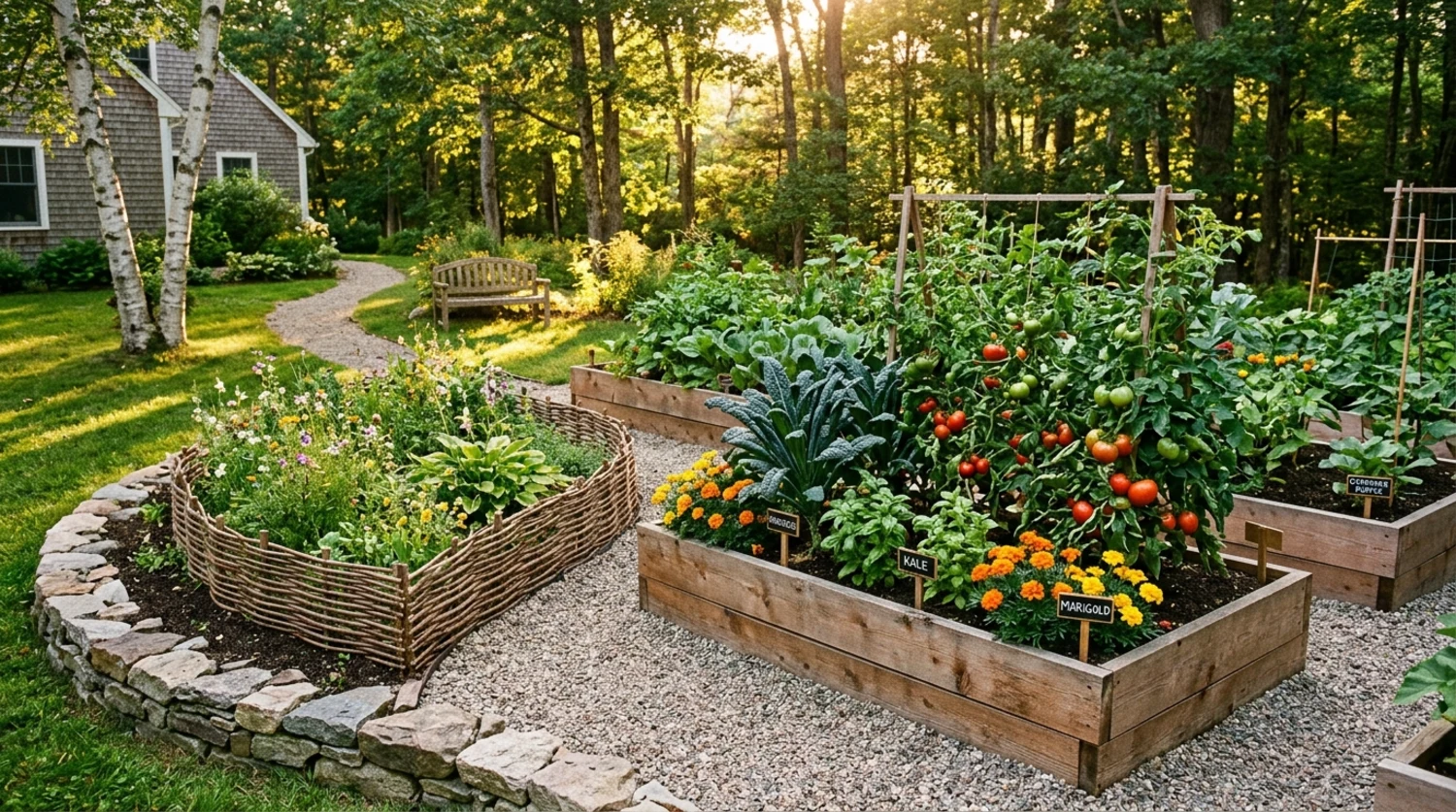
Choosing the right garden barrier depends on three essential project goals: (1) for pest defense against rabbits and woodchucks, install a 24-inch vertical timber or wire barrier with an 8-to-12-inch buried L-footer skirt, (2) for sloped erosion control, use dry-stack native fieldstone or segmental retaining blocks on a compacted crushed stone base, and (3) for low-cost aesthetic separation, spaded English trenches or woven willow wattle provide natural elegance under $8 per linear foot.
The Essential Functions of a High-Performance Garden Barrier
In suburban landscape design, an uncontained garden bed quickly creates ongoing maintenance headaches. Without a defined barrier, aggressive lawn turfgrass (such as Kentucky bluegrass and creeping red fescue) continuously infiltrates planting beds, expensive hardwood mulch washes onto walkways during heavy rainstorms, and local wildlife devastates tender vegetable seedlings.
A thoughtfully engineered garden barrier solves these challenges simultaneously. By elevating soil profiles, barriers increase soil temperatures by 5°F to 8°F in early New England springs, dramatically accelerating seedling germination while keeping pets, pests, and lawn equipment safely at bay.
Material Specifications
Garden Barrier Materials Compared: Durability, Cost & Pest Defense
| Material | Expected Lifespan | Cost / Linear Ft | Pest Protection | DIY Difficulty | Best Landscape Application |
|---|---|---|---|---|---|
| Native New England Fieldstone | 50+ Years (Permanent) | $15 – $35 (DIY) / $35 – $70 (Pro) | High (solid barrier) | Moderate (heavy lifting) | Classic North Shore colonial estates, rustic cottage beds, terrace slopes |
| Northern White Cedar Timbers | 15–22 Years | $8 – $16 | Moderate-High | Easy (standard woodworking tools) | Raised organic vegetable gardens, straight clean-line borders |
| Corten Weathering Steel | 25–40 Years | $12 – $24 | Moderate (stops weed creep) | Easy-Moderate | Modern architectural gardens, curved lawn lines, sharp contemporary beds |
| Woven Willow / Hazel Wattle | 5–8 Years | $4 – $9 | Moderate | Very Easy | English cottage borders, organic permaculture beds, budget-friendly fencing |
| Stone Gabion Mesh Baskets | 30+ Years | $20 – $45 | Exceptional | Moderate | Sloped hillside stabilization, industrial-modern garden zoning, sound absorption |
| Hardware Cloth + Cedar Skirt | 12–18 Years | $6 – $12 | Maximum (Stops rabbits, woodchucks & burrowers) | Moderate (trenching required) | Kitchen vegetable gardens, strawberry patches, deer and rabbit exclusion |
Curated Design Collection
21 Creative Garden Barrier Ideas for Small and Large Yards
Dry-Stacked New England Fieldstone Wall
Natural Masonry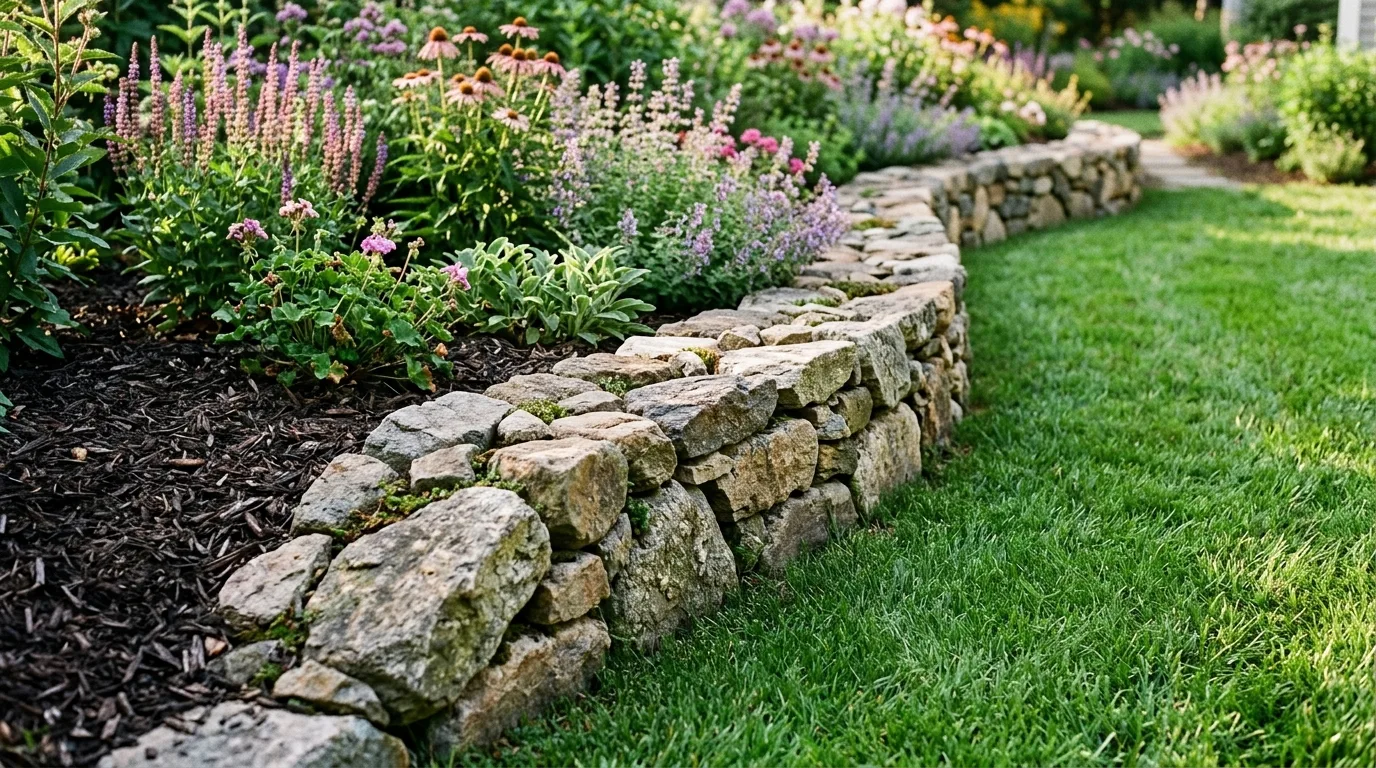
Stack rounded glacial granite and fieldstones over a 4-inch compacted gravel trench. The natural crevices provide microhabitats for beneficial predatory insects while creating an heirloom New England boundary.
Woven Willow Wattle Hurdles
Rustic BiodegradableWeave flexible green willow whips horizontally between upright wooden stakes driven 10 inches into the soil. It forms an elegant, organic raised bed rim that gracefully weathers into a silvery gray hue.
Corten Steel Architectural Edging
Modern Metal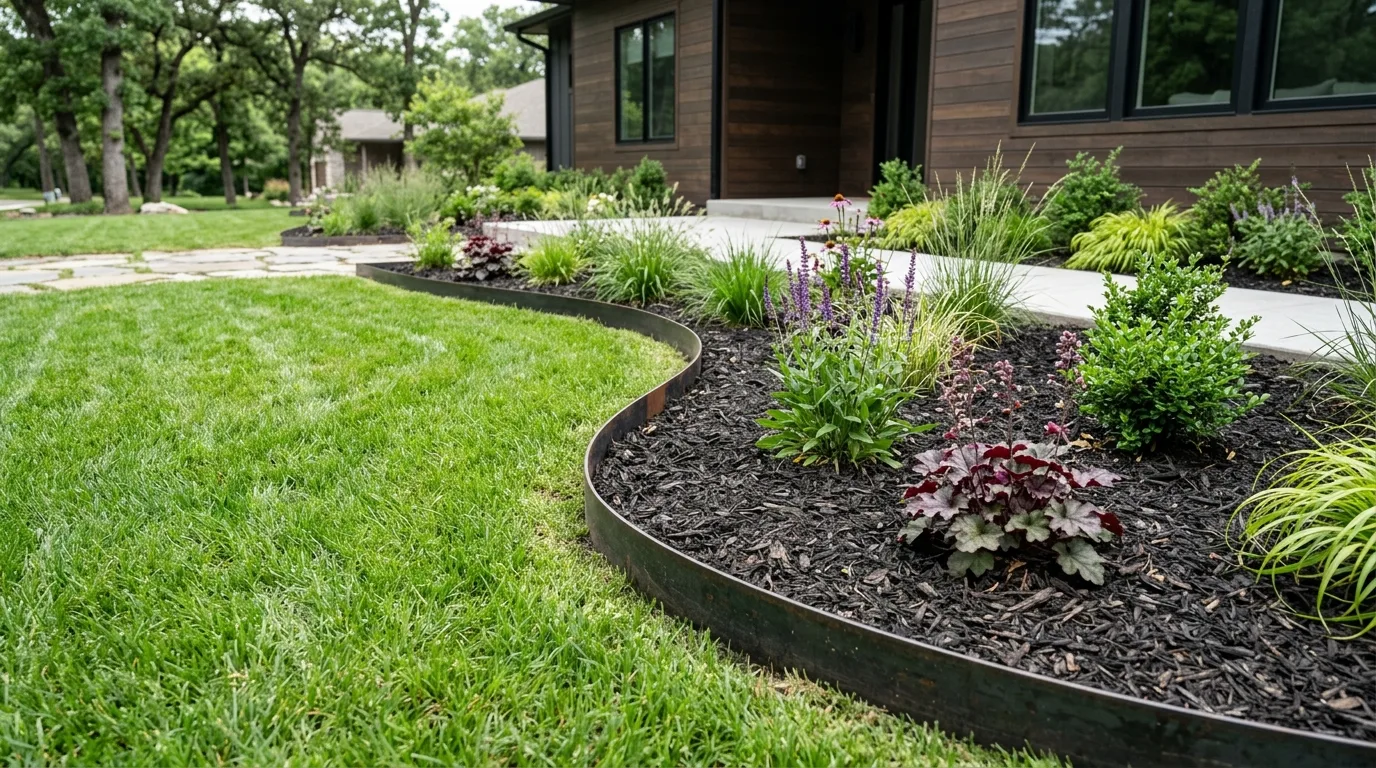
Corten steel develops an amber-bronze rust patina that halts further corrosion. Its slim 1/8-inch profile creates crisp, razor-sharp separations between gravel walkways and lush perennial beds.
Living Boxwood & Inkberry Low Hedgerow
Living Green Barrier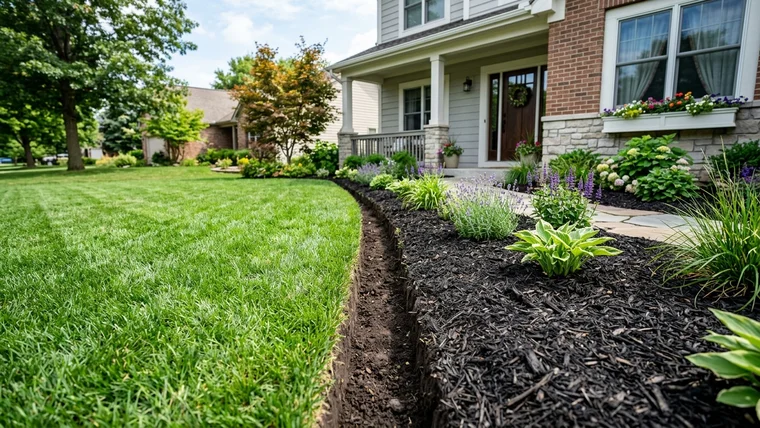
Plant dense native inkberry hollies 12 inches apart along garden borders. Regular light shearing creates a formal, manicured green parapet that deters foot traffic and shields delicate perennials from winter winds.
Welded Wire Gabion Retaining Baskets
Structural Industrial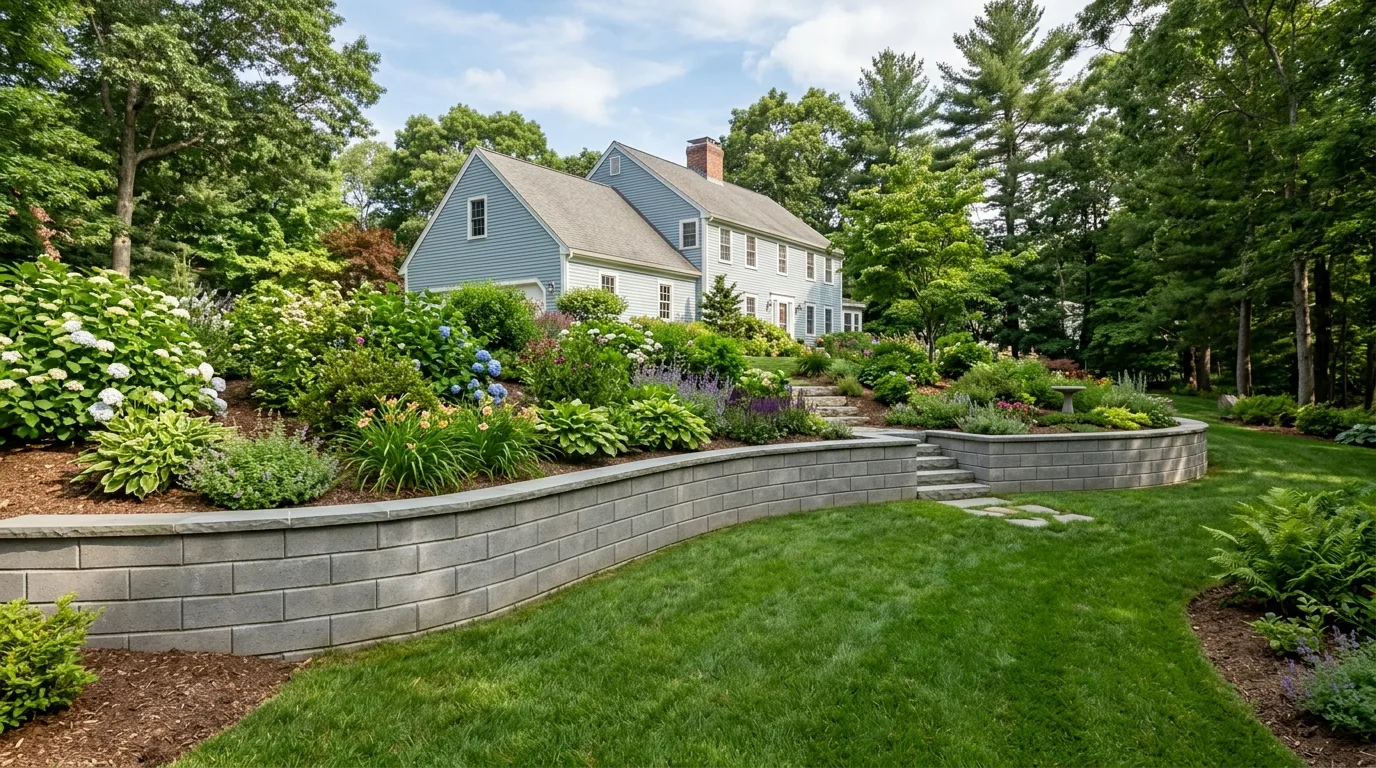
Fill rectangular galvanized steel mesh baskets with local river rock or broken granite quarry chunks. Gabions handle hydrostatic groundwater effortlessly without requiring buried perforated pipe drainage.
Notched Cedar 4x4 Interlocking Timbers
Wood & Timber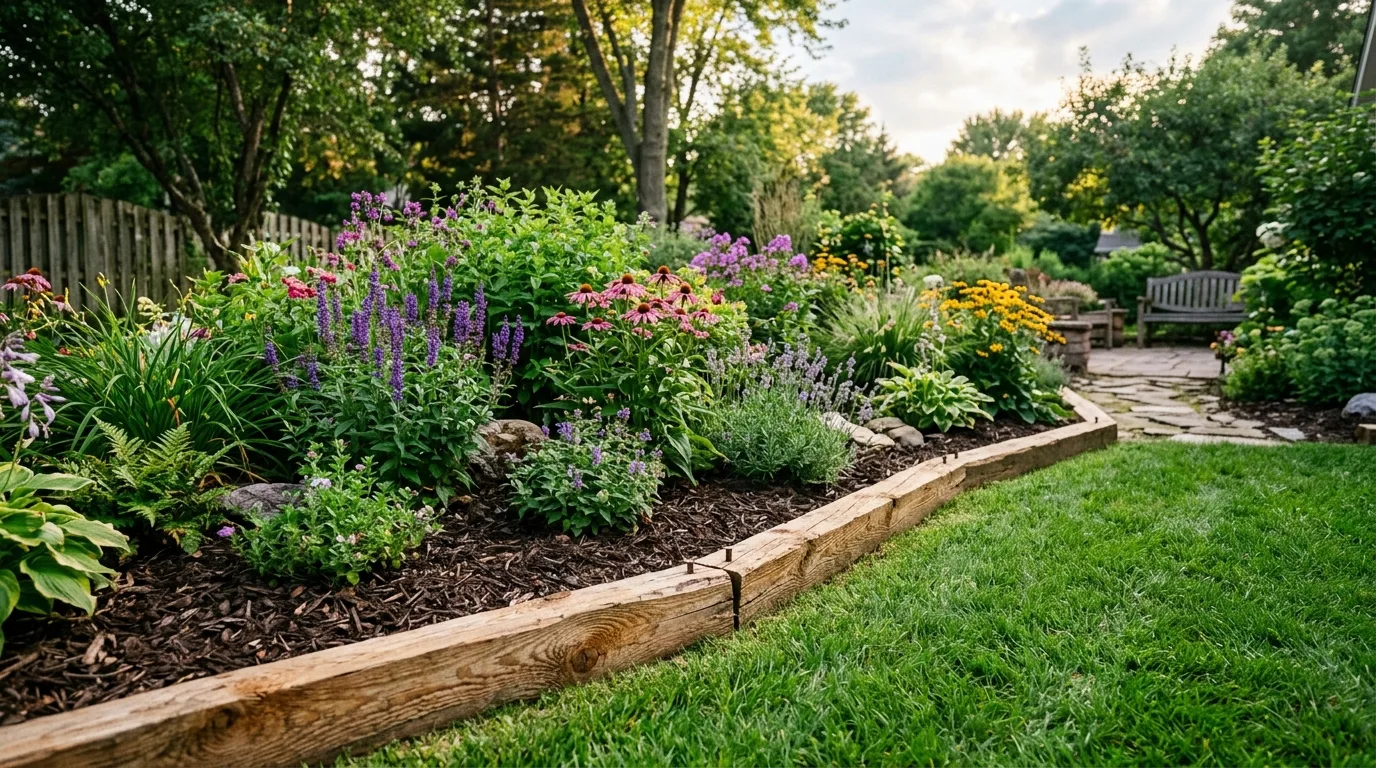
Lap-joint solid cedar timbers at bed corners and anchor them with 1/2-inch steel rebar drilled vertically through the timber into the subsoil. Delivers decades of geometric stability for vegetable gardens.
L-Foot Hardware Cloth Buried Pest Skirt
Pest Exclusion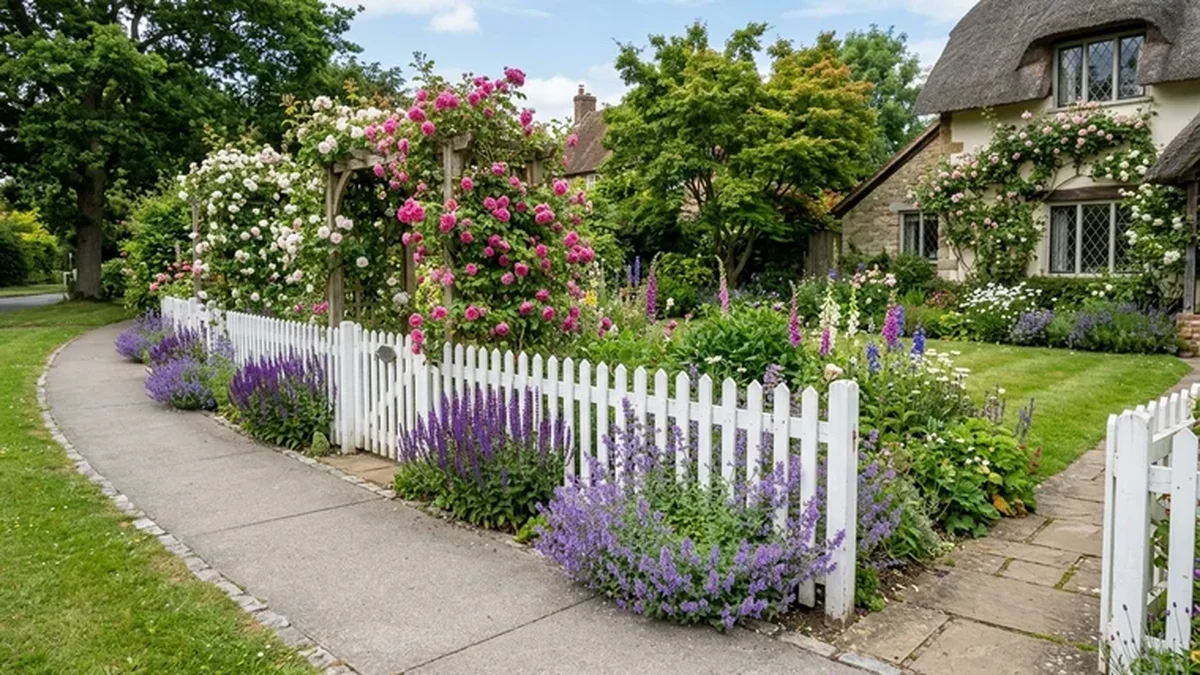
Attach heavy-duty hardware cloth to the inner perimeter of cedar garden borders, extending 10 inches below soil grade and flaring 6 inches outward horizontally to stop digging pests dead in their tracks.
Recycled Red Brick Soldier Border
Historic Masonry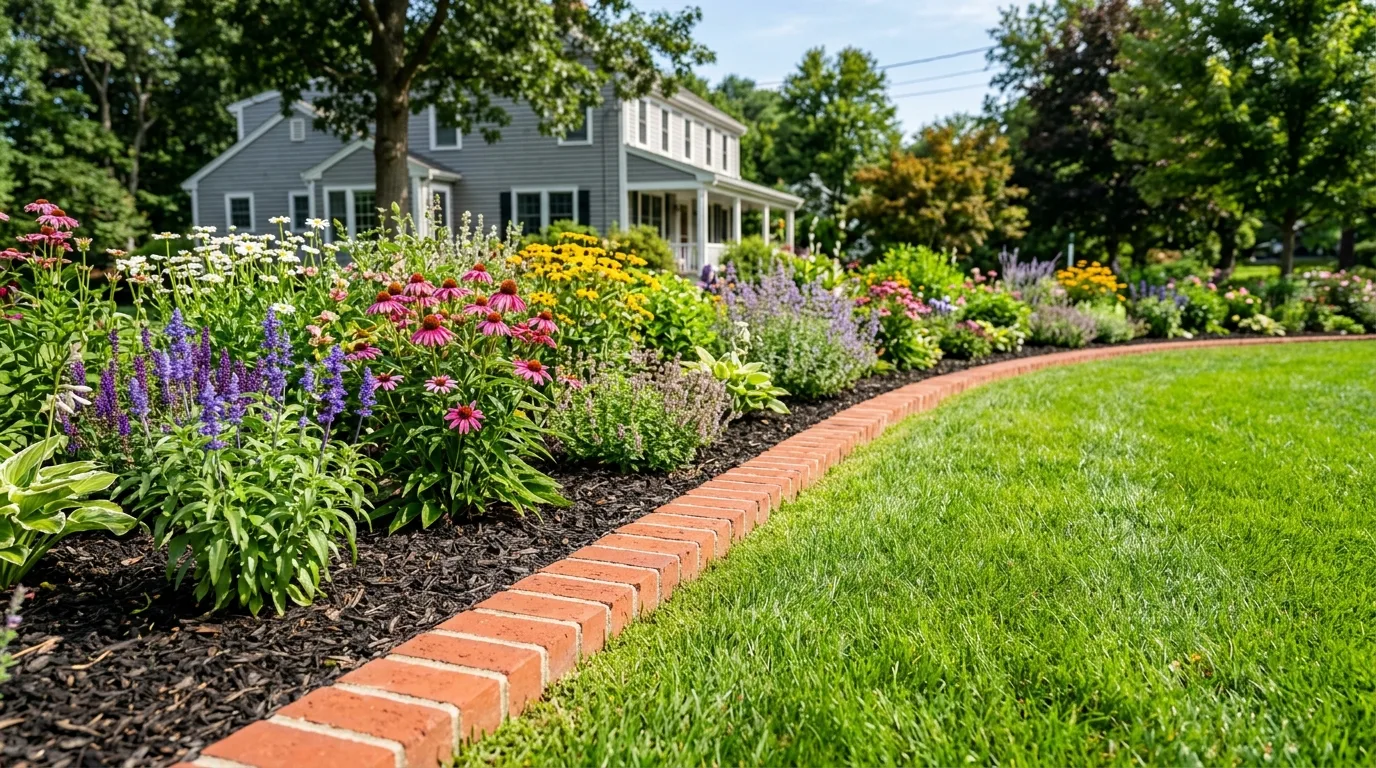
Set historic clay brick pavers vertically on end ('soldier course') or angled at 45 degrees ('sawtooth pattern') over a tamped stone dust bedding. Sweeping polymeric sand locks joints against weed seeds.
Split-Rail Rustic Garden Enclosure
Farmhouse Aesthetic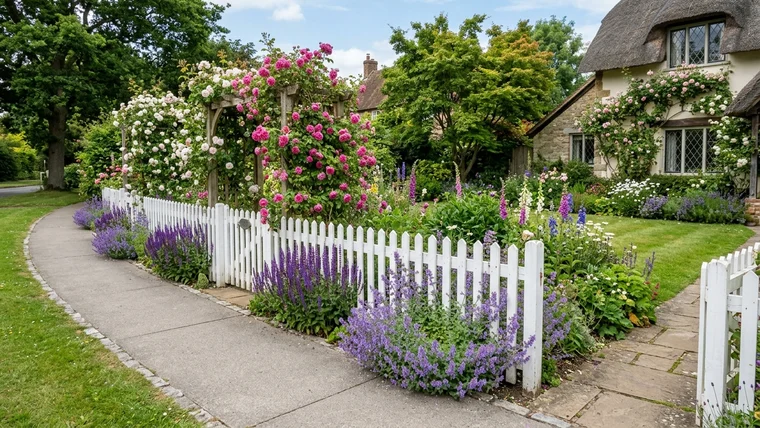
A classic two-rail wooden split-rail perimeter creates an unmistakable farmhouse boundary. Line the inside with black vinyl-coated welded wire to keep out dogs and wildlife while maintaining rustic charm.
Aromatic Lavender & Catmint Living Border
Living Perennial Barrier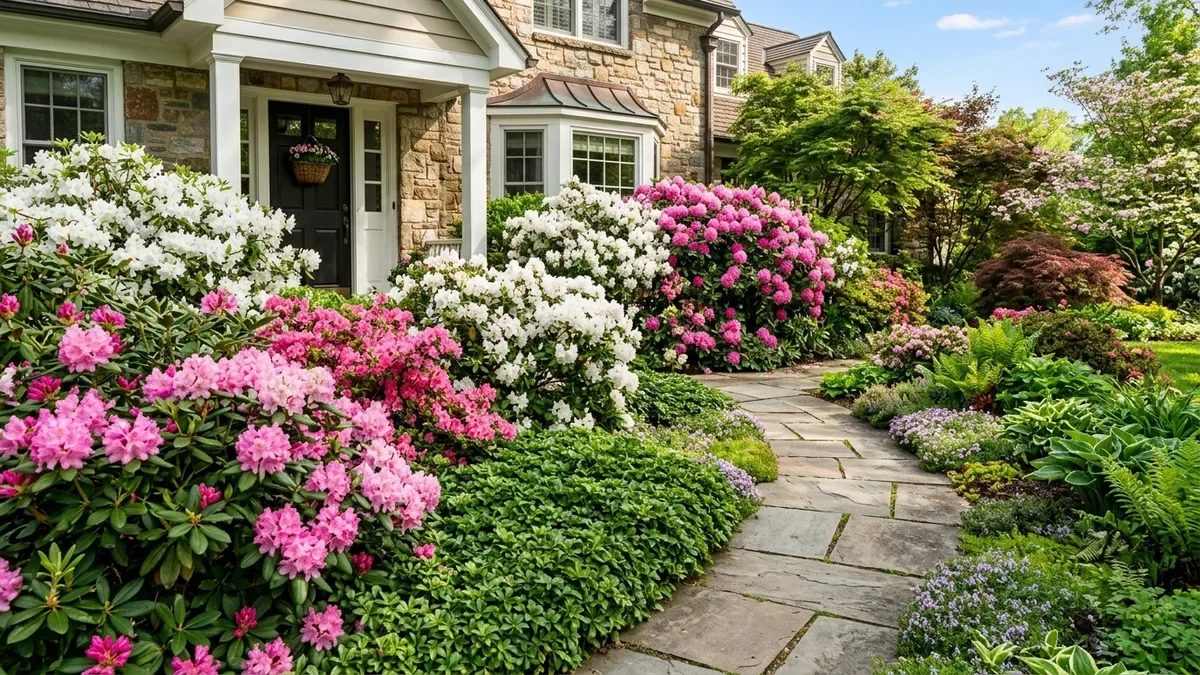
Plant dense drifts of aromatic perennial herbs along bed edges. The strong volatile foliage oils naturally discourage deer and rabbits, while massed purple blooms attract pollinators all summer long.
Bamboo Screen Garden Zoning Panels
Natural Screening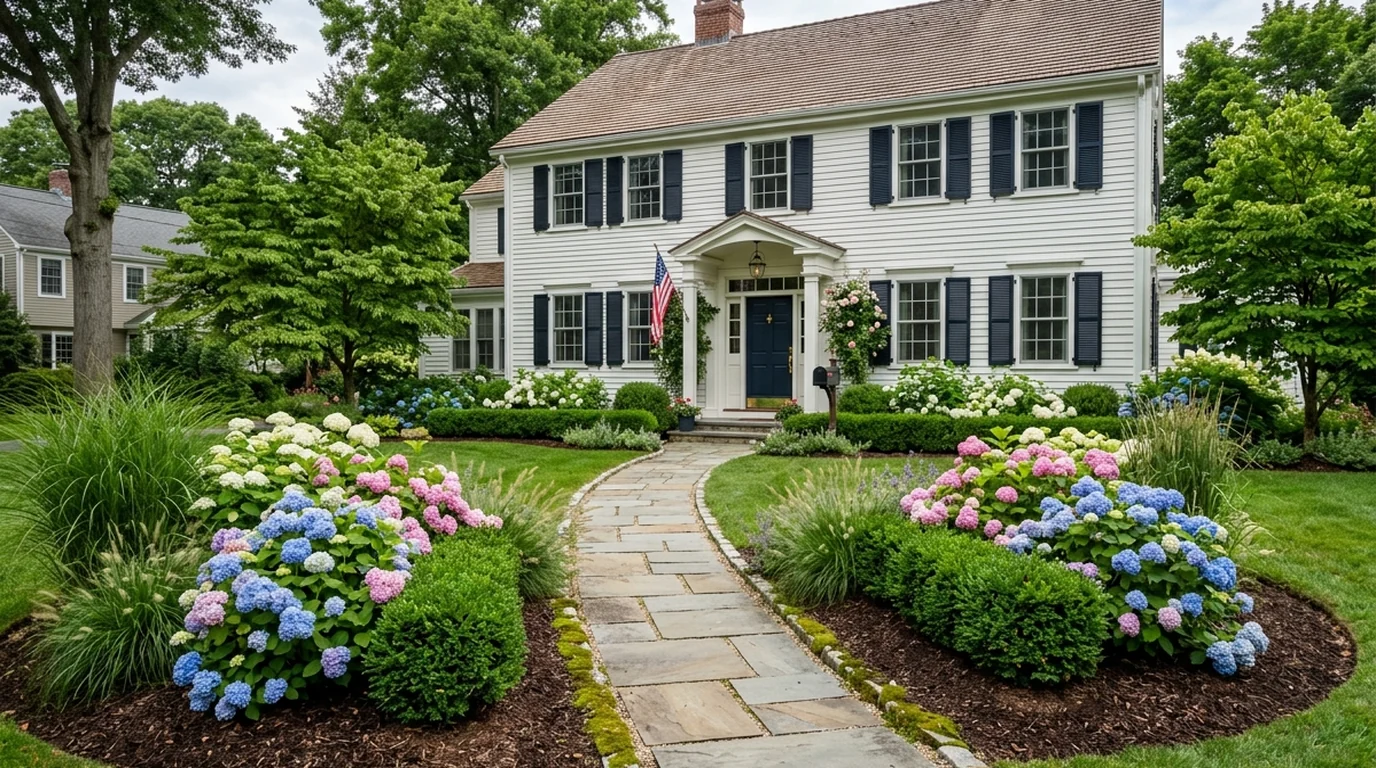
Frame natural bamboo poles inside rot-resistant cedar framing panels. Position these screens along the prevailing windward side of raised beds to buffer tender tomato and pepper plants from gusty spring winds.
Vertical Pallet Herb & Strawberry Wall
Upcycled DIY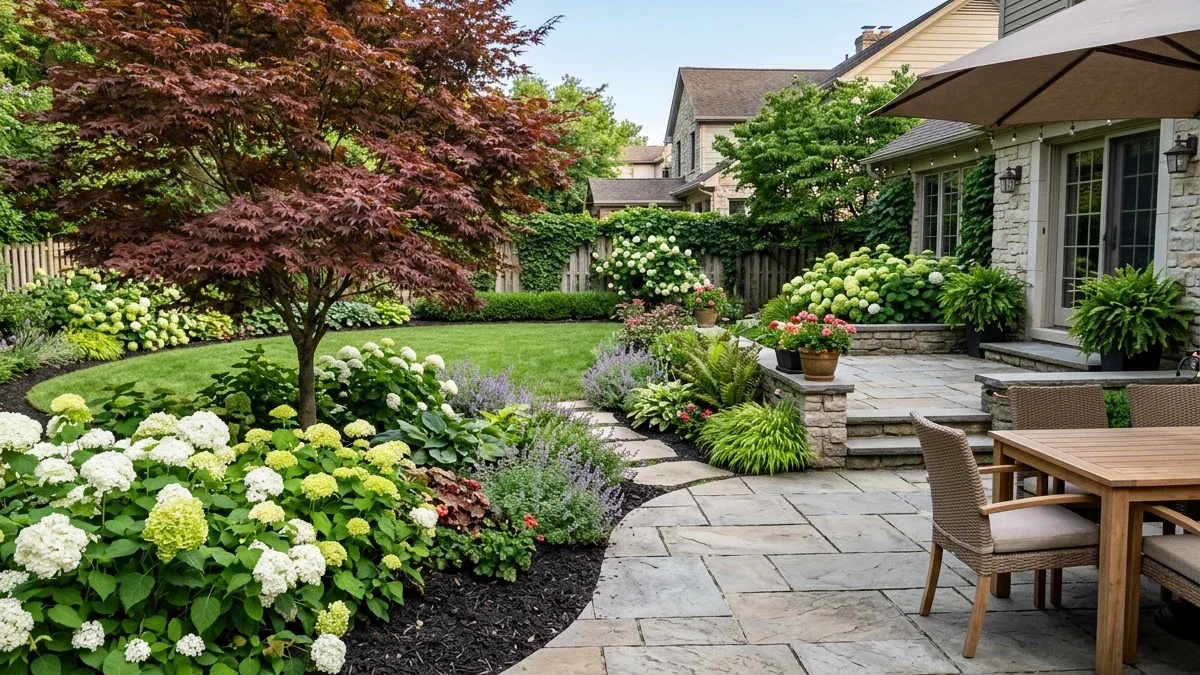
Line the interior channels of heat-treated wooden pallets with porous geotextile fabric. Plant compact herbs, strawberries, and trailing nasturtiums to create an edible vertical room divider on paved patios.
Granite Cobblestone Belgian Block Edge
Luxury Masonry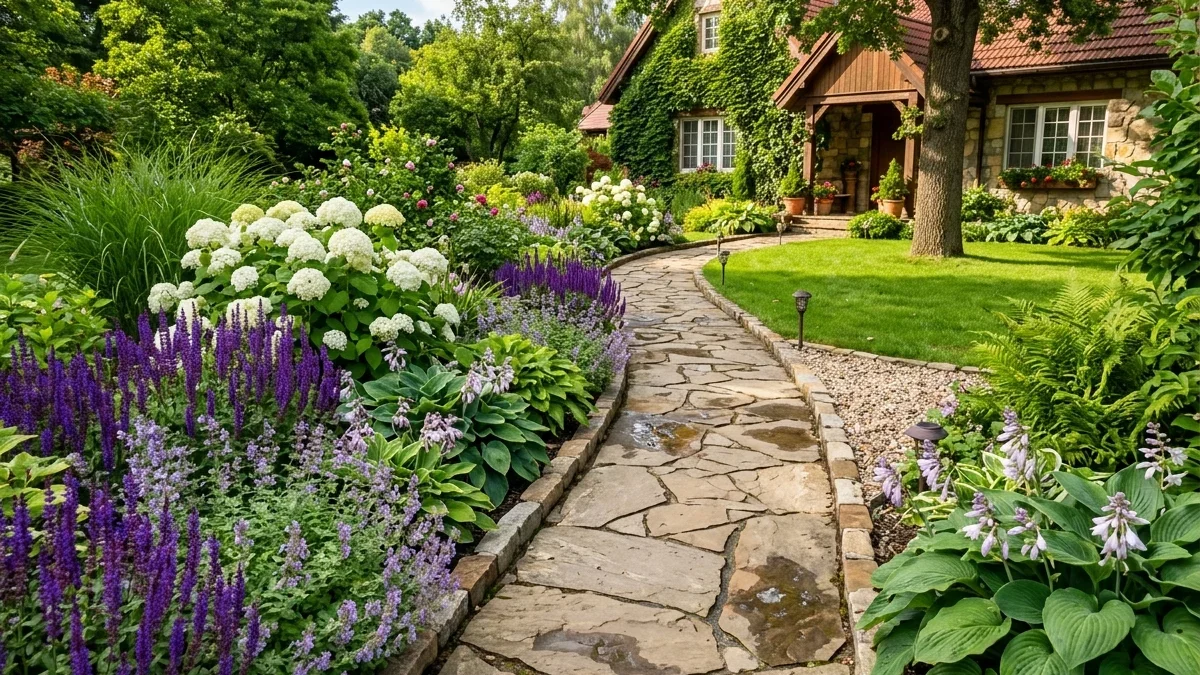
Bed solid granite cobblestones (Belgian blocks) in a dry-pour mortar mix flush with your turf level. Allows lawnmower wheels to glide smoothly along the border, completely eliminating the need for string trimming.
Horizontal Slatted Privacy Barrier
Contemporary Wood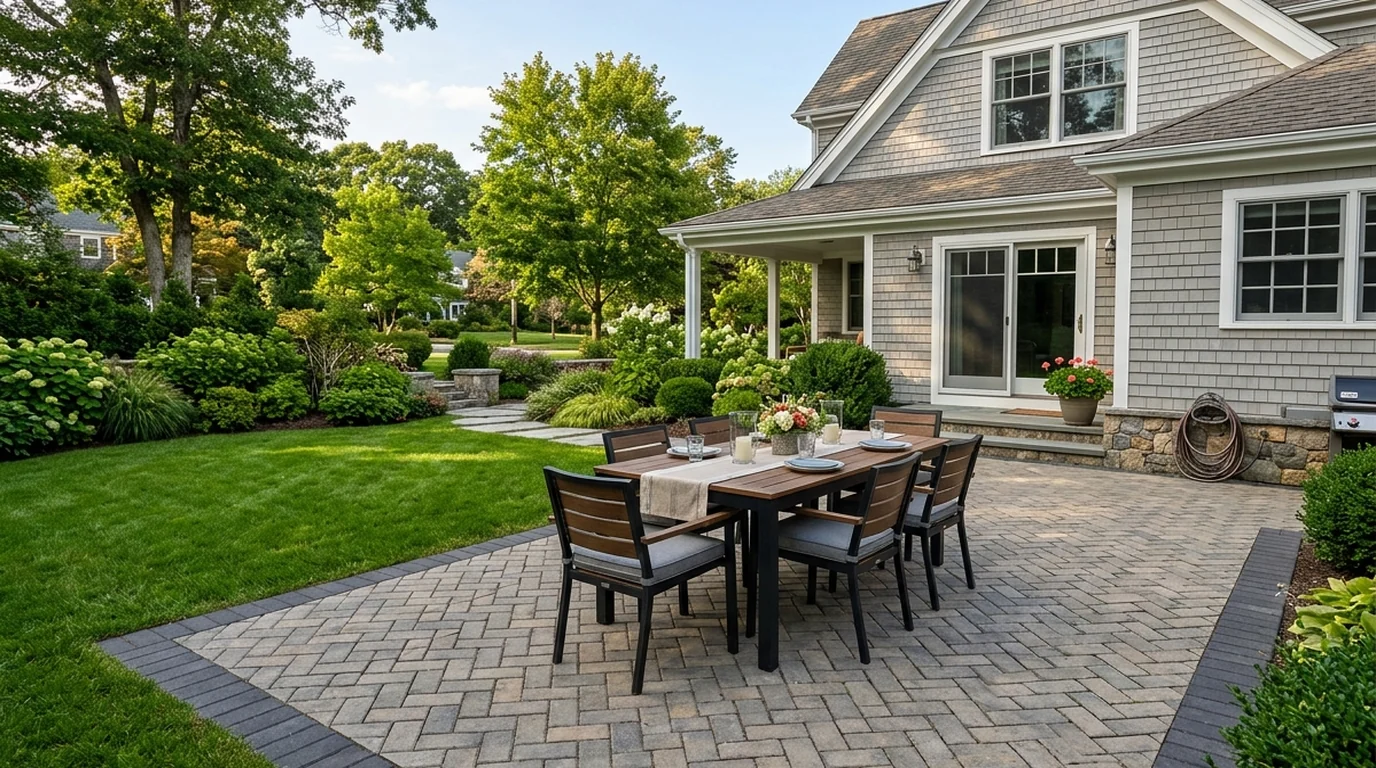
Mount narrow horizontal wood slats with 1/2-inch gaps between sturdy square posts. The spacing diffuses wind turbulence without creating dark shadows, shielding vegetable beds while creating backyard privacy.
Galvanized Stock Tank Raised Bed Barrier
Farmhouse Industrial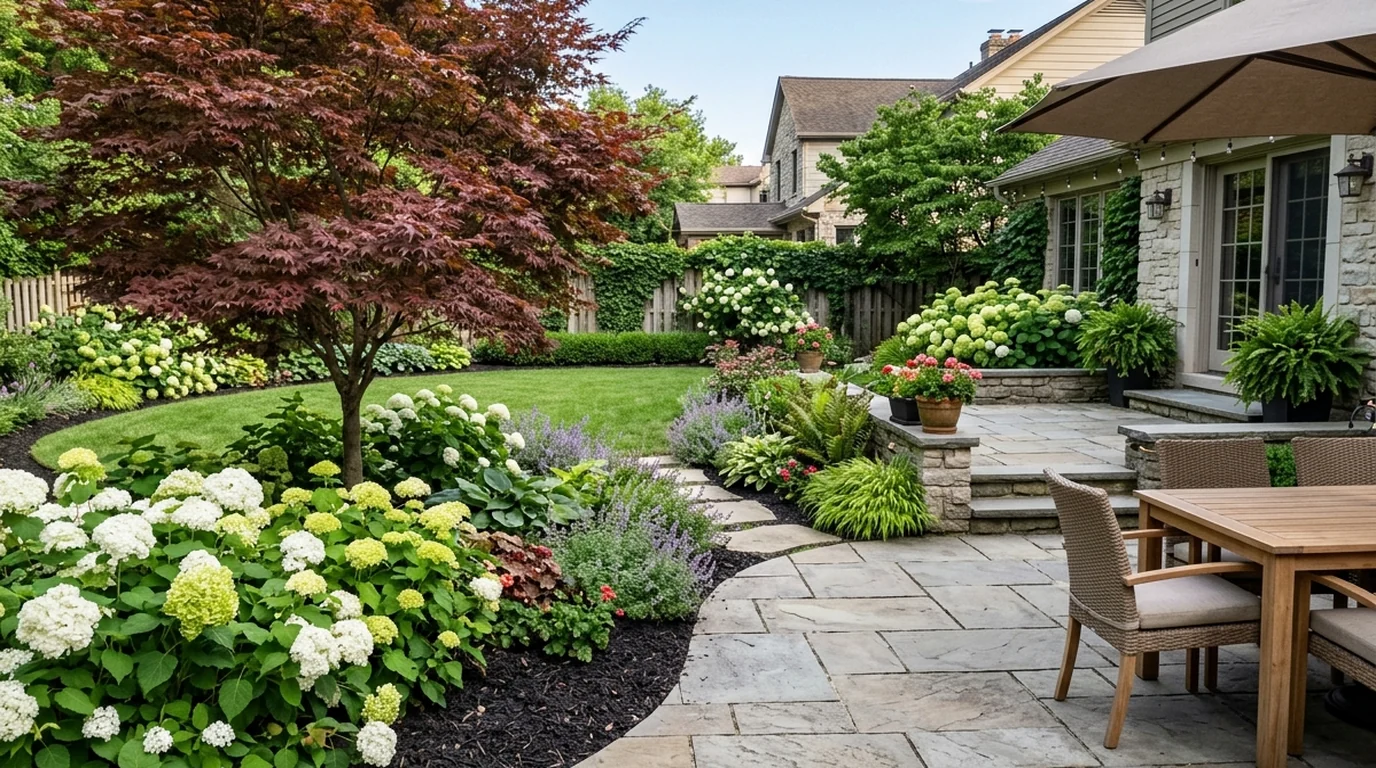
Drill drainage holes in heavy-duty galvanized oval stock tanks and set them directly on gravel pads. The 2-foot height completely stops rabbits and keeps vegetable gardening at an ergonomic, back-friendly height.
Vertical Log Palisade Edge
Woodland Rustic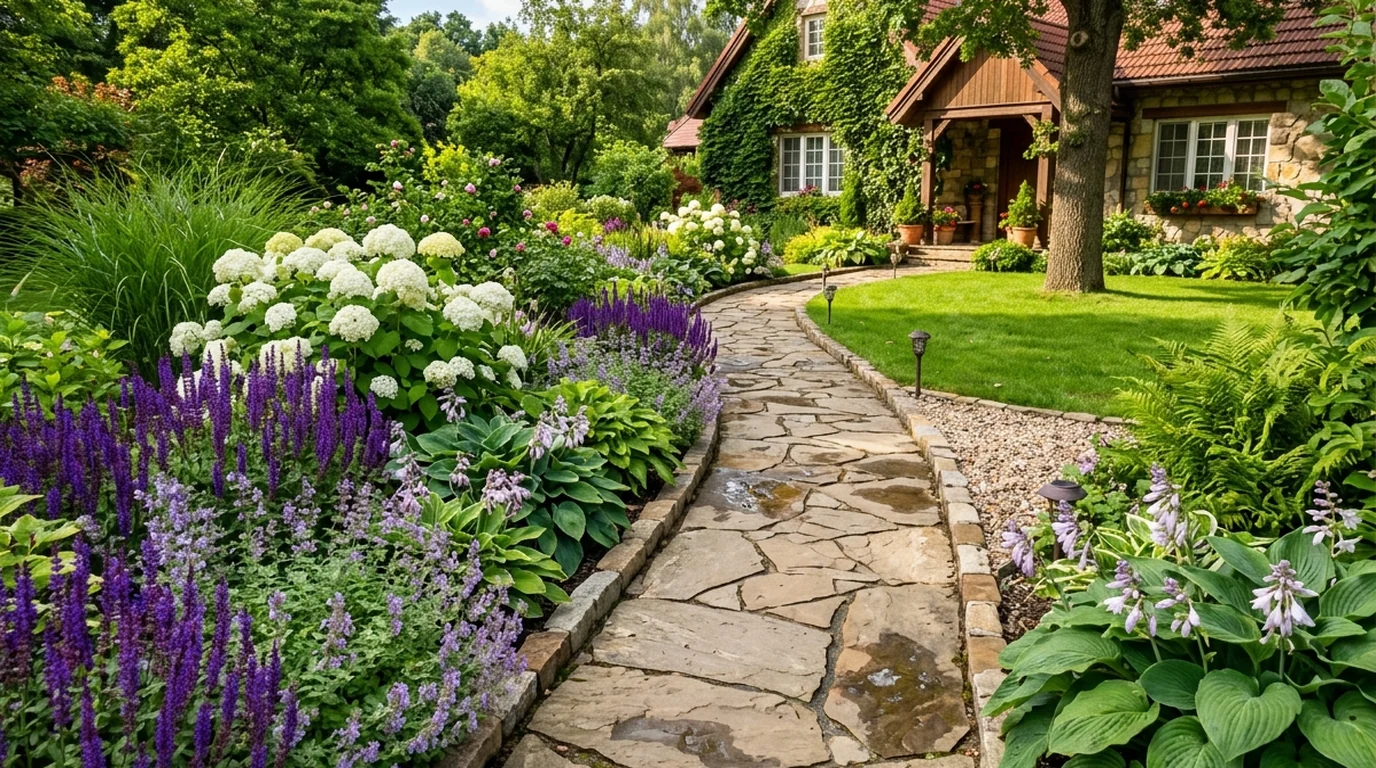
Cut fallen cedar or locust branches into varying lengths (12 to 20 inches) and set them vertically side-by-side in a narrow trench. The undulating heights form a natural rustic barrier along woodland garden edges.
Living Willow Living Fence (Salix)
Living Bioengineering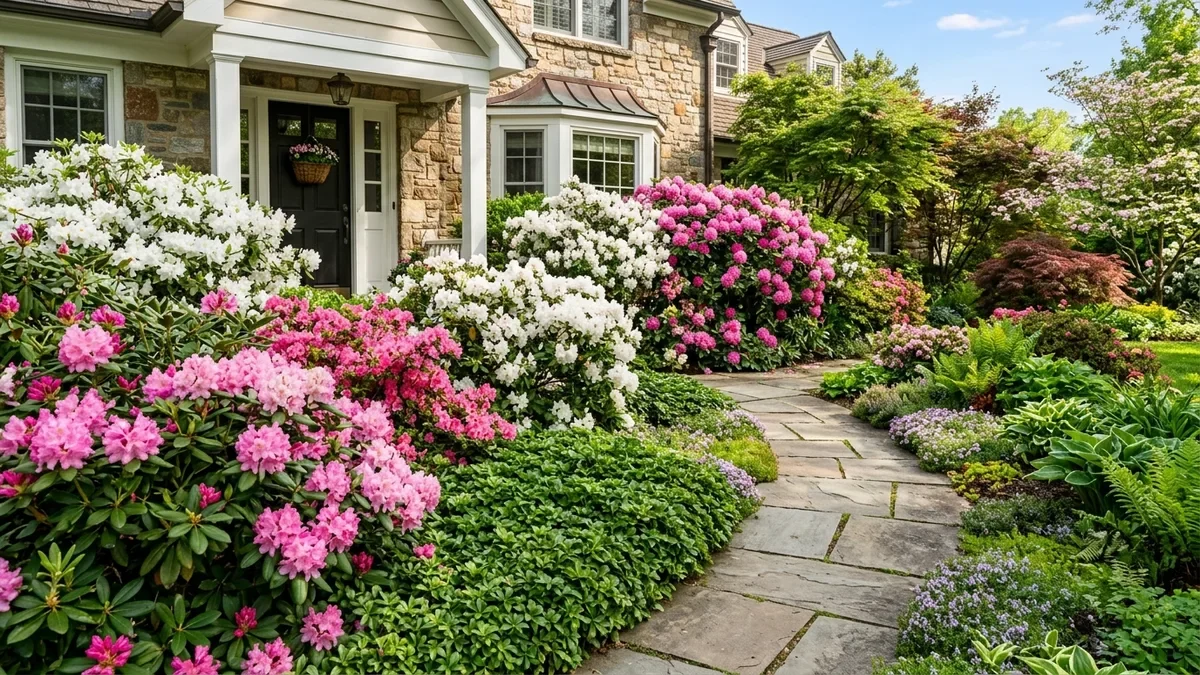
Plant live willow cuttings directly into damp ground in March, weaving stems together into an interlocking lattice. By June, leaves sprout along every stem, forming an impenetrable, self-healing living fence.
Large River Cobble & Boulder Dry Creek Barrier
Drainage Integration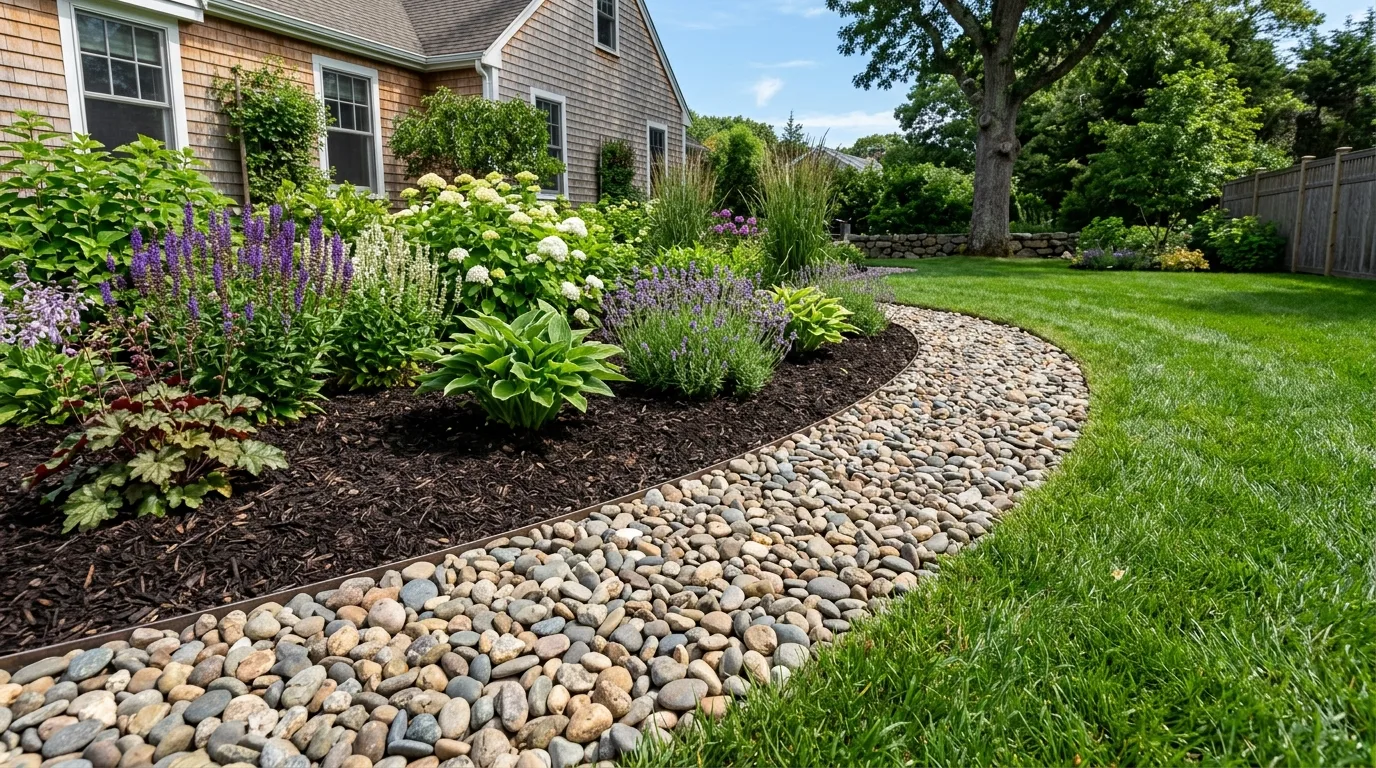
Line a shallow perimeter depression with non-woven filter fabric and layer with smooth river cobbles and larger granite boulders. Captures excess lawn runoff and directs water safely away from garden root zones.
Decorative Metal Garden Trellis Hurdles
Ornamental Steel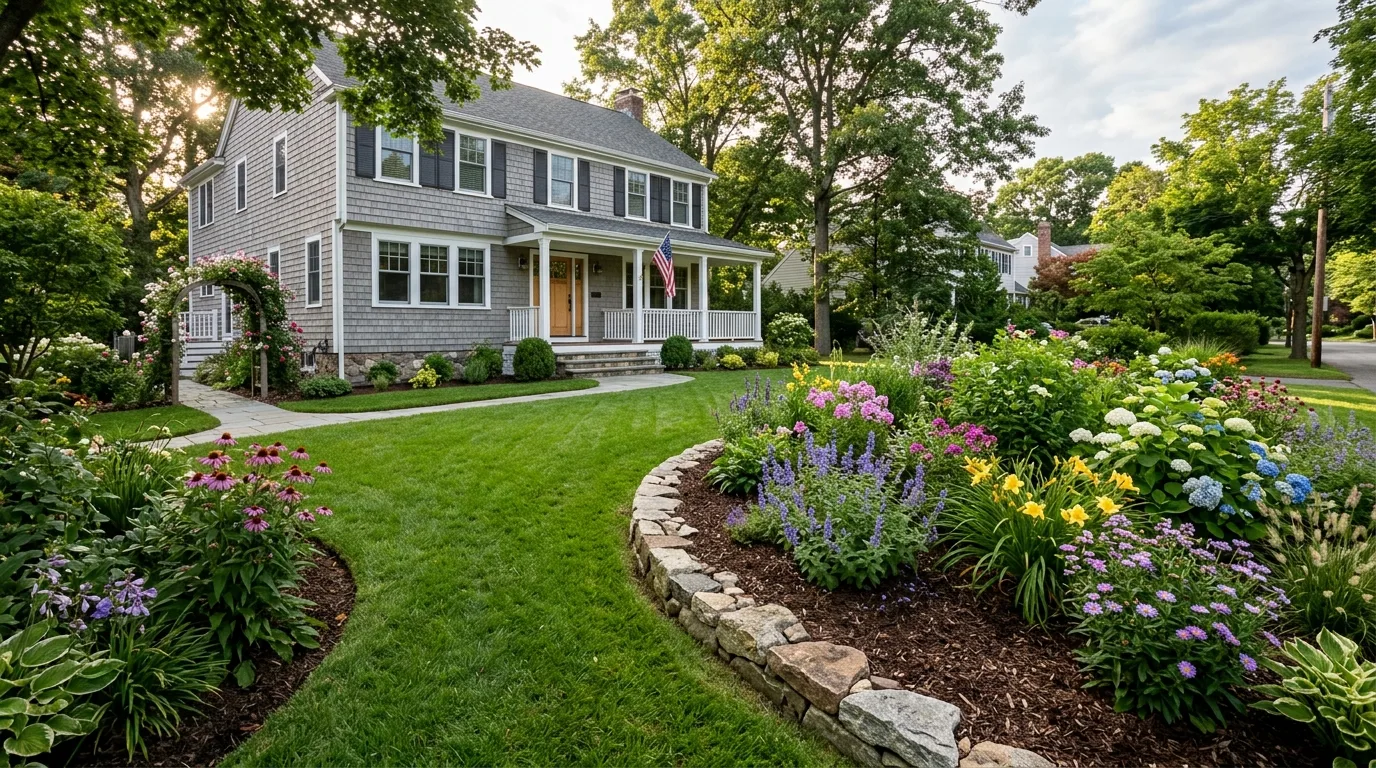
Interlocking steel hurdle panels stake directly into the lawn with integrated spiked footings. Perfect for temporary seasonal protection or as beautiful vertical support for snap peas and sweet peas.
Spaded English Trench Turf Barrier
Minimalist Zero-Cost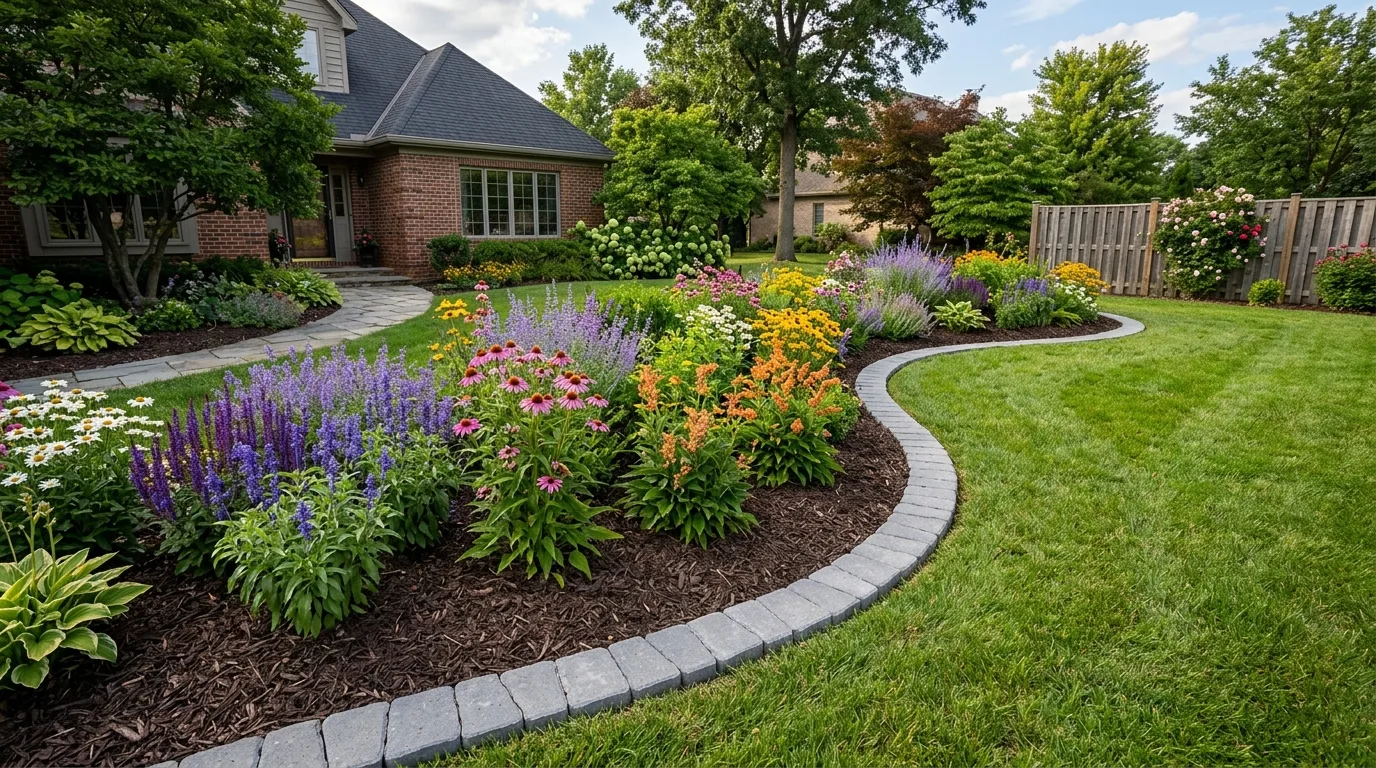
Cut a crisp 90-degree vertical edge along the turf with a flat spade, tapering at a 45-degree angle back into the garden bed. Rhizome grass roots cannot bridge the air gap, keeping mulch beds pristine.
Modular Cast Stone Curved Retaining Blocks
Engineered Hardscape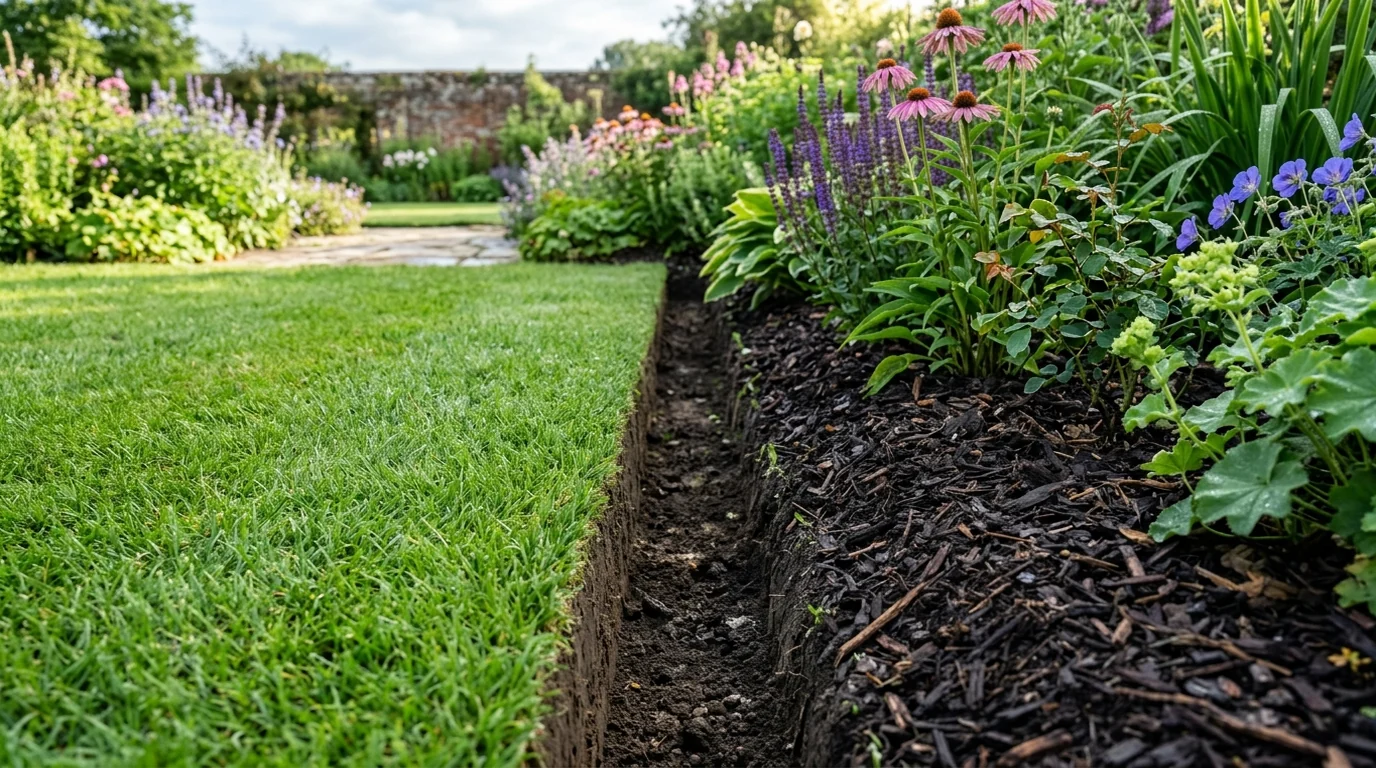
Engineered concrete retaining blocks feature integrated rear shear pins or locking lips. Easily construct flowing S-curves and raised circular planting circles that withstand heavy soil and snow loads.
Wildlife Defense Engineering
Building Wildlife-Proof Garden Barriers in Massachusetts
The Burrowing Animal Defense (L-Footer)
Groundhogs and rabbits rarely dig backwards. Excavate an 8-inch deep vertical trench along the outside of your barrier, install 1/2-inch galvanized hardware cloth, and bend the bottom 6 inches outward horizontally facing the lawn. Cover with crushed stone and soil.
Drainage Physics & Weep Holes
Solid masonry or timber barriers over 12 inches tall act as small dams. If soil retains excess water during spring snowmelt, saturated hydrostatic pressure rots roots and heaves the barrier. Always backfill with 4 inches of washed 3/4-inch drainage stone and provide perforated weep holes every 6 feet.
Homeowner FAQs
Frequently Asked Questions About Garden Barriers
Answers
Frequently asked questions
01What is the most cost-effective DIY garden barrier?
Natural trench edging (spaded English edging) is the most cost-effective garden barrier at virtually zero material cost. For physical materials, pressure-treated landscape timbers ($3 to $6 per linear foot) and woven willow or hazel wattle hurdles ($4 to $8 per linear foot) offer the best combination of low cost, natural aesthetics, and simple DIY installation.
02How deep should a garden barrier go to stop burrowing animals?
To effectively exclude burrowing pests like eastern cottontails, woodchucks (groundhogs), and voles, a garden barrier or hardware cloth skirt must extend 8 to 12 inches vertically underground, followed by a 6-inch outward horizontal 'L-footer' trench. When pests attempt to dig beneath the barrier, they contact the wire mesh and abandon the attempt.
03What is the difference between garden edging and a garden barrier?
Garden edging (typically 2 to 4 inches tall) defines clean lines between turfgrass and mulch beds to prevent rhizomatous grass creep. A garden barrier (12 to 36+ inches tall) serves physical containment functions: preventing soil washouts on slopes, retaining raised bed soils, deflecting wind, providing visual zoning, or physically blocking domestic pets and wildlife.
04Can you use natural fieldstone as a mortarless garden barrier?
Yes. Dry-stack native New England fieldstone is one of the most durable, architecturally timeless garden barriers available. Fieldstones up to 18 inches tall require no mortar or concrete footings; they are dry-laid over a 4-inch compacted crushed stone base, allowing free drainage while resisting New England's harsh winter freeze-thaw cycles without cracking.
05What living plants make the best natural garden barriers?
Compact evergreen shrubs like dwarf boxwood ('Winter Gem'), inkberry holly (Ilex glabra 'Densa'), and yew create crisp year-round living barriers. For softer, pollinator-friendly borders, woody herbs such as English lavender, catmint (Nepeta 'Walker's Low'), and creeping rosemary form dense 12-to-18-inch fragrant boundaries that naturally deter deer and rabbits.
06How long do cedar garden bed barriers last compared to pine?
Naturally rot-resistant Northern White Cedar or Western Red Cedar borders last 15 to 25 years in ground contact without chemical preservatives, thanks to natural thujaplicin oils. In contrast, untreated pine decays within 2 to 4 years. Pressure-treated pine lasts 10 to 15 years, but cedar remains the gold standard for edible vegetable beds due to zero chemical leaching.
07What garden barrier is best for sloped yards?
Terraced timber barriers, segmental concrete retaining blocks, or stone gabion cages are best for sloped terrain. They act as mini-retaining walls that resist hydrostatic soil pressure, prevent erosion during heavy downpours, and create level planting terraces that retain moisture and nutrients evenly.
08How much does a contractor-installed garden border cost in Essex County?
Professional installation typically ranges from $12 to $25 per linear foot for commercial-grade metal or timber borders, and $28 to $65 per linear foot for hand-laid natural stone or segmental masonry borders, including site excavation, aggregate base compaction, and leveling.
Citations: UMass Amherst Center for Agriculture, Food and the Environment (Landscape and Nursery Program), Massachusetts Department of Agricultural Resources (MDAR), and ASTM C1372 Segmental Retaining Wall Unit standards.
Updated:Ready to Build Your Custom Garden Barriers?
Connect with screened, independent landscape contractors and hardscaping specialists in Peabody and Essex County for free, no-obligation estimates on raised beds, stone borders, and garden enclosures.
Get connected with an independent local landscaping professional. Calls go to (877) 537-6896.