Skip to content
Landscaping PeabodyMassachusetts

Garden Borders & Landscape Design • Homeowner Guide

Flower Bed Edging Ideas: 10 Border Types Compared

Published: October 3, 2026 · 12 min read

A clean flower bed edge does more than sharpen curb appeal—it stops grass roots from creeping into planting beds, prevents bark mulch from washing across the lawn, and determines whether mowing your yard takes twenty minutes or an hour of frustrating string-trimming. Compare 10 practical border materials with realistic pros, cons, installation depths, and New England climate considerations.

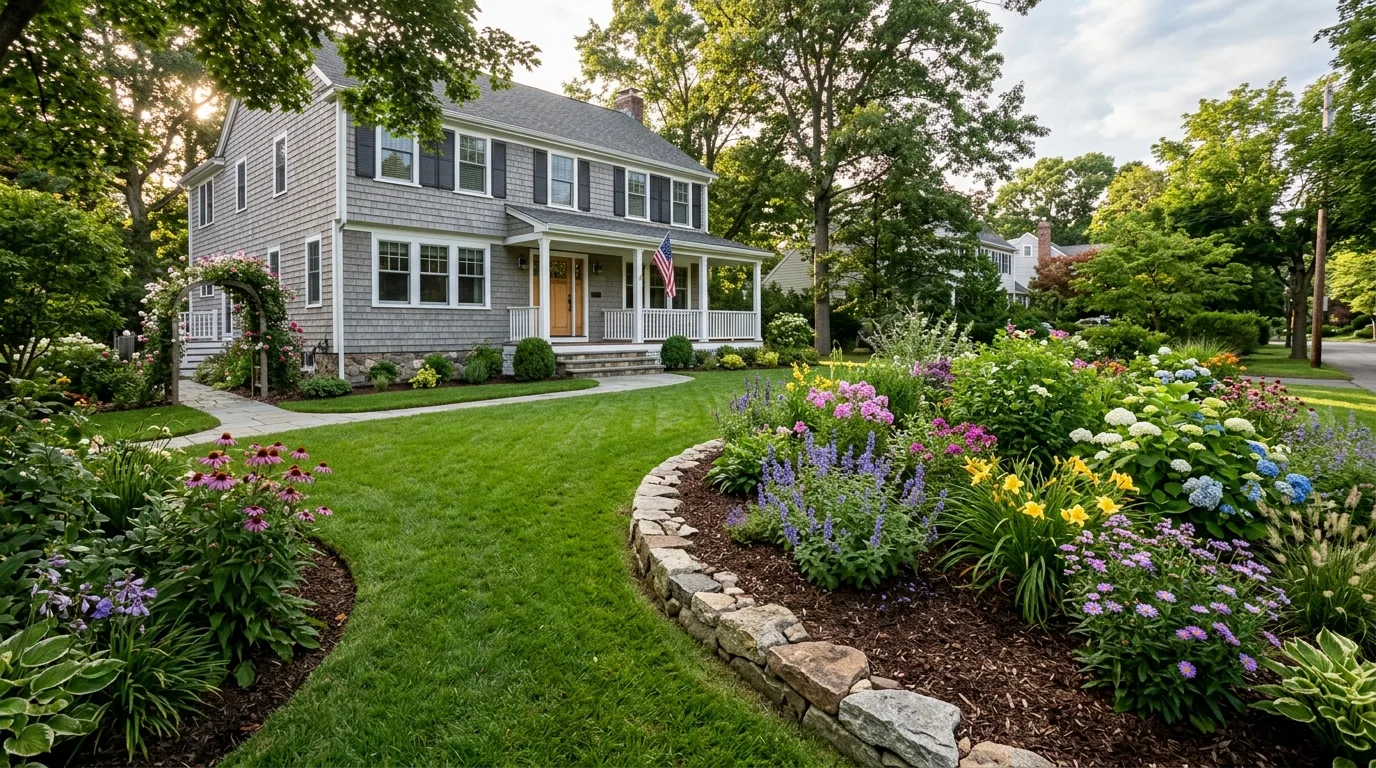
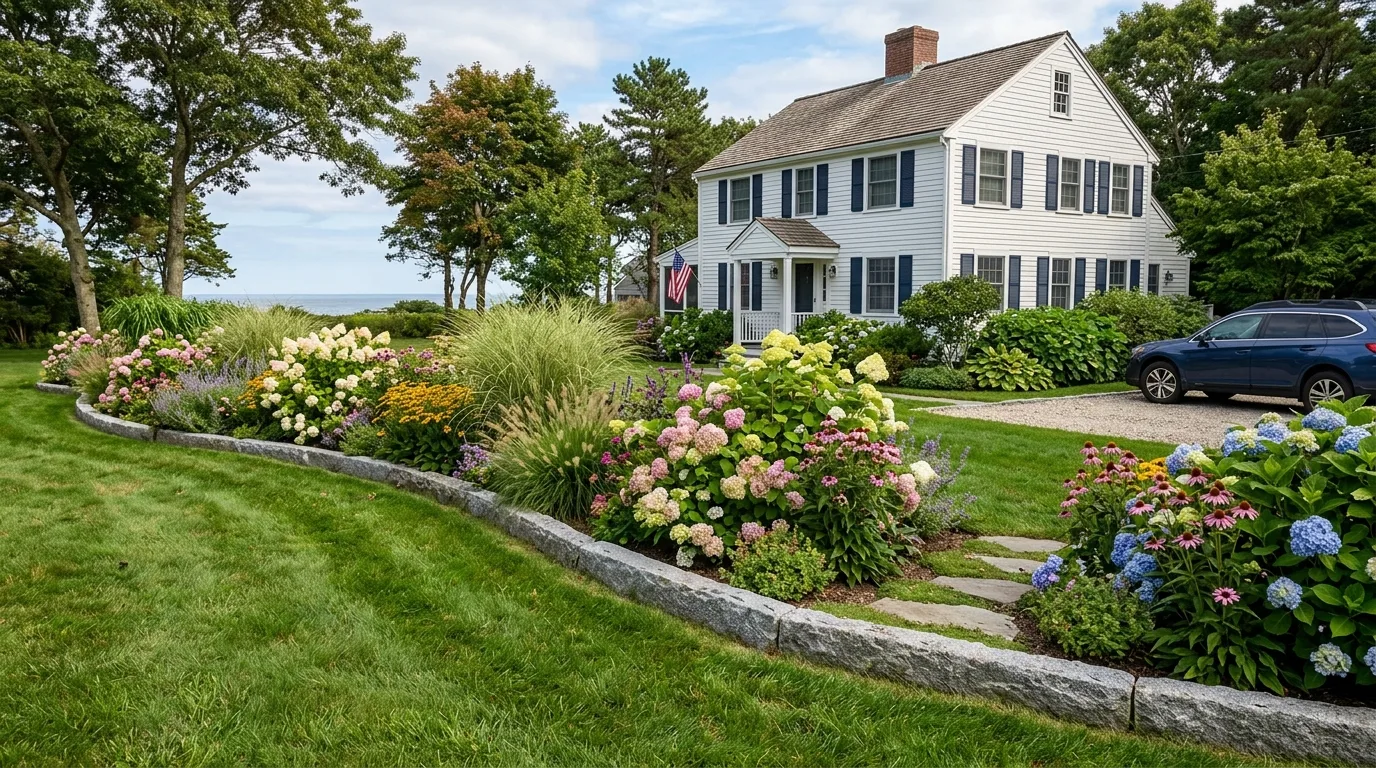
Suburban New England home with a curved flower bed bordered by natural stone edging and blooming perennials

Quick Answer for Homeowners

How to Choose the Right Flower Bed Edging

Flower bed edging creates a durable physical barrier that prevents spreading lawn rhizomes from invading planting beds and stops loose mulch from tumbling onto the lawn. The three best all-around options depend on your primary maintenance priority:

  • For the cleanest mowing with zero string-trimming: Choose a flush brick or concrete paver mowing strip laid flat at turf height so mower wheels roll cleanly across the border.
  • For zero material cost and 100% frost-heave immunity: Cut a 4-inch deep English spade trench, which creates a natural air barrier that desiccates grass rhizomes without buying materials.
  • For modern, narrow curves and maximum root blockage: Install 12-to-14-gauge Corten or steel landscape edging anchored with deep ground stakes.

Planning Tip: Match your edging depth to your lawn variety. Cool-season Kentucky bluegrass requires a 3-to-4-inch barrier depth to stop underground horizontal runners.
See seasonal cleanup & mulch practices →

Material Evaluation

Flower Bed Edging Comparison: Materials, Budgets & Durability

Edging MaterialVisual StyleBudgetDIY EffortCurvatureRoot BarrierFreeze-Thaw DurabilityMain Advantage
Spade-Cut Trench (English Edge)Requires manual re-cutting 1–2 times per yearClassic, Natural, Organic$EasyExcellent (any radius)High (4″ air gap)100% immune (no rigid parts)Zero material cost; mower wheel rides cleanly over edge
Natural Fieldstone & GraniteUneven stone tops require regular string trimmingCottage, Rustic, Colonial$$$ModerateVery Good (flexible placement)Medium (depends on sub-grade)Self-settling (easy to reset)Permanent, timeless New England aesthetic; never rots
Clay Brick & PaversNon-rated brick can spall; joints need weedingTraditional, Formal, Historic$$ModerateGood (pie-joint curves)High (when sand-bedded)Good (requires aggregate base)Flush soldier courses allow zero-trim mower rollout
Steel & Corten EdgingHigher material price; tough staking in rocky soilsModern, Minimalist, Architectural$$$ModerateExceptional (clean arcs)Exceptional (solid vertical sheet)Excellent (deep 12″ stakes)Ultra-slim footprint; stops 100% of underground roots
Granite Cobblestone (Belgian Block)Heavy blocks (15–20 lbs each); higher delivery costEstate, Historic New England$$$$DemandingGood (segmented blocks)High (4–6″ depth)Outstanding durabilityVirtually indestructible; immune to salt, plows & trimmers
Curved Concrete Border PaversFactory pigments fade over decades; can shift if unpinnedSuburban, Contemporary$$EasyEngineered for curvesModerate to HighGood on compacted gravelInterlocking radii make circular islands fast to build
River Rock & Gravel SwaleDebris and grass clippings blow into crevicesCasual, Coastal, Woodland$$EasyExcellent (fills any shape)Medium (requires landscape fabric)Unaffected by ground frostExcellent storm runoff control; stops mulch washouts
Cedar & Landscape TimbersEventual biological decay (8–15 yr life); rigid geometryRustic, Woodland, Contemporary$$Easy (straight runs)Poor (requires miter cuts)High along straight linesGood when pinned with rebarExcellent soil retention for terraced garden beds
Aluminum Commercial StripCan bend if struck hard by heavy commercial machineryClean, Golf Course, Modern$$$ModerateOutstanding flexibilityExceptional (4″ solid wall)Good when staked deeply100% rustproof, lightweight, creates effortless curves
Living Plant Border (Green Edging)Lawn grass invades root clumps; tricky mower edgingCottage, English Garden, Pollinator$$EasyNatural, soft organic flowLow (no physical barrier)Perennial root systems thriveSoft living transition; attracts beneficial pollinators
* Budget tiers: $ (Under $1/linear ft) · $$ ($2–$6/linear ft) · $$$ ($7–$15/linear ft) · $$$$ ($16–$35+/linear ft uninstalled materials).

10 Practical Flower Bed Edging Ideas Explored

Each edging material carries distinct trade-offs between upfront labor, long-term maintenance, and aesthetic compatibility with your home. Below is an honest look at how each option performs in real residential yards.

1

Spade-Cut Trench (The English Garden Edge)

The spade-cut edge—often called the traditional English garden trench—is the method of choice for historical estates, botanical gardens, and professional landscape maintenance crews. Instead of buying manufactured plastic or stone barriers, you use a flat-edged spade or half-moon edger to cut a sharp, vertical 4-inch drop along the turf line, sloping the interior floor inward toward the garden bed.
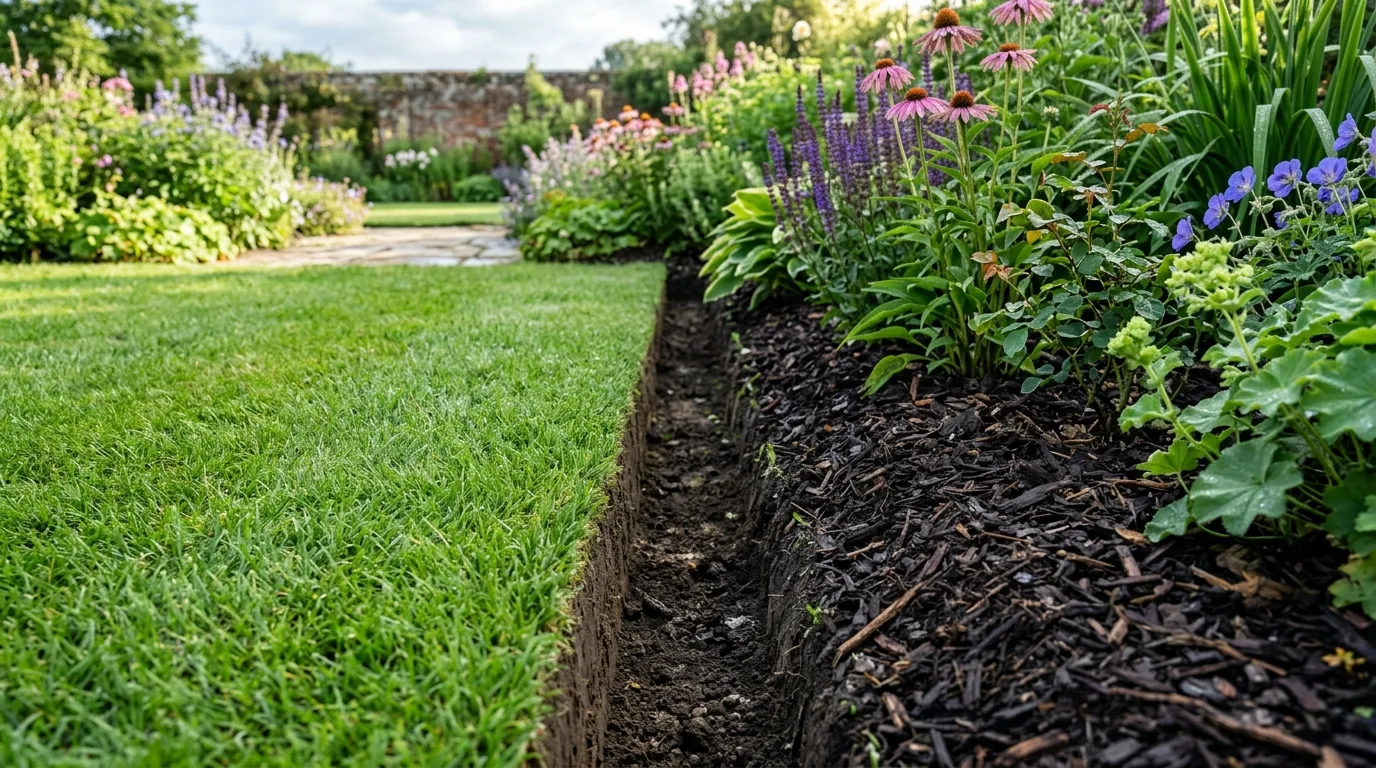
Sharp vertical 4-inch spade-cut trench lawn edge separating lush green turf from dark bark mulch
A sharp spade-cut trench creates a physical air gap that naturally prevents turf rhizomes from reaching bed mulch, without any rigid materials that can heave during winter.

Key Advantages

  • • $0 material expense—requires only hand tools and physical effort.
  • • 100% immune to frost heave because no rigid borders exist to buckle.
  • • Lawn mower wheels can ride right along the turf rim without scalping.
  • • Total layout flexibility to reshape beds or enlarge plantings over time.

Real-World Trade-Offs

  • • Requires annual or biannual re-cutting during spring and autumn cleanups.
  • • Mulch must not be over-spread into the trench bottom, or grass will root in it.
  • • Loose sandy soils require gentler trench slopes than clay-rich loam.

Best suited for: Informal perennial borders, woodland edges, and homeowners who prefer natural materials and clean, unobtrusive lines.

2

Natural Fieldstone & Native Granite

Natural stone borders echo centuries of New England agricultural heritage. Whether using rounded glacial fieldstone gathered from property excavations or quarried split granite chunks, natural stone delivers an organic, substantial border that blends naturally into colonial, farmhouse, and cottage architecture. Stones are typically dry-laid one to two tiers high in a shallow gravel trench.
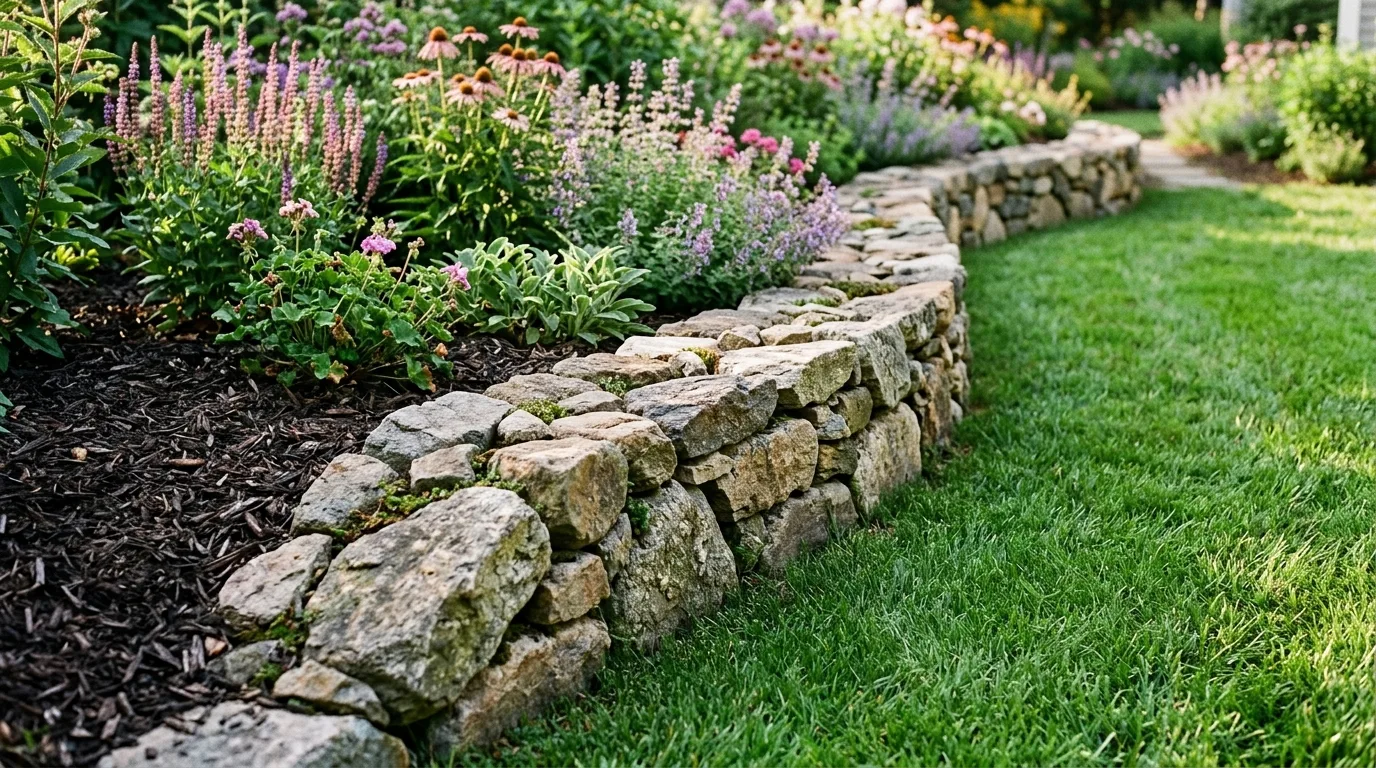
Stacked natural fieldstone border along a curved perennial garden bed with dark mulch and turf grass
Dry-stacked fieldstone creates a tactile, timeless edge that naturally accommodates minor ground shifting and grade variations.

Key Advantages

  • • Lifetime durability—stone never rots, rusts, or fades in sunlight.
  • • Effortlessly negotiates rolling yard topography and gentle slopes.
  • • Dry-laid stones can be lifted and releveled in minutes after extreme winters.
  • • Develops a rich weathered patina with moss and lichen over time.

Real-World Trade-Offs

  • • Uneven tops prevent mowers from rolling over; requires weekly string-trimming.
  • • Grass blades and weed seedlings can sprout between stone crevices.
  • • Heavy physical labor during hauling and placement (20–60 lbs per stone).

Best suited for: Traditional New England homes, cottage perennial gardens, slope retaining transitions, and rustic landscape borders.

3

Clay Brick & Masonry Paver Mowing Strips

Clay brick offers warm historic character and clean geometric order. When installed as a vertical "soldier course," brick creates a formal 3-to-4-inch raised retention wall for mulch. Alternatively, when laid flat end-to-end ("running bond") flush with the top of the turf root zone, it functions as an effortless mowing strip that allows lawn mower wheels to glide right across without scalping the grass.
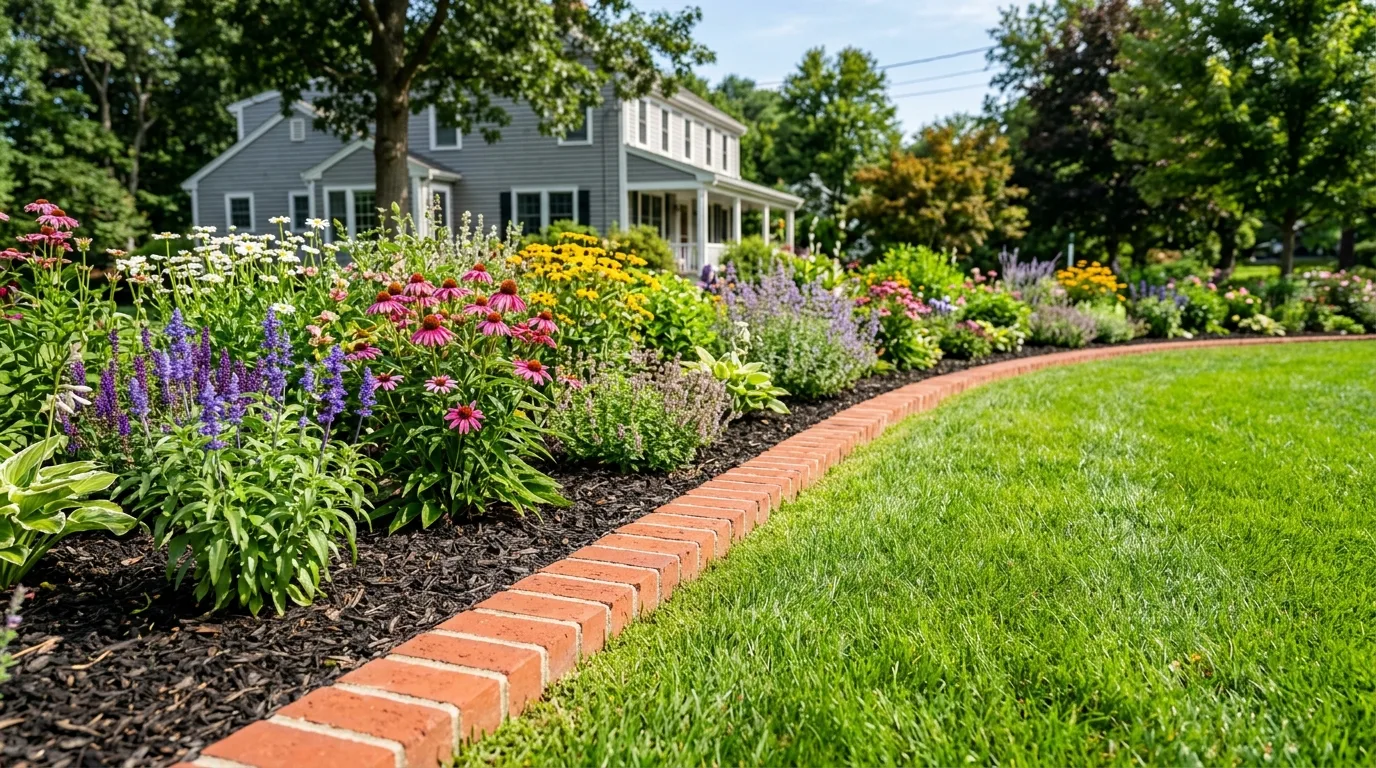
Classic red clay brick border laid neatly along a perennial flower bed and lawn
Red clay brick borders complement brick foundations and walkways while providing a straightforward DIY installation on a compacted sand bed.

Key Advantages

  • • Flush installation cuts weekly lawn mowing time by eliminating line trimming.
  • • Connects visually with home brick chimneys, walkways, and front steps.
  • • Uniform shape makes establishing straight runs or gentle curves simple.
  • • Easy to repair or replace individual damaged units without digging up the bed.

Real-World Trade-Offs

  • • Requires severe-weathering (SW) rated brick to avoid winter spalling.
  • • Angled "sawtooth" brick designs trap dead leaves and catch lawn mower blades.
  • • Must be laid over a 2-to-3-inch compacted aggregate base to prevent settling.

Best suited for: Georgian, Colonial, and Federal style homes, formal front entry gardens, and property owners seeking a flush mowing strip.

4

Steel & Weathering Corten Landscape Edging

Commercial steel edging—available in black powder-coated steel or pre-oxidized Corten weathering steel—is the preferred choice for contemporary architecture and clean geometric landscapes. Measuring 1/8 inch (or 14 gauge) in thickness, steel edging creates an ultra-thin vertical plane that defines planting zones without consuming valuable planting bed square footage.
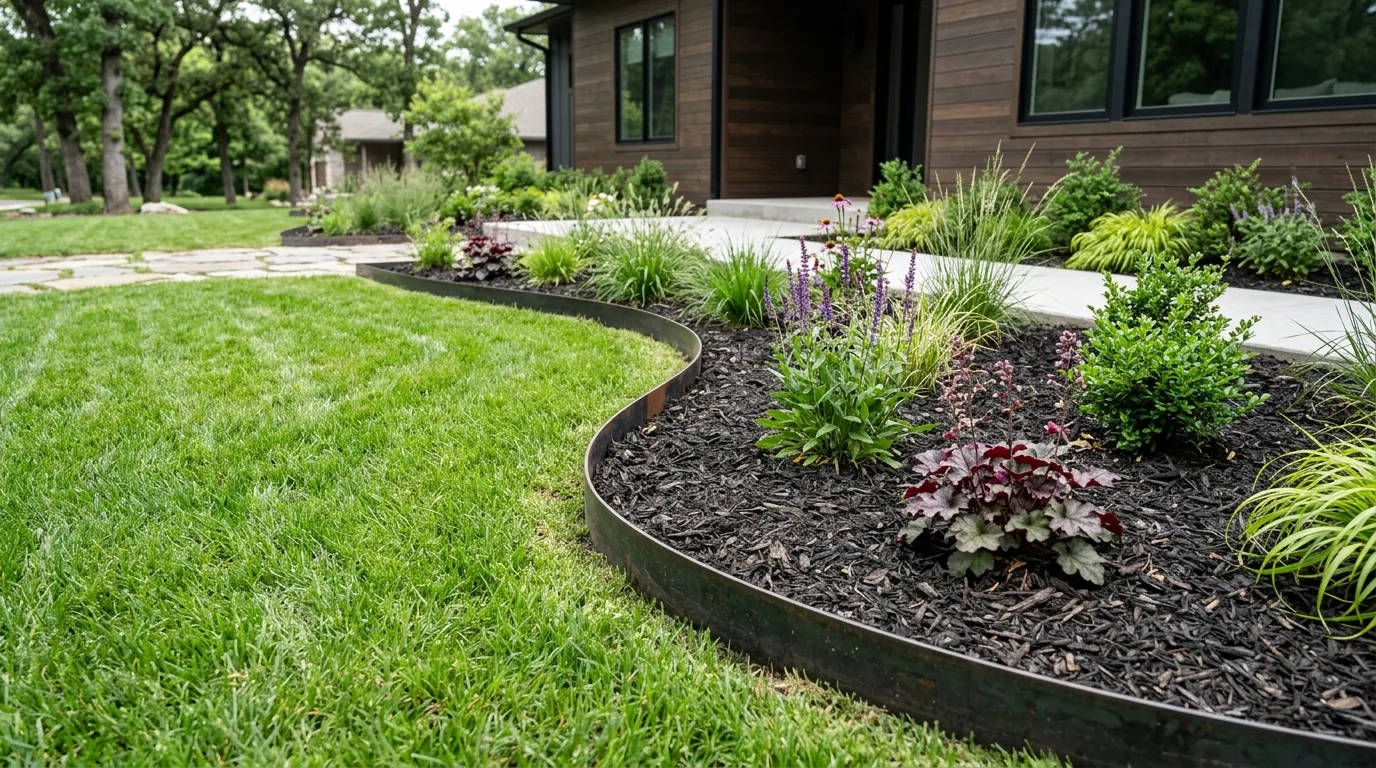
Sleek dark steel landscape edging creating a clean curved border between dark mulch and lawn
Heavy steel edging provides an impenetrable root barrier while bending into razor-sharp modern curves that hold their shape year after year.

Key Advantages

  • • Unmatched root barrier: solid 4-to-5-inch steel wall blocks 100% of rhizomes.
  • • Bends into sweeping, continuous curves without joint buckling or kinks.
  • • Ultra-slim profile preserves garden planting area right up to the border.
  • • Corten develops a protective rust patina that stops deep corrosive pitting.

Real-World Trade-Offs

  • • Higher upfront material expense compared to plastic or brick options.
  • • Requires 12-inch heavy steel stakes that can be tough to drive in rocky subsoil.
  • • Must be installed with top lip no more than 1/2 to 1 inch above grade for safety.

Best suited for: Modern and transitional architecture, clean architectural beds, high-end residential landscape renovations, and aggressive lawn grass containment.

5

Granite Cobblestones (Belgian Block)

For historic authenticity and brute durability, split granite Belgian blocks are the undisputed regional standard across eastern Massachusetts. Measuring roughly 4 by 7 by 10 inches, these solid quarried granite blocks can be laid end-to-end flat, upright, or half-buried along garden perimeters, walkways, and driveway aprons.
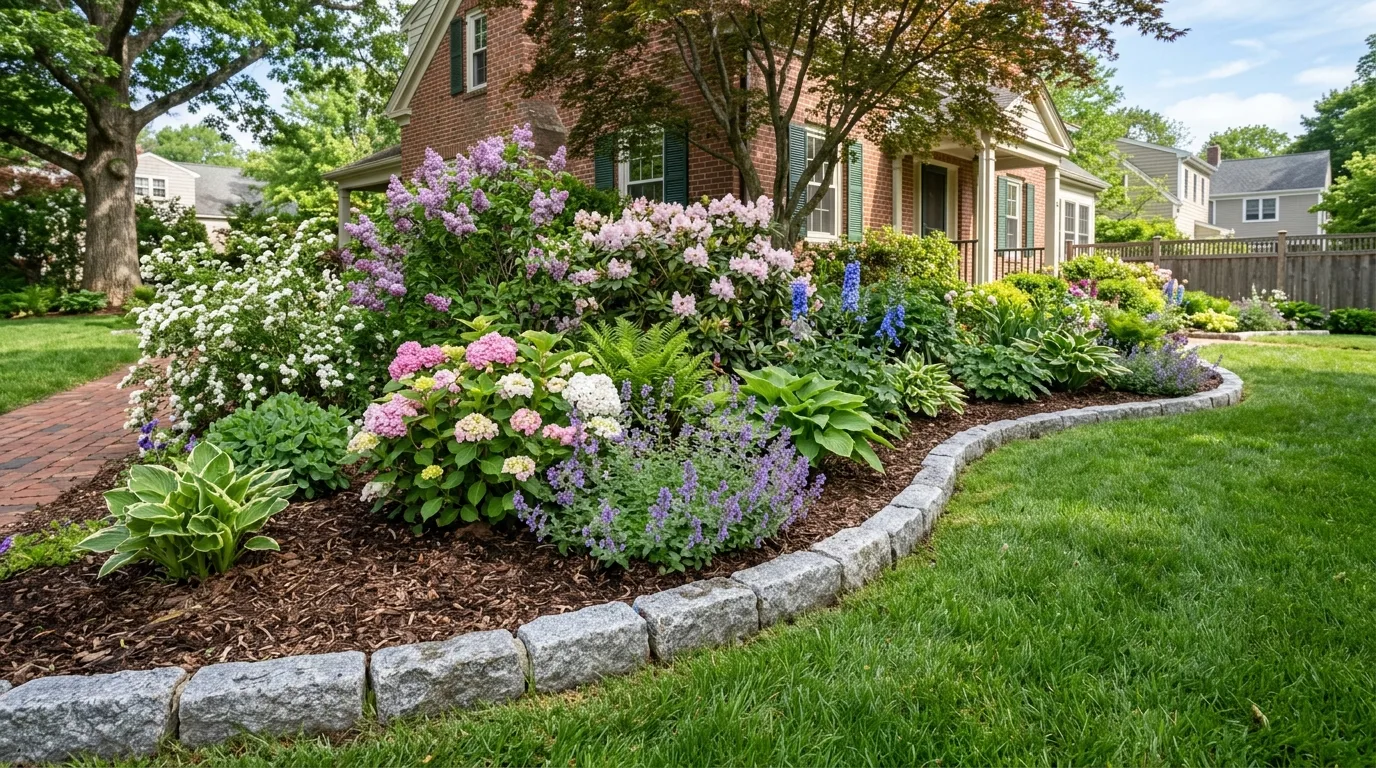
Grey granite Belgian block cobblestones installed as a durable flower bed border along a lush lawn
Granite Belgian blocks provide heavyweight permanence that withstands winter snow plows, heavy lawn mowers, and harsh de-icing chemicals.

Key Advantages

  • • Indestructible: completely immune to rot, freeze-thaw cracking, and mower hits.
  • • Resists winter road salt and snowblower scrapes along driveway flower beds.
  • • Substantial visual presence anchors large foundation plantings and trees.
  • • High resale value and architectural prestige for historic properties.

Real-World Trade-Offs

  • • High material and delivery costs due to extreme unit weight (15–20 lbs each).
  • • Physically demanding DIY installation requiring deep aggregate trenching.
  • • Can require periodic string-trimming if raised significantly above turf grade.

Best suited for: Driveway border beds, high-traffic front entryways, historic North Shore estates, and permanent landscape investments. Learn more about hardscaping and stone masonry options.

6

Interlocking Radius & Curved Border Pavers

When flower beds feature sweeping kidney curves, serpentine borders, or circular tree rings, pre-cast concrete radius pavers simplify installation. These modular units are manufactured with angled or tongue-and-groove side profiles that lock together cleanly along smooth radiuses without needing cumbersome diamond-blade angle cuts.
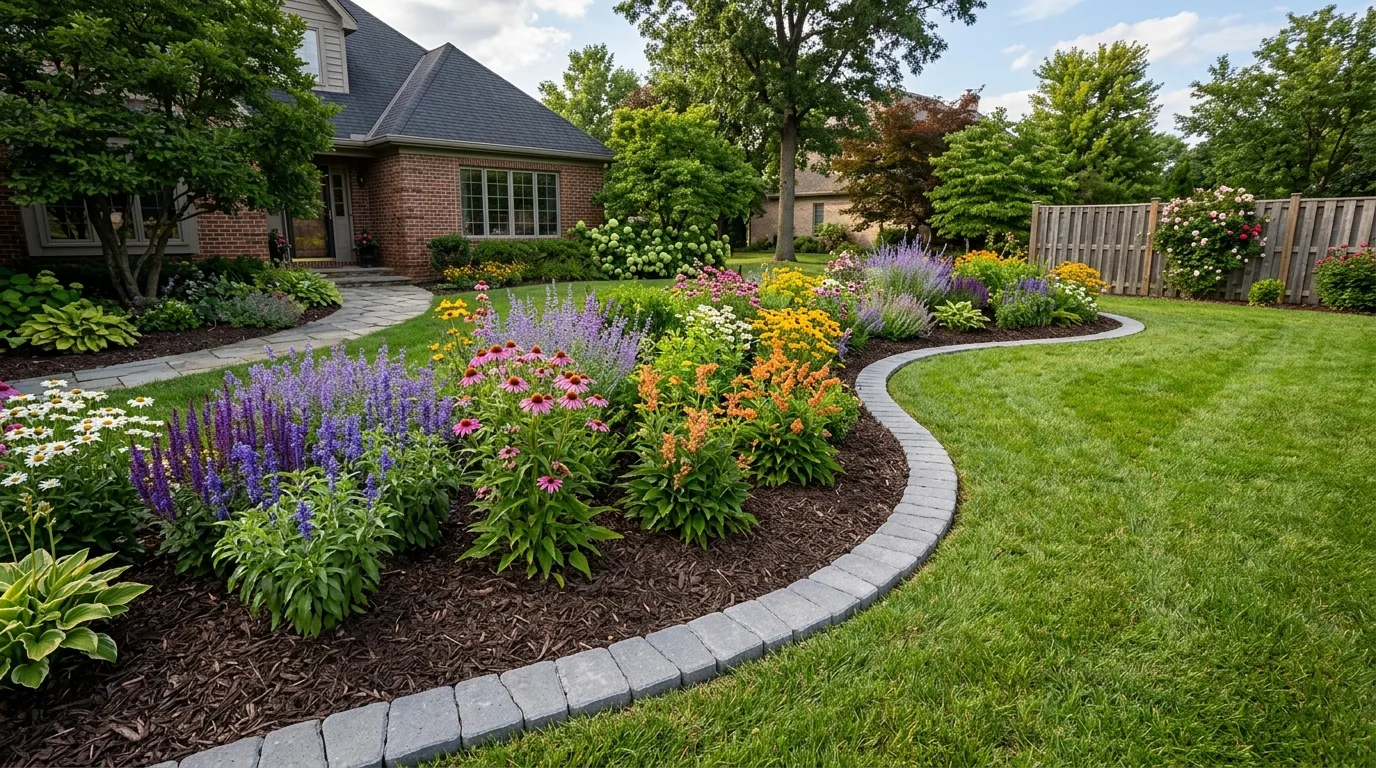
Graceful S-curved flower bed bordered with interlocking concrete paver stones beside a green lawn
Interlocking radius pavers make flowing serpentine lawn curves easy to assemble while maintaining uniform height and crisp soil retention.

Key Advantages

  • • Engineered specifically to form smooth curves without messy field cuts.
  • • Widely available in diverse textures (tumbled, chiseled, slate, or smooth).
  • • Uniform dimensions speed up trench leveling and bedding sand placement.
  • • Moderate price point accessible for typical suburban front yard upgrades.

Real-World Trade-Offs

  • • Concrete dye pigments can gradually weather or lighten over 10–15 years.
  • • Lightweight unpinned models can tilt if bumped repeatedly by lawn equipment.
  • • Requires a solid compacted sand/crushed stone base to prevent uneven settling.

Best suited for: Flowing lawn islands, circular specimen tree rings, and homeowners wanting a tidy, DIY-friendly masonry border.

7

River Rock & Decorative Gravel Swale Borders

For properties dealing with heavy roof downspout runoff, sloped yard drainage, or frequent mulch washouts, a river rock transition border provides both function and texture. By excavating an 8-to-12-inch wide channel between the flower bed and lawn, lining it with commercial geotextile fabric, and filling it with 2-to-4-inch rounded New England river stones, you create a dedicated infiltration trench that prevents erosion.
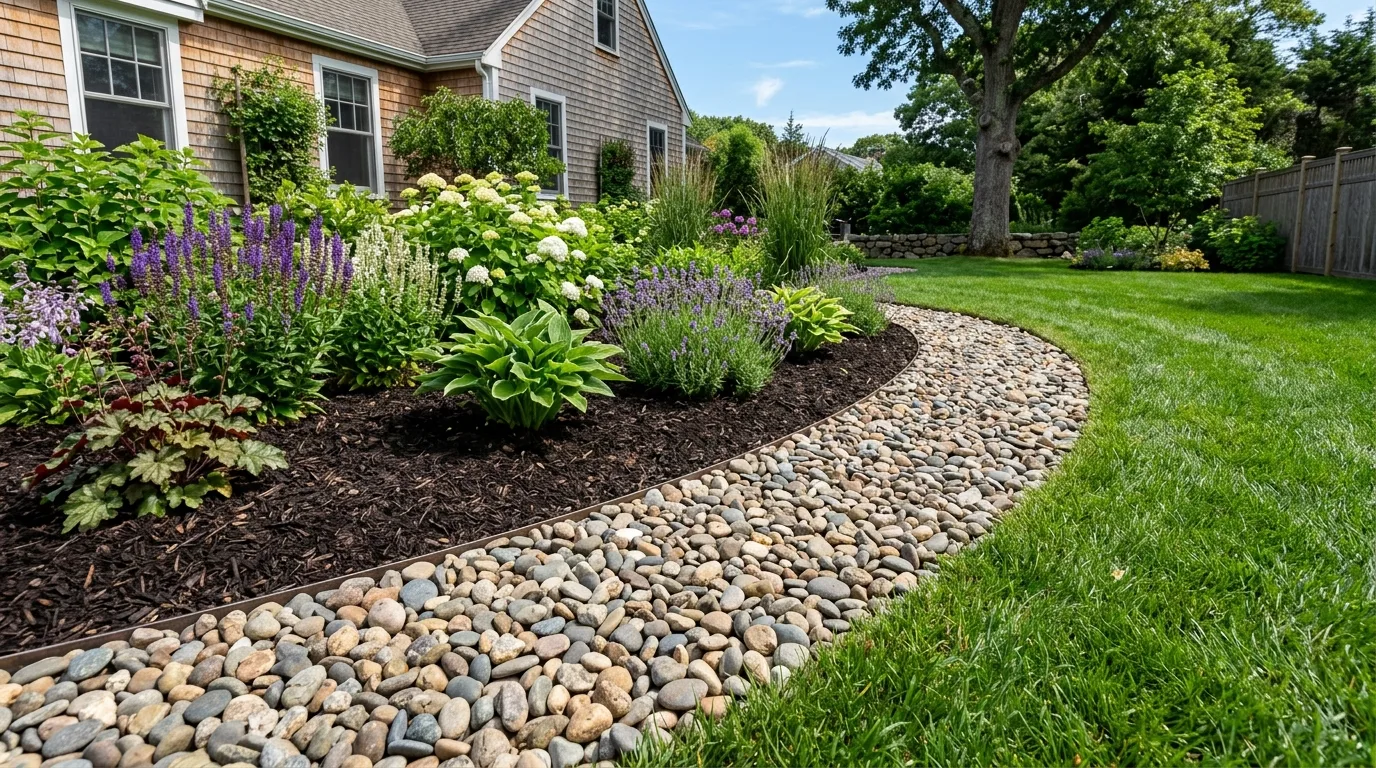
Rounded river rock gravel border creating a decorative stone transition between garden mulch and lawn
A river rock swale buffer absorbs storm runoff, preventing light bark mulch from floating out onto your lawn during intense summer downpours.

Key Advantages

  • • Solves drainage: water percolates immediately rather than washing mulch away.
  • • High visual contrast: smooth stones pop against dark mulch and green grass.
  • • Natural materials complement coastal, woodland, and contemporary landscapes.
  • • Can be calculated precisely using our Landscaping Yard Calculator.

Real-World Trade-Offs

  • • Grass clippings and fallen leaves blow into crevices, needing seasonal blowing.
  • • Must be installed with professional non-woven fabric to prevent weed growth.
  • • Errant stones kicked into turf can damage lawn mower blades if not contained.

Best suited for: Sloped yards, roof gutter discharge paths, rain gardens, and homeowners looking for functional stormwater management. See our yard drainage solutions guide.

8

Cedar & Landscape Timber Borders

For long, straight property boundaries, vegetable garden perimeters, or slightly terraced planting zones, rough-sawn cedar or ground-contact pressure-treated timbers offer substantial physical structure at a budget-conscious price. Timbers (typically 4x4 or 4x6 dimensions) are set level into shallow trenches and fastened firmly into the subsoil with 12-inch steel rebar spikes.
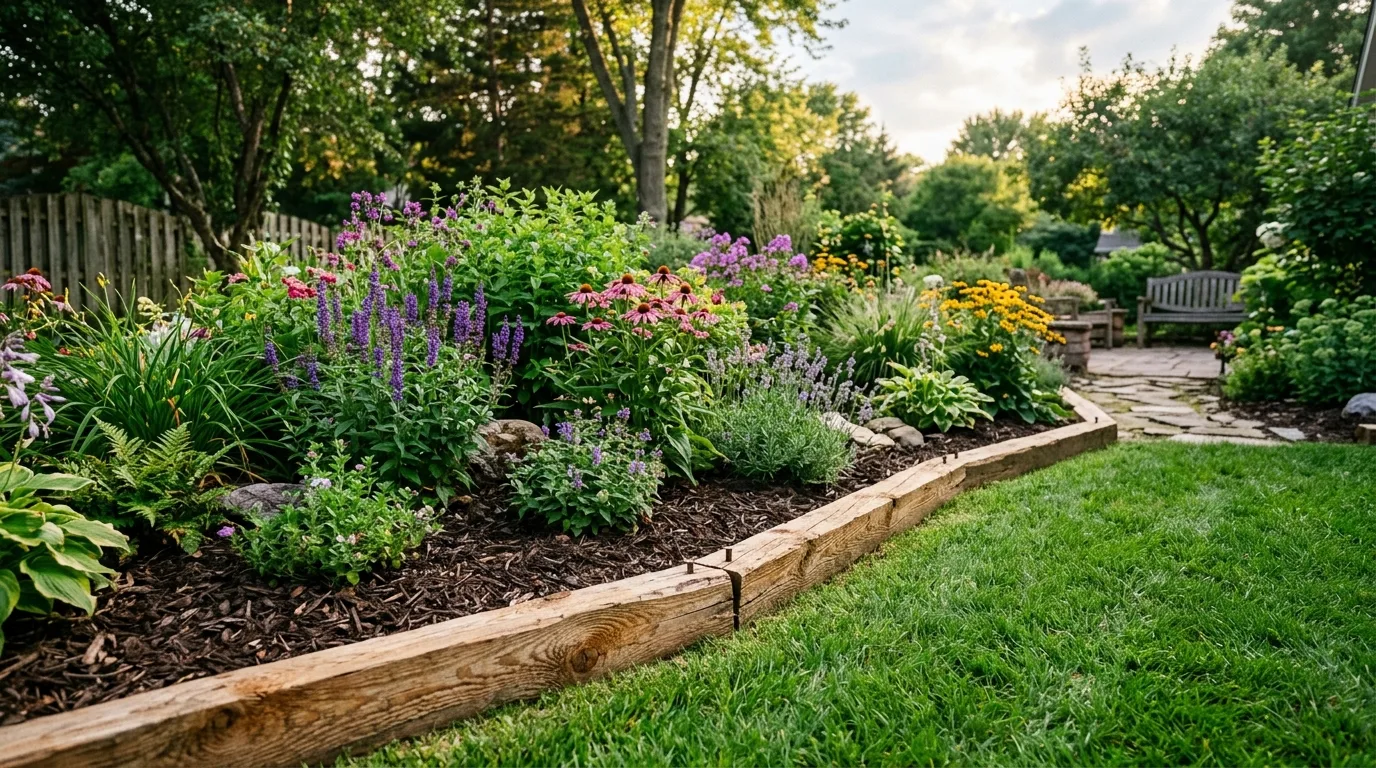
Natural cedar landscape timber border pinned neatly along a backyard flower bed and lawn
Cedar timbers provide a warm, organic border for straight garden runs and offer sufficient height to retain enriched topsoil on minor yard grades.

Key Advantages

  • • Fast installation for long linear runs along property fences or driveways.
  • • Provides vertical soil retention to build raised beds with enriched loam.
  • • Naturally rot-resistant woods like cedar or locust age to a soft silver-grey.
  • • Affordable material cost compared to cut stone masonry.

Real-World Trade-Offs

  • • Cannot easily form flowing organic curves without segmented miter cuts.
  • • Biological life span is limited: wood eventually decays after 8–15 years.
  • • High-RPM string trimmers can gouge and splinter soft cedar over time.

Best suited for: Backyard borders, perimeter fences, straight geometric beds, and vegetable or cutting garden enclosures.

9

Commercial Aluminum Strip Edging

Commercial-grade aluminum edging (such as 1/8-inch by 4-inch extruded alloy) bridges the gap between cheap plastic rolls and heavy steel plates. Unlike rolled plastic, aluminum does not stretch, crack from UV exposure, or ripple. Unlike steel, aluminum will never rust or stain adjacent light-colored concrete walkways. It features built-in stake pockets that secure the strips flush with the turf root zone.

Key Advantages

  • • 100% rustproof and corrosion-free, ideal for wet coastal New England soils.
  • • Extremely lightweight and easy to transport in standard passenger vehicles.
  • • Bends smoothly into graceful, continuous organic curves without kinking.
  • • Virtually invisible once installed, emphasizing plants and mulch.

Real-World Trade-Offs

  • • More pliable than steel: direct impacts from heavy zero-turn mowers can bend it.
  • • Requires careful trenching so the top lip rests safely at lawn thatch height.
  • • Ground stakes can strike rocks or ledge, requiring angled re-staking.

Best suited for: Serpentine flower beds, manicured turf boundaries, and homeowners wanting an unnoticeable, permanent metal barrier.

10

Living Plant Borders (Green Edging)

If hardscape edges feel too rigid for your garden vision, consider a living border. By planting compact, dense perennials in a tight ribbon along the perimeter, you create a soft textural transition that suppresses weed germination. Popular choices include dwarf boxwood, Lady's Mantle (Alchemilla mollis), creeping thyme, coral bells (Heuchera), and compact hostas.

Key Advantages

  • • Organic, living aesthetic that changes colors and blooms across seasons.
  • • Supports pollinators, bees, and beneficial garden insects.
  • • Softens sharp architectural corners and harsh foundation transitions.
  • • Expands naturally over time, providing cuttings to divide and replant.

Real-World Trade-Offs

  • • Provides zero physical barrier against aggressive underground grass rhizomes.
  • • Mowing close to soft plant foliage risks shredding leaves with mower blades.
  • • Best paired with a hidden spade trench between the turf and the living border.

Best suited for: Cottage gardens, pollinator beds, shade gardens, and borders backed by an existing trench. Explore our landscape design service guide for perennial layout strategies.
Quick Selector

Best Flower Bed Edging by Use Case

Lowest Budget

Spade-Cut English Trench

Zero material costs. Simply invest two hours with an edging shovel each spring to cut a crisp 4-inch trench that blocks turf roots and holds mulch.

Easiest Lawn Mowing

Flush Paver Mowing Strip

Laid flat and level with the lawn surface. Mower wheels glide right over the border, cutting all grass cleanly without picking up a string trimmer.

Modern & Clean Lines

Corten or Powder-Coated Steel

Ultra-thin 1/8-inch profile creates crisp architectural borders and blocks 100% of creeping grass runners without consuming bed space.

Curved & Serpentine Beds

Commercial Aluminum or Radius Pavers

Both materials flex effortlessly around gentle S-curves and circular island beds without joint gaps, warping, or complex masonry angle cuts.

Front Yard Curb Appeal

Granite Belgian Cobblestone

Substantial split granite blocks provide historic gravitas, frame foundation plantings, and withstand winter street snow plowing and salt.

Heavy Stormwater Runoff

River Rock Swale Border

An 8-to-12-inch channel of 2-to-4-inch river rock slows torrential runoff, stops mulch washouts, and filters stormwater into the subsoil.

Local Climate & Soil Considerations

Which Flower Bed Edging Works Best in Peabody, MA?

North Shore Massachusetts residential garden bed framed with durable split granite curb edging beside a lush lawn
In eastern Massachusetts, heavy split granite and aggregate-bedded stone resist winter frost heaves and salt spray along residential planting beds.

Gardening in Essex County presents unique physical challenges that cause many generic landscaping ideas to fail after a single winter. If you are planning flower bed edging in Peabody, Danvers, Salem, or nearby North Shore communities, three regional factors must guide your material choice:

1. Severe Freeze-Thaw Ground Movement (USDA Zone 6b)

Between November and April, soil moisture repeatedly freezes and expands, followed by warm sunny thaws. Rigid, continuous borders set with mortar or thin plastic pounded into shallow dirt will heave upward and crack. For masonry, flexible dry-laid aggregate bedding (a compacted base of crushed stone and sand) is essential because it allows individual stones or pavers to move slightly and settle without structural cracking.

2. Rocky Glacial Till & Dense Paxton Soils

Most residential lots in Peabody sit atop dense, rocky Paxton-Charlton glacial till. Driving long steel or plastic edging stakes straight into the ground often strikes stubborn New England fieldstones or shallow granite ledge 2 to 4 inches down. When installing metal edging, keep a heavy chisel and hand sledge ready to fracture small subsoil stones, or angle stakes around bedrock.

3. Snow Plowing, De-Icing Salt & Spring Runoff

Front yard foundation beds and driveway borders absorb heavy punishment during North Shore winters. Snow blowers, municipal plow piles, and sodium chloride road salt rapidly degrade soft woods and brittle composites. Split granite Belgian blocks, heavy fieldstone, or trench edges are completely impervious to road salt and shovel impacts.

Evaluation Framework

How to Choose the Right Flower Bed Edging for Your Property

A

How do you currently mow and trim your lawn?

If you hate string-trimming edges every Saturday morning, install a flat mowing strip flush with the lawn. If you enjoy weekly detailing with a blade edger, a crisp spade trench or thin steel border will give you razor-sharp lines.

B

What is the shape and geometry of your planting beds?

Long straight foundation runs are ideal for timber, steel, or brick running courses. Beds with fluid curves, tree circles, or undulating lawn islands require flexible materials like aluminum strips, radius border pavers, or hand-dug spade trenches.

C

What turfgrass variety is planted in your lawn?

Spreading cool-season turf grasses (like Kentucky bluegrass) spread through horizontal underground rhizomes that require an aggressive 3-to-4-inch physical depth barrier. Clump-forming grasses (like tall fescue) spread much slower and can be managed with shallower edging.

D

Are your flower beds flat or situated on a slope?

On sloped yards, heavy rain will wash lightweight bark mulch over low-profile edging. Choose a raised fieldstone border, a terraced timber run, or an integrated river rock drainage swale to contain the mulch bed.

E

What is your long-term landscape timeline?

If you plan to expand garden beds or add a paver patio within two years, avoid pouring concrete footings or hauling tons of cobblestone. Use a natural spade trench or flexible aluminum that can be relocated easily later.

Execution & Effort

DIY vs. Professional Flower Bed Edging Installation

Weekend DIY Projects

Homeowners with standard garden tools can successfully handle:

  • • Spade-cut trenches: Low-cost, forgiving, and requires only a sharp spade and wheelbarrow.
  • • Flexible aluminum or steel strips: Quick to install in soft loam soils using a rubber mallet and stakes.
  • • River rock drainage swales: Straightforward trenching, fabric pinning, and gravel placement.
  • • Cedar timber runs: Easy for level straight beds using a hand saw and drill for rebar pins.

When Professional Help Makes Sense

Consider working with an independent landscaping professional for:

  • • Granite Belgian block masonry: Involves tons of stone delivery, deep gravel compaction, and mortar beds.
  • • Severe property slopes & retaining: Multi-tiered walls exceeding 18 inches require laser leveling and sub-drainage.
  • • Full property redesigns: Combining bed edging with sod renovation, patio pavers, and planting master plans.
  • • Dense bedrock excavation: When trench lines run directly into glacial ledge that requires mechanical breakers.

Transparent Referral Disclosure: Landscaping Peabody MA is a local landscaping information and referral platform. We do not dispatch an in-house crew or directly perform landscaping construction. If you need help with hardscaping or master landscape installations, we connect you directly with independent local landscaping professionals who provide on-site property walkthroughs and custom written estimates.

Avoid Costly Errors

5 Common Flower Bed Edging Mistakes to Avoid

1. Buying Thin, Rolled Plastic Edging

Inexpensive corrugated plastic rolls sold at home improvement stores are the most common edging failure in New England. Cold winters cause the plastic to become brittle, while ground frost pushes it out of the dirt within two seasons. Once heaved, mower blades easily shred the exposed plastic lip.

2. Setting Edging Too Shallow (Under 3 Inches)

Placing decorative scalloped pavers or stones directly on top of the turf without digging a sub-trench creates an illusion of a border. Kentucky bluegrass rhizomes naturally run 2 to 3 inches below the soil surface, easily tunneling underneath shallow borders and popping up through your mulch within weeks.

3. Elevating Borders Above Mower Deck Clearance Without a Buffer

Protruding stones or raised bricks that stand 2 to 4 inches above the turf force you to steer lawn mowers away from the bed. If you don't create a flat mowing shoulder, you will have to string-trim the entire bed perimeter every week, which eventually chips brickwork or scars tree bark.

4. Trenching Too Close to Mature Tree Root Flares

When edging flower beds around mature oaks, maples, or pines, severing major structural roots with a sharp trencher can compromise the tree's health and wind stability. Within the tree's critical root zone, opt for shallow hand-spaded trenches or loose dry-laid fieldstone rather than deep trenching.

5. Overfilling Bed Mulch Above the Edging Rim

According to UMass Extension horticultural guidelines, mulch should be maintained at a depth of 2 to 3 inches. Piling mulch 4 to 6 inches high against your border causes it to spill over the edging into the turf during rainstorms, defeating the purpose of the border and encouraging weed growth.

Common Homeowner Questions

Frequently Asked Questions About Flower Bed Edging

Answers

Frequently asked questions

01

What is the cheapest way to edge a flower bed?

The most budget-friendly way to edge a flower bed is an English spade-cut trench, which requires zero material cost. Using a sharp spade or half-moon edger, you cut a 4-inch vertical drop along the lawn edge with a sloped interior trench. It creates a crisp, professional physical air barrier that stops grass roots without buying plastic or masonry.

Read our seasonal bed edging guide →

02

How deep does flower bed edging need to be to stop grass from spreading?

Effective flower bed edging must penetrate at least 3 to 4 inches below ground level. Cool-season turfgrasses like Kentucky bluegrass spread via underground horizontal rhizomes concentrated in the top 2 to 3 inches of topsoil. Surface-level borders shallower than 3 inches allow grass rhizomes to tunnel underneath into garden mulch.

03

What type of flower bed edging is easiest to mow around?

A flat, flush mowing strip made of clay brick, concrete pavers, or cut stone laid level with the turf is the easiest border to mow. Because mower deck wheels ride directly on top of the flat paver border, grass is trimmed cleanly in one pass, eliminating the need to use a string trimmer every week.

Explore lawn care & mowing practices →

04

Why does plastic landscape edging pop out of the ground in New England?

Thin roll-plastic edging heaves out of the ground because of winter freeze-thaw cycles. In USDA Zone 6b climates like Peabody and eastern Massachusetts, saturated topsoil repeatedly freezes, expands upward, and leverages unanchored plastic edging out of its shallow trench. Soil contraction during spring thaws leaves the plastic exposed and warped.

05

Is steel or aluminum edging better for flower beds?

Steel edging is heavier, more rigid, and holds straight architectural lines or crisp sweeping curves under heavy mower bumps, but it requires galvanized coating or Corten weathering to resist rust. Commercial aluminum is completely rustproof and lightweight, making it ideal for tight serpentine curves, but it can dent if struck directly by heavy commercial lawn mowers.

06

Can you edge flower beds without digging a trench?

No-dig borders that sit directly on top of the lawn without trenching fail quickly because grass rhizomes and crabgrass readily creep beneath them. While surface borders may temporarily hold back loose mulch, establishing a long-term barrier against turf encroachment requires a minimum 3-to-4-inch trench or sub-grade barrier.

07

How do you keep mulch from washing over edging during heavy rain?

To prevent mulch from washing onto lawns, maintain a 1-to-2-inch elevation drop between the top of the edging and the mulch surface, and taper the mulch inward toward plant root balls. For properties with steep slopes or heavy roof runoff, installing a decorative river rock drainage swale or permeable gravel buffer absorbs storm velocity and prevents mulch washouts.

Learn about yard drainage & runoff swales →

Updated:

Ready to Transform Your Flower Beds & Landscape?

Call Now

Get connected with an independent local landscaping professional. Calls go to (877) 537-6896.

Peabody & North Shore

Talk to a local pro

Call Now