Front Yard Flower Bed Ideas for Beautiful, Layered Curb Appeal
Transform your front landscape from a flat expanse of turf into a vibrant, multi-layered architectural garden. Whether you are designing flower beds in front of the house to complement foundation walls and window trim or planning front yard flower bed ideas that frame walkways, entry porches, and property boundaries, the secret to lasting curb appeal lies in deliberate structure. Learn how to anchor beds with structural shrubs, choreograph 4-season bloom succession, plan for true mature plant spacing, and coordinate colors with your home's architecture.

What Makes a Front Yard Flower Bed Successful?
A successful front-yard flower bed should complement the house, fit the site's sun and soil, leave doors and windows visible, and still have structure when few plants are blooming. For flower beds in front of the house, start with a generous depth (typically 6 to 8 feet for multi-tier layering), maintain an unplanted 12-to-18-inch air buffer against siding, select dwarf shrubs sized to mature below window sills, and repeat key perennials in cohesive drifts.
The Core Differentiator: A Front Yard Flower Bed Is Not Just Flowers
The most common mistake in residential landscaping is assuming a flower bed consists exclusively of colorful blooming petals. Without woody evergreen framework, ornamental grasses, and structural shrubs, an herbaceous perennial bed disappears into bare, frozen mud for four to five months every winter.
Authoritative university research—including NC State University Extension and Clemson Extension—emphasizes that enduring curb appeal relies on a three-tier architectural framework: permanent woody structural anchors (30%–40% of the canopy), middle-tier flowering perennials for sequential summer rhythm, and a low carpet of groundcovers along the border to suppress weeds and anchor soil.
Flower Beds in Front of House: What Makes the Design Work?
Direct Answer: The Golden Rules of Front-of-House Bed Design
A successful flower bed in front of the house complements the architecture without hiding it, leaves windows and entryways unobstructed, and maintains structure year-round. It requires a generous depth (typically 6 to 8 feet for multi-tier layering), an unplanted 12-to-18-inch air-and-maintenance buffer against the siding, and dwarf shrubs sized to stay below window sills without constant shearing.
Complementing the Facade Rather Than Camouflaging It
Historically, 20th-century residential landscaping treated foundation beds as visual “cover-ups” designed to hide tall, unsightly raised concrete footings. Homeowners planted continuous lines of fast-growing evergreen shrubs that eventually grew into monolithic green blocks, blocking windows and suffocating siding.
Clemson University Cooperative Extension emphasizes that modern foundation planting must complement rather than camouflage the home. Modern homes with low foundation lines require landscape elements that celebrate architectural details—window trim, front porches, stone accents, and inviting doorways—rather than burying them behind a continuous hedge.
The Four Essential Architectural Zones in Front of the House
- 1. Entry Planting:Welcoming focal point with seasonal color, fragrance, and graduated heights flanking the door.
- 2. Corner Anchors:Taller pyramidal or rounded specimens to frame house mass and soften 90-degree corners.
- 3. Wall & Window Beds:Low-profile horizontal drifts positioned safely below sills with siding ventilation gaps.
- 4. Transition Flow:Undulating perennial waves connecting corners to entryways without monotonous straight lines.
Layout Blueprints for Flower Beds in Front of the House
Explore dimensional cross-sections and plan views illustrating proper bed depth, window sill clearance, and entry flow.
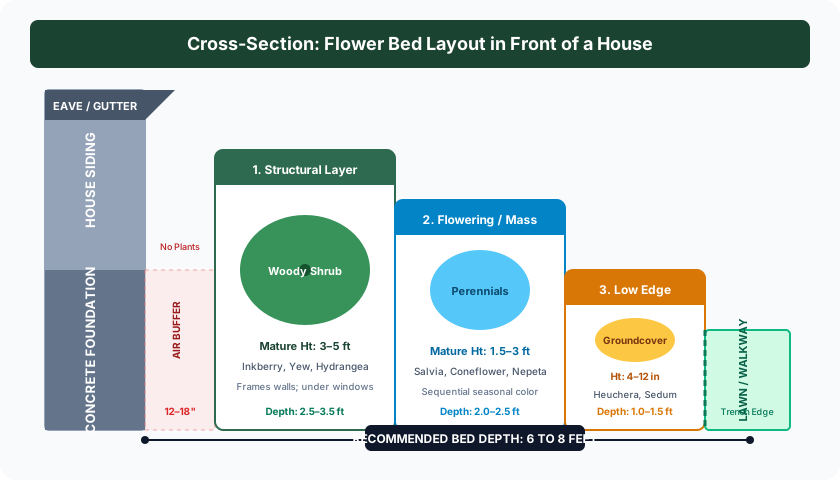
Foundation Flower Bed Anatomy: Siding Clearance & 3-Tier Layering
This dimensional cross-section illustrates how a generous 6-to-8-foot foundation bed accommodates an unplanted 12-to-18-inch siding buffer, a back structural shrub layer (3–5 ft spread), a middle blooming perennial layer (2–3 ft spread), a low mounding groundcover edge (1 ft spread), and a crisp 3-to-4-inch spade-cut trench border sloping away from the home.
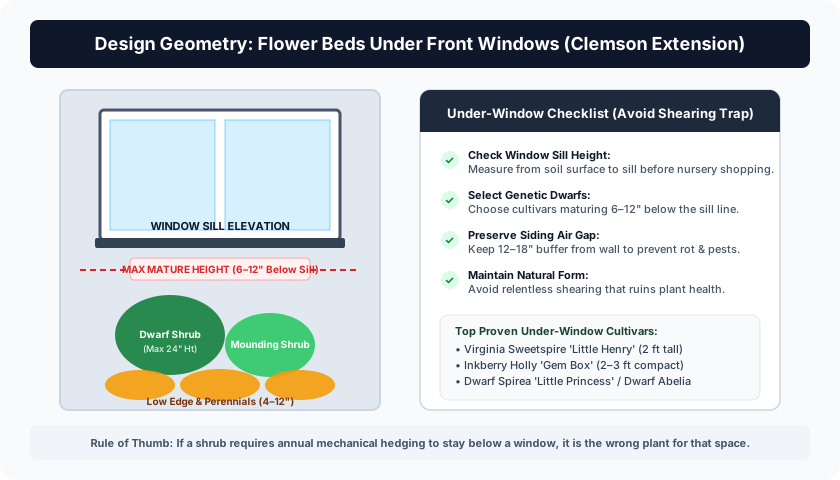
Flower Bed Under Front Windows: Protecting Sills & Sightlines
Planting under front windows requires strict adherence to mature plant genetics. Rather than planting standard-sized shrubs that require endless shearing, select naturally compact cultivars whose mature canopy stops at least 6 to 12 inches below the bottom of the window sill. This keeps natural sunlight pouring into your home and avoids scarred, hollow shrub interiors.
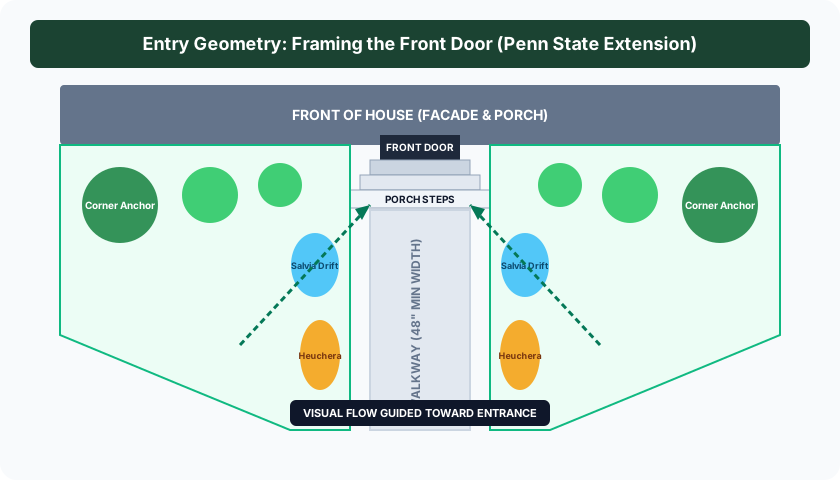
Front Entry & Doorway Flower Beds: Welcoming Visual Funnel
An overhead architectural plan view showing how flower beds flanking front stairs and walkways should funnel visitors toward the front entrance. Taller structural specimens anchor exterior corners, while graduated, fragrant perennials and low creeping groundcovers flank the 36-to-48-inch walkway, ensuring guests never brush against damp foliage or thorny branches.
Design for Year 5, Not Planting Day
The most pervasive failure in front-of-house flower beds occurs when young 1-gallon nursery pots are spaced to look “full” on day one. A compact shrub with an 18-inch container width will inevitably reach its genetic mature spread of 4 to 5 feet within 36 to 48 months.
When planted too close to siding or adjacent plants, foliage suffocates, fungal powdery mildew multiplies, and branches rub against exterior paint. In Year 1 and 2, resist the urge to crowd plants; fill temporary open mulch voids with affordable annuals, flowering bulbs, or clean decorative rock.
The Extension Foundation Spacing Formula:
- Example: A shrub with a 4-foot mature spread requires its root ball centered at least 36 to 42 inches from the siding.
- Ventilation Buffer: Guarantees 12–18 inches of free air movement to dry moisture and deter mildew.
- Maintenance Access: Provides ample room for painters, window washers, and pest control inspectors.
Four Microclimate Forces Dictating Front-of-House Beds
Front foundation walls create localized physics and microclimates that don't exist in open yard spaces. Account for these four physical realities before digging:
1. The Eave Rain Shadow & Dripline
Wide roof overhangs and gutters create a permanent “rain shadow” within the first 12 to 24 inches of the foundation wall. Even during heavy downpours, soil directly against siding remains dry as dust, while the gutter dripline violently compacts soil 2 feet outward. Install drip irrigation in back rows and a stone splash band along un-guttered eaves.
2. Reflected Wall & Pavement Heat
Brick facades, vinyl siding, asphalt driveways, and concrete front walkways absorb solar radiation and re-radiate thermal heat well into the evening. On south- and west-facing front walls, ambient root temperatures can exceed 110°F. Choose drought-tolerant prairie or Mediterranean species with waxy or silver foliage that resist radiant wilting.
3. Foundation Drainage & Downspout Flow
Never dump roof stormwater into a foundation flower bed. High moisture saturates basement walls, cracks foundations, and suffocates plant roots. Extend gutter downspouts through buried 4-inch PVC discharge pipes leading at least 10 feet away into a lawn swale, dry well, or dedicated rain garden. Grade bed soil away from the home at a 2% slope.
4. Underground Utilities & HVAC Clearances
Front-of-house beds frequently host gas meters, electric feeds, water main shutoffs, and air conditioning condensers. Always call 811 before digging to mark buried lines. Maintain a mandatory 36-inch clear radius around air conditioner compressors so intake fans can draw air freely without overheating internal compressors.
Which Front-of-House Flower Bed Fits Your Situation?
Compare 12 real-world architectural challenges—from low window sills and brick facades to small front yards and shady walls—to determine the ideal layout and plant palette.
| Your Situation | Architectural Challenge | Recommended Bed Layout | Structural Anchor | Flowering Accent | Critical Watch-Out |
|---|---|---|---|---|---|
| Low front windows (< 24" sill height) | Tall shrubs block natural interior daylight, ruin outdoor window trim, and require constant hacking into unnatural boxes. | Deep 5–6 ft bed with horizontal drifts of compact mounding shrubs (mature height 18–24") fronted by low perennials. | Virginia Sweetspire ('Little Henry'), Compact Inkberry ('Gem Box'), Dwarf Abelia ('Kaleidoscope') | Coral Bells (Heuchera), Dwarf Catmint ('Cat's Pajamas'), Hardy Geranium ('Rozanne') | Never plant standard 4–6 ft nursery shrubs under low windows hoping to shear them down; it causes woody, bare shrub interiors and stops blooming. |
| Two-story blank foundation wall | Massive vertical siding or masonry dwarfs shallow 2-to-3-foot flower beds, leaving the house looking naked and unanchored. | Deep 7–9 ft multi-tier bed with vertical corner anchors, intermediate flowering shrubs, and bold perennial swaths. | Pyramidal Arborvitae ('Degroot's Spire'), Serviceberry (Amelanchier), Columnar Hornbeam, Winterberry Holly | Panicle Hydrangea ('Limelight'), Joe Pye Weed ('Gateway'), Russian Sage, Switchgrass ('Northwind') | Shallow 2-foot ribbon beds look like an accidental green strip; tall facades require proportional depth (7+ ft) and vertical plant scale. |
| Small front porch or entry stoop | Cramped entry feels claustrophobic if flanked by wide, bulky shrubs that crowd stairs and block front railing sightlines. | Tapered entry bed (4–5 ft deep) with outward-sweeping curves that visually broaden the front door approach. | Single architectural specimen (e.g., Japanese Maple or Dwarf Korean Lilac) flanked by low evergreen spheres | Fragrant English Lavender, Allium ('Millenium'), Salvia ('Caradonna'), Creeping Phlox | Maintain shrub centers at least 3 feet clear of steps and railings to preserve comfortable 36-inch pedestrian passage. |
| Wide ranch or single-story rambler | Endless horizontal roofline feels flat and monotonous without rhythmic vertical punctuation and undulating bed geometry. | Continuous 6–8 ft foundation bed with alternating deep curve bays, staggered specimen accents, and sweeping perennial drifts. | Multi-stem Serviceberry, Oakleaf Hydrangea ('Ruby Slippers'), Spreading Yew, Dwarf Fothergilla | Black-Eyed Susan (Rudbeckia), Purple Coneflower, Feather Reed Grass ('Karl Foerster'), Coreopsis | Avoid a single straight continuous shrub hedge, which exaggerates the horizontal ranch line like a long green ruler. |
| Brick or stone masonry facade | Masonry absorbs and re-radiates intense heat, causing dry root zones; saturated crimson/orange flowers clash with red brick. | Heat-resilient border with generous 18-inch siding air buffer, drip irrigation, and contrasting cool-toned blooms. | Inkberry Holly ('Shamrock'), Juniper ('Blue Star'), Dwarf Mugo Pine, Boxwood alternatives | White & Blue Hydrangeas, Russian Sage (lavender-blue), White Coneflower ('PowWow White'), Catmint ('Walker's Low') | Avoid hot orange and magenta flowers that fight against red brick tones; contrast brick with crisp whites, blues, cool purples, and silvers. |
| Shady north-facing front wall | Permanent building shade with slow-drying soil; conventional flowering perennials fail to bloom or become spindly and leggy. | Foliage-first textural tapestry utilizing contrasting leaf shapes, variegated foliage, and pale white/pink blooms that illuminate shade. | Mountain Laurel (Kalmia latifolia), Japanese Plum Yew (Cephalotaxus), Dwarf Rhododendron | Hostas ('Patriot', 'Halcyon'), Astilbe, Bleeding Heart (Dicentra), Japanese Forest Grass (Hakonechloa) | North walls stay damp much longer than sun-baked facades; inspect drainage and avoid waterlogging foundation soils. |
| Hot reflective west- or south-facing wall | Intense afternoon sun compounded by radiant heat bouncing off vinyl siding, stucco, and concrete walkways scorches leaves. | Drought-hardy native prairie or Mediterranean matrix with silver, gray, and waxy foliage mulched with shredded bark or gravel. | Creeping Juniper, Adam's Needle (Yucca filamentosa), Little Bluestem ('Standing Ovation') | Butterfly Weed (Asclepias tuberosa), Sedum ('Autumn Joy'), Agastache ('Blue Fortune'), Purple Coneflower | Moisture-loving shade perennials (like Bigleaf Hydrangeas or Astilbes) suffer chronic leaf scorch and root collapse against south/west walls. |
| Small front yard (< 15 ft to sidewalk) | Limited real estate makes deep beds crowd the remaining lawn into unusable, awkward slivers of grass. | Unified full-depth front garden replacing lawn entirely, or a disciplined 3.5–4.5 ft tiered border with slender vertical accents. | Slender Columnar Juniper ('Sky Pencil'), Espaliered Fruit Tree/Cotoneaster, Dwarf Inkberry | Upright Salvia, Allium ('Millenium'), Dwarf Coneflower, Heuchera ('Caramel'), Creeping Thyme | Avoid wide spreading shrubs (like Forsythia or Burning Bush) that will swallow sidewalk clearance within two seasons. |
| Large colonial or multi-level home | Substantial architectural mass requires commanding landscape grounding; small flower patches look miniature and lost. | Deep 8–10 ft foundation beds anchored by multi-tiered evergreen backdrops, substantial corner specimen groves, and wide walkway borders. | Pyramidal Hollies, Pagoda Dogwood, Eastern Redbud, Columnar Hornbeam, Massed Inkberries | Panicle Hydrangeas ('Quick Fire Fab'), Baptisia australis, Japanese Anemone, Switchgrass, Siberian Iris | Skimping on bed depth; shallow 3-foot beds create an awkward 'necklace' look that fails to anchor a tall structure. |
| Ultra-low maintenance priority (< 2 hrs/mo) | Homeowners desire year-round curb appeal without spending weekends staking, deadheading, dividing crowns, or hand-shearing. | Shrub-heavy matrix (60% compact shrubs, 40% self-supporting perennials and groundcovers) with crisp spade-cut edging. | Dwarf Conifers, Repeat-blooming Shrub Roses (Drift/Knockout), Dwarf Spirea ('Double Play') | Amsonia hubrichtii (Arkansas Blue Star), Nepeta ('Walker's Low'), Sedum spectabile, Daylily ('Stella de Oro') | Avoid floppy heirloom delphiniums, aggressive mints, and shrubs requiring seasonal hand-shearing to maintain scale. |
| Native pollinator & songbird focus | Wanting high biodiversity without the front yard looking messy, unkempt, or triggering neighborhood HOA complaints. | Structured native garden with crisp formal edges, clean geometric boundaries, structural evergreen anchors, and grouped plant drifts. | Winterberry Holly (Ilex verticillata), New Jersey Tea (Ceanothus americanus), Sweet Pepperbush (Clethra) | Echinacea purpurea, Asclepias tuberosa, Solidago rugosa ('Fireworks'), Monarda fistulosa | Never broadcast random wildflower seed mixes into front foundation beds; cluster 3–5 plants of each native species into intentional drifts. |
| Lawn-free front yard meadow conversion | Eliminating high-water, high-mowing turf while establishing an intentional, attractive architectural living tapestry across the front yard. | Interconnected deep planting islands linked by flagstone walkways, gravel buffers, and layered perennial matrices. | Multi-stem Specimen Trees (Birch, Serviceberry), Native Shrub Clusters (Viburnum, Fothergilla) | Pennsylvania Sedge (Carex pensylvanica), Little Bluestem, Coneflowers, Rudbeckia, Calamintha | Ensure defined perimeter borders (stone edging, 24" mulch/gravel transition band) so neighbors and city code recognize it as intentional design. |
10 Front-of-House Flower Bed Typologies Explained
Detailed design rules, depth standards, plant palettes, and pro tips for every zone in front of your home.
Front Foundation Beds (The Core Perimeter)
Architectural Goal: Soften harsh concrete foundation walls and visually anchor the home's structure to the ground without concealing architectural trim.
- Maintain a 12-to-18-inch unplanted inspection and ventilation buffer between siding and the back plant line.
- Calculate shrub centers using: (Mature Spread / 2) + 12–18 inches away from exterior siding.
- Allocate 30%–40% of the canopy to broadleaf or coniferous evergreens to maintain winter structure.
- Grade the soil bed away from the house at a 2% minimum slope to divert roof moisture.
Structure: Compact Inkberry Holly ('Gem Box'), Dwarf Boxwood, or Dwarf Plum Yew
Flowering: Panicle Hydrangea ('Bobo' or 'Little Lime'), Purple Coneflower, Salvia
Groundcover: Creeping Phlox, Sedum 'Angelina', or Golden Groundsel
Flower Beds Under Front Windows
Architectural Goal: Frame exterior window trim, preserve interior natural sunlight, and protect clear sightlines looking out from inside living spaces.
- Measure window sill elevation from finished bed grade before selecting any woody shrub.
- Choose naturally dwarf cultivars whose ultimate genetic height stops 6–12 inches below the sill.
- Arrange plantings in sweeping horizontal drifts rather than blocky clipped cubes.
- Use clumping perennials in the middle tier to add seasonal floral color without vertical bulk.
Structure: Virginia Sweetspire ('Little Henry', 2 ft), Dwarf Abelia ('Kaleidoscope', 2.5 ft), Dwarf Mugo Pine
Flowering: Coral Bells (Heuchera), Dwarf Catmint ('Cat's Pajamas'), Hardy Geranium ('Rozanne')
Groundcover: Barrenwort (Epimedium), Dwarf Mondo Grass, or Lady's Mantle
Front Entry & Doorway Flower Beds
Architectural Goal: Create an inviting, intuitive visual funnel directing the human eye and footsteps directly toward the front entrance.
- Anchor step flanks with rounded evergreen specimens, stone urns, or architectural container groupings.
- Plant fragrant flowers along step borders (lavender, sweet alyssum, gardenia, dwarf lilac) for sensory arrival.
- Ensure plant crowns sit at least 12 inches back from step edges to maintain a 36-inch minimum clear passage.
- Coordinate blooming flower hues with the accent color of your front door.
Structure: Dwarf Korean Lilac ('Palibin'), Japanese Holly globes, or Dwarf Hinoki Cypress
Flowering: English Lavender ('Hidcote'), Salvia ('Caradonna'), Allium ('Millenium')
Groundcover: Thymus serpyllum (Creeping Thyme), Golden Creeping Jenny, Mazus
Front Porch Flower Beds
Architectural Goal: Ground elevated porch foundations, conceal crawlspaces or lattice skirts, and connect outdoor porch living with garden beauty.
- Keep upper plant canopies low enough that seated porch occupants can view the yard over the top.
- Integrate flowering climbing vines (clematis, climbing hydrangeas) on vertical porch columns.
- Maintain a 12-inch air-circulation buffer behind porch lattice to prevent wood rotting.
- Choose flowers with long summer bloom windows to maximize enjoyment during porch-sitting months.
Structure: Oakleaf Hydrangea ('Ruby Slippers'), Dwarf Rhododendron, Compact Boxwood
Flowering: Siberian Iris, Japanese Anemone, Tall Phlox ('Jeana'), Coneflower
Groundcover: Foamflower (Tiarella), Sweet Woodruff, Spotted Deadnettle (Lamium)
House Corner Anchor Beds
Architectural Goal: Softening harsh 90-degree vertical edges, framing the total facade, and transitioning the home outward toward the property boundary.
- Place the largest structural anchors (ornamental tree or large upright shrub) at exterior corners.
- Verify that mature canopy spread remains at least 3 feet clear of roof eaves and gutter downspouts.
- Step down plant heights in concentric tiers moving toward the center of the house and front lawn.
- Incorporate multi-season features like spring flowers, brilliant autumn foliage, and colorful winter bark.
Structure: Serviceberry (Amelanchier grandiflora), Pagoda Dogwood, Pyramidal Arborvitae
Flowering: Fothergilla ('Mount Airy'), Panicle Hydrangea ('Limelight'), Joe Pye Weed
Groundcover: Bearberry (Arctostaphylos), Pachysandra procumbens, Canadian Wild Ginger
Front Walkway Flower Beds
Architectural Goal: Provide an engaging walking experience, soften hard pavers or concrete, and delineate pedestrian flow.
- Setback plant crowns at least 12 inches from the hardscape edge so mature foliage billows without obstructing the path.
- Select upright, non-floppy perennials that don't sag across pavers after rainstorms.
- Repeat key plants at regular 6-to-8-foot intervals to establish visual rhythm along the walk.
- Ensure walkway maintains a minimum 36-to-48-inch unobstructed pedestrian clearance at all times.
Structure: Dwarf Boxwood spheres, Compact Inkberry ('Shamrock'), Dwarf Spirea
Flowering: Nepeta ('Walker's Low' or 'Junior Walker'), Lady's Mantle (Alchemilla), Stachys ('Hummelo')
Groundcover: Creeping Phlox (Phlox subulata), Dwarf Mondo Grass, Dianthus
Front Driveway Edge Flower Beds
Architectural Goal: Soften harsh asphalt or concrete ribbons, prevent cars from driving onto lawn, and withstand intense reflected pavement heat.
- Select heat-resilient, drought-tolerant, and de-icing salt-tolerant species.
- Keep plant profiles low enough to permit vehicle doors to swing open without brushing foliage.
- Maintain clear line-of-sight near the street apron so drivers can back out safely without visual obstruction.
- Install durable edging (spade-cut trench, cobblestone border, or steel edging) that withstands vehicle tires.
Structure: Blue Star Juniper, Dwarf Mugo Pine, Spirea ('Glow Girl')
Flowering: Russian Sage ('Little Spire'), Black-Eyed Susan (Rudbeckia), Sedum 'Autumn Joy'
Groundcover: Creeping Thyme, Ice Plant (Delosperma), Stonecrop Sedums
Small Space & Narrow Foundation Beds
Architectural Goal: Deliver high-impact visual interest and curb appeal without encroaching on tight walkways or crowding the building facade.
- Prioritize slender columnar evergreens, espaliered shrubs, and vertical climbing trellises.
- Limit the plant palette to 2 or 3 repeating species to prevent a chaotic, cluttered appearance.
- Select clumping, non-invasive perennials that maintain a tight, compact footprint.
- Use crisp, clean edging lines to maximize perceived visual depth in tight quarters.
Structure: Columnar Japanese Holly ('Sky Pencil'), Slender Arborvitae, Espaliered Apple or Cotoneaster
Flowering: Allium ('Millenium'), Liatris spicata, Coreopsis ('Zagreb'), Dwarf Coneflower
Groundcover: Wild Ginger (Asarum canadense), Creeping Thyme, Sedum spurium
Long Continuous Blank Wall Beds
Architectural Goal: Break up vast monotonic siding or brick expanses through architectural rhythm, sculptural shadows, and focal height variations.
- Avoid single continuous hedges of the same shrub, which make blank walls look even longer and more institutional.
- Establish a rhythmic cadence with 2 or 3 sculptural specimen shrubs spaced along the wall, connected by flowing perennial drifts.
- Vary bed depth with deep outward curves to create planting bays that bring taller specimens forward.
- Incorporate wall-mounted trellis features or vertical espaliers to add architectural layering.
Structure: Multi-stem Witch Hazel (Hamamelis), Panicle Hydrangea ('Limelight'), Columnar Hornbeam
Flowering: Joe Pye Weed ('Baby Joe'), Japanese Anemone, Tall Phlox, Feather Reed Grass ('Karl Foerster')
Groundcover: Epimedium, Geranium macrorrhizum (Bigroot Geranium), Foamflower
Lawn-Free Front of House Beds
Architectural Goal: Replace high-maintenance, water-hungry turfgrass with a biodiverse, four-season architectural living matrix.
- Establish clear geometric pedestrian circulation pathways using flagstone, stepping stones, or compacted gravel.
- Maintain crisp, intentional perimeter borders (stone edging or a 24-inch buffer strip) to signal intentional design to neighbors and municipal code.
- Organize plant heights logically: 6–12 inches along pathways, 2–3 feet in mid-island drifts, and 4–8 feet against foundation walls.
- Use matrix-style planting (dense groundcovers acting as 'green mulch') to naturally suppress weeds.
Structure: Multi-stem Serviceberry, Dwarf Conifers, Ninebark ('Diabolo'), Winterberry Holly
Flowering: Purple Coneflower, Little Bluestem, Salvia nemorosa, Amsonia hubrichtii, Black-Eyed Susan
Groundcover: Pennsylvania Sedge (Carex pensylvanica), Creeping Thyme, Calamintha
Quick Selection Guide
Find the Right Flower Bed Strategy for Your Property
| Your Situation | Best Flower-Bed Direction | Main Structural Anchor | Primary Watch-Out |
|---|---|---|---|
| Small front yard (< 400 sq ft) | Compact layered entry bed with single architectural focal point | 1 dwarf evergreen or specimen deciduous shrub (e.g., dwarf fothergilla, compact inkberry) | Avoid planting more than 4–5 plant species; single specimens create visual clutter. |
| Two-story blank foundation wall | Deep (6–8 ft) multi-tier foundation bed with vertical corner anchors | Pyramidal or upright shrubs (e.g., emerald arborvitae, serviceberry, winterberry) | Narrow 2-ft strips look dwarf and disproportionate against tall multi-story walls. |
| Low front windows (< 24 inches sill) | Horizontal drift planting with naturally compact mounding shrubs | Naturally dwarf shrubs (e.g., Virginia sweetspire 'Little Henry', dwarf abelia) | Never rely on relentless shearing to keep standard-sized shrubs below window lines. |
| Dense tree shade / woodland front | Textural foliage-first woodland bed with shade-tolerant ephemerals | Shade-tolerant broadleaf evergreens (e.g., mountain laurel, Japanese plum yew) | Never raise soil or build stone borders over existing tree root flares. |
| Hot, full-sun exposure (6+ hrs) | Prairie-resilient herbaceous perennial border with ornamental grasses | Sturdy structural grasses and shrubs (e.g., little bluestem, switchgrass, potentilla) | Ensure soil retains adequate organic matter so blooms don't scorch by mid-August. |
| Tight budget / Phased expansion | Entry-first core bed anchored with divisible long-lived perennials | 3–5 foundational shrubs, filled in with quick-multiplying perennial crowns | Don't buy hundreds of annuals each spring; invest in permanent perennial crowns. |
| Low-maintenance priority (< 2 hrs/mo) | Shrub-heavy massing with groundcover underplanting and crisp natural edging | Disease-resistant compact evergreens and repeat-blooming shrub roses | Avoid short-lived, floppy perennials that require regular staking or division. |
| Native biodiversity & pollinator goal | Multi-season native meadow drift with overlapping bloom calendars | Native shrubs (e.g., buttonbush, spicebush, viburnum dentatum) | Include host plants and hollow winter stems; avoid double-flowered sterile cultivars. |
| Four-season curb appeal priority | Evergreen backbone (40% of canopy) paired with grass plumes & berry shrubs | Broadleaf evergreens, winterberry holly, and weeping conifers | Beds of 100% deciduous perennials disappear into bare brown earth for 5 months. |
| Modern / Contemporary architecture | Geometric linear bands, high-contrast massing, and architectural foliage | Upright columnar evergreens, structural agaves/yuccas, or clipped hornbeams | Avoid messy cottage mixes; modern landscapes require strict repetition and clean lines. |
| Traditional or Cottage home | Lush undulating border with billowing flowering shrubs and soft walkway spillover | Hydrangeas, lilacs, boxwood alternatives, and classic climbing roses | Keep walkway edges pruned back to allow 36+ inches of comfortable pedestrian passage. |
Horticultural Architecture
How to Plan a Front Yard Flower Bed Before Choosing Plants
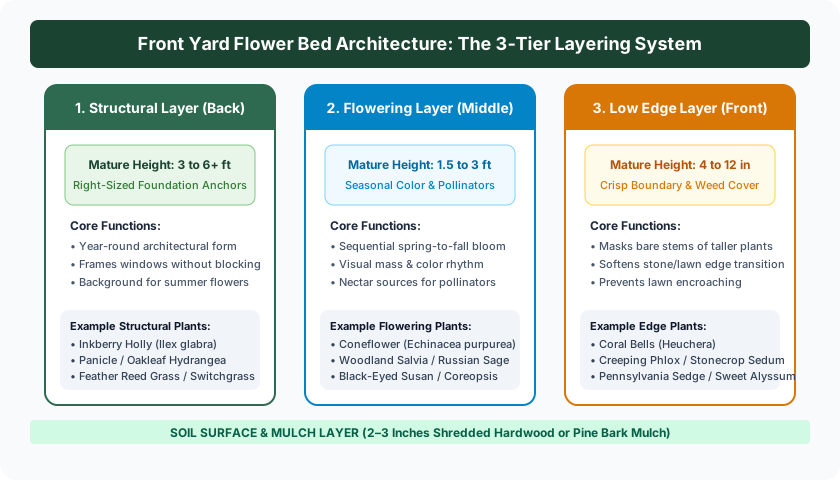
The Three-Tier Horticultural Layering System
Layering is the cornerstone of front yard curb appeal. Rather than arranging plants haphazardly, organize your bed into three distinct functional tiers: (1) Back structural shrubs (3–6+ ft) that frame building walls, (2) Middle flowering perennials (1.5–3 ft) that provide summer bloom succession, and (3) Low edge perennials and groundcovers (4–12 in) that soften border transitions.
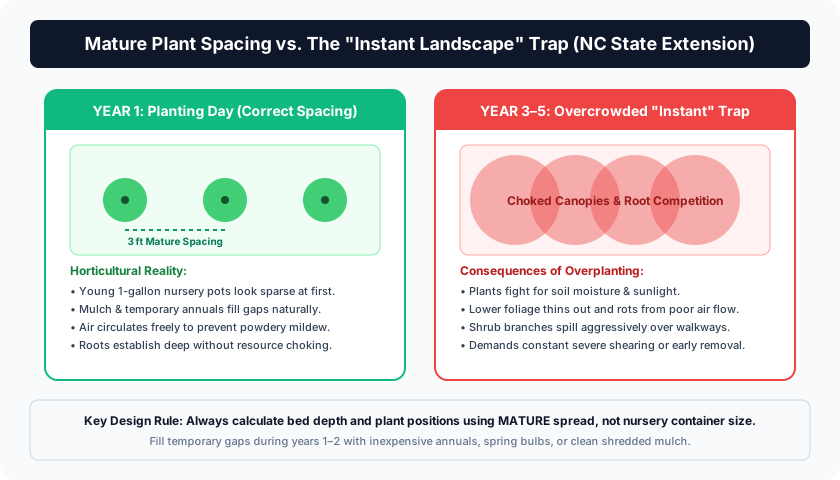
Mature Plant Spacing vs. The "Instant Landscape" Trap
Young 1-gallon nursery pots look tiny on planting day. Tempted by magazine photos, homeowners frequently pack plants together tightly, creating an "instant" full look. Within 24 to 36 months, the root zones choke each other, air circulation drops, powdery mildew thrives, and branches swallow walkways. Always space plants using their mature spread; fill temporary gaps in Years 1–2 with inexpensive annuals, bulbs, or clean mulch.
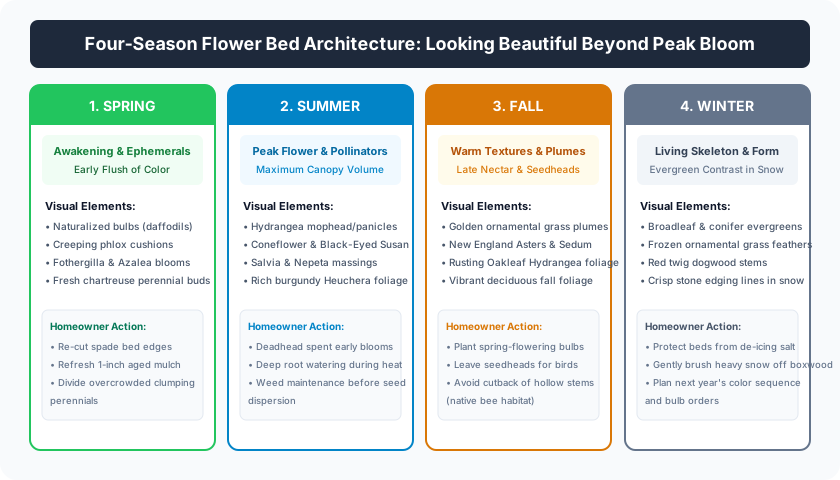
Four-Season Flower Bed Architecture: Looking Good Year-Round
Curate plants so that as one species fades, another steps into the spotlight. In spring, bulbs and ephemerals break dormancy; in summer, hydrangeas and coneflowers peak; in fall, asters and ornamental grass plumes take center stage; and in winter, evergreen silhouettes, colorful dogwood stems, and frost-covered seedheads maintain curb appeal. For exact indoor seed-starting, direct-sowing, and bulb schedules by local frost dates, consult our comprehensive month-by-month flower planting guide.
Practical Methodology
The 10-Step Front Yard Flower Bed Planning Framework
Locate the Bed & Define Its Architectural Purpose
Decide whether the bed serves as foundation landscaping, walkway framing, entry accent, or a boundary buffer. The bed should guide the visitor's eye directly toward the front door.
Calculate Sunlight Hours & Solar Exposure
Observe the site throughout a clear day: note morning sun, afternoon blast (west), or north-facing shade. Never choose plants before confirming true direct sunlight hours.
Evaluate Soil Texture, Compaction & Subsurface Drainage
Perform a simple ribbon test and percolation check. Heavy builder's clay requires organic compost amendment; downspout outlets must be routed away from building foundations.
Establish Proportional Bed Scale & Depth
Match bed depth to house height. A two-story home requires at least 6–8 feet of bed depth for realistic layering; single-story ranches look balanced with 4–6 foot depths.
Draw Broad, Intentional Geometry (Straight or Sweeping Curves)
Use garden hoses or landscape spray paint to test edges. Opt for bold, generous arcs or clean modern straight lines. Eliminate fussy, tiny scallops that make mowing difficult.
Select Structural Anchors First (Evergreens & Woody Shrubs)
Dedicate 30%–40% of bed area to structural shrubs with mature sizes that fit under windows without constant pruning. These provide the living architectural skeleton in winter.
Layer Middle Flowering Perennials for Sequential Bloom
Select 3–5 complementary perennial species in repeated groups of 3 to 7 plants. Ensure bloom times stagger across spring, mid-summer, late summer, and autumn.
Carpet Front Edges with Mounding Groundcovers & Foliage
Incorporate low-profile perennials (Heuchera, creeping phlox, sedges) within 12–18 inches of the border to mask leggy stems and suppress weeds along lawn lines.
Verify Mature Height, Spread & Building Foundation Clearance
Check plant tags for MATURE spread, not nursery pot size. Keep shrub centers at least half their mature spread plus 12 inches away from siding and foundation walls.
Simulate the 4-Season Appearance Before Digging
Review how the bed will look in January: identify persistent evergreen foliage, ornamental grass plumes, seedheads, and crisp border lines when all flowers are dormant.
Curated Design Portfolio
25 Front Yard Flower Bed Ideas Organized by Location & Lifestyle

Classic Layered Foundation Bed with Architectural Anchors
Why It Works:
By arranging plants into three distinct tiers—structural shrubs at the wall, medium flowering perennials in the center, and low mounding groundcovers at the edge—this bed creates rich optical depth. The layered hierarchy hides bare foundation concrete while ensuring windows stay completely unblocked.
- 1. Structure:Inkberry Holly (Ilex glabra) or Korean Boxwood paired with Panicle Hydrangea 'Little Lime'
- 2. Flowering:Coneflower (Echinacea purpurea), Woodland Salvia ('Caradonna'), and Black-Eyed Susan ('Goldsturm')
- 3. Edge:Coral Bells (Heuchera 'Palace Purple') and Creeping Phlox (Phlox subulata)

Low-Profile Foundation Bed for Low-Sill Windows
Why It Works:
Homes with oversized front picture windows or low sills (under 24 inches) frequently suffer from overgrown shrubs that block views and interior light. This concept relies on dwarf woody shrubs that top out naturally at 18–24 inches, combined with airy horizontal perennial drifts.
- 1. Structure:Virginia Sweetspire 'Little Henry' (Itea virginica) and Dwarf Japanese Plum Yew (Cephalotaxus)
- 2. Flowering:Catmint (Nepeta 'Junior Walker'), Butterfly Weed (Asclepias tuberosa), and Dwarf Tickseed (Coreopsis)
- 3. Edge:Stonecrop Sedum ('Angelina') and Blue Fescue Grass (Festuca glauca)

High-Contrast Foundation Bed for Red & Brown Brick Homes
Why It Works:
Red and dark brown brick absorb huge amounts of heat and can look heavy from the curb. This design uses cool-toned foliage—chartreuse, silver, deep emerald, and pure white blooms—that pop crisply against warm masonry without clashing.
- 1. Structure:Panicle Hydrangea 'Bobo' (pure white panicles) and Japanese Boxwood / Inkberry spheres
- 2. Flowering:Russian Sage (Perovskia atriplicifolia), White Coneflower ('PowWow White'), and Blue Fortune Agastache
- 3. Edge:Japanese Forest Grass (Hakonechloa macra 'Aureola') and Lamb's Ear (Stachys byzantina)

Modern Farmhouse Hydrangea & Grass Foundation Border
Why It Works:
White vertical board-and-batten siding paired with dark trim demands a tailored, architectural plant palette. Massing pure white panicle hydrangeas with upright feather reed grasses and structured evergreen spheres creates an immaculate, high-end look with long seasonal persistence.
- 1. Structure:Hydrangea paniculata 'Limelight' or 'Quick Fire' paired with Feather Reed Grass ('Karl Foerster')
- 2. Flowering:Echinacea 'White Swan', Catmint ('Walker's Low'), and White False Indigo (Baptisia alba)
- 3. Edge:Little Bluestem ('Standing Ovation') and Pennsylvania Sedge (Carex pensylvanica)

Evergreen-Anchored Four-Season Foundation Bed
Why It Works:
By dedicating a strict 40% of bed square footage to cold-hardy evergreen shrubs, this design solves the 'dead-looking winter landscape' problem. Perennial blooms weave between permanent green structure during summer, while winter reveals crisp architectural shapes in snow.
- 1. Structure:Conical Dwarf Alberta Spruce and mounding Japanese Plum Yew (Cephalotaxus harringtonia)
- 2. Flowering:Black-Eyed Susan, Purple Coneflower, Blue False Indigo (Baptisia australis), and Autumn Joy Sedum
- 3. Edge:Candytuft (Iberis sempervirens) and Dwarf Stonecrop (Sedum cauticola)
Welcoming Front-Door Framing Beds
Why It Works:
The front entry is the visual bullseye of any home. This design frames the portico or front steps with graduated heights that draw the eye directly to the entrance while keeping step treads, railings, and house numbers totally visible.
- 1. Structure:A pair of symmetrical urns or compact Boxwood/Inkberry globes flanking the bottom step
- 2. Flowering:Perennial Salvia ('May Night'), Russian Sage, and long-blooming Daylilies ('Stella de Oro')
- 3. Edge:Sweet Alyssum (Lobularia maritima) or Golden Creeping Jenny in contained edging

Flanking Walkway Perennial Flower Border
Why It Works:
Transforming a dull concrete or paver sidewalk into an immersive garden journey. By planting upright clumping perennials with restrained lateral spread, the walkway feels lush and alive without encroaching onto pedestrian paving.
- 1. Structure:Compact Japanese Spirea ('Little Princess') or dwarf flowering almond spaced every 8–10 feet
- 2. Flowering:Calamint (Calamintha nepeta), Allium 'Millenium', and Spike Speedwell (Veronica)
- 3. Edge:Creeping Thyme (Thymus praecox) and Moss Phlox tucked into paving margins

Front Porch Spillover Garden Bed
Why It Works:
Front porches look significantly more anchored when flower beds soften the vertical drop from porch decking to lawn. Incorporating fragrant perennials and summer-blooming shrubs creates a sensory oasis for homeowners sitting on the porch.
- 1. Structure:Oakleaf Hydrangea ('Ruby Slippers') and Sweet Pepperbush (Clethra alnifolia)
- 2. Flowering:Lavender ('Phenomenal'), Coneflower, Anise Hyssop (Agastache foeniculum), and Garden Phlox
- 3. Edge:Hardy Geranium ('Rozanne') and Lady's Mantle (Alchemilla mollis)

Asymmetrical Modern Entry Pocket Bed
Why It Works:
Modern architecture frequently features off-center front doors and dramatic overhangs. Symmetrical plantings look forced and artificial; an asymmetrical design pairs a substantial specimen anchor on one side with low, rhythmic drifts on the other.
- 1. Structure:Specimen multi-stem Serviceberry (Amelanchier) or Japanese Maple (Acer palmatum) on one side
- 2. Flowering:Repetitive linear bands of Japanese Forest Grass and Allium 'Summer Beauty'
- 3. Edge:Black Mondo Grass (Ophiopogon planiscapus 'Nigrescens') and clean Mexican beach pebbles

Full-Sun Heat-Resilient Perennial Flower Bed
Why It Works:
South- and west-facing front yards suffer intense solar radiation that bakes standard garden center flowers by mid-July. This concept uses tough, deep-rooted prairie forbs and bunchgrasses that thrive in 8+ hours of scorching sun with minimal supplemental watering.
- 1. Structure:Switchgrass (Panicum virgatum 'Northwind') and Leadplant (Amorpha canescens)
- 2. Flowering:Purple Coneflower (Echinacea), Orange Butterfly Weed (Asclepias), and Blanket Flower (Gaillardia)
- 3. Edge:Rock Stonecrop (Sedum rupestre) and Prairie Dropseed (Sporobolus heterolepis)

Woodland Dappled Shade Foliage & Flower Bed
Why It Works:
Shady front yards under mature oaks or maples cannot sustain sun-loving petunias or roses. This design embraces dappled woodland light by prioritizing contrasting leaf textures—bold hostas, feathery ferns, and arching sedges—interspersed with pale, light-reflecting blooms.
- 1. Structure:Mountain Laurel (Kalmia latifolia) or Dwarf Rhododendron and Japanese Plum Yew
- 2. Flowering:Astilbe ('Bridal Veil'), Columbine (Aquilegia canadensis), and Bleeding Heart (Dicentra spectabilis)
- 3. Edge:Foamflower (Tiarella cordifolia) and European Wild Ginger (Asarum europaeum)
Dry Shade Under-Tree Pocket Bed
Why It Works:
The ground beneath mature trees is notorious for dry, root-choked soil. Rather than piling soil over tree roots (which suffocates trees), this design installs tough, drought-tolerant perennials into natural pockets between major surface roots.
- 1. Structure:Lowbush Blueberry (Vaccinium angustifolium) or Bush Honeysuckle (Diervilla lonicera)
- 2. Flowering:Bigleaf Aster (Eurybia macrophylla), Golden Ragwort (Packera aurea), and Solomon's Seal (Polygonatum)
- 3. Edge:Pennsylvania Sedge (Carex pensylvanica) forming a soft lawn-alternative carpet

Morning Sun Hydrangea & Perennial Showcase Bed
Why It Works:
East-facing front yards provide the horticultural holy grail: gentle morning sunlight followed by protective afternoon shade. This exposure allows delicate bigleaf (mophead) hydrangeas to produce enormous flower heads without suffering from heat scorch.
- 1. Structure:Bigleaf Hydrangea (Hydrangea macrophylla 'Endless Summer') and Dwarf Korean Lilac
- 2. Flowering:Japanese Anemone ('Honorine Jobert'), Blue Lobelia (Lobelia siphilitica), and Turtlehead (Chelone)
- 3. Edge:Coral Bells (Heuchera 'Caramel') and Sweet Woodruff (Galium odoratum)

Lush American Cottage Flower Bed
Why It Works:
Cottage gardens celebrate romantic abundance, soft organic forms, and multi-layered flower tapestries. By weaving flowering shrubs, long-lived perennials, and self-seeding annuals together, the bed delivers continuous color from May through October.
- 1. Structure:Old-Fashioned Lilac (Syringa vulgaris) and Shrub Roses (Rosa 'Knock Out' or David Austin)
- 2. Flowering:Foxglove (Digitalis), Delphinium, Hollyhock, Phlox paniculata, and Peonies (Paeonia)
- 3. Edge:Catmint (Nepeta racemosa 'Walker's Low') and Sweet Alyssum billowing over edges
Structured Modern Minimalist Flower Bed
Why It Works:
Modern curb appeal relies on restraint, crisp architectural geometry, and high-impact repetition. Instead of a dozen flower varieties, this design uses large, repeating blocks of 2–3 sculptural plant species set within dark steel or concrete bed borders.
- 1. Structure:Massed Columnar Japanese Yew (Taxus cuspidata) and Feather Reed Grass ('Karl Foerster')
- 2. Flowering:Allium 'Millenium' planted in dense geometric blocks (20+ bulbs per block)
- 3. Edge:Black Mondo Grass or creeping thyme set against steel metal edging and basalt gravel

Crisp Traditional Suburban Symmetrical Bed
Why It Works:
Classic American suburban neighborhoods benefit from orderly, balanced plantings that respect neighborhood sightlines. Symmetrical evergreen anchors frame windows and doors, while dependable summer-blooming perennials provide seasonal cheer.
- 1. Structure:Symmetrical pair of Emerald Green Arborvitae flanking corners, with dwarf spirea drifts
- 2. Flowering:Daylilies (Hemerocallis 'Happy Returns'), Coreopsis ('Moonbeam'), and Purple Coneflower
- 3. Edge:Crisp spade-cut trench edge separating lush green turf from dark shredded bark mulch

High-Ecological-Value Pollinator Habitat Bed
Why It Works:
A front-yard pollinator bed can be gorgeous and ecologically vital when designed intentionally. By planting in defined massings rather than chaotic single stems, you provide visual coherence to human neighbors while creating high-density nectar corridors for native bees and butterflies.
- 1. Structure:New Jersey Tea (Ceanothus americanus) or Spicebush (Lindera benzoin)
- 2. Flowering:Dense drifts of Milkweed (Asclepias incarnata), Wild Bergamot (Monarda fistulosa), and Goldenrod ('Fireworks')
- 3. Edge:Native Wild Strawberry (Fragaria virginiana) and Clustered Mountain Mint (Pycnanthemum muticum)

Native Meadow-Inspired Naturalistic Front Bed
Why It Works:
Inspired by the New Perennial Movement (Piet Oudolf), this matrix-style planting intermingles native grasses and perennials into an interlocked living ecosystem. The deep, interwoven root network suppresses weeds naturally while requiring zero chemical fertilizers.
- 1. Structure:Little Bluestem (Schizachyrium scoparium) and Purple Love Grass (Eragrostis spectabilis)
- 2. Flowering:Pale Purple Coneflower (Echinacea pallida), Rattlesnake Master (Eryngium), and Amsonia hubrichtii
- 3. Edge:Prairie Dropseed (Sporobolus) forming sweeping golden hummocks along the border

Ultra-Low-Maintenance Shrub & Perennial Bed
Why It Works:
True low-maintenance landscaping is achieved through 'right plant, right place' design: choosing disease-resistant plants whose mature dimensions precisely match the bed space. By eliminating trimming, staking, and frequent division, maintenance drops to under 2 hours per month.
- 1. Structure:Dwarf Abelia ('Kaleidoscope') and Globular Blue Star Juniper (Juniperus squamata)
- 2. Flowering:Russian Sage (Perovskia), Autumn Joy Sedum (Hylotelephium), and Daylilies ('Happy Returns')
- 3. Edge:Spreading Stonecrop Sedum ('Kamtschaticum') and dense shredded bark mulch

Four-Season Architectural Interest Flower Bed
Why It Works:
Most flower beds look stunning for 3 weeks in June and dull the rest of the year. This bed is engineered across four distinct seasonal phases: spring bulb emergence, summer flowering abundance, fiery autumn foliage with grass plumes, and architectural winter berry/bark silhouettes.
- 1. Structure:Red Twig Dogwood (Cornus sericea 'Arctic Fire') and Winterberry Holly (Ilex verticillata)
- 2. Flowering:Allium bulbs for spring, Coneflower/Hydrangea for summer, and New England Aster for fall
- 3. Edge:Coral Bells (evergreen in mild winters) and creeping stonecrop sedums

Spring-Bulb to Autumn Perennial Succession Bed
Why It Works:
Early spring bulbs (daffodils, alliums) burst into bloom long before perennials wake up. As bulb foliage dies down and turns yellow in June, emerging hosta and coneflower foliage expands to completely hide the decaying bulb leaves, ensuring seamless visual continuity.
- 1. Structure:Dwarf Fothergilla (Fothergilla gardenii) with honey-scented early spring bottle-brush blooms
- 2. Flowering:Darwin Hybrid Tulips, Giant Allium ('Globemaster'), followed by Coneflower and Summer Phlox
- 3. Edge:Creeping Phlox (spring color sheet) followed by mounding Heuchera and Hardy Geranium

No-Lawn Expanded Living Flower Bed Landscape
Why It Works:
Replacing a high-maintenance, thirsty front turf lawn with a large, interconnected flower bed creates an awe-inspiring curbside presence. Permeable gravel or flagstone paths cut through deep perennial tapestries, cutting mowing to zero while supporting biodiversity.
- 1. Structure:Specimen Flowering Dogwood (Cornus florida) or Crape Myrtle surrounded by shrub masses
- 2. Flowering:Sweeping waves of Salvia, Rudbeckia, Agastache, Coreopsis, and Lavender
- 3. Edge:Low thyme carpet, sedum drifts, and crushed granite walking paths

Small Front-Yard Micro Pocket Garden
Why It Works:
Small front yards (under 250 sq ft) easily become overwhelmed by large shrubs. This micro-design relies on verticality, compact dwarf cultivars, and a disciplined two-color palette to make tiny spaces feel intentional, spacious, and upscale.
- 1. Structure:Single Columnar Evergreen (e.g., Sky Pencil Holly or Fastigiate Yew) or espaliered camellia
- 2. Flowering:Dwarf Coneflower (Echinacea 'PowWow Wild Berry') and Spike Speedwell ('Royal Candles')
- 3. Edge:Miniature Coral Bells ('Little Cutie') and stone paver border

Curbside Mailbox Island Flower Bed
Why It Works:
A solitary mailbox post in the grass often looks forgotten. Circling the post with a teardrop-shaped island bed filled with salt-tolerant, drought-resilient perennials turns an everyday utility into a cheerful curbside statement piece.
- 1. Structure:Compact woody shrub (e.g., Potentilla fruticosa or Dwarf Glossy Abelia) anchoring the rear
- 2. Flowering:Black-Eyed Susan ('Goldsturm'), Coreopsis ('Zagreb'), and Daylily ('Pardon Me')
- 3. Edge:Creeping Stonecrop (Sedum) and cobblestone or Belgian block edging

Front Fence-Line Cottage Border Bed
Why It Works:
A wooden picket fence or ornamental aluminum fence provides an idyllic physical backdrop for flower beds. Back-row perennials lean gently against rails, while front groundcovers soften the ground contact, eliminating tedious weed-whacking along the fence line.
- 1. Structure:Climbing Clematis or Climbing Hydrangea trained along fence rails at intervals
- 2. Flowering:Delphinium, Foxglove, Purple Coneflower, Garden Phlox, and Shasta Daisy ('Becky')
- 3. Edge:Sweet Alyssum and Nepeta ('Cat's Pajamas') draping along the baseboard
Architectural Harmony
Matching Flower Bed Shapes & Palettes to House Styles
| House Style | Bed Shape | Planting Character | Color Palette | Main Watch-Out |
|---|---|---|---|---|
| Modern / Mid-Century | Crisp straight lines, rectangular modules, or dramatic sweeping arcs | Restrained architectural repetition in structured drifts; high foliage contrast | Monochromatic greens, chartreuse, silver, and deep burgundy foliage | Over-fussy, multi-colored cottage mixes clash with clean architectural geometry. |
| Ranch / Split-Level | Long, continuous horizontal beds (5–7 ft deep) that visually anchor low rooflines | Layered low-to-medium horizontal bands that accentuate mid-century horizontality | Warm earthy tones, soft yellows, purples, and cream whites | Tall upright shrubs under low eaves block natural light and break horizontal rooflines. |
| Colonial / Traditional | Symmetrical flanking foundation beds with crisp, formal geometric or gently bowed edges | Mirrored entry accents, balanced foundation tiers, formal repetition of dependable forms | Classic white, rich pink, deep navy blues, and formal evergreen greens | Asymmetrical chaotic plantings undermine formal classical facade symmetry. |
| Craftsman / Bungalow | Organic flowing curves incorporating natural boulder accents and stone bed edging | Naturalistic textural layering featuring native perennials, stonecrops, and sturdy shrubs | Earthy russets, burnt orange, golden yellow, olive green, and bronze foliage | Rigid plastic edging and sheared geometric spheres feel artificial against organic woodwork. |
| American Cottage | Deep undulating borders (6–9 ft deep) spilling gently along paths and porches | Dense, multi-layered tapestry of perennials, self-seeding annuals, and flowering shrubs | Pastel rainbow: soft pinks, lavenders, sky blues, lemon yellows, and antique whites | Neglecting structural evergreens leaves the bed completely bare and flat in winter. |
| Modern Farmhouse | Generous foundation beds with crisp metal or clean-cut trench edging against light siding | High contrast: crisp dark green evergreens, massed white blooms, and airy grasses | Clean white, charcoal, slate gray foliage, and pure emerald green | Busy neon color mixes fight against the minimalist black-and-white farmhouse aesthetic. |
| Red / Brown Brick Suburban | Sweeping foundation bed with a prominent curved bed corner that softens heavy masonry | Lush cool-toned foliage and contrasting blooms that pop against warm brickwork | Cool blues, crisp whites, chartreuse, silver, and pale pink (cool palette balances warm brick) | Planting dark red or brick-orange flowers that get lost visually against matching red brick. |
Solar Microclimates
Flower Bed Plant Strategies by Sunlight Exposure
| Solar Exposure | Design Strategy | Structural Shrubs | Flowering Perennials | Main Challenge |
|---|---|---|---|---|
| Full Sun (6+ hours direct sunlight) | Dense perennial drifts that can handle intense solar heat without mid-day wilting | Panicle hydrangea, ninebark, potentilla, dwarf lilac, switchgrass | Coneflower (Echinacea), black-eyed Susan, Russian sage, salvia, coreopsis | Rapid soil evaporation; requires 2–3 inches organic mulch and drought-adapted selections. |
| Morning Sun / Afternoon Shade (4–6 hours east exposure) | Ideal horticultural exposure for delicate, large-leaved flowering shrubs and soft perennials | Bigleaf hydrangea (Hydrangea macrophylla), mountain laurel, sweet pepperbush (Clethra) | Astilbe, bleeding heart, spiderwort, Japanese anemone, columbine | Soil drying out if shaded under aggressive shallow tree roots (e.g. Norway maple). |
| Part Shade / Dappled Sunlight (3–5 hours filtered canopy light) | Textural foliage contrast combining broad leaves, fine ferns, and pale, light-reflecting blooms | Oakleaf hydrangea, serviceberry, leatherleaf mahonia, Japanese plum yew | Goat's beard, turtlehead, hardy geranium, great blue lobelia, toad lily | Slower growth rates and sparser bloom counts compared to full-sun equivalents. |
| Full Dense Shade (< 3 hours direct light, north-facing walls) | Foliage-first tapestry emphasizing leaf variegation, gloss, silver hues, and textural interplay | Canadian hemlock (dwarf), inkberry holly, chokeberry, Japanese plum yew | Actaea (bugbane), snakeroot, lungwort (Pulmonaria), Solomon's seal, ferns | Lack of photosynthetic energy limits vibrant flower production; prioritize foliage. |
| Dry Shade (Under mature shade trees with dense root competition) | Tough, drought-tolerant woodland perennials planted in pocket holes between major roots | Fragrant sumac 'Gro-Low', bush honeysuckle (Diervilla lonicera), arrowwood viburnum | Bigleaf aster, golden ragwort, barrenwort (Epimedium), Solomon's seal | Extreme root water absorption; never bury tree root flares with imported topsoil. |
| Hot Reflected Heat (Curbsides, south-facing asphalt driveways) | Sturdy xerophytic perennials with waxy, silver, or fine foliage adapted to microclimate oven conditions | Yucca filamentosa, juniper 'Blue Star', leadplant, shrubby cinquefoil | Agastache (hummingbird mint), butterfly weed (Asclepias tuberosa), blanket flower, yarrow | Radiant heat from masonry and asphalt bakes root zones; requires gravel or coarse mulch. |
Geographic Climate Adaptation
Full-USA Regional Flower Bed Strategies
| US Region | Climate Realities | Flower Bed Strategy | Dependable Genera | Seasonal Priority |
|---|---|---|---|---|
| Northeast / New England (Zones 4–7) | Harsh freezing winters, heavy snow loads, humid summers, rocky acidic glacial till | Layer snow-resilient woody shrubs with long-lived cold-hardy perennials and spring ephemerals | Hydrangea, Ilex glabra, Echinacea, Nepeta, Heuchera, Carex pensylvanica, Baptisia | Protect broadleaf evergreens from winter salt spray and harsh dry northwestern winds. |
| Mid-Atlantic / Chesapeake (Zones 6–8) | Moderate winters, hot humid summers, variable clay soils, frequent freeze-thaw cycles | Combine disease-resistant native perennials with deer-resistant structural foundation shrubs | Viburnum, Clethra alnifolia, Rudbeckia, Salvia, Amsonia hubrichtii, Schizachyrium | Select cultivars resistant to powdery mildew due to intense summer ambient humidity. |
| Southeast / Piedmont (Zones 7–9) | Long hot humid summers, mild winters, dense red clay soils, high fungal pathogen pressure | Generous raised bed amendments with pine bark; heat-tolerant bloomers with open branching | Loropetalum, Abelia, Echinacea, Coreopsis, Muhlenbergia capillaris, Lantana | Avoid waterlogged clay around foundation roots during torrential summer thunderstorms. |
| Florida & Gulf Coast (Zones 9–11) | Subtropical heat, sandy fast-draining soils, heavy wet season, year-round growing season | Lush tropical foliage mixed with drought-tolerant coastal native shrubs and evergreen palms | Coontie (Zamia), Walter's Viburnum, Firebush, Plumbago, Agapanthus, Muhly grass | Balance wet-season deluge drainage with dry winter irrigation management. |
| Midwest & Rust Belt (Zones 4–6) | Sub-zero polar vortexes, high wind, heavy alkaline clay soils, hot continental summers | Deep-rooted prairie perennials anchored with durable wind-resistant deciduous shrubs | Aronia, Spiraea, Liatris, Silphium, Solidago, Panicum virgatum, Sporobolus | Leave hollow perennial stems standing through winter to insulate crowns and shelter pollinators. |
| Northern Great Plains (Zones 3–5) | Severe Arctic freezes (-30°F), desiccating winds, low humidity, alkaline limestone soils | Ultra-hardy shrub backbone combined with rugged native prairie forbs and bunchgrasses | Potentilla, Dwarf Arctic Willow, Echinacea angustifolia, Pasqueflower, Bouteloua | Deep autumn watering prior to soil freeze-up prevents severe winter shrub desiccation. |
| South Central & Texas (Zones 7–9) | Extreme summer heat (100°F+), flash droughts, caliche alkaline soil, sudden winter blue northers | Xeriscape-hybrid beds with heat-proof native perennials, gravel mulches, and structural agaves | Texas Sage (Leucophyllum), Red Yucca, Salvia greggii, Blackfoot Daisy, Guara, Damianita | Avoid thirsty broadleaf shrubs like hydrangeas; prioritize deep drought dormancy resilience. |
| Mountain West & High Desert (Zones 3–6) | High UV solar radiation, short frost-free season, low rainfall, rapid day-to-night temperature swings | Steppe-adapted rock garden plantings, native penstemons, and drought-hardy low conifer anchors | Penstemon, Eriogonum (Buckwheat), Rabbitbrush, Agastache, Blue Grama, Pinus mugo | Protect against early autumn and late spring hard freezes that hit tender flower buds. |
| Southwest / Sonoran / Mojave (Zones 8–10) | Arid desert conditions, intense radiant heat, minimal rainfall, alkaline caliche hardpan | Sculptural succulents, desert-adapted blooming shrubs, organic decompose granite mulch | Desert Marigold, Fairy Duster, Hesperaloe, Salvia clevelandii, Opuntia, Desert Spoon | Hydrozone carefully; avoid planting moisture-loving perennials adjacent to desert succulents. |
| California Coastal & Mediterranean (Zones 9–10) | Dry, rainless summers, mild wet winters, microclimate coastal marine layers, wildfire risks | Summer-dry chaparral and coastal scrub plants paired with structural succulent accents | Ceanothus (California Lilac), Arctostaphylos (Manzanita), Salvia apiana, Poppies, Dudleya | Strict avoidance of summer over-watering, which induces fatal root rot in summer-dormant natives. |
| Pacific Northwest (Zones 7–9) | Mild wet winters, acidic soils, cool cloud cover, surprisingly dry summer drought periods | Lush woodland understory layers featuring evergreen ferns, rhododendrons, and summer-hardy perennials | Rhododendron (dwarf), Mahonia nervosa, Polystichum munitum, Campanula, Epimedium | Provide supplemental irrigation during July–August dry spells for shallow-rooted woodlanders. |
Avoid Costly Pitfalls
18 Front Yard Flower Bed Mistakes to Avoid
1. Shopping for Flowers by Bloom Color Alone
Why It Fails: Homeowners visit the nursery in May and buy whatever is blooming in 4-inch pots, resulting in an overwhelming 2-week bloom explosion followed by 10 months of dull, unstructured green foliage.
2. Falling for the 'Instant Landscape' Overcrowding Trap
Why It Fails: Planting young 1-gallon nursery pots shoulder-to-shoulder to make the bed look immediately full creates severe root competition, fungal leaf diseases, and tangled overgrowth within 24 months.
3. Planting 'One of Everything' (The Specimen Collector Trap)
Why It Fails: Buying 25 different single plant varieties creates a chaotic, restless visual effect that lacks harmony and looks like a retail plant nursery holding yard rather than a designed garden.
4. Designing Beds That Are Too Narrow for the House Scale
Why It Fails: A 2-foot wide flower strip installed against a large two-story suburban home looks tiny, insubstantial, and disproportionate from the street, providing zero depth for plant layering.
5. Planting Fast-Growing Large Shrubs Under Low Windows
Why It Fails: Planting shrubs that reach 8–10 feet tall directly under a 3-foot window sill forces endless, ugly hedge shearing that destroys the plant's natural habit and blocks interior natural light.
6. Hiding the Front Entry, Steps, or House Numbers
Why It Fails: Oversized shrubs or tall flower masses placed adjacent to the front porch obscure sightlines, conceal handrails, and hide house numbers from emergency first responders.
7. Crowding Walkways with Floppy or Thorny Flowers
Why It Fails: Planting spreading perennials directly at walkway edges causes wet foliage and bee-covered blooms to spill over the path, drenching pedestrian clothing after rain and impeding foot traffic.
8. Carving Wobbly, Nervous 'Scalloped' Bed Edges
Why It Fails: Tiny undulating scallops made with a garden spade look nervous, amateurish, and clashing against the straight, formal geometric lines of a residential house, while making mowing a nightmare.
9. Ignoring the Winter 'Living Skeleton'
Why It Fails: A flower bed composed of 100% herbaceous perennials completely collapses into bare dirt from November through March, leaving the front of the home barren and unfinished all winter.
10. Assuming All Perennials Are 'Low Maintenance'
Why It Fails: Many vigorous perennials require regular staking, frequent deadheading, powdery mildew spraying, and division every 2–3 years to avoid self-seeding aggressively into lawns.
11. Using One National Plant Palette Regardless of Climate
Why It Fails: Copying a plant list from a magazine that was designed for coastal Oregon or Maine and trying to grow it in Dallas, Atlanta, or Phoenix leads to swift plant death from heat and humidity.
12. Planting Aggressive Invasive Ornamentals
Why It Fails: Planting invasive plants like English Ivy, Burning Bush (Euonymus alatus), or Japanese Barberry damages local forest ecosystems and requires constant, frustrating pulling.
13. Piling 'Mulch Volcanoes' Against Stems and Siding
Why It Fails: Mounding 6 inches of woodchips directly against shrub stems and wood siding suffocates root flare bark, induces rot, and provides moisture bridges for subterranean termites.
14. Hiding Utility Meters, Cleanouts, and AC Condensers
Why It Fails: Completely burying gas meters, electric panels, cleanout caps, or AC condensers behind impenetrable thorny shrubs prevents technician access and restricts heat exchange.
15. Trapping Downspout Water Against Foundation Walls
Why It Fails: Creating a raised flower bed border that dams roof runoff against basement masonry causes damp basements, efflorescence, and foundation settling.
16. Planting Hydrangeas Everywhere in Scorching Full Sun
Why It Fails: Bigleaf hydrangeas (Hydrangea macrophylla) planted in hot afternoon sun wilt dramatically every single afternoon, developing scorched leaves and failed flower buds.
17. Raising Soil and Flower Beds Over Existing Tree Roots
Why It Fails: Dumping 8 inches of topsoil over mature tree roots to plant flowers suffocates delicate fine feeder roots and triggers crown dieback and tree death over 3–5 years.
18. Over-Relying on USDA Hardiness Zones Alone
Why It Fails: A plant hardy to Zone 7 in dry Colorado may perish quickly in Zone 7 North Carolina due to suffocating summer humidity and fungal pathogens.
Visualize a New Flower Bed Layout on Your Own Front Yard
Wondering how deep foundation beds, curved walkway borders, or massed hydrangeas would look against your specific siding color and roofline? Use our interactive visualizer to explore bed shapes, plant massing, and architectural styles before digging.
Questions & Answers
Frequently Asked Questions About Front Yard Flower Beds
Answers
Frequently asked questions
01What looks good in a front yard flower bed?
A successful front-yard flower bed looks best when it combines a permanent structural layer of evergreen or flowering shrubs (30%–40% of the canopy) with staggered perennials, ornamental grasses, and low-growing edge plants. Rather than planting one of everything, repeating a disciplined palette of 5 to 7 plant species in coordinated drifts creates a unified, professional appearance that maintains visual appeal in all four seasons.
02How do you arrange flower beds in front of the house?
To arrange flower beds in front of the house: (1) maintain a 12-to-18-inch unplanted buffer against the siding for airflow and maintenance; (2) position taller structural shrubs in the back row, spacing shrub centers at half their mature spread plus 12 inches away from the wall; (3) select shrubs whose mature height naturally stays 6 to 12 inches below window sills; (4) tier intermediate flowering perennials (1.5–3 ft) in the middle; and (5) knit the front edge with low mounding groundcovers along a defined 3-to-4-inch trench edge.
03How deep should a flower bed be in front of a house?
For proper multi-tier layering, a foundation flower bed in front of a house should be at least 6 to 8 feet deep. A 6-to-8-foot bed provides sufficient space for an unplanted 12-to-18-inch siding buffer, a back row of structural shrubs (3–5 ft mature spread), a middle row of blooming perennials (2–3 ft spread), and a front groundcover border (1–2 ft spread). In compact front yards with narrow setbacks, a 3.5-to-4.5-foot bed can work if you utilize slender columnar evergreens and compact vertical perennials.
04How far away from the house foundation should a flower bed be planted?
Always maintain an unplanted 12-to-18-inch gravel or mulch gap directly against the foundation wall for siding ventilation, termite inspection, and home maintenance access. Calculate shrub planting centers using the formula: (Mature Spread ÷ 2) + 12–18 inches. For example, a shrub with a 4-foot mature spread should have its root ball centered at least 3 to 3.5 feet away from the exterior wall.
05What can you plant under front windows?
Choose naturally dwarf shrubs whose genetic mature height remains at least 6 to 12 inches below the bottom of your window sill without constant shearing. Top choices include Virginia Sweetspire ('Little Henry', 2 ft), Dwarf Abelia ('Kaleidoscope', 2.5 ft), Dwarf Inkberry Holly ('Gem Box', 2–3 ft), Dwarf Japanese Plum Yew (2 ft), and mounding perennials like Coral Bells (Heuchera) and Dwarf Catmint ('Cat's Pajamas'). Never plant fast-growing 6-to-8-foot shrubs expecting to shear them indefinitely.
06What can I plant in front of a brick house?
Against red or dark brick facades, choose plants that create crisp contrast: broadleaf evergreens with deep green or chartreuse foliage, and flowers in cool color palettes such as crisp whites, lavender-blues, soft pinks, and silvery purples. Excellent choices include White Panicle Hydrangeas ('Bobo', 'Limelight'), Russian Sage, Blue Star Juniper, Catmint ('Walker's Low'), and White Coneflower. Avoid hot saturated reds and oranges that clash with red brick masonry.
07How do you arrange flower beds in front of a porch?
Scale front porch flower beds so mature shrub heights finish 4 to 6 inches below porch floorboards or railing balusters, allowing seated porch occupants to view the front yard unobstructed. Anchor porch corners with rounded evergreen shrubs or upright flowering specimens, weave climbing clematis or climbing roses on vertical posts, and leave a 12-inch air buffer behind porch lattice to prevent dampness and wood rot.
08How do I make a front flower bed look professional?
To achieve a professional landscape finish: (1) carve bold, generous curves or crisp straight lines rather than wobbly scallops; (2) cut a deep 3- to 4-inch vertical spade-cut trench edge to prevent grass intrusion; (3) apply a uniform 2- to 3-inch layer of dark shredded bark mulch; (4) repeat key plant species at regular 6-to-8-foot intervals to establish visual rhythm; and (5) choose plants with attractive foliage textures that look immaculate even when out of bloom.
09How do you layer a flower bed?
Layering follows a three-zone horticultural hierarchy: (1) Structural Layer (back, 3–6+ ft tall) featuring evergreen or woody shrubs and tall grasses to anchor the architecture; (2) Flowering Succession Layer (middle, 1.5–3 ft tall) delivering sequential spring, summer, and autumn color; and (3) Low Edge Layer (front, 4–12 in tall) composed of creeping groundcovers and mounding foliage that knit the bed into a clean, weed-suppressing border.
10How can I make a front flower bed low maintenance?
Lower maintenance comes from 'right plant, right place' design: (1) choose self-supporting, pest-resistant perennials (like Amsonia, Nepeta, and Sedum) that never require staking; (2) select shrubs whose mature spread fits the bed without frequent shearing; (3) plant densely enough at mature spacing that plants form a living mulch canopy; and (4) install crisp trench edging to keep aggressive turfgrass rhizomes from invading.
11How do I design a flower bed for year-round color?
Combine four distinct visual elements: (1) Spring bulbs (daffodils, alliums) for early wake-up color, (2) long-blooming summer perennials and hydrangeas for peak color, (3) fall-flowering asters and golden ornamental grass plumes, and (4) cold-hardy evergreens, red twig dogwood stems, and persistent dried seed cones that catch winter snow.
12What flowers are good for a small front yard?
For small front yards, select compact clumping perennials that do not spread aggressively: Allium ('Millenium'), dwarf coneflower ('PowWow Wild Berry'), spike speedwell (Veronica 'Royal Candles'), dwarf catmint ('Cat's Pajamas'), and coral bells (Heuchera). Limit your palette to 3 or 4 repeating species and stick to a disciplined 2-color harmony (such as purple and white or chartreuse and blue) to avoid visual clutter.
13What plants are good for full sun in a front flower bed?
Top full-sun performers that tolerate radiant heat include Purple Coneflower (Echinacea purpurea), Black-Eyed Susan (Rudbeckia fulgida), Russian Sage (Salvia yangii), Butterfly Weed (Asclepias tuberosa), Autumn Joy Sedum, Panicle Hydrangea ('Limelight' or 'Bobo'), and sturdy ornamental grasses like Switchgrass and Little Bluestem. These species endure 6+ hours of intense sun without midday wilting.
14What can I plant in a shady front flower bed?
In part to full shade, prioritize textural foliage and pale light-reflecting blooms: Hostas (especially variegated white-and-green cultivars), Astilbe, Bleeding Heart (Dicentra), Native Ferns (Christmas Fern, Maidenhair Fern), Coral Bells (Heuchera), Barrenwort (Epimedium), Foamflower (Tiarella), and broadleaf evergreen shrubs like Mountain Laurel and Japanese Plum Yew.
15Should flower beds in front of the house be curved or straight?
Match the bed edge geometry to your home's architecture: (1) Straight, crisp linear beds complement modern, mid-century, and formal Georgian or colonial architecture; (2) Sweeping, gentle organic curves complement ranch, craftsman, cottage, and informal traditional homes. If curving, make curves broad and generous (radius 6–10+ ft) so riding mowers can follow the edge effortlessly without choppy 3-point turns.
16How do you prevent foundation flower beds from damaging siding and gutters?
To protect your home structure: (1) Maintain a 12-to-18-inch unplanted buffer against siding; (2) Grade the flower bed soil away from the foundation at a minimum 2% slope (downward slope of 1/4 inch per foot for the first 6 feet); (3) Route gutter downspout runoff into buried solid PVC pipes that discharge at least 10 feet away from foundation walls; and (4) Avoid mounding mulch against siding, maintaining at least 4 to 6 inches of visible concrete foundation below wood or vinyl siding.
Planning a Front Yard Landscape in Peabody, MA?
While the 25 flower bed design ideas detailed above apply to residential properties nationwide, front-yard gardening on Massachusetts' North Shore brings unique regional considerations: rocky acidic glacial till, coastal nor'easter winds, de-icing salt spray along street curbs, and USDA Zone 6b winter freezes.
In Essex County, successful flower beds pair salt- and snow-resilient woody evergreens (like inkberry holly and low-profile yews) with dependable New England perennials (coneflowers, nepeta, black-eyed Susans, and native asters). If you are planning a comprehensive front yard makeover—including bed expansion, sod replacement, bluestone walkways, or natural stone edging—LandscapingPeabodyMA.com connects you with independent, vetted landscaping professionals across Peabody, Danvers, Beverly, Salem, and Marblehead.
Ready to Elevate Your Home's Front Yard Curb Appeal?
Connect with experienced local landscaping professionals for custom bed design, perennial installation, paver walkways, and seasonal maintenance across the North Shore.
Get connected with an independent local landscaping professional. Calls go to (877) 537-6896.