High-Yield Vertical Homesteading
19 Genius Vertical Potato Tower Garden Ideas: High-Yield Small Space Guide
A vertical potato tower is a space-saving gardening method where indeterminate seed potatoes are planted at the base and progressively covered with soil and straw as stems grow upward. Tubers develop continuously along the buried stems, producing 20 to 30 pounds of clean, unblemished potatoes in just four square feet with effortless unclip harvesting.
Massive food production in a 4 sq ft footprint
Prevents compaction and tuber fungal rot
No garden forks or damaged spuds
System Performance
Vertical Potato Tower Specifications & Yield Benchmarks
| Tower System | Build Cost | Expected Yield | Footprint | Drainage Speed | Harvest Style |
|---|---|---|---|---|---|
| Wire Mesh Cylinder Tower | $15 - $25 | 20 - 30 lbs | 3.5 sq ft | Excellent | Cylinder Open |
| Wooden Pallet Box Tower | $0 - $15 (Upcycled) | 25 - 35 lbs | 4.0 sq ft | Fast | Side Panel Unlatch |
| Stackable Wooden Crate System | $35 - $60 | 20 - 30 lbs | 4.0 sq ft | Fast | Side Panel Unlatch |
| Heavy-Duty Fabric Grow Bags | $12 - $20 | 15 - 22 lbs | 2.5 sq ft | Excellent | Tarp Dump (Instant) |
| Recycled Plastic Drum Tower | $20 - $35 | 20 - 28 lbs | 3.5 sq ft | Moderate | Side Panel Unlatch |
| Concrete Block Pocket Tower | $30 - $45 | 15 - 25 lbs | 6.0 sq ft | Fast | Side Panel Unlatch |
Tower Blueprints
19 Ingenious Vertical Potato Tower Designs
Wire Mesh & Straw Cylinder Tower
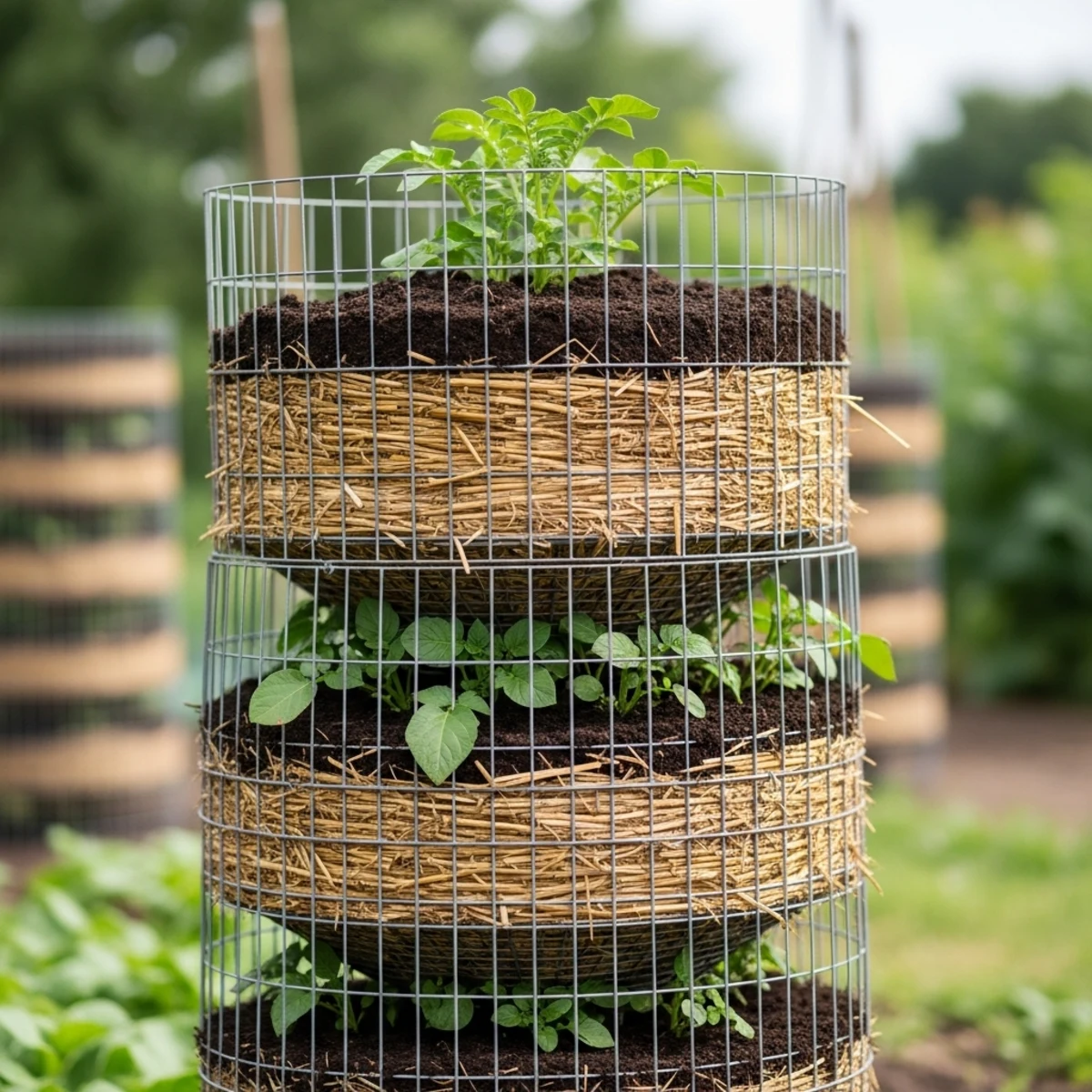
A classic wire mesh cylinder lined with clean wheat straw is the most reliable, high-yielding vertical potato tower ever invented. The open wire mesh ensures unmatched root aeration while the straw outer ring insulates tubers from extreme heat. When harvest arrives, simply unclip the wire seam and watch 25+ pounds of clean, golden tubers tumble out freely.
Upcycled Wooden Pallet Potato Tower
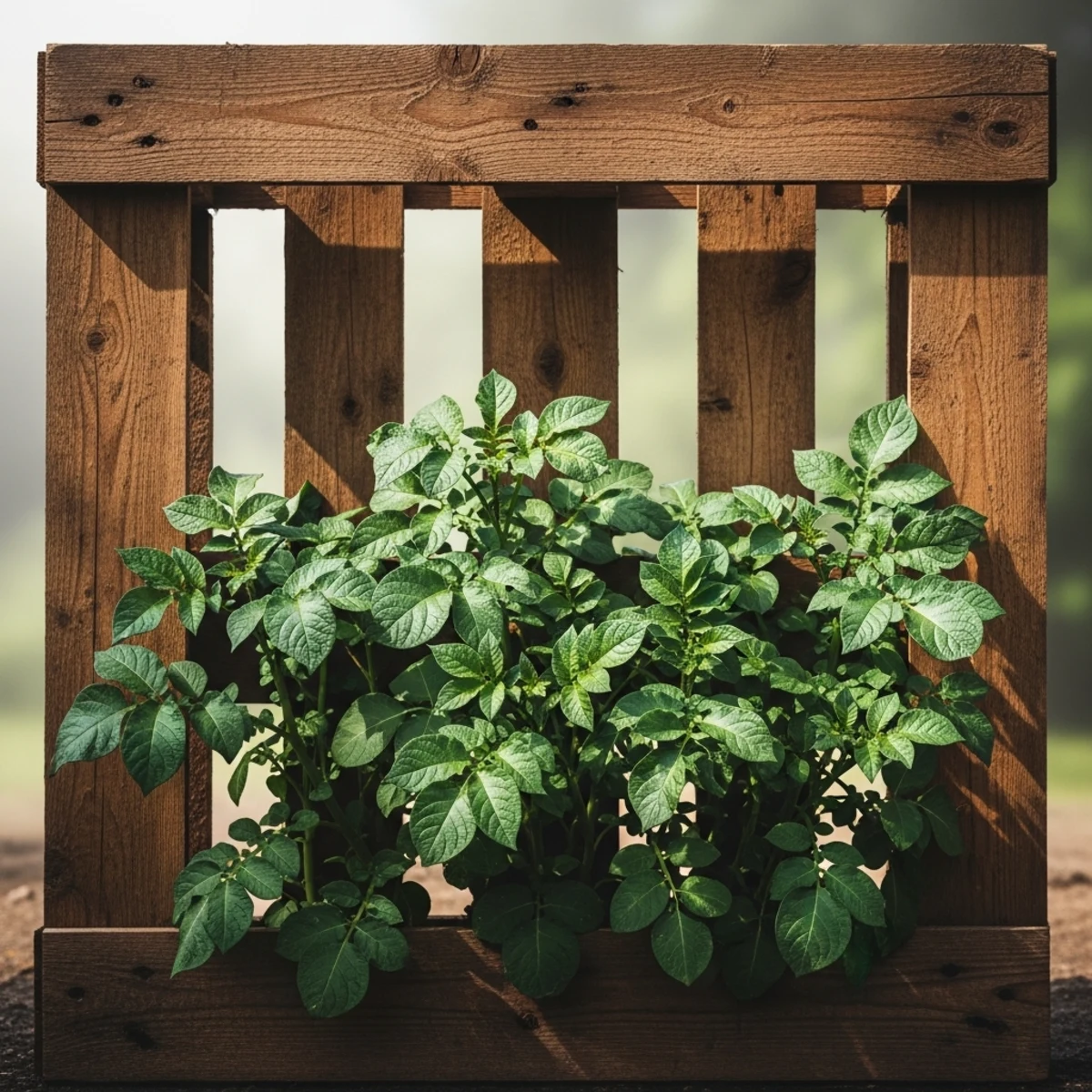
Constructed by fastening four heat-treated (HT stamp) wooden pallets vertically, this box tower creates an attractive, sturdy vertical growing chamber. Fasten the front horizontal slats with exterior wood screws so you can remove slats one by one from the bottom up to harvest tender new potatoes early without disturbing the upper plants.
Stackable Wooden Box Layer Tower
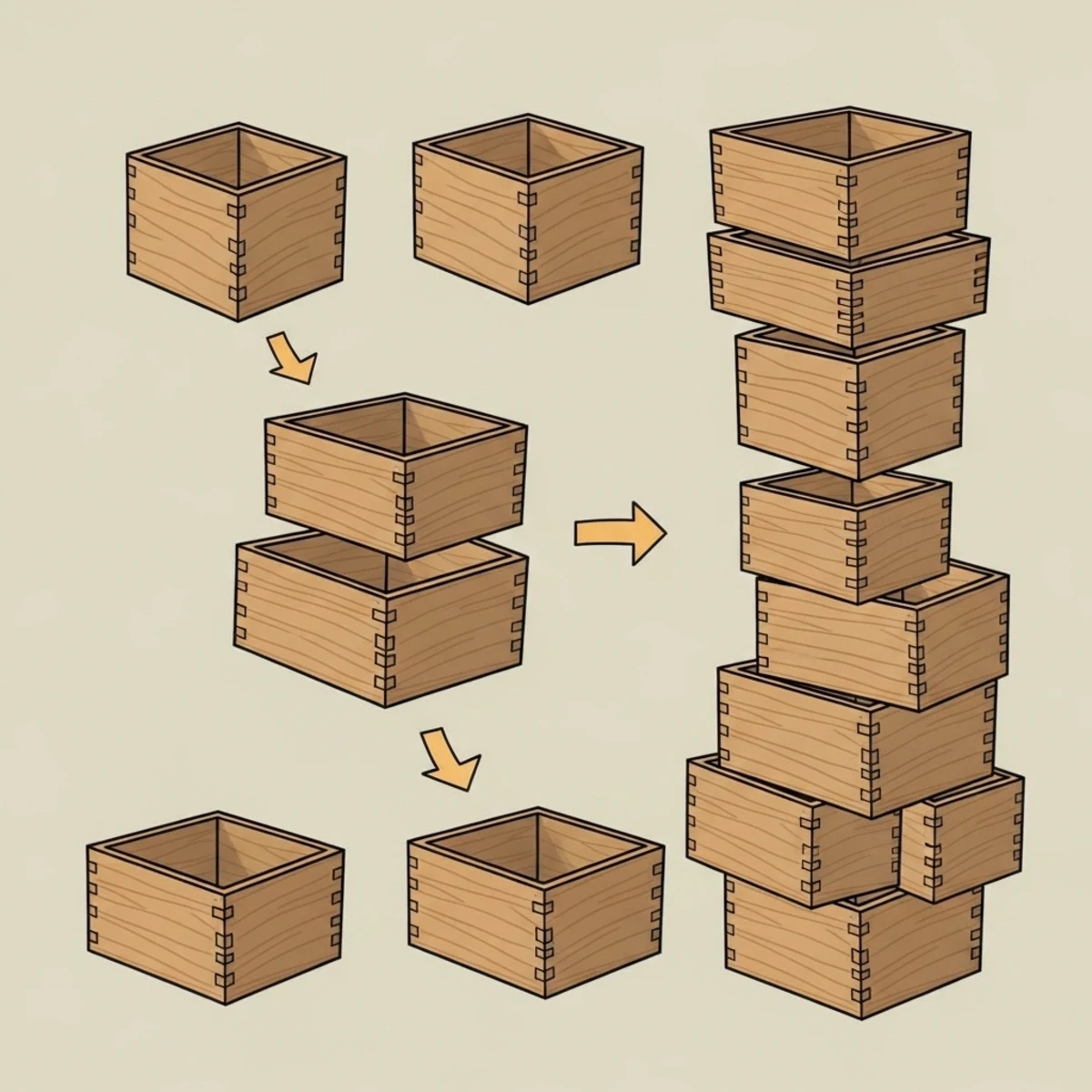
This modular system starts with a single 6-inch high wooden box filled with soil and seed potatoes. As green shoots reach 8 to 10 inches tall, you simply stack another wooden tier on top and fill with compost. By midsummer, you have a rigid 4-tier wooden tower that deconstructs effortlessly at harvest time.
Recycled Plastic Food-Grade Drum Tower
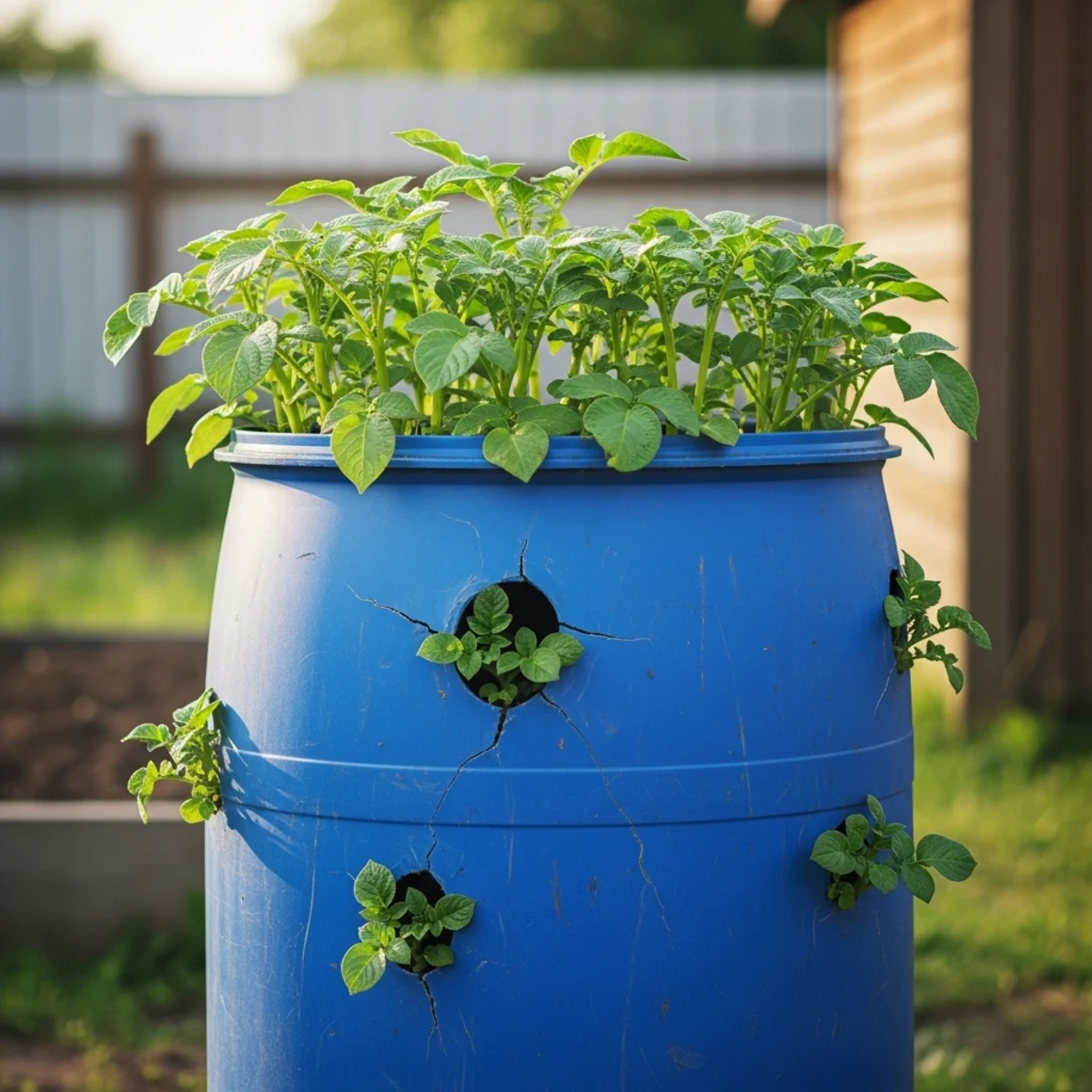
A recycled 55-gallon food-grade plastic drum can be modified with 2-inch side pocket incisions heated and flared outward to form cups. Potatoes grow not only from the open top but cascade outward through dozens of side planting pockets, multiplying your harvest volume three-fold in a compact 3-foot circular footprint.
Heavy-Duty Fabric Grow Bag Towers
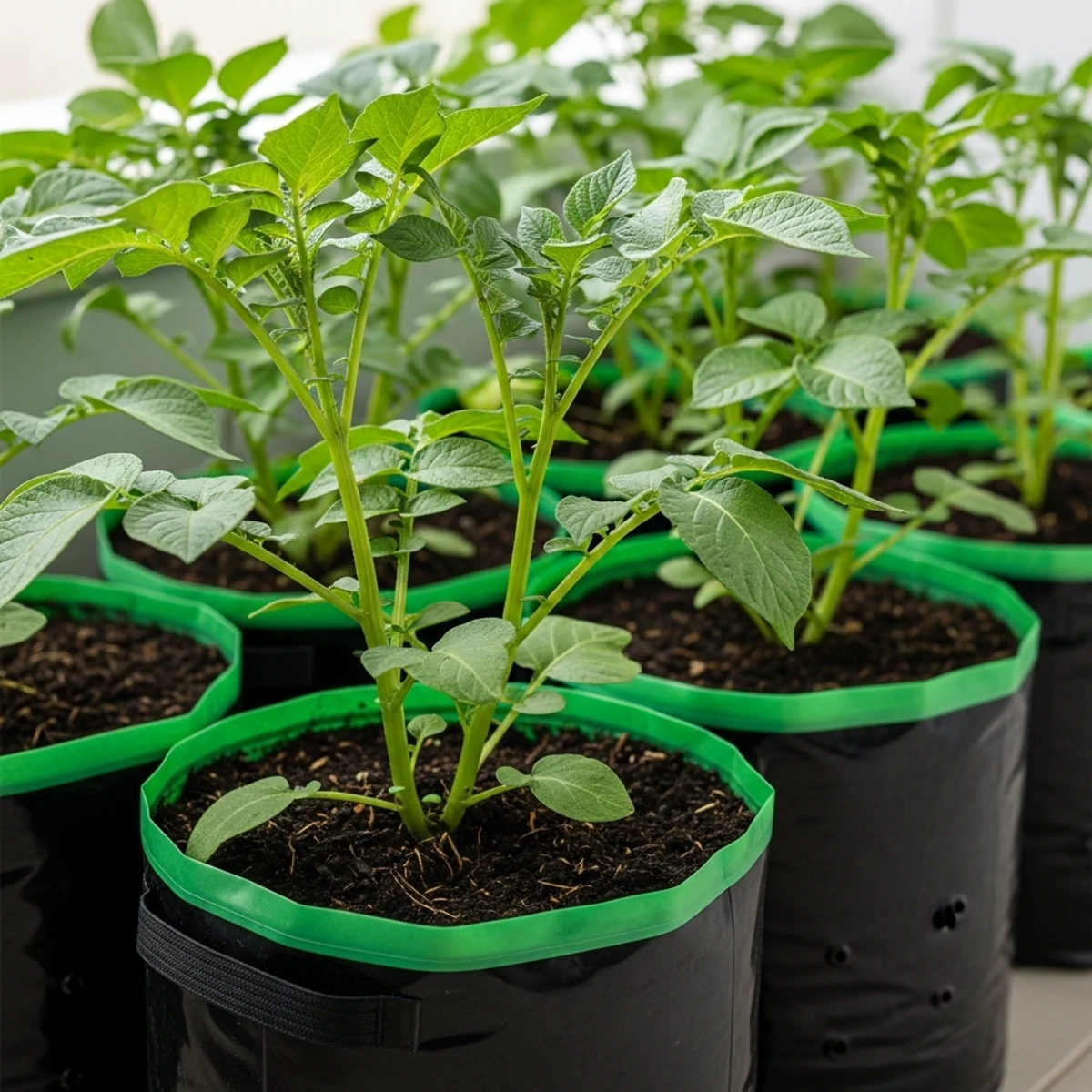
Commercial potato grow bags made from breathable 300 GSM non-woven geotextile fabric prevent roots from becoming root-bound through natural 'air-pruning'. High-quality bags feature a Velcro harvest flap near the base, allowing gardeners to reach inside and harvest baby 'creamer' potatoes for dinner while the main plant continues producing.
Interlocking Milk Crate Vertical Tower
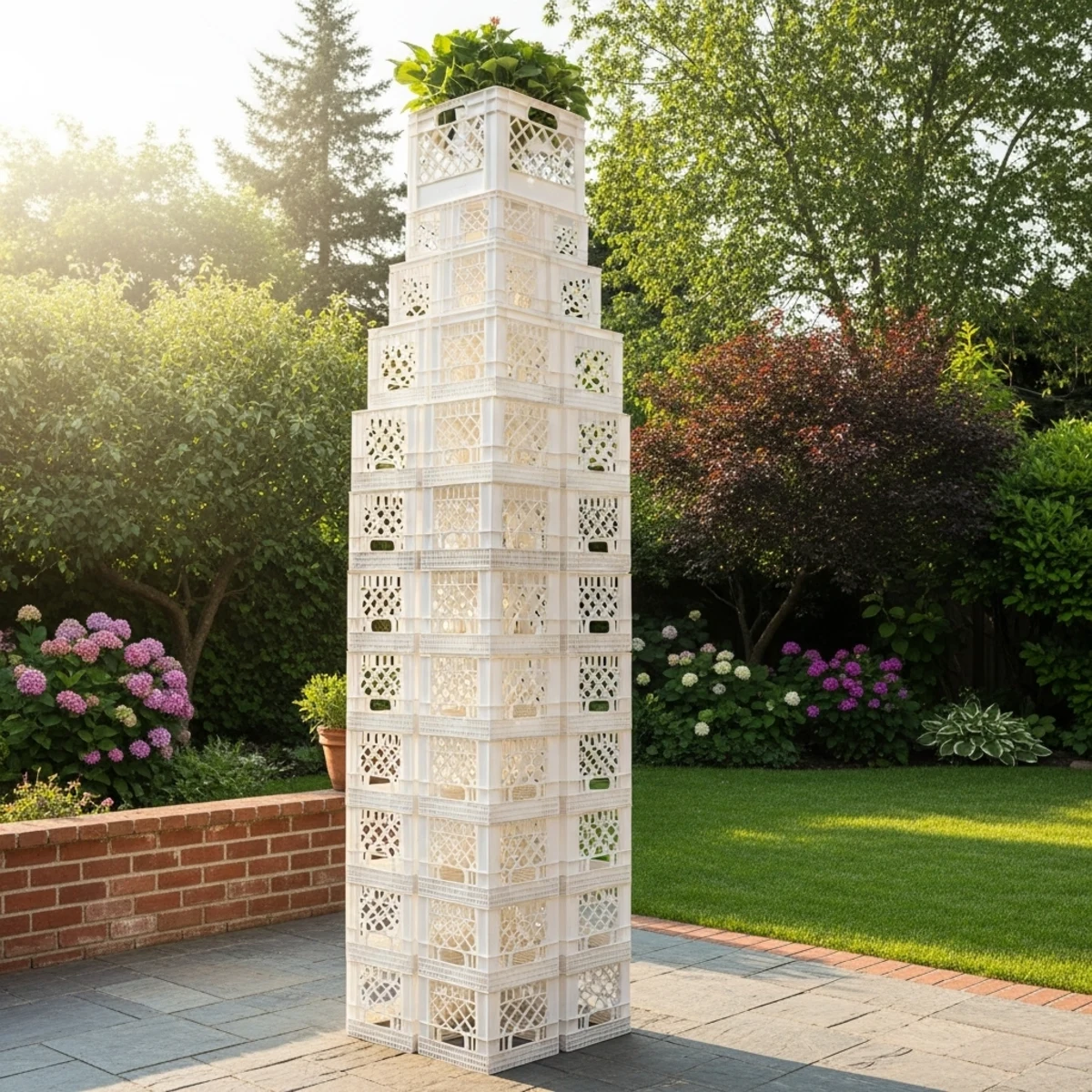
Rigid commercial milk crates feature built-in grid perforations that provide perfect natural drainage and root aeration. Lined with landscape fabric or burlap, crates can be stacked 3 to 4 units high as vines grow. In autumn, unstacking the modular crates makes harvesting as easy as flipping individual blocks onto a lawn tarp.
Recycled Tire Stack Potato System
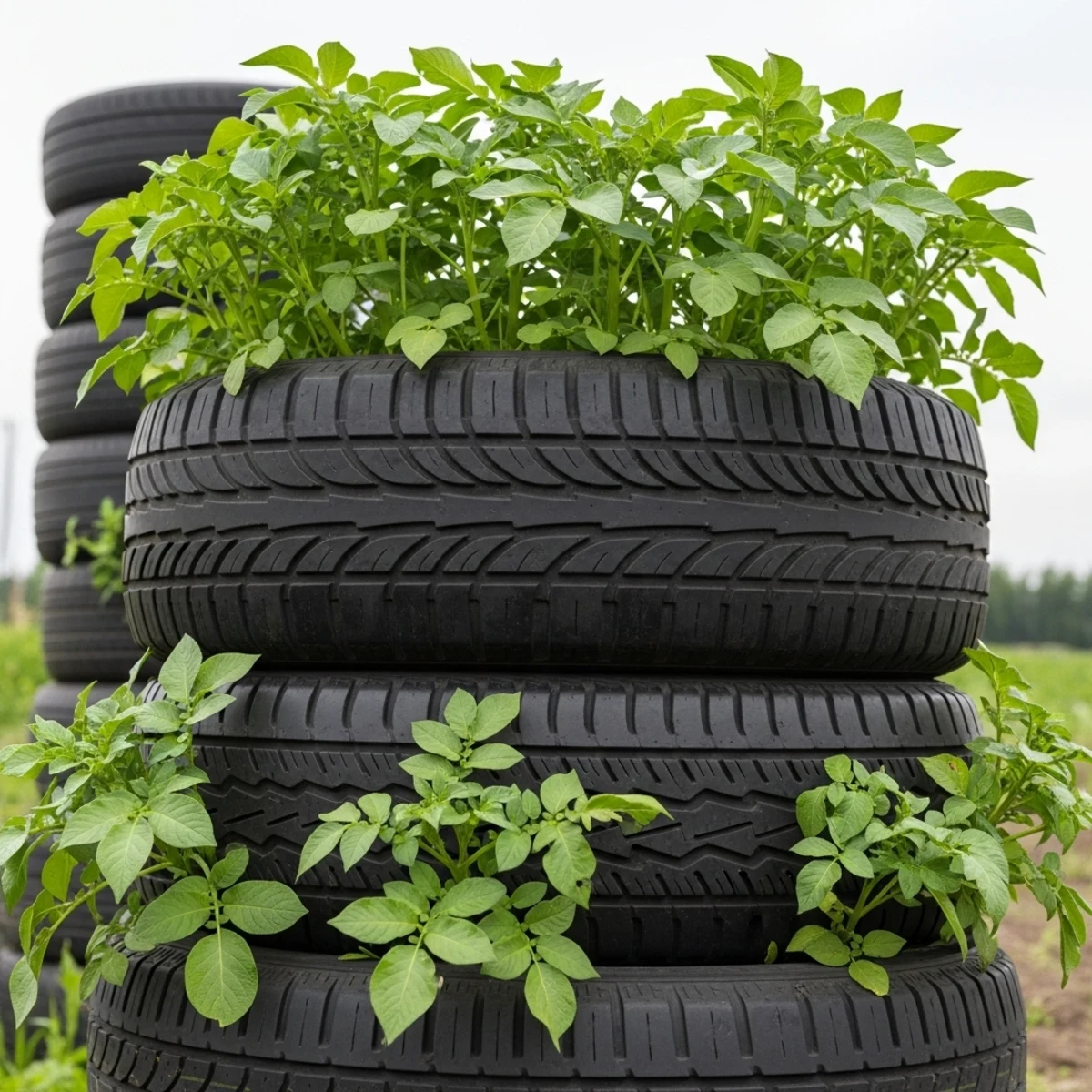
For budget-conscious urban gardeners, stacking clean tires creates an ultra-durable vertical planter. The black rubber absorbs early spring solar heat, warming soil weeks before in-ground garden beds. As foliage shoots upward, stacking an additional tire and backfilling with straw creates a warm, productive vertical column.
Wire Cage with Layered Straw & Compost
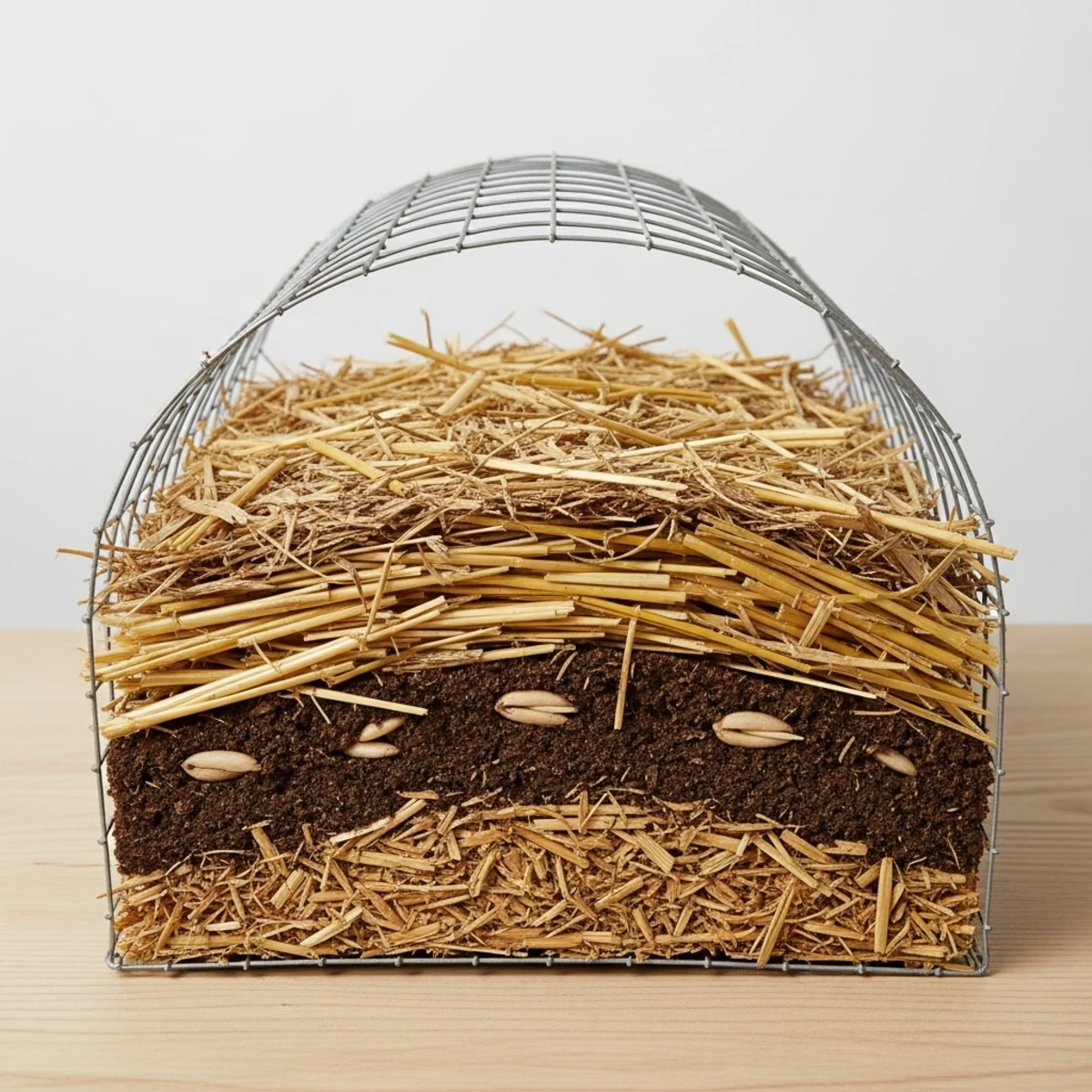
In this pure Ruth Stout-inspired method, seed potatoes rest directly on compost surrounded by a heavy wire cage packed with thick layers of clean straw rather than dense soil. Tubers develop inside the moist, shaded straw layers, emerging at harvest time spotless, unblemished, and requiring only a quick rinse before cooking.
Vertical Raised Bed Box with Slide-Out Slats
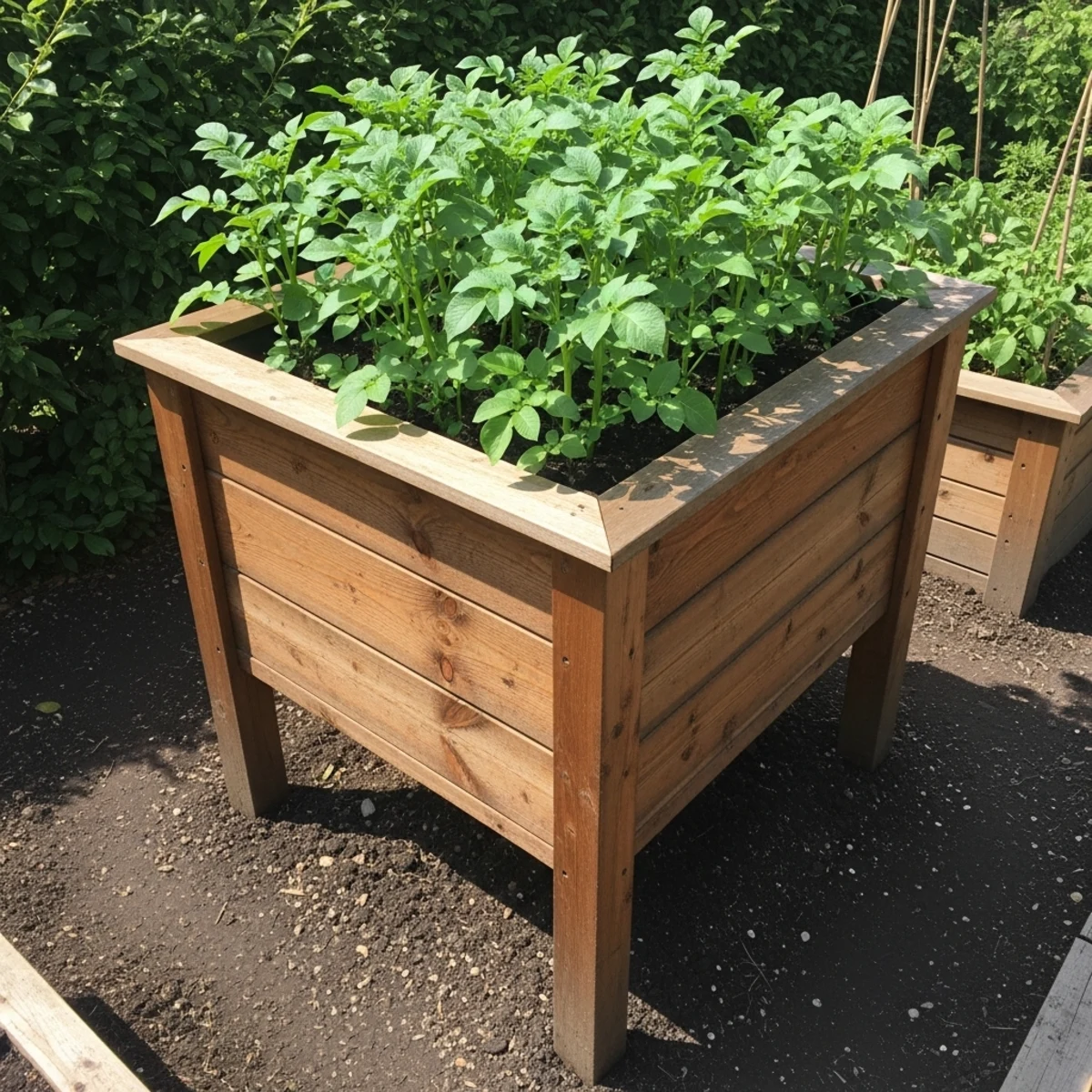
Designed as a permanent hardscape planter, this vertical cedar tower features vertical channels on the front face where horizontal 1x6 cedar slats slide into place. Gardeners insert new slats as the potato vines climb upward. At harvest time, sliding out the bottom planks releases the crop smoothly without heavy shoveling.
Heavy-Duty Trash Can Potato Planter
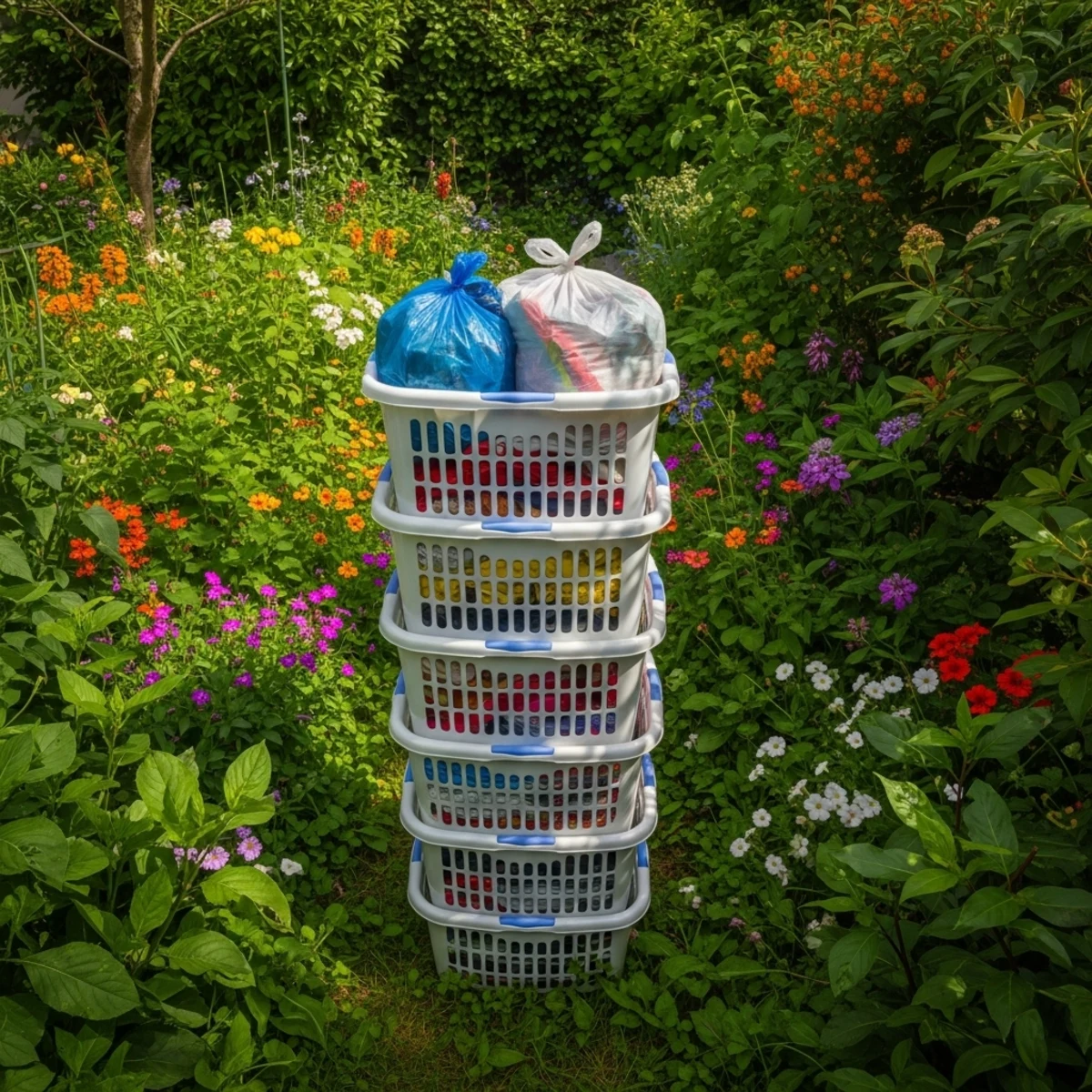
An ordinary 32-gallon plastic trash can transforms into a high-capacity potato factory in 10 minutes. Drill fifty 1/2-inch drainage holes across the bottom and lower 10 inches of sidewall. Fill with 6 inches of soil and 4 seed potatoes, gradually topping off with shredded leaves as vines climb to produce up to 25 pounds of spuds.
Ventilated Laundry Basket Potato Tower
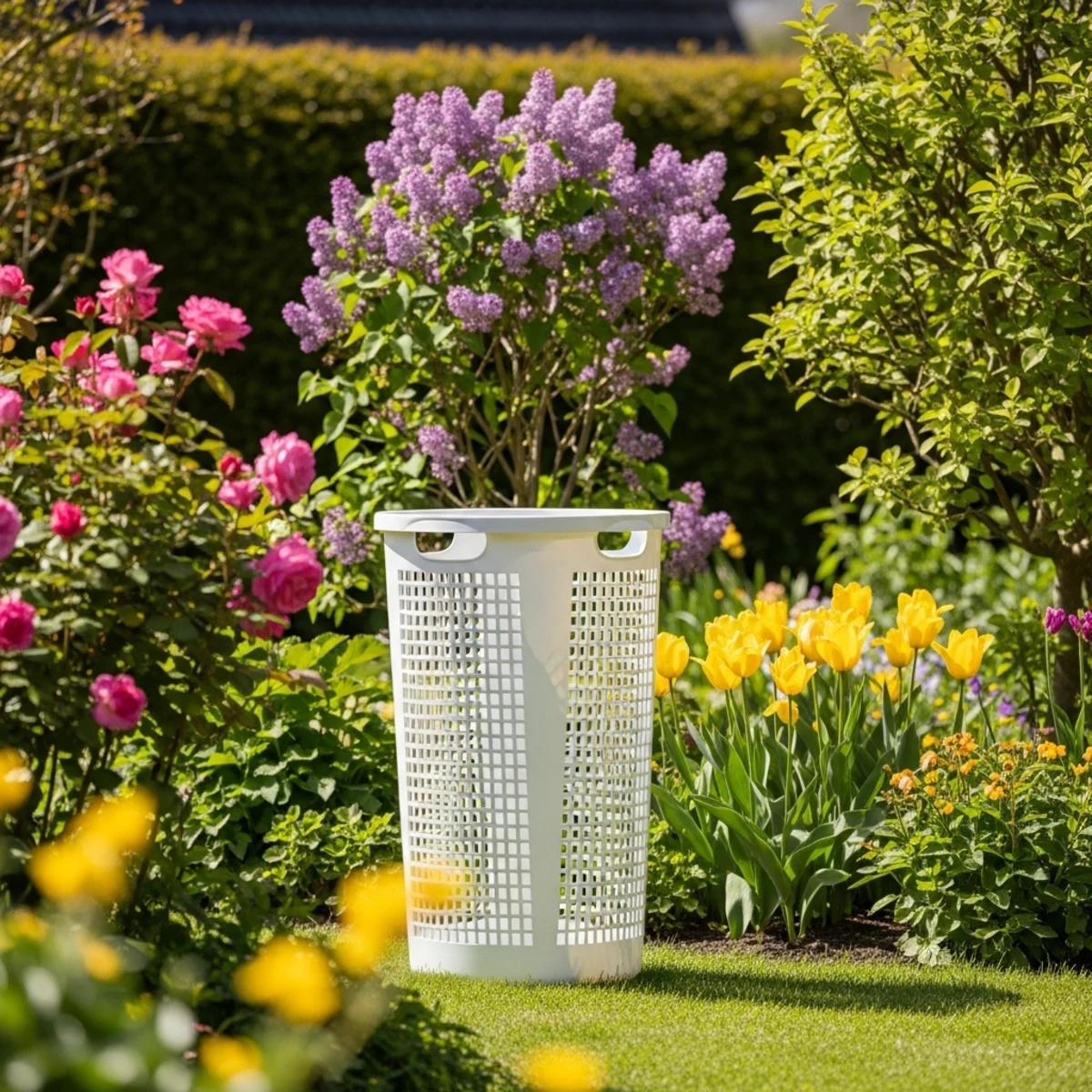
Inexpensive plastic laundry baskets with mesh or diamond perforations make phenomenal potato towers. Line the interior with breathable burlap or weed barrier fabric, add potting mix, and insert seed potatoes. The hundreds of air vents ensure soil never becomes waterlogged, completely preventing tuber rotting during wet springs.
Stacked 5-Gallon Bucket Tower Garden
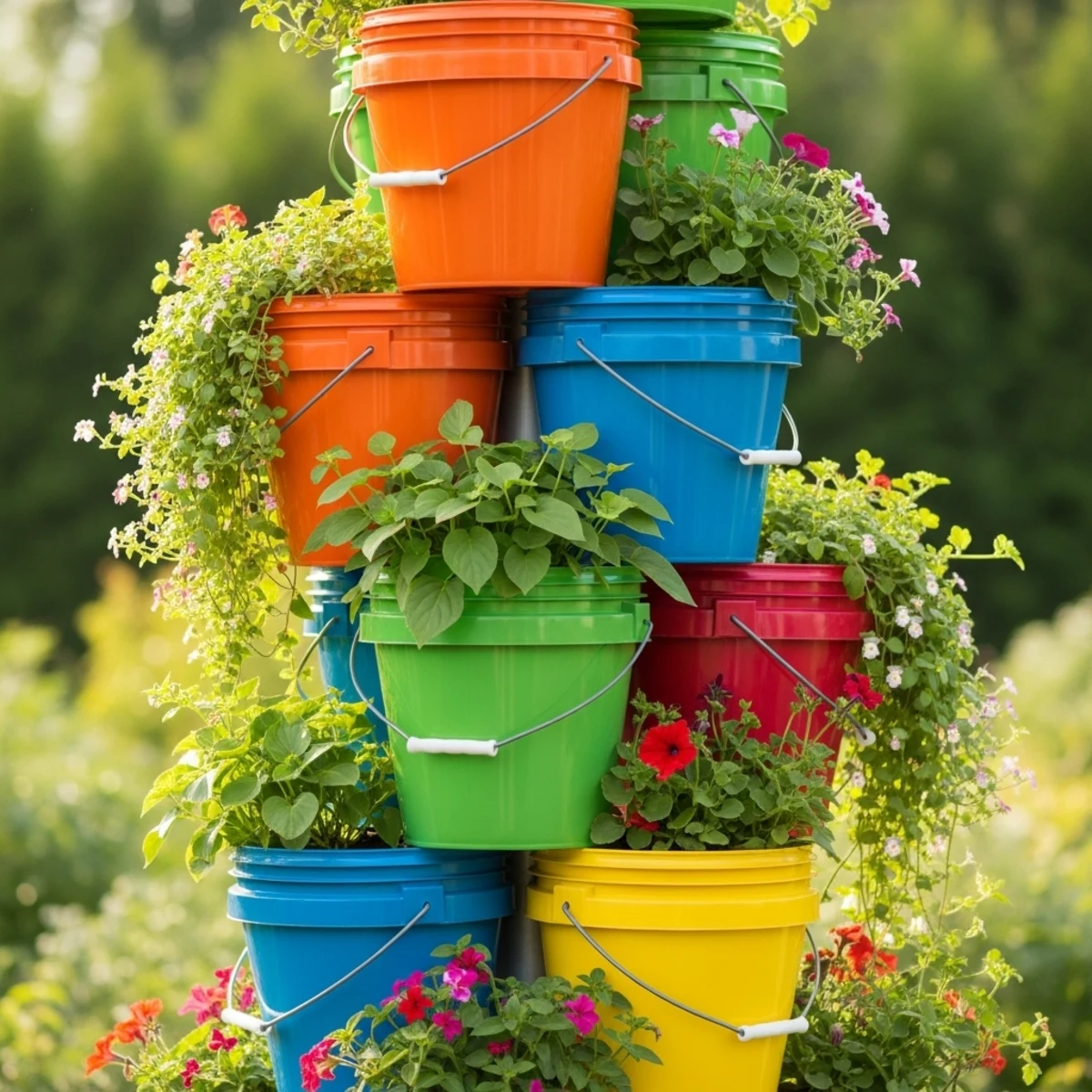
Stacked 5-gallon food-grade buckets offer incredible modular flexibility for small decks and urban patios. With sturdy metal handles, buckets can be easily shifted around the patio as sun angles change throughout summer. Fingerling potato varieties thrive in these buckets, producing dozens of gourmet tubers per container.
Recycled Wooden Crate Tower

Repurposing wooden produce or apple shipping crates brings rustic farm charm to vertical potato growing. Slatted sides provide natural airflow while retaining loose straw and soil. Stacking crates in an offset spiral or vertical column creates an eye-catching focal feature in country and cottage gardens.
Concrete Cinder Block Pocket Planter Tower

Stacking hollow concrete cinder blocks in an alternating checkerboard pattern creates deep, insulated vertical pockets. The dense concrete absorbs radiant solar heat during midday sun, slowly releasing warmth into the soil cavities at night to keep root zones active during cool early New England spring weather.
PVC Pipe Vertical Tower with Central Drip Line
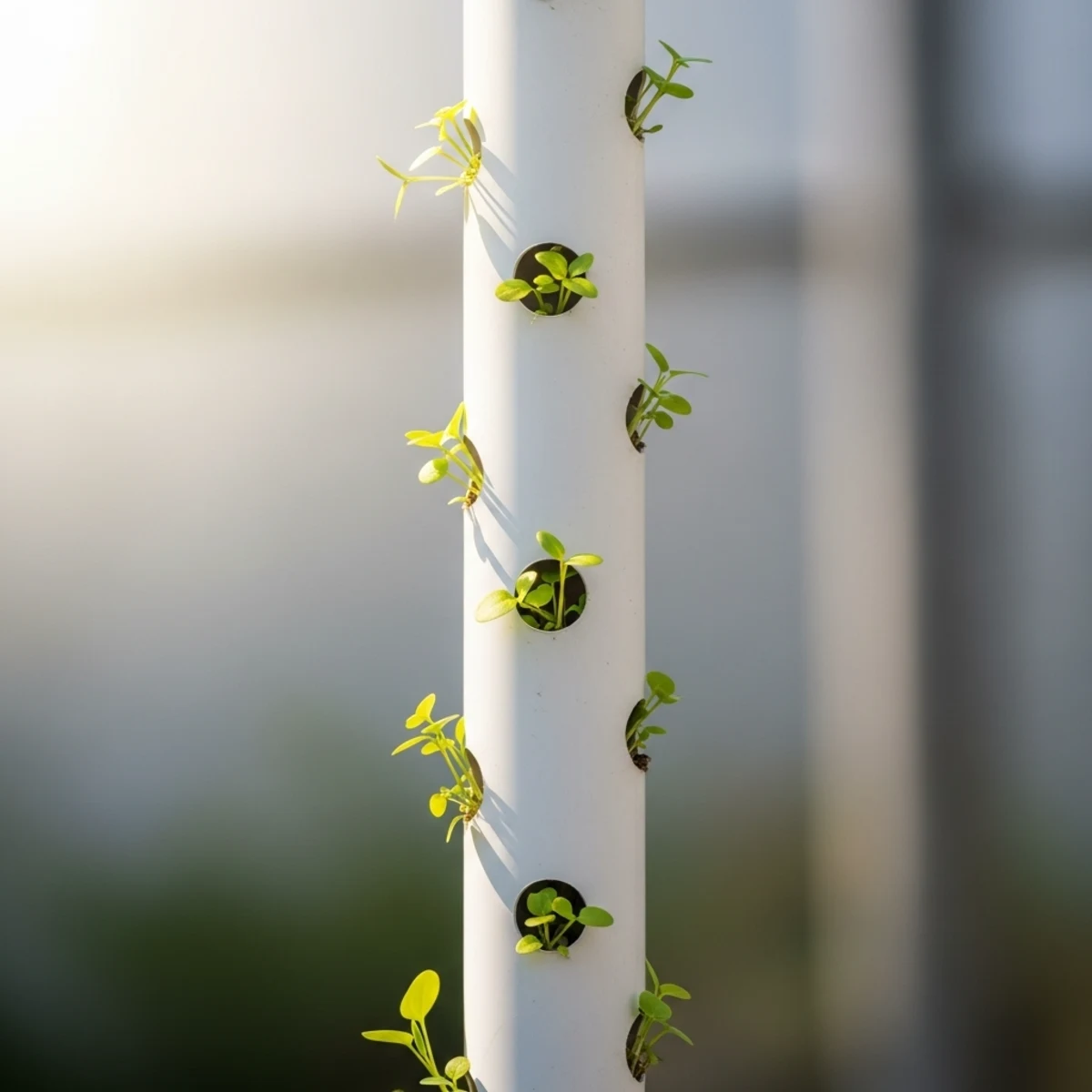
One common challenge with tall towers is watering dry bottom roots without over-saturating top layers. Inserting a 1.5-inch perforated PVC irrigation core down the middle of a wide vertical pipe ensures that water, liquid kelp, and compost tea deliver direct hydration directly into deep tuber zones.
Suspended Heavy-Duty Hanging Basket Planter
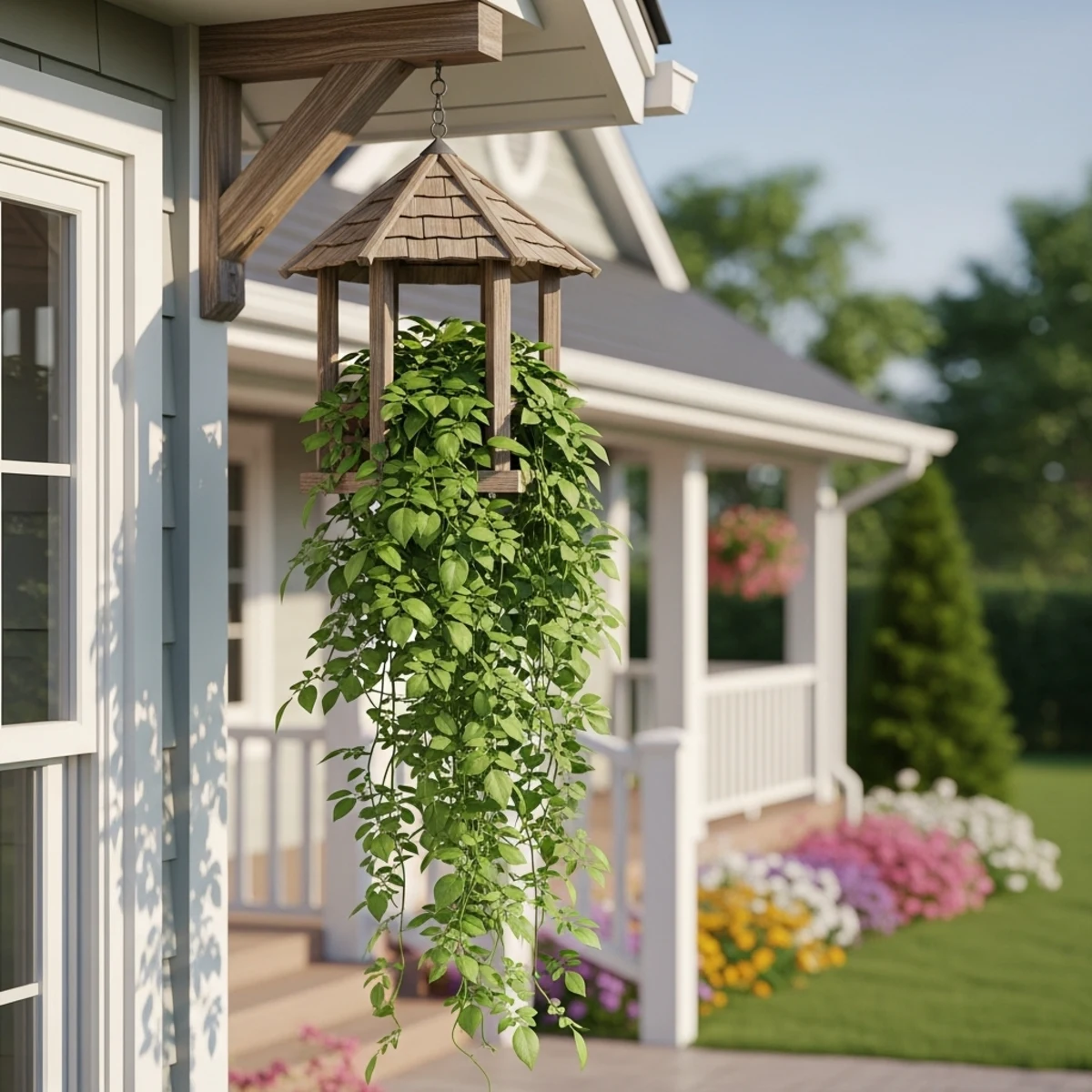
Suspended from heavy pergola rafters or sturdy wall brackets, heavy coco-lined wire hanging planters lift your potato crop several feet off the ground. This physical elevation completely eliminates threats from burrowing voles, moles, and ground beetles while freeing up valuable ground garden space.
Bamboo & Stick Framed Tepee Tower
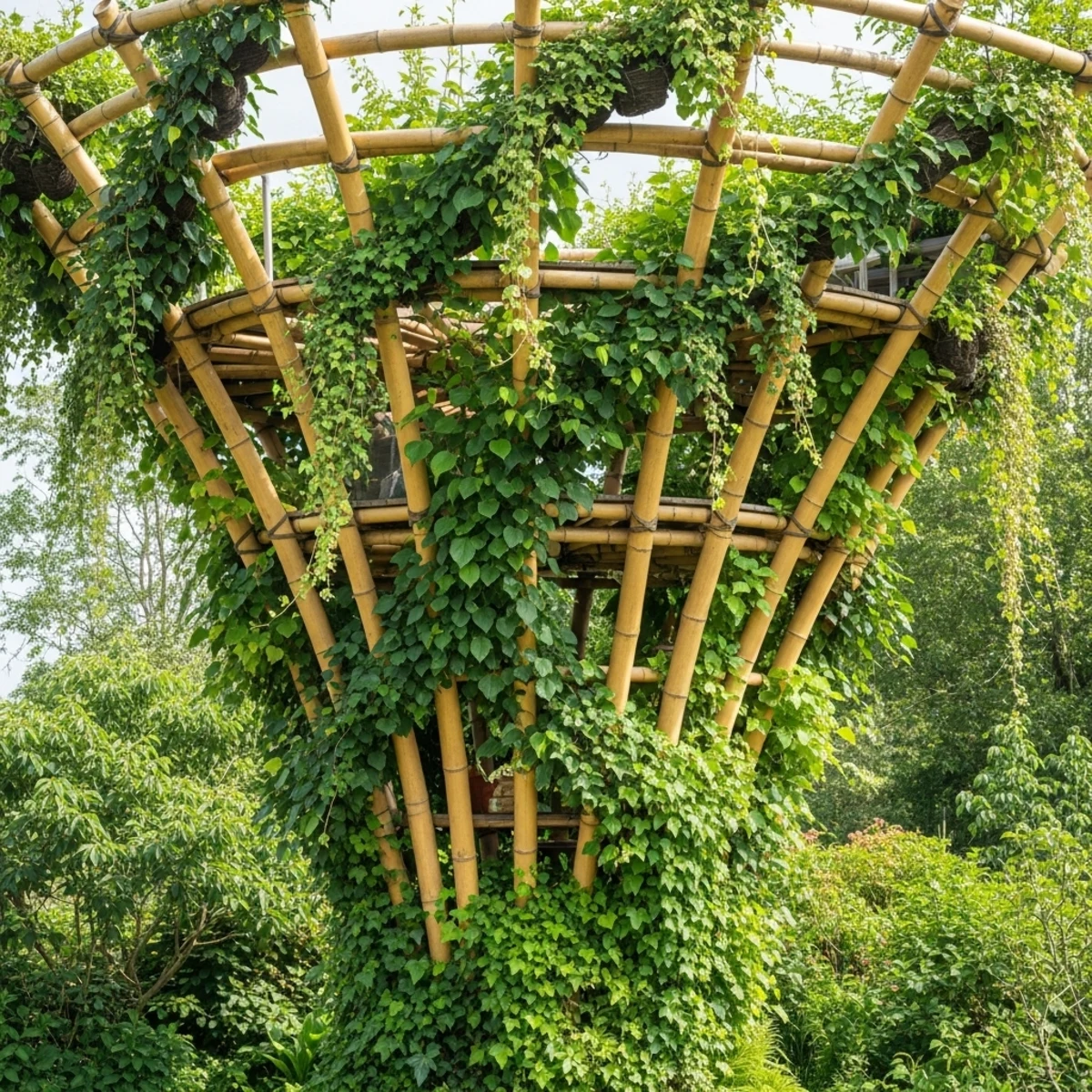
Constructed from 6 sturdy bamboo canes tied into a cone tepee and woven horizontally with natural jute rope, this organic framework contains a central pillar of straw and rich compost. At the end of the season, cutting the biodegradable twine allows the entire tower to drop and enrich the garden bed.
Upcycled Antique Drawer Vertical Planter
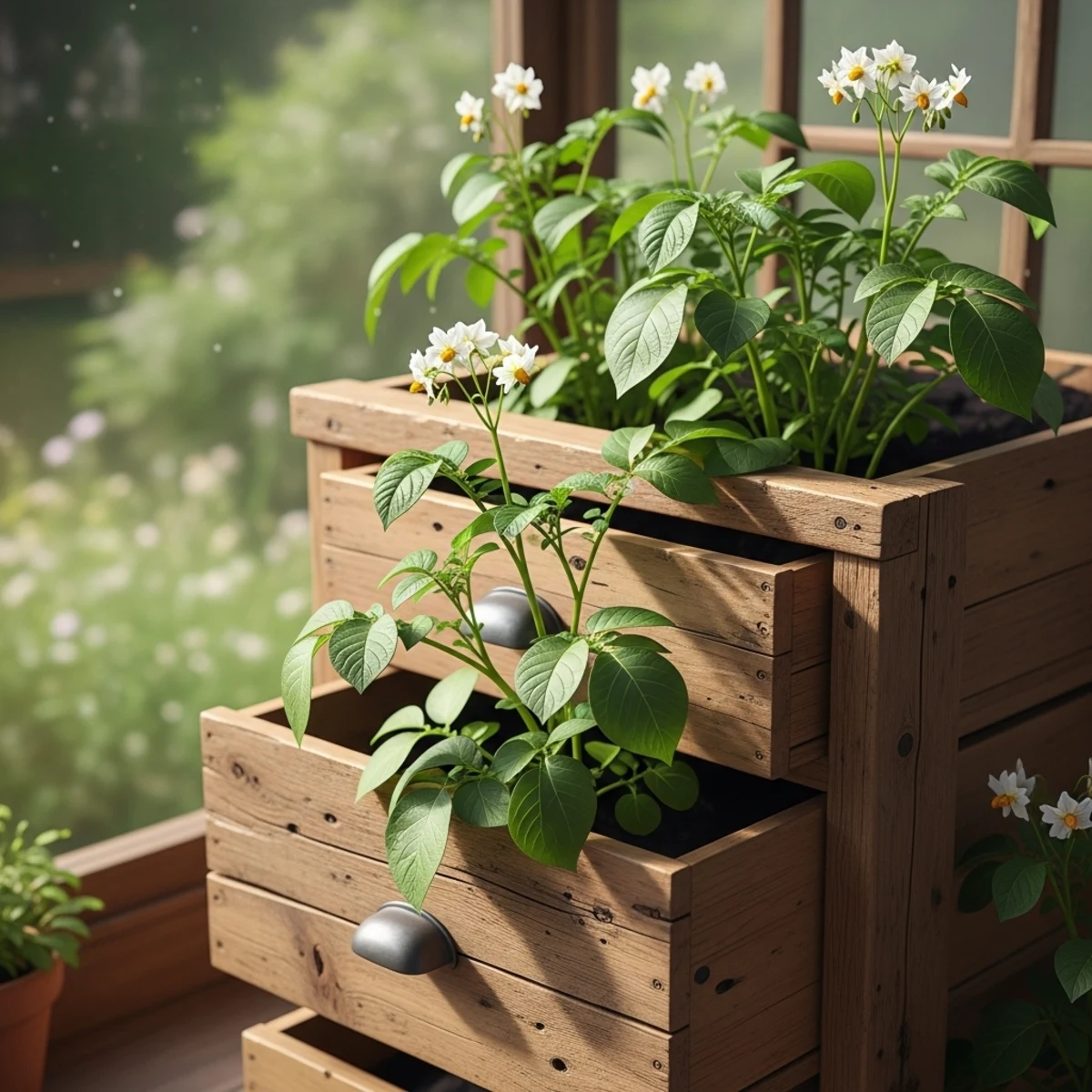
Old solid-wood dresser drawers stacked in an offset stepped ladder configuration form charming tiered potato shelves. Drill drainage holes in each drawer bottom, line with landscape fabric, and fill with soil. Each stepped drawer functions as an independent harvest shelf, perfect for small urban backyards.
Vertical Ladder A-Frame Potato Planter
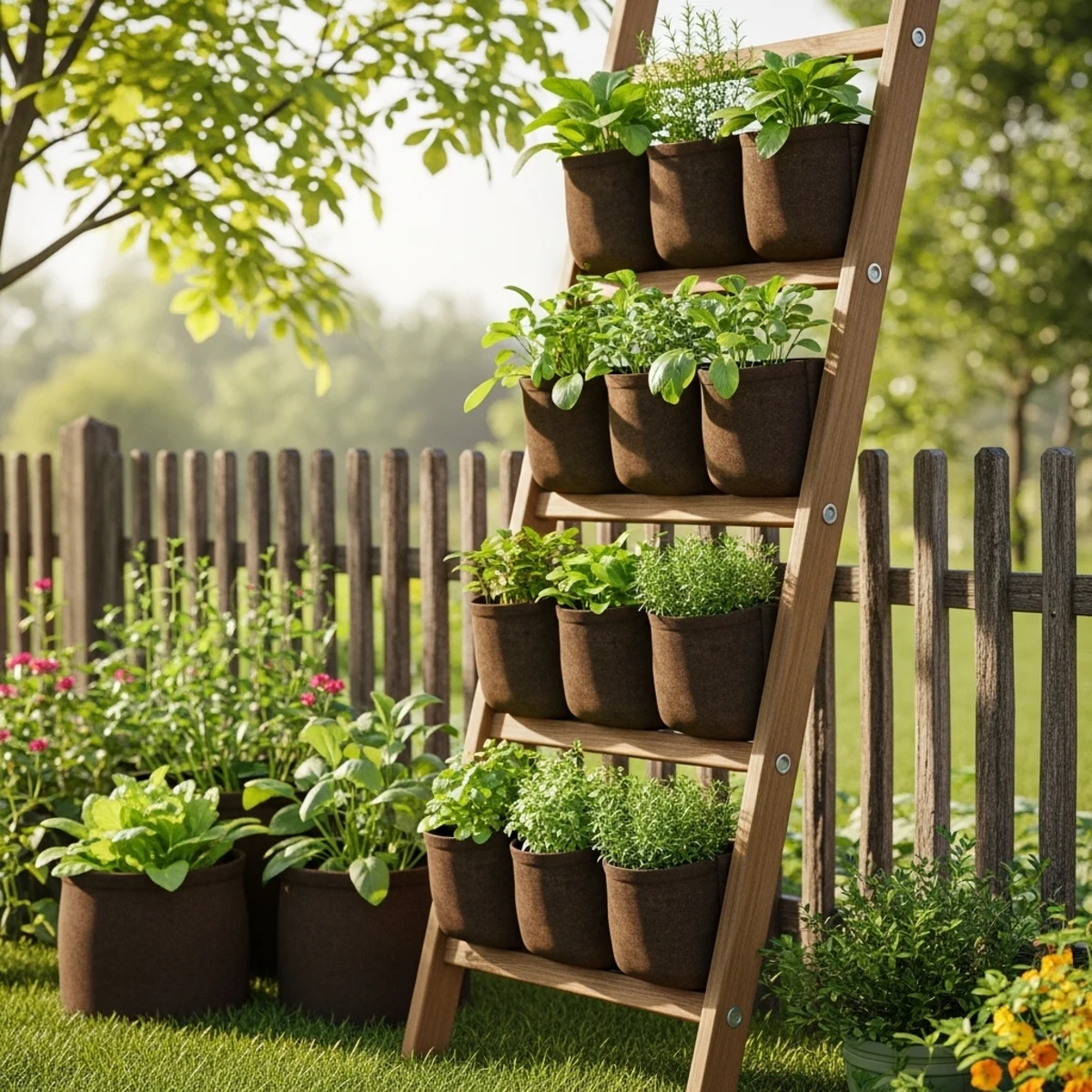
A rustic wooden A-frame ladder fitted with horizontal planter troughs across each rung creates a multi-story potato garden along sunny garage walls or privacy fences. Staggering the tiers ensures every level receives full overhead sunlight while taking up less than two feet of ground depth.
Horticultural Science
The 3 Golden Rules for Maximum Potato Tower Harvests
Plant Indeterminate Seed
Only indeterminate varieties (Russets, German Butterball) form tubers along ascending buried stems. Determinate varieties yield in only one bottom layer.
Light & Airy Medium
Never fill towers with heavy topsoil. Use a 50/50 mix of rich organic compost and clean straw to prevent soil compaction and waterlogged tuber rot.
Install Central Drip Core
A perforated central watering pipe or soaker line ensures deep moisture reaches bottom roots during hot July dry spells without eroding soil layers.
Expert Knowledge
Frequently Asked Questions About Vertical Potato Tower Gardening
01How does a vertical potato tower work?
Potato towers take advantage of how indeterminate potato varieties grow. Seed potatoes are planted in 6 inches of soil at the base. As foliage grows upward, additional soil, compost, and straw are hilled up around the stems. New underground tubers develop along the buried stem nodes all the way to the top.
02Which potato varieties yield best in vertical potato towers?
Always choose indeterminate potato varieties—such as Russet Burbank, German Butterball, Red Pontiac, or Canela Russet. Indeterminate varieties continuously produce tubers along buried stems throughout the season. Determinate varieties (like Yukon Gold or Norland) produce tubers in only one single layer.
03How much potato harvest can you realistically expect from one vertical tower?
A well-managed 3- to 4-foot vertical potato tower with optimal aeration, consistent drip watering, and loose organic compost routinely yields 15 to 30 pounds of clean, unblemished potatoes from a footprint of just 4 square feet.
04What is the best soil and mulching medium for potato towers?
Use an airy 50/50 blend of loose organic compost and clean seed-free straw or shredded leaves. Heavy garden dirt compacts into dense mud inside vertical cylinders, suffocating tubers and causing fatal fungal rot. Loose straw allows tubers to expand effortlessly and keeps harvesting clean.
05How often do vertical potato towers need to be watered?
Because elevated vertical towers drain freely and possess a high surface area exposed to summer wind, they dry out faster than in-ground beds. During hot July and August days in Massachusetts, water deeply 2 to 3 times per week, or install a central perforated PVC watering pipe down the center of the tower.
06When should seed potatoes be planted in Massachusetts Zone 6b?
Plant seed potatoes 2 to 3 weeks before the last spring frost—typically between mid-April and early May in Essex County. Soil temperature should reach at least 45°F to 50°F to prevent seed rot and encourage strong initial sprout emergence.
07How do you harvest potatoes from a vertical tower without digging?
Harvesting is the greatest advantage of vertical towers. Instead of labor-intensive fork digging that punctures potatoes, simply unlatch the wire mesh cylinder, unbolt the bottom pallet board, or dump the fabric grow bag onto a tarp. The clean potatoes fall out freely without dirt clods.
08Why do potato leaves turn yellow and die back at the end of the season?
Yellowing, dying foliage in late summer is a natural sign that tubers have fully matured. When the vines die back, withhold all watering for 10 to 14 days. This allows potato skins to cure and toughen inside the soil before harvest, ensuring long storage longevity throughout winter.
Ready to Build High-Yield Custom Cedar Vegetable Towers?
Our carpentry and landscaping team constructs durable food-safe cedar planter boxes, vertical trellises, and automatic drip irrigation across Peabody and Essex County.
Get connected with an independent local landscaping professional. Calls go to (877) 537-6896.