Landscaping Along a Fence: Ideas for a Beautiful Fence Line
Transform a flat, rigid property boundary into an intentional, layered living backdrop. Discover how to match plant mature spreads to available bed widths, navigate fence microclimates, support climbing vines safely, and maintain essential access for fence repairs.
Direct Answer: How Do You Landscape Along a Fence?
Due Diligence
What to Check Before Landscaping Along a Fence
Before digging holes or purchasing nursery stock, verify these four critical property conditions to avoid costly legal, structural, and maintenance blunders:
Legal Boundary
Don't assume the fence is the line: Fences are often set 6–12 inches inside property bounds. Check your plot survey to prevent planting on your neighbor's lot.
Utility Easements
Call 811 before digging: Overhead wires and buried electric, gas, or fiber optic lines frequently follow rear property fence lines. Never plant large trees over utilities.
Gate Swings
Preserve a 3-ft radius: Keep spreading, thorny, or tall shrubs away from gate hinges and latches to ensure seamless lawnmower and emergency access.
Maintenance Aisle
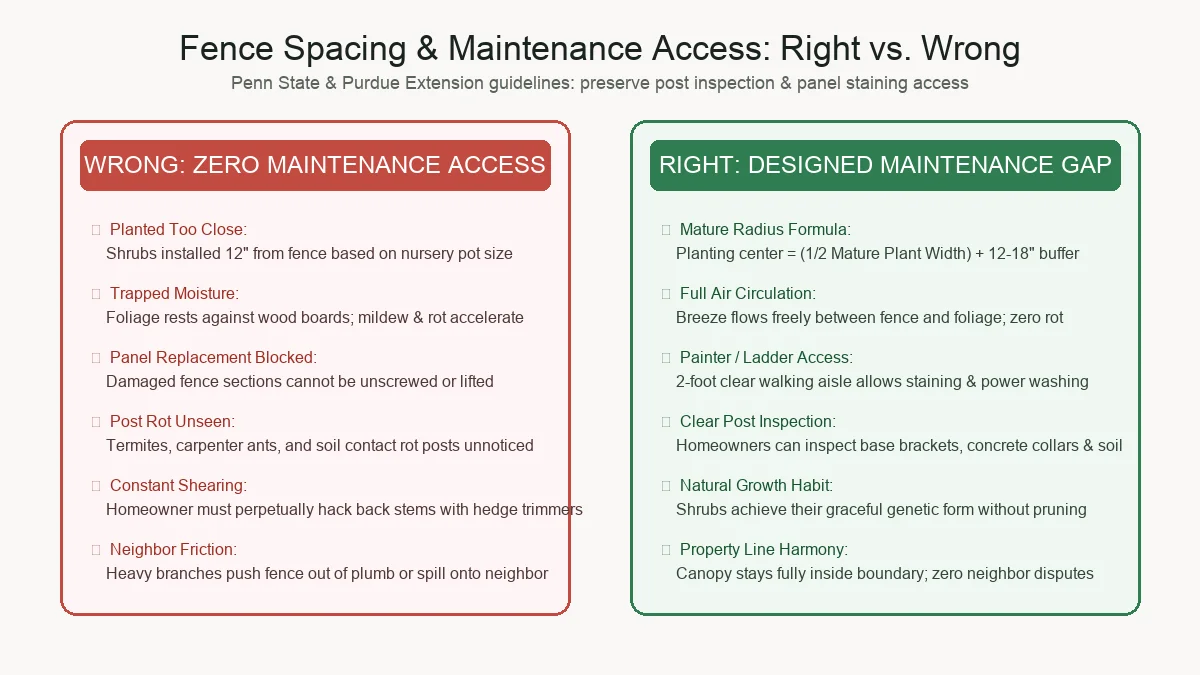
Leave an 18–24" gap: Wood fences require periodic staining, and vinyl needs power washing. Never crowd plants directly against pickets.
Space Planning
How Wide Is Your Planting Area? Match Width to Plant Genetics
The single most common mistake in fence-line landscaping is choosing plants based on their 18-inch nursery container size rather than their mature botanical spread. An oversized shrub squeezed into a narrow strip requires constant, aggressive shearing, which destroys its natural form and flowers while overcrowding fence panels.
Measure the physical distance between your fence pickets and the lawn edge, patio, or walkway, then choose the appropriate layout tier:
Very Narrow Strip
Strictly columnar uprights (Sky Pencil Holly, Slender Silhouette), upright grasses (Karl Foerster), or non-invasive vines trained on wire trellises. Avoid standard broad shrubs.
Narrow Border
Two-tier design: compact upright shrubs (3–4 ft mature spread) in the back staggered with drought-hardy perennials (coneflowers, salvia) or fine grasses in the front.
Standard Layered Bed
The gold standard for residential backyards. Allows a full three-tier progression: tall shrubs (hydrangeas, viburnums), mid-layer perennials, and mounding front edging with a 2-ft maintenance aisle.
Deep Mixed Border
Combines small specimen trees (serviceberry, redbud), layered evergreen screens, deep shrub masses, sweeping perennial drifts, and winding stepping stone paths.
Fence-Line Plant Spacing & Maintenance Gap Calculator
Calculate exact plant quantities, maintenance walking aisles, and organic mulch volumes based on your fence length and bed depth.
Standard Backyard Section
Standard Residential Bed
Recommended Specifications for 40 Linear Feet (160 sq ft Bed)
10
Setback: 24" from fence20
20 perennials20"
Clear space behind shrubs1.2 yd³
~17 retail bags (2.5" depth)Horticultural Rule: Penn State and Purdue Extension recommend leaving at least a 24-inch clear gap behind mature shrubs along wooden privacy fences. This allows sunlight and breezes to dry the backside of wood pickets after rainstorms, preventing premature fungal decay and wood rot.
Environmental Realities
How a Fence Changes Sun, Shade, and Soil Moisture
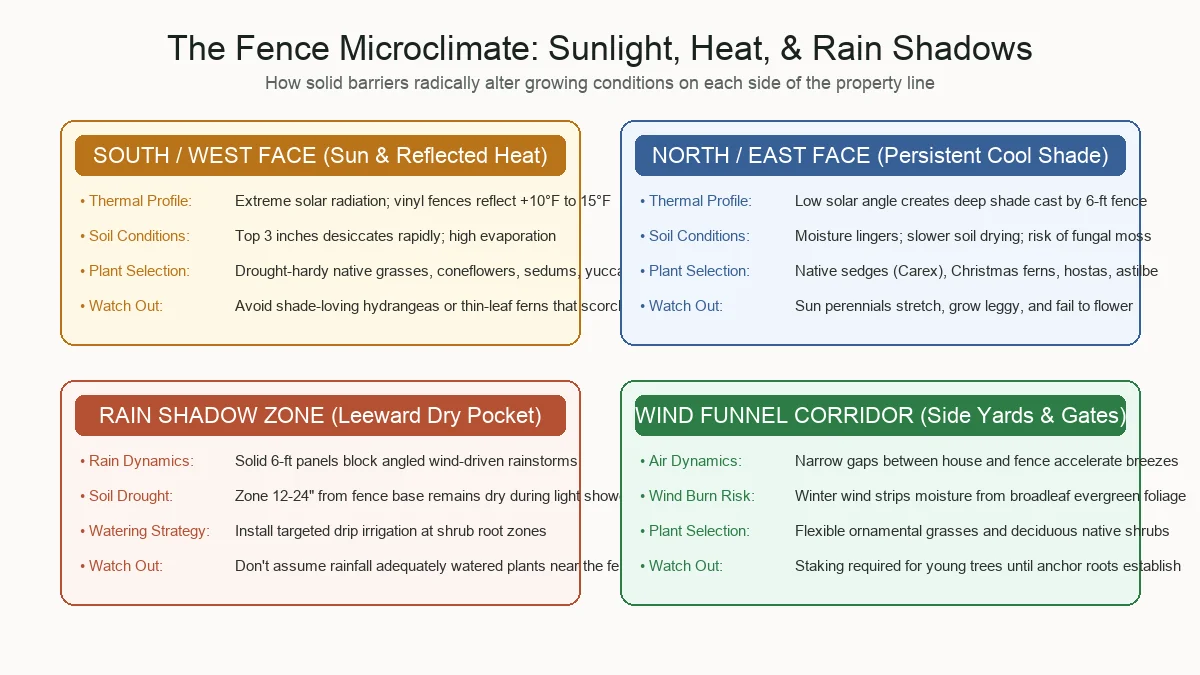
A 6-foot solid privacy fence acts as a massive environmental barrier that creates radically different microclimates on each side of the property line. Light, heat, wind, and rainfall are all modified:
Audit Your Fence Microclimate
Solid barriers create radical microclimate variations on each side of the property line. Assess sun angle, reflected heat, and rain shadows.
Thermal & Light Analysis
Strong afternoon sunlight. Soil will desiccate faster than open lawn; use 2.5 inches of coarse shredded bark mulch.
Precipitation & Moisture Analysis
Solid 6-ft panels block angled wind-driven rainstorms. A 12- to 24-inch strip directly along the fence base will remain bone-dry during light summer showers. Supplemental root-zone drip irrigation is essential during Year 1 establishment.
Design Catalog
12 Residential Fence-Line Landscaping Ideas
Whether your goal is full privacy screening, colorful cottage charm, modern minimalism, or clean mowing margins, explore 12 field-tested residential design ideas:
Choose Your Fence-Line Landscape Concept
Filter 12 proven residential fence border designs by available bed width, sun exposure, and landscape style.
Classic Three-Tier Layered Border
Best For: Backyards with standard lawn margins seeking depth, continuous color, and soft boundaries.
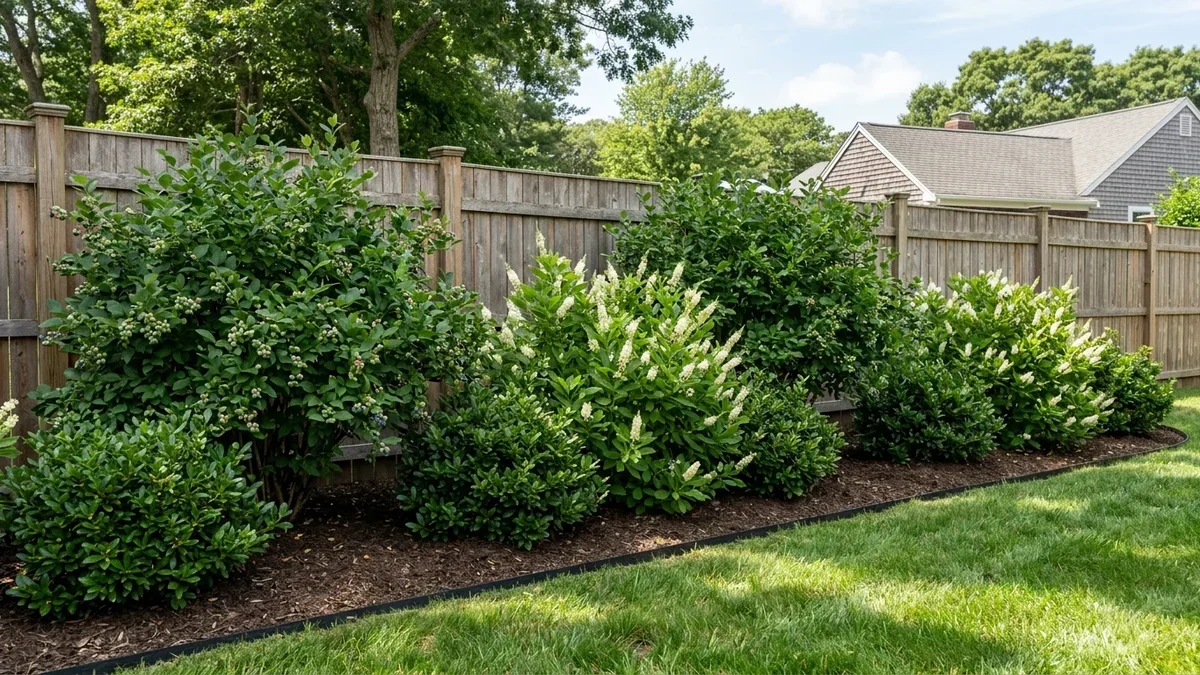
Arranges plants in three descending heights: tall flowering shrubs (such as panicle hydrangeas or viburnums) anchored 2 feet off the fence, mid-height perennials (coneflowers, black-eyed Susans, salvia) in the center, and low mounding edging (catmint, lady's mantle) at the lawn border.
Critical Watch-Out: Do not plant the back tier flush against the fence panels; leave a 2-foot aisle so you can power wash or stain the fence without crushing shrubs.
Ultra-Narrow Columnar Border
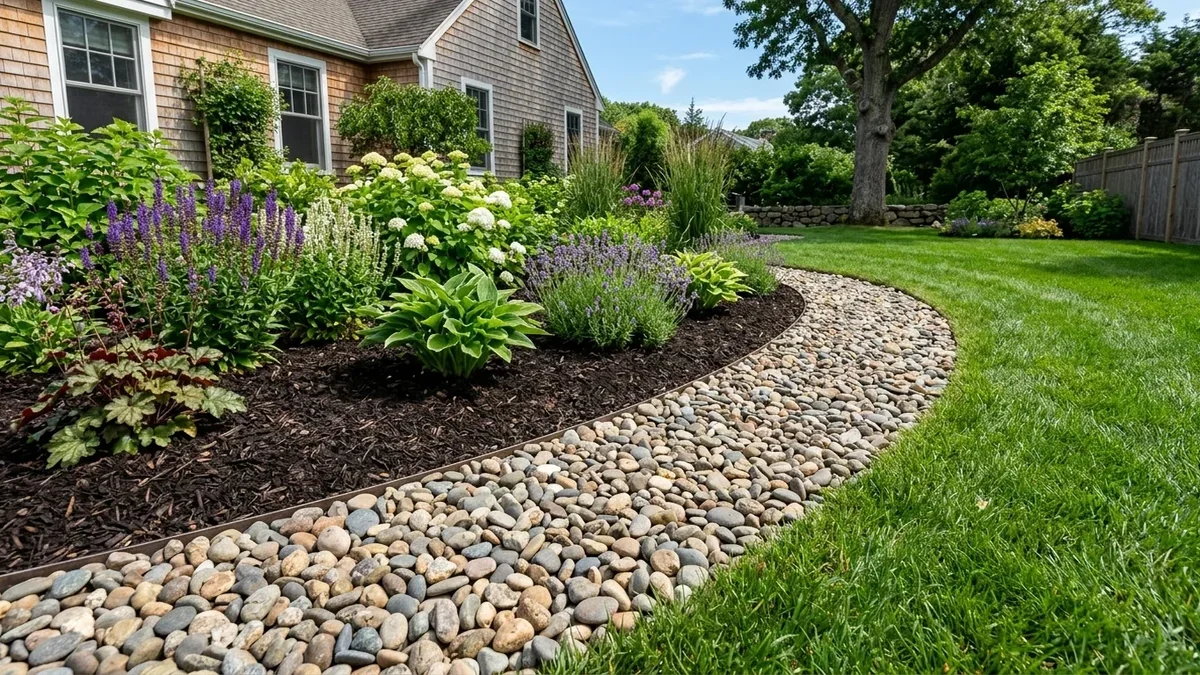
Best For: Side yards, tight property borders, and narrow walkways where spreading shrubs block foot traffic.
Utilizes strictly columnar, fastigiate cultivars that grow 8 to 12 feet tall while staying under 24 to 30 inches wide (e.g., 'Slender Silhouette' sweetgum, 'Fine Line' buckthorn, Sky Pencil holly, or Karl Foerster feather reed grass).
Critical Watch-Out: Never purchase standard broad shrubs intending to keep them narrow with perpetual shearing; select genetically narrow cultivars.
Modern Architectural Repetitive Border
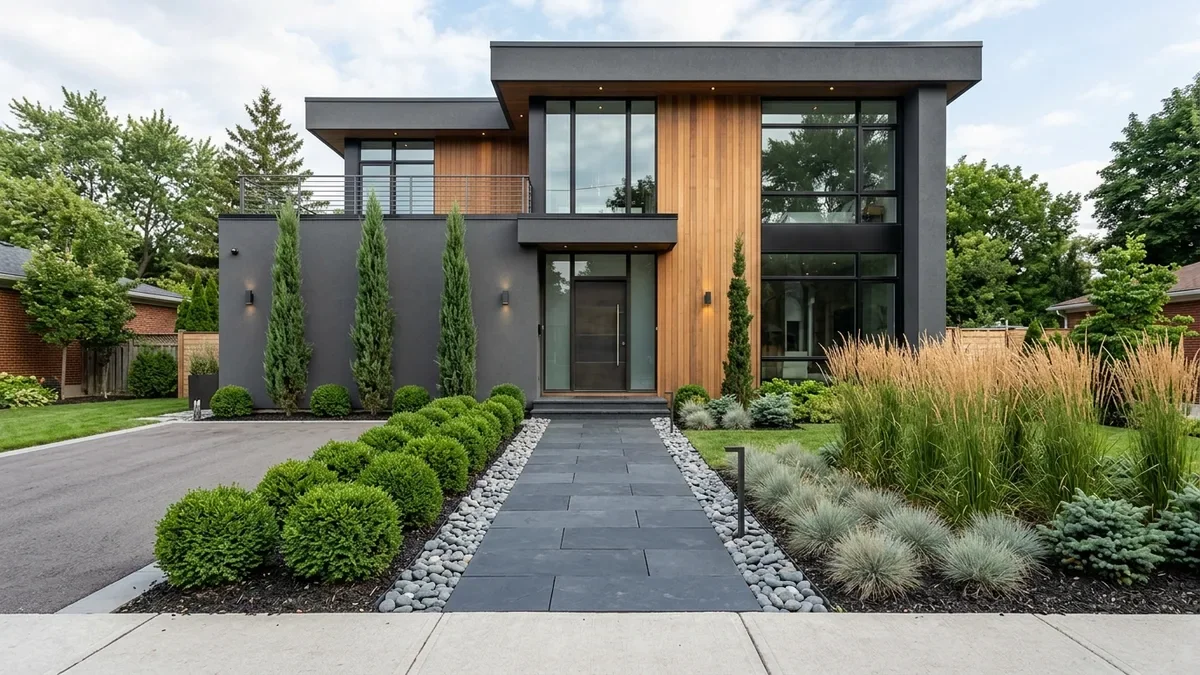
Best For: Contemporary homes, clean vinyl fences, and low-maintenance minimalist outdoor living spaces.
Pairs a limited palette of 2 or 3 species planted in a rhythmic alternating pattern. For example: repeating architectural upright boxwoods with fine-textured Prairie Dropseed and allium globes against a neutral fence panel.
Critical Watch-Out: Keep the species count strictly under 4. Adding too many mismatched varieties destroys the clean, rhythmic modern aesthetic.
Layered Cottage Garden Along a Picket Fence
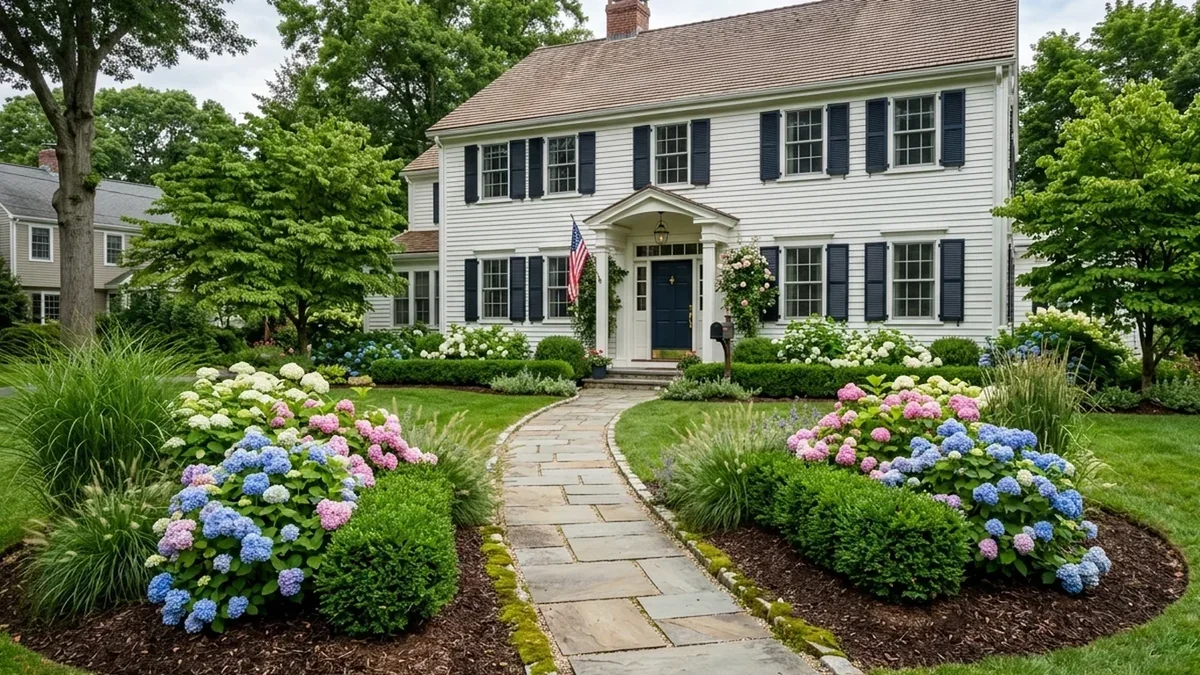
Best For: Homeowners desiring romantic, abundant floral color, cut flowers, and nostalgic garden charm.
Weaves climbing roses, delphiniums, foxgloves, peonies, and sprawling hardy geraniums. Flowers peek through and tumble over the fence rails, softening rigid woodwork with romantic textures and fragrance.
Critical Watch-Out: Cottage gardens require active deadheading and weed monitoring; don't let weeds hide in dense flower clusters.
Native Shrub & Understory Wildlife Strip
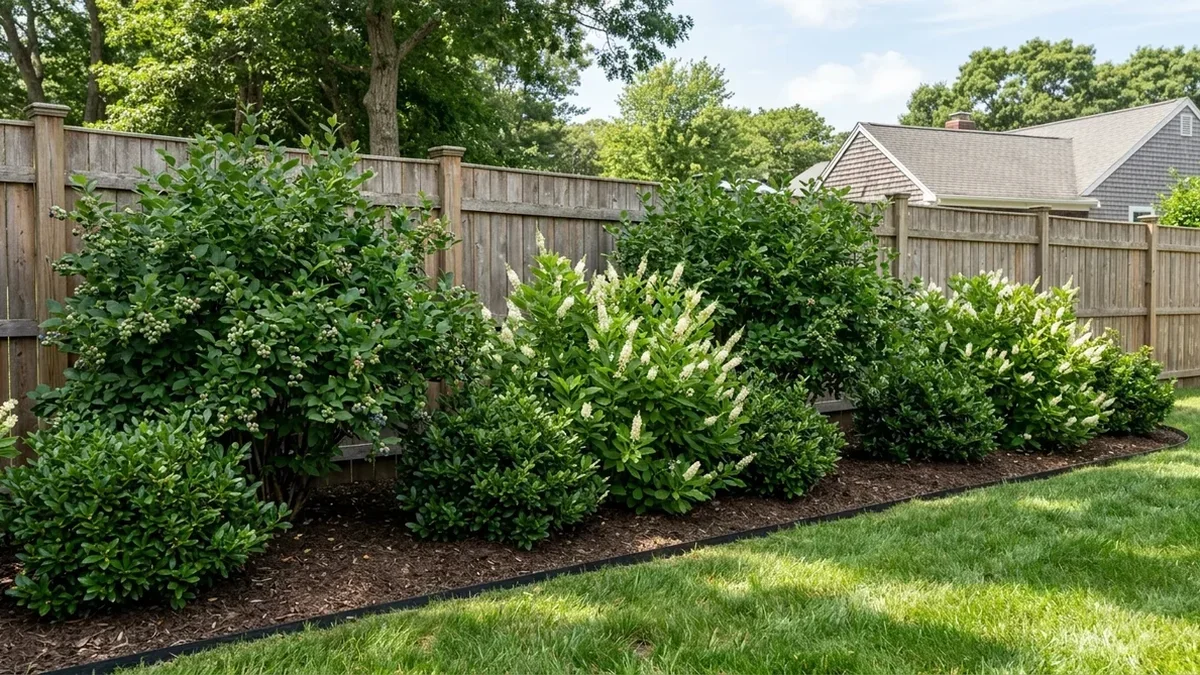
Best For: Property boundaries backing up to greenbelts, woods, or conservation easements.
Replaces high-mow lawn with multi-layered regional native shrubs (Arrowwood Viburnum, Elderberry, Winterberry Holly) underplanted with native ferns and wild ginger. Provides food and nesting cover for native songbirds.
Critical Watch-Out: Verify mature shrub spreads; aggressive native suckering species like staghorn sumac can push against fence posts.
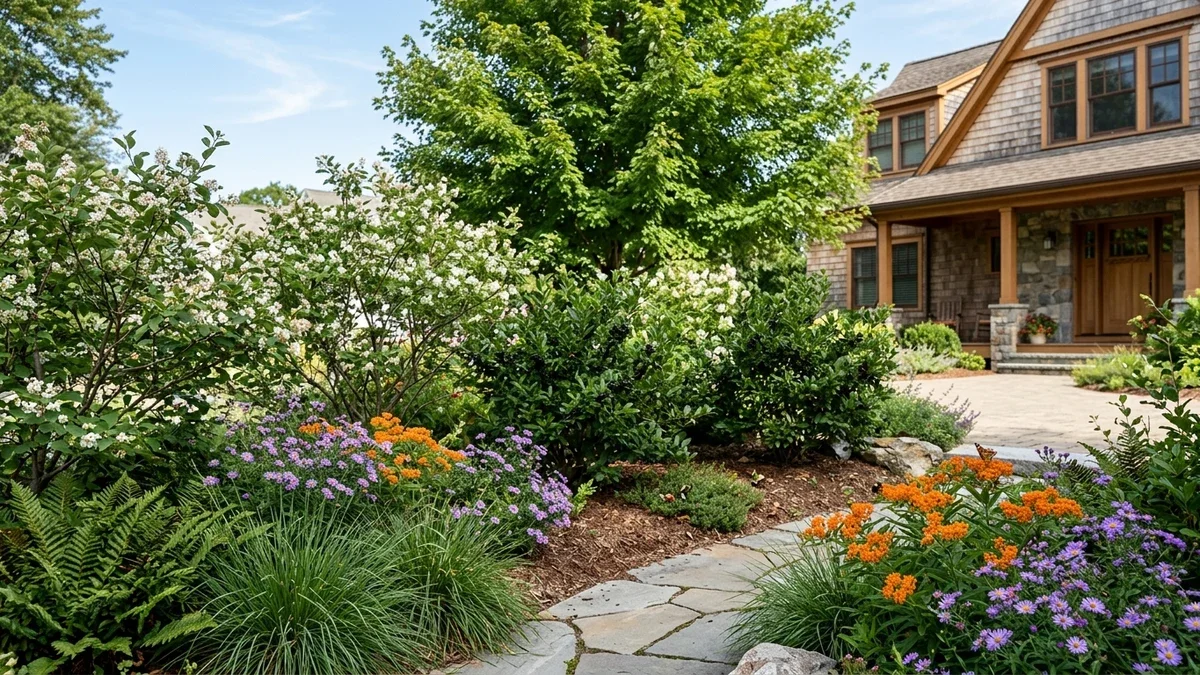
Pollinator Habitat Fence Ribbon
Best For: Attracting butterflies, native bees, and hummingbirds while using the fence as a windbreak.
Uses the fence as a warm thermal windbreak to shelter delicate flying pollinators. Features an unbroken succession of blooms from early spring Golden Alexander through midsummer wild bergamot to late autumn New England asters.
Critical Watch-Out: Ensure you include caterpillar host plants (like native milkweed for monarchs), not just adult nectar flowers.
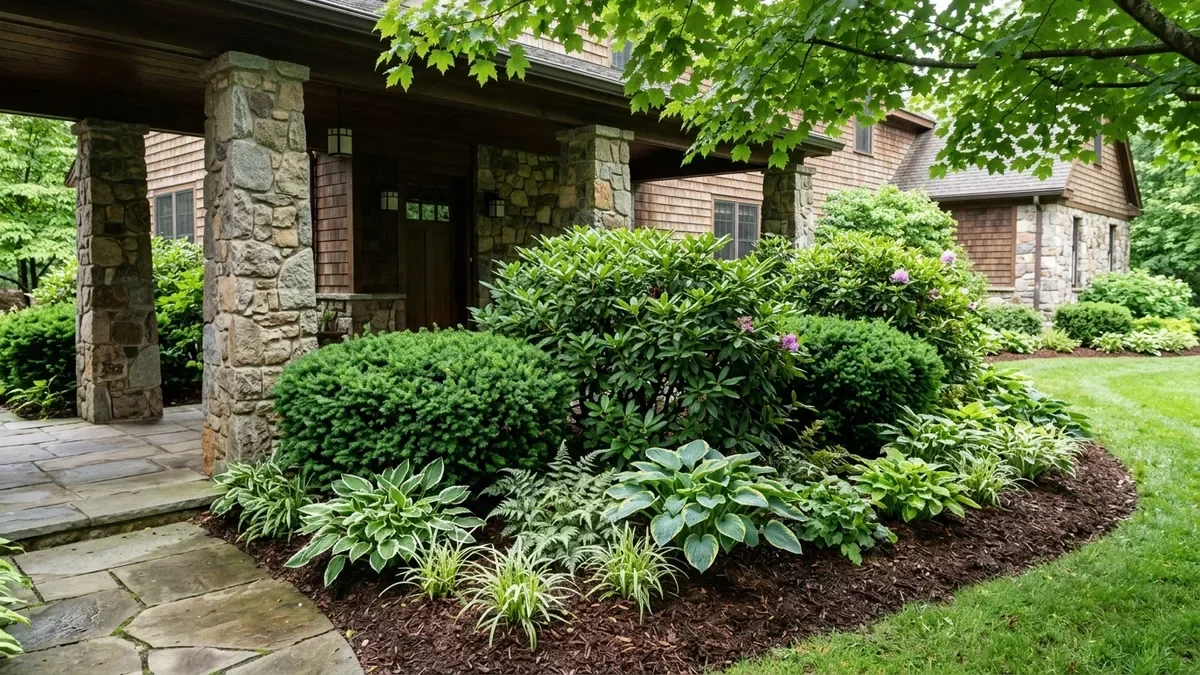
Cool Woodland Shade Fence Border
Best For: North-facing fences, side yards shaded by neighboring homes, or tree-canopied boundaries.
Thrives in the cool shade cast by 6-foot solid fences. Features rich foliage contrasts using variegated hostas, Christmas ferns, Japanese painted ferns, astilbes, and shade-tolerant Oakleaf Hydrangeas.
Critical Watch-Out: Shady fence lines dry out slowly. Avoid overwatering or planting directly in soggy low spots without checking drainage.
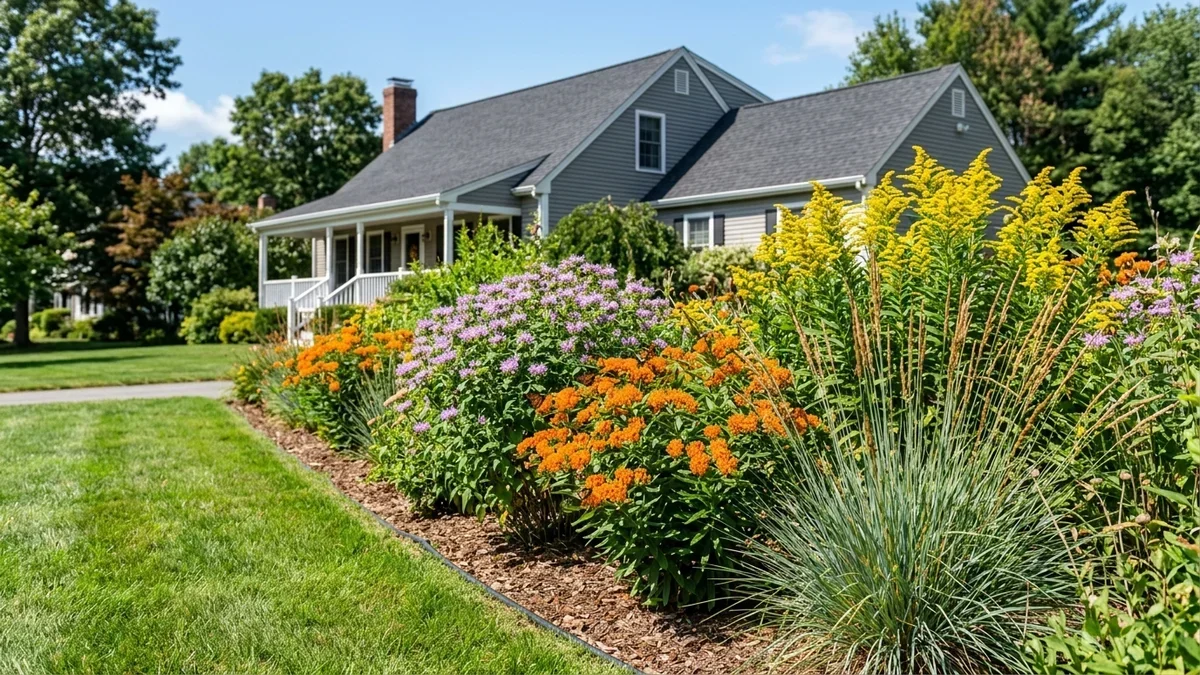
Hot Afternoon Sun & Drought-Hardy Fence Border
Best For: South- and west-facing fence exposures where sun and reflected heat bake conventional flowers.
Combines sun-worshipping, drought-adapted perennials (Russian sage, Purple Coneflower, Sedum 'Autumn Joy', Little Bluestem) that tolerate intense radiant heat bouncing off light-colored fence panels without scorching.
Critical Watch-Out: White and tan vinyl fences can reflect an extra 10°F to 15°F of ambient heat; select heat-tolerant cultivars with waxy or silver foliage.
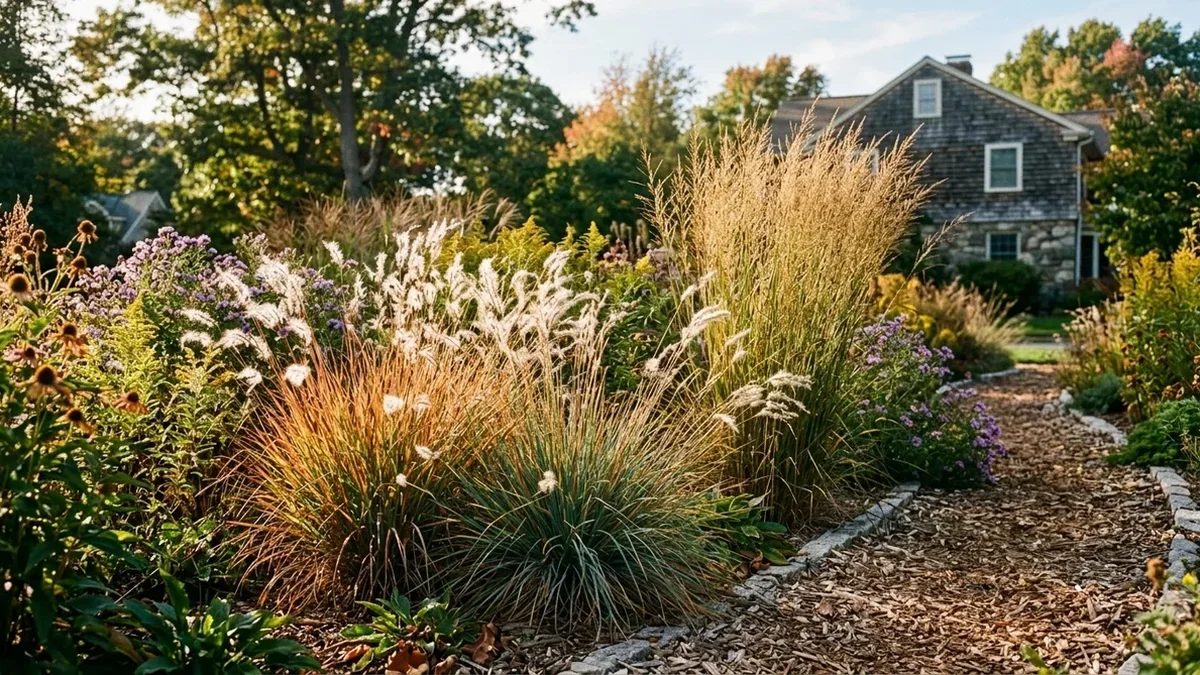
Flowing Ornamental Grass Screen
Best For: Softening monotonous, flat fence lines with sound, movement, and four-season structural interest.
Masses of fine-textured ornamental grasses (Feather Reed Grass, Switchgrass, Prairie Dropseed) that sway gracefully in breezes, softening hard wooden or vinyl slats and producing golden winter seed plumes.
Critical Watch-Out: Avoid invasive non-native grasses such as Miscanthus sinensis (Chinese silvergrass), which has escaped cultivation in numerous US states.
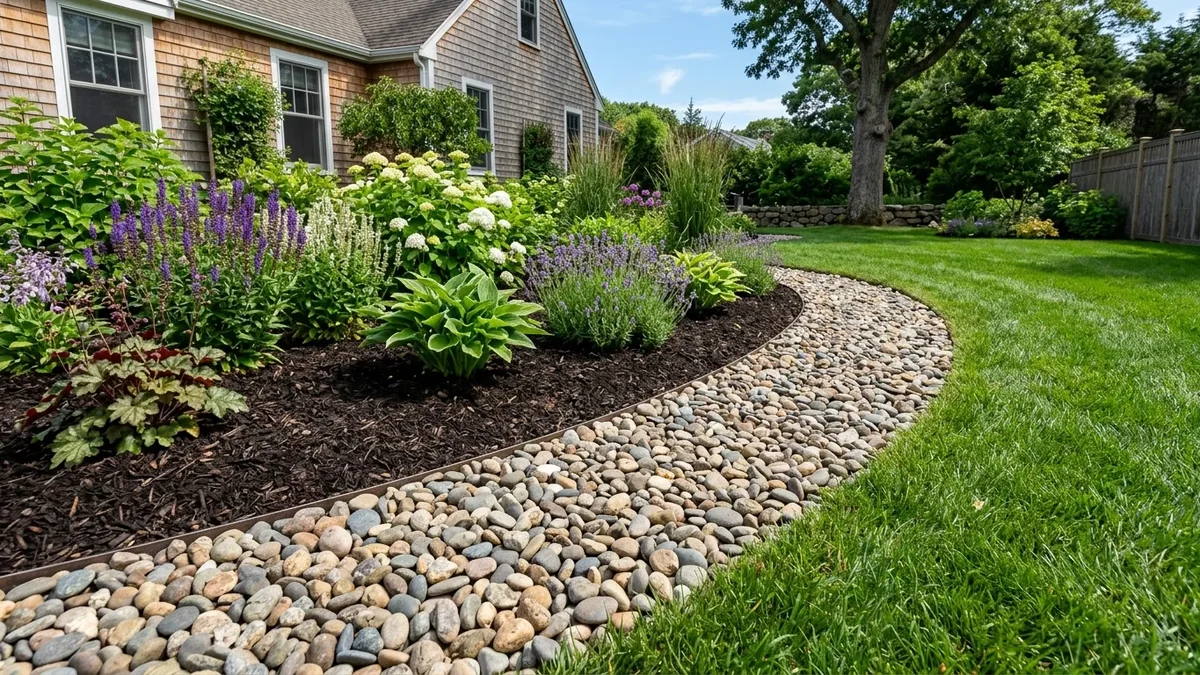
Gravel Ribbon with Architectural Stone Accents
Best For: Clean mowing margins, zero-string-trimmer damage to fence posts, and neat architectural aesthetics.
A crisp 2- to 3-foot gravel strip lined with steel edging. Eliminates lawnmower collisions with fence posts while providing a weed-free base for specimen boulder accents, drought-tolerant grasses, and upright shrubs.
Critical Watch-Out: Gravel does not resolve underlying soil compaction or standing water drainage problems; grade the subsoil properly before adding rock.
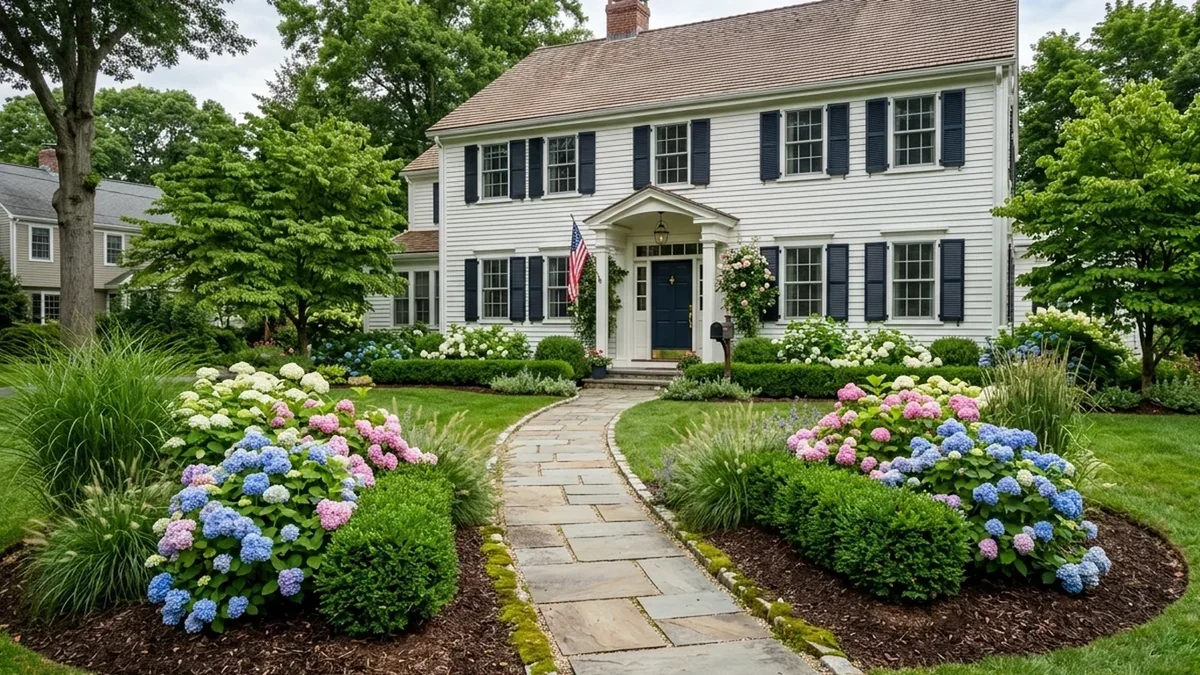
Two-Tier Mixed Privacy Screen
Best For: Adding 10 to 15 feet of additional privacy screening above an existing 6-foot fence to block second-story windows.
Staggers upright pyramidal evergreens (Emerald Green arborvitae, American holly, or upright junipers) with flowering deciduous shrubs. Blocks elevated sightlines while maintaining visual variety and pest resistance.
Critical Watch-Out: Avoid single-species monocultures of Leyland cypress; multi-species screens prevent catastrophic disease wipeouts.
Climbing Vine Screen on Welded Wire Trellis
Best For: Maximizing vertical greenery in narrow side yards without trapping moisture against wood fence panels.
Installs a standalone wire mesh or stainless cable trellis 3 inches in front of a wood fence. Supports non-invasive twining climbers (Coral Honeysuckle, Clematis) without letting roots attach directly to fence boards.
Critical Watch-Out: Never let self-clinging vines (English ivy, wintercreeper) attach directly to wood panels; they trap moisture and rot boards.
Vertical Landscaping
Should You Grow Vines on a Fence? Climbing Habits & Wood Safety
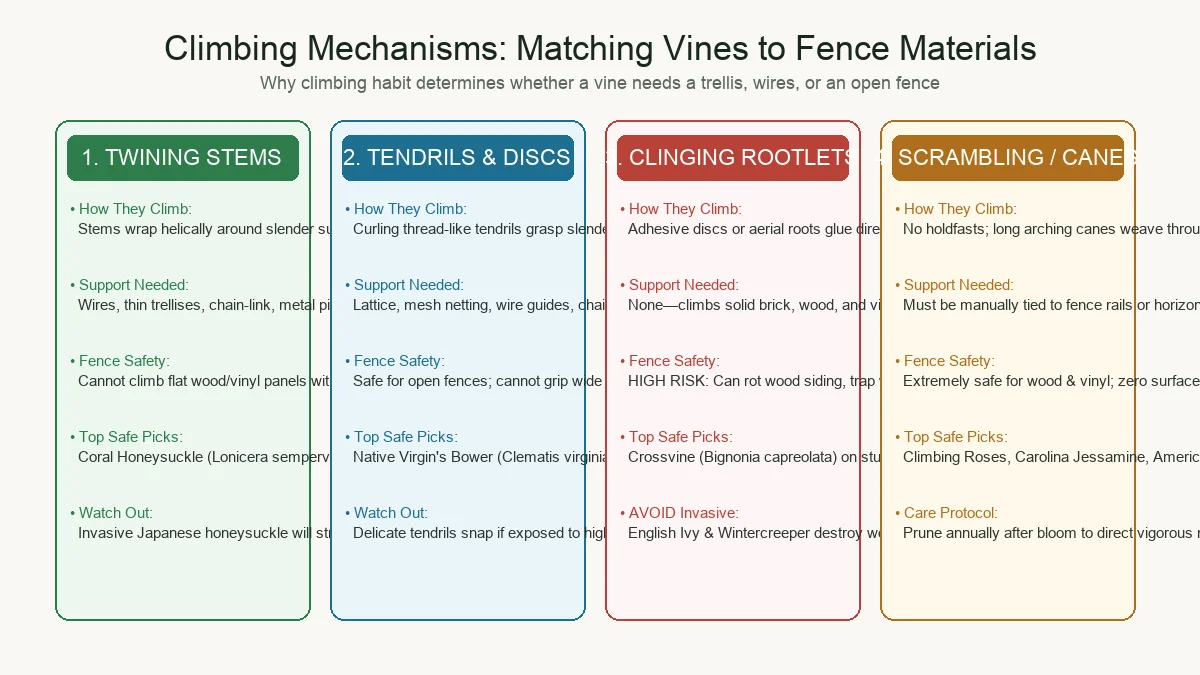
Covering a fence with flowering vines is an iconic garden vision. However, vines climb using four completely different biological mechanisms—and choosing the wrong vine can permanently rot wood boards or tear down vinyl panels:
Should You Grow Vines on a Fence? Compatibility & Invasive Screening
Compare climbing mechanisms, fence material safety, and critical regional invasive species warnings before selecting a vine.
| Vine Species | Climbing Mechanism | Wood Fence Safety | Vinyl / Metal Safety | Ecological Status |
|---|---|---|---|---|
| Coral HoneysuckleLonicera sempervirens | Twining Stems | Safe with Wire/Trellis | Safe with Wire/Trellis • Excellent Natural Support | Native & Non-Invasive |
| American WisteriaWisteria frutescens | Twining Stems | Safe with Wire/Trellis | Safe with Wire/Trellis • Good Support | Native & Non-Invasive |
| Virgin's Bower ClematisClematis virginiana | Curling Tendrils | Safe with Wire/Trellis | Safe with Wire/Trellis • Excellent Natural Support | Native & Non-Invasive |
| CrossvineBignonia capreolata | Clinging Rootlets / Discs | High Rot Risk | Safe with Wire/Trellis • Excellent Natural Support | Native & Non-Invasive |
| Climbing RosesRosa setigera / hybrids | Scrambling Canes | Safe with Wire/Trellis | Safe with Wire/Trellis • Good Support | Non-Native Well-Behaved |
| English IvyHedera helix | Clinging Rootlets / Discs | Severe Damage Risk | Cannot Grip Smooth Surface • Vigorous / Needs Pruning | DO NOT PLANT |
| Japanese HoneysuckleLonicera japonica | Twining Stems | Severe Damage Risk | Cannot Grip Smooth Surface • Extreme Aggression | DO NOT PLANT |
| Oriental BittersweetCelastrus orbiculatus | Twining Stems | Severe Damage Risk | Cannot Grip Smooth Surface • Extreme Aggression | DO NOT PLANT |
The 4-Inch Trellis Rule for Wooden Fences:
If you grow climbing vines along a wooden privacy fence, never let stems attach directly to the pickets. Mount an independent lattice panel or heavy-gauge wire trellis on standoff brackets positioned 3 to 4 inches away from the fence surface. This gap maintains unobstructed airflow behind the foliage, allowing wood pickets to dry out quickly after storms and preserving fence life for decades.
Year-Round Appeal
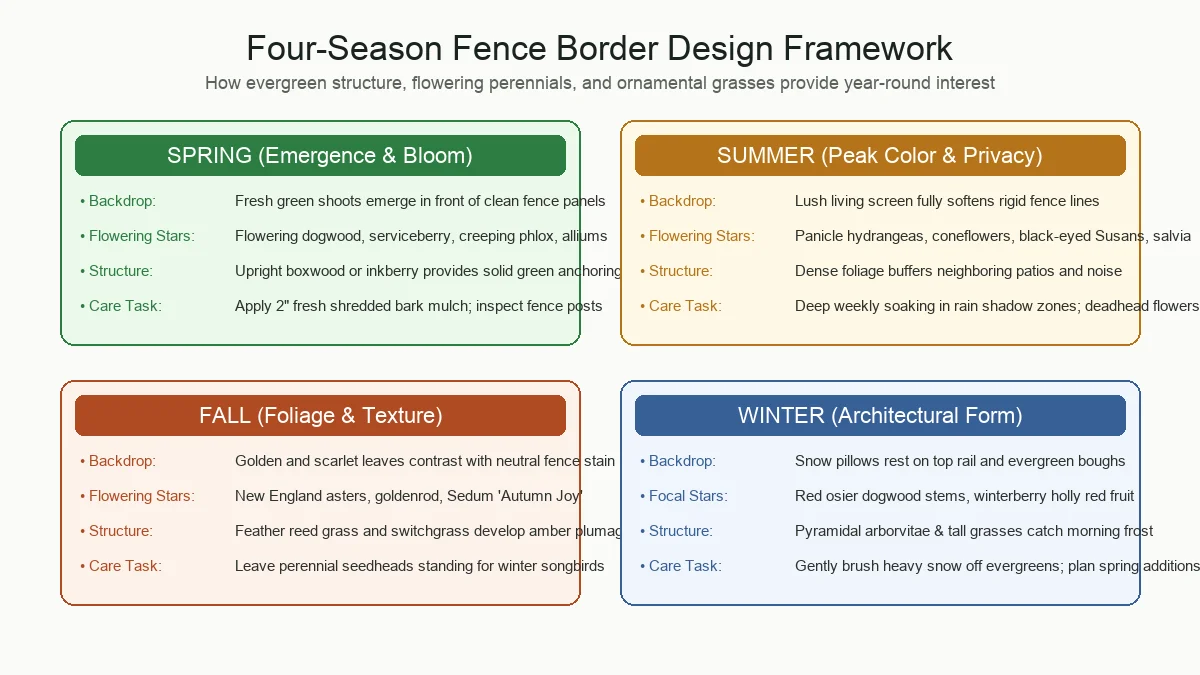
Four-Season Fence Border Design: Beyond Summer Blooms
A fence is visible 365 days a year from your living room, kitchen, and patio windows. If your fence border consists exclusively of herbaceous summer perennials, the fence line looks bleak and exposed for five months of winter. Professional designers balance seasonal blooms with enduring winter architecture:
Low-Maintenance Hardscaping
Landscaping Along a Fence With Rocks: The Mowing Strip Solution
Weed-whacking along a fence is one of the most frustrating lawn maintenance chores. Nylon string trimmer line repeatedly gouges soft cedar and vinyl posts, causing premature splintering and unsightly grass staining.
Installing a dedicated 12- to 24-inch crushed gravel ribbon along the base of the fence line solves this problem permanently. Combined with commercial-grade steel or aluminum edging, the gravel margin allows your lawnmower's rear wheels to roll smoothly along the border, completely eliminating the need for string trimmers.
Prevent Headaches
12 Common Fence-Line Landscaping Mistakes to Avoid
Planting based on nursery pot size rather than mature spread, forcing constant aggressive pruning.
Pressing shrubs flush against wood pickets, trapping moisture and causing fungal rot and mildew.
Eliminating maintenance access, making it impossible to place ladders, stain wood, or replace posts.
Blocking gate swings and latches with spreading, prickly, or tall flopping perennials.
Planting invasive vines (English ivy, oriental bittersweet) that destroy fence framework and spread into trees.
Ignoring reflected heat from white vinyl fences, resulting in sun-scorched, crispy perennial foliage.
Forgetting the leeward rain shadow, where solid 6-ft fences block natural rainfall from reaching root balls.
Assuming the fence is the legal property line, accidentally planting permanent shrubs on a neighbor's lot.
Digging over utility easements without calling 811 to locate buried electric, gas, and communications lines.
Planting single-species privacy monocultures (Leyland cypress) that succumb to blights, creating huge gaps.
Using decorative gravel as a fake drainage fix instead of addressing underlying soil grading or pipe runoff.
Overcrowding plants for instant results, causing stunted roots, fungal disease, and premature plant death.
Homeowner Answers
Frequently Asked Questions About Fence-Line Landscaping
Answers
Frequently asked questions
01What should I plant along my fence?
The best plants depend on your available bed width and sunlight exposure. For narrow borders (2 to 3 feet wide), choose upright columnar shrubs (such as Sky Pencil Holly or 'Fine Line' Buckthorn), ornamental grasses (Karl Foerster feather reed grass), or non-invasive climbing vines on independent trellises. For standard beds (4 to 6 feet wide), create a classic three-tier layered border featuring tall flowering shrubs in the back (panicle hydrangeas, viburnums), mid-height perennials (coneflowers, black-eyed Susans, salvia) in the middle, and low-growing mounding groundcovers along the lawn edge.
02How far away from a fence should I plant shrubs?
University Extension horticultural guidelines recommend planting shrubs with their center point located at least half of their mature spread plus 12 to 18 inches away from the fence. For example, if a panicle hydrangea matures to 6 feet wide (a 3-foot radius), its root ball should be planted at least 4 to 4.5 feet away from the fence. This preserves a 12- to 18-inch clear walking aisle behind the shrub so you can paint, stain, power wash, or repair fence panels without damaging plants.
03How do I make a long, flat fence line look better?
To soften a monotonous fence, introduce visual rhythm, varied heights, and contrasting textures. Rather than planting a single uninterrupted hedge, use broad, gentle bed curves to break up straight lines. Repeat groupings of 3 to 5 specimens of the same flowering perennial or ornamental grass at regular intervals. Incorporating architectural anchors—such as a garden bench, a specimen ornamental tree, or decorative boulders—draws the eye through the landscape.
04What can I plant along a narrow fence line (under 2 feet wide)?
In ultra-narrow strips, avoid standard spreading shrubs that require perpetual shearing. Instead, install fastigiate (columnar) plants like 'Slender Silhouette' sweetgum, columnar junipers, or upright grasses like switchgrass. Alternatively, install a wire mesh trellis mounted 4 inches off the fence and train non-invasive native vines like Coral Honeysuckle (Lonicera sempervirens) or Virgin's Bower (Clematis virginiana).
05Can I grow climbing vines directly on a wooden fence?
You should avoid letting self-clinging vines (such as English Ivy, Boston Ivy, or Wintercreeper) attach directly to wooden fence pickets. These species produce adhesive aerial rootlets that penetrate micro-cracks in wood, trap humidity, accelerate fungal rot, and peel paint. Instead, mount an independent wood or welded wire trellis 3 to 4 inches outward from the fence to allow continuous airflow behind the vine canopy.
06How do I landscape along a fence for additional privacy?
If an existing 6-foot fence leaves second-story neighbor windows exposed, plant a staggered two-tier privacy screen. Use slender, upright evergreens (such as Emerald Green arborvitae, upright junipers, or American holly) spaced 5 to 6 feet apart to add 8 to 15 feet of vertical screening. Stagger them with deciduous flowering shrubs in the front to create seasonal color and prevent single-species disease vulnerability.
07What plants grow best along a hot, sunny fence?
South- and west-facing fences create intense microclimates because light-colored vinyl or stained wood reflects solar radiation, raising ambient temperatures by 10°F to 15°F. Select drought-hardy, sun-worshipping perennials with thick or silver-waxy leaves that resist scorching: Russian Sage, Purple Coneflower, Sedum 'Autumn Joy', Little Bluestem, Agastache (Anise Hyssop), and Black-Eyed Susans.
08What plants grow best along a shady fence line?
North-facing fences and fence lines shaded by mature tree canopies stay cool and damp. Top performers include native Christmas Fern (Polystichum acrostichoides), Pennsylvania Sedge (Carex pensylvanica), variegated Hostas, Astilbe, Coral Bells (Heuchera), and shade-tolerant shrubs like Oakleaf Hydrangea and Mountain Laurel.
09Can I put decorative gravel or rocks along my fence?
Yes. A 12- to 24-inch gravel ribbon lined with steel or cobblestone edging is an excellent design strategy directly along fence bases. It prevents lawnmower wheels and string trimmer line from chewing up wooden fence posts and stops grass from growing between fence slats. However, gravel will not fix underlying grading or drainage problems; grade the subsoil properly before installing stone.
10What climbing vines are considered invasive and should never be planted?
Never plant English Ivy (Hedera helix), Japanese Honeysuckle (Lonicera japonica), Oriental Bittersweet (Celastrus orbiculatus), Chinese Wisteria (Wisteria sinensis), or Wintercreeper (Euonymus fortunei). These aggressive non-native species crush fence frameworks with heavy woody trunks, rot pickets, and escape cultivation to strangle native woodland trees.
11Do I need to check property lines before planting along a fence?
Yes. Never assume an existing fence sits exactly on the legal property line. Fences are frequently constructed 6 to 12 inches inside property boundaries to comply with local setback rules. Check your boundary survey and consult local municipal setback ordinances before planting large specimen trees or permanent retaining borders.
12How do I prevent landscaping from interfering with fence gates?
Maintain a 3-foot clear operational radius around all gates. Avoid planting spreading, thorny, or tall flopping plants within the gate's swing path or near latch hardware. Use low-profile groundcovers, stepping stones, or crushed stone borders around entry gates to ensure smooth daily operation and emergency access.
Local North Shore Context
Planning Fence-Line Landscaping in Peabody, MA?
While the spatial, microclimate, and maintenance rules outlined in this guide apply nationally, your plant palette must be tailored to the coastal New England climate, cold winters (USDA Zone 6b), and glacial soils of the Massachusetts North Shore.
In Essex County communities like Peabody, Danvers, Beverly, and Salem, resilient fence borders feature salt-tolerant and cold-hardy species such as Arrowwood Viburnum, Winterberry Holly, Panicle Hydrangeas, New England Asters, and Little Bluestem.
If you are a homeowner seeking professional assistance with site grading, heavy turf removal, cobblestone border edging, or a complete master landscape design, LandscapingPeabodyMA.com connects you with independent, pre-screened North Shore landscape contractors.
Ready to Transform Your Fence Line into a Living Garden?
Connect with pre-screened landscaping and planting specialists in Peabody and across the North Shore.
Get connected with an independent local landscaping professional. Calls go to (877) 537-6896.