Drought-Tolerant Landscaping: A Water-Wise Yard Guide
A comprehensive, condition-based planning system grounded in US EPA WaterSense and university Extension research. Discover how to reduce supplemental irrigation, select plants tailored to your climate, group hydrozones, and convert unused lawn areas without creating a barren desert.
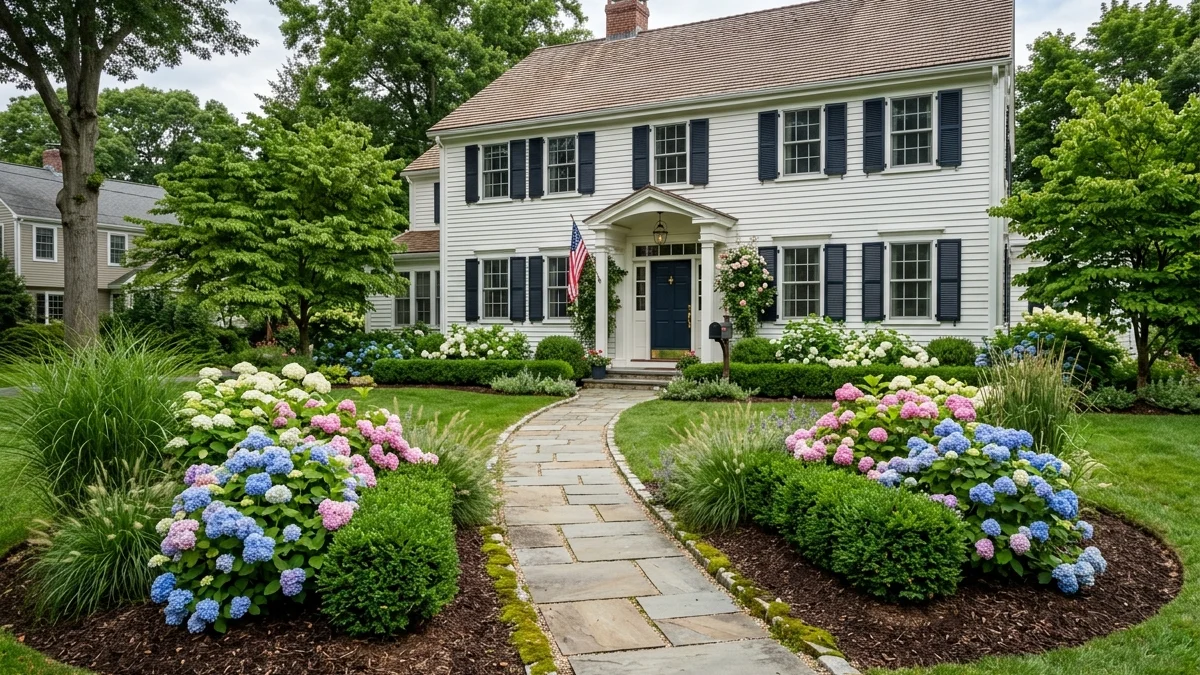
What Is Drought-Tolerant Landscaping?
Drought-tolerant landscaping is a landscape-design approach that reduces unnecessary supplemental water use by matching plants to local climate and microclimate conditions, improving soil health, grouping plants with similar water needs (hydrozoning), applying protective mulch layers, and keeping turfgrass only where it serves a functional purpose. It does not require a barren, desert-looking yard of crushed gravel, nor is it completely irrigation-free.
Because annual rainfall, winter hardiness, soil chemistry, and humidity differ dramatically across the United States, there is no single national drought-tolerant plant list. A resilient landscape in Massachusetts looks completely different from one in Colorado, Georgia, or California.
The Water-Smart Landscape Planning System
Assess Site Microclimates
Map sunlight patterns, soil texture, slope runoff, and wind exposure across each yard zone.
Keep Functional Turf
Retain grass where children, pets, or outdoor entertaining genuinely use it; flag unneeded turf.
Match Plants to Region
Select species vetted by your Land-Grant University Extension for your exact USDA hardiness zone.
Group by Water Need (Hydrozoning)
Plumb high, moderate, and low-water plants onto isolated irrigation zones.
Improve Root-Zone Soil
Relieve compaction and build water-holding sponge capacity with compost without over-amending.
Reduce Unnecessary Evaporation
Plant shade canopy trees to lower ambient ground temperatures and protect understory beds.
Irrigate with Precision Hardware
Convert spray heads to drip emitters in planting beds and install a WaterSense smart timer.
Mulch with Coarse Wood Chips
Maintain 3 inches of arborist wood chips to cool soil by 10–18°F and lock in subsoil moisture.
Provide Establishment Water
Never skip establishment hydration: new plants need 1 to 2 seasons of care to develop deep roots.
Wean & Maintain Seasonally
Taper watering frequency as root systems mature; hand-pull early spring weeds before seed drop.
Drought Tolerant Does Not Mean 'No Water Ever'
The term drought tolerant is frequently misunderstood by homeowners and misrepresented by marketers. In horticulture, a drought-tolerant plant is simply an organism capable of sustaining physiological health during periods of limited soil moisture once appropriately established and matched to the site.
Plants survive water shortages through distinct evolutionary adaptations:
- Deep Taproots & Extensive Lateral Roots: Prairie grasses and native oak trees send roots 5 to 15 feet down into the subsoil, mining moisture reserves inaccessible to shallow turfgrass.
- Reduced Leaf Surface & Waxy Cuticles: Plants like Lavender, Manzanita, and Pine have narrow, needle-like, or heavily waxed leaves that physically prevent moisture transpiration.
- Pubescent (Hairy) or Silver Foliage: Silver foliage (such as Russian Sage, Lamb’s Ear, or Artemisia) deflects intense solar radiation, while fine leaf hairs trap a microscopic layer of humid air against leaf pores (stomata).
- Summer or Drought Dormancy: California buckeye, Texas grasses, and Kentucky bluegrass naturally turn golden or shed foliage during peak summer heat to protect their crowns, rebounding vigorously when rains return.
Drought-Tolerant Landscaping vs. Xeriscaping: What's the Difference?
Homeowners frequently encounter three related terms used interchangeably: Drought-Tolerant Landscaping, Water-Wise Landscaping, and Xeriscaping. While their goals align, they represent different scopes:
| Concept | Origin & Definition | Core Focus | Lawn & Plant Treatment |
|---|---|---|---|
| Drought-Tolerant Landscaping | Broad horticultural concept | Plant selection capable of surviving seasonal rain deficits | Focuses on tough, deep-rooted species; turf may or may not be reduced |
| Xeriscaping | Coined in 1981 by Denver Water & Colorado State University | Structured 7-principle system for water-conserving design | Restricts turf strictly to practical functional shapes; emphasizes hydrozoning |
| Water-Wise Landscaping | Promoted by US EPA WaterSense and municipal utilities | Holistic irrigation efficiency, soil health, rainwater use, and maintenance | Focuses on preventing waste across plants, hardware, and outdoor living spaces |
Xeriscape ≠ "Zeroscape": Why Rocks Alone Do Not Save Water
The single most damaging misconception about drought-tolerant landscaping is assuming that xeriscaping means replacing all grass and plants with a desert of bare gravel and crushed rocks. In horticulture, that is called "zeroscaping"—and it often creates severe heat traps, weed nightmares, and dead soil.
A Yard Full of Gravel, Weed Fabric & No Canopy
- Extreme Thermal Heat Island: Crushed stone and dark gravel absorb solar energy, reaching surface temperatures of 130°F to 150°F. This heat radiates directly into foundation walls and windows, substantially driving up home air-conditioning electricity bills.
- Suffocated Soil Biology: Plastic sheeting or non-woven fabric beneath rock blocks natural organic leaf fall from feeding earthworms and beneficial mycorrhizae. Underneath, soil bakes into sterile, impermeable hardpan.
- Debris & Herbicide Trap: Windborne dust and leaves settle into rock crevices over 2–3 years, forming a rich organic seedbed. Stubborn weeds sprout directly on top of the fabric, forcing homeowners to use toxic chemical herbicide sprays because hand-pulling through rock is difficult.
- Zero Ecological Benefit: Offers no shade for family recreation, no pollinator nectar, and zero bird habitat.
Layered Plantings, Living Shade & Organic Mulch
- 60%–80% Living Plant Canopy: A well-planned xeriscape is rich with trees, shrubs, ornamental grasses, and flowering perennials adapted to local climate and rainfall patterns.
- Natural Evaporative Microclimate: Tree canopies intercept intense summer sun, cooling ambient soil temperatures by 10°F to 18°F and lowering home cooling demands through natural transpiration.
- Living Soil Regeneration: Organic arborist wood chips slowly break down, feeding fungal networks, loosening compacted clay, and expanding the soil's natural sponge-like water holding capacity.
- Retains Functional Living Spaces: A small, dedicated patch of high-efficiency turf can remain where children, pets, or outdoor entertaining genuinely require it.
The Horticultural Takeaway: Originating from the Greek word xeros (dry), xeriscaping was coined in 1981 by the Denver Water Department, Colorado State University, and the Associated Landscape Contractors of Colorado. It was explicitly designed to prove that dry-climate landscapes could be lush, colorful, and architecturally stunning—never barren rock pits.
Start by Assessing Your Site: Microclimates Before Plants
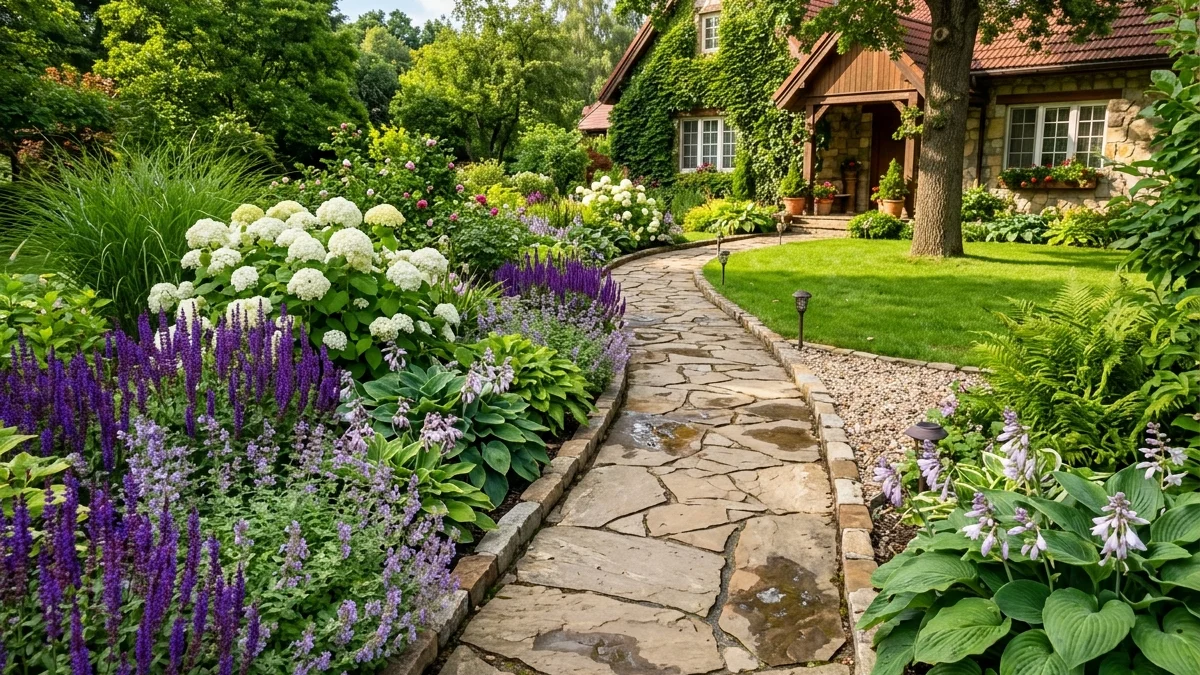
The 6-Factor Site Audit
- 1. Sunlight & Aspect: South- and west-facing exposures endure intense afternoon heat and rapid evaporation; north- and east-facing beds remain cooler and hold moisture significantly longer.
- 2. Soil Texture & Infiltration: Sandy soils drain instantly and hold little water; heavy clays retain moisture but shed rainfall during rapid summer downpours.
- 3. Slope & Water Flow: Tops of slopes dry out fastest; low swales collect stormwater. (If your yard experiences chronic waterlogging or standing water, explore our guide to yard drainage solutions).
- 4. Wind Exposure: Open, windy ridges increase plant evapotranspiration (ET) rates by up to 40% compared to sheltered courtyards.
- 5. Hardscape Heat Sinks: Concrete driveways, curbs, and asphalt radiate extreme heat (130°F+), requiring hyper-tough perimeter plantings.
- 6. Functional Needs: Distinguish play areas and pet runs from purely decorative viewing gardens.
Drought Tolerance Is Inherently Local: No Single National Plant List
A plant celebrated for drought tolerance in Arizona (such as an Agave or Desert Willow) will rapidly freeze and rot in a Minnesota subzero winter or drown in North Carolina summer clay. Conversely, a drought-tolerant New England native (like Bearberry or Sweetfern) will bake to a crisp in an arid Texas summer.
Horticultural drought manifests across three fundamentally different climatic patterns:
(Southwest, Great Basin) Low annual rainfall (7–12 in/yr), intense heat, and high vapor pressure deficit year-round.
(California, Pacific Northwest) Plentiful winter rain followed by 4 to 6 months of zero summer precipitation.
(Northeast, Midwest, Southeast) High annual rainfall (35–55 in/yr) punctuated by unpredictable 4 to 8-week flash droughts in July/August.
Find Drought-Tolerant Plant Resources for Your State
Because climate, rainfall, winter temperatures, and soils differ dramatically across the United States, no single national plant list exists. Select your state below to access your local Land-Grant University Extension horticulture database, state native plant society, and regional climate considerations.
California Water-Wise Landscaping
Mediterranean climate: rain falls strictly in winter/spring with 4 to 6 months of zero summer precipitation.
Summer-dormant and drought-adapted California chaparral and coastal sage plants can rot if watered heavily in midsummer heat.
Verified Authoritative Plant Databases for California
Peer-reviewed plant trials, soil testing services, and county-specific planting calendars.
Locally adapted native species vetted for pollinator value and extreme drought survival.
Native Plants vs. Drought-Tolerant Plants: An Important Distinction
One of the most persistent myths in modern landscaping is that "all native plants are drought tolerant." In nature, plants evolve to fill specific ecological niches. A wetland plant (such as native Marsh Marigold, Swamp Milkweed, or River Birch) is completely native to the United States, but it will wither and die if planted on a hot, dry, sandy slope without irrigation.
To design a truly water-smart landscape, look for species that are both native to your ecoregion AND adapted to upland, dry, or rocky habitats. If you are planning an intentional, multi-tiered ecological landscape across any US region, consult our complete native plant landscaping design guide. For Massachusetts and New England homeowners, you can also explore our localized database of 38 verified regional species in our Massachusetts native plant guide.
Naturally occur in dry prairies, glades, chaparral, and coastal barrens. Provide co-evolved pollen and nectar for specialized native bees and caterpillars while thriving with minimal water.
Non-native plants (such as Mediterranean Lavender, Catmint, or Russian Sage) that thrive in dry soils without becoming invasive. Safe to use in controlled garden borders, but never plant invasive species like Burning Bush or Barberry.
Hydrozoning: Grouping Plants by Water Needs
Hydrozoning: The Secret to Irrigation Efficiency
Hydrozoning is the practice of grouping plants with similar water, soil, and sunlight requirements together on dedicated irrigation valves. By separating low-water native shrubs from thirsty functional lawns, you eliminate the single most common irrigation mistake: overwatering drought-adapted plants to keep lawn patches green.
Zone 1: Very Low / Low Water (Naturalized Perimeter)
Dedicated low-flow drip line (0.5–1.0 GPH emitters) or hand-watering during extreme droughts only.
Cadence: Zero regular watering in wet/temperate climates; 1–2 times monthly in hot arid summer climates.
Outlying property perimeters, steep slopes, sunny sidewalk strips, and distant property boundaries.
Role: Forms the structural backbone and outer buffer of the property, providing color and texture with zero ongoing irrigation costs.
- Deep-rooted native ornamental grasses (Little Bluestem, Prairie Dropseed, Sideoats Grama)
- Drought-hardy flowering perennials (Coneflower, Black-Eyed Susan, Russian Sage, Agastache, Penstemon)
- Durable woody shrubs (Sumac, Ninebark, Bearberry, Texas Sage, Juniper, Bayberry)
- Drought-adapted shade trees (Bur Oak, Honey Locust, Kentucky Coffeetree, Mesquite)
The Golden Rule of Hydrozoning:
Never place Zone 1 plants (like Russian Sage or Lavender) on the same sprinkler zone as Zone 3 turfgrass. Watering them at the turf's cadence will cause fatal root rot and fungus, while watering at the perennial's cadence will brown out the lawn.
Mulch Guidance: 3–4 inches of coarse arborist wood chips or regional gravel/crushed stone where appropriate.
Do You Need to Remove Your Lawn? The 'Functional Turf' Rule
Keep Grass Where It Serves a Purpose
In standard American suburbs, irrigated turfgrass covers roughly 40 million acres, consuming up to 30% of municipal drinking water supplies. But the answer is not to pave over your backyard or tear up the grass where your children play soccer.
The EPA WaterSense principle is simple: design turf around intended human function.
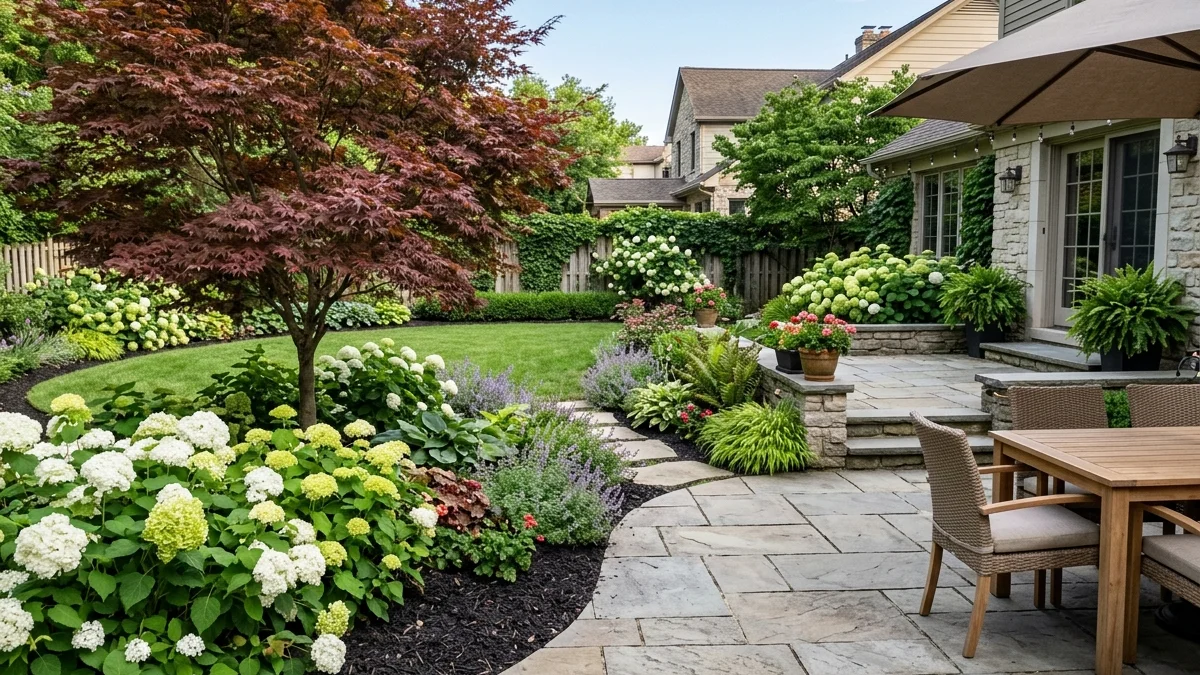
How to Convert an Existing Yard Gradually
How to Convert an Existing Lawn Gradually
You don't need a massive bulldozer or a \$20,000 budget to create a drought-resilient yard. By tackling one functional zone at a time using sheet mulching and targeted irrigation retrofits, you save money, protect soil microbiology, and eliminate lawn maintenance stress.
Site Audit & Functional Turf Mapping
Map your yard to identify high-value living areas versus water-wasting turf strips. Don't tear out everything; determine where grass actually earns its keep.
Action Items & Field Tasks for Phase 1
Why Soil Matters in a Drought-Tolerant Landscape
Water-smart landscaping happens beneath your feet. Soil with 5% organic matter holds significantly more available water per cubic foot than compacted, mineral-depleted soil. When rain falls, living spongy soil absorbs every drop; compacted soil causes runoff.
Never add sand to heavy clay soil. Adding sand to fine clay particles without massive organic matter creates a low-grade concrete that locks out water and oxygen. Instead, topdress with coarse compost or arborist wood chips and let earthworms aerate the subsoil naturally.
Sandy soils allow water to slip through rapidly. Incorporate composted organic matter into the top 4–6 inches at planting time to expand capillary water-holding capacity, and choose deep-taproot species adapted to coastal or outwash plains.
Mulch Science: Reducing Moisture Loss Without Trapping Heat
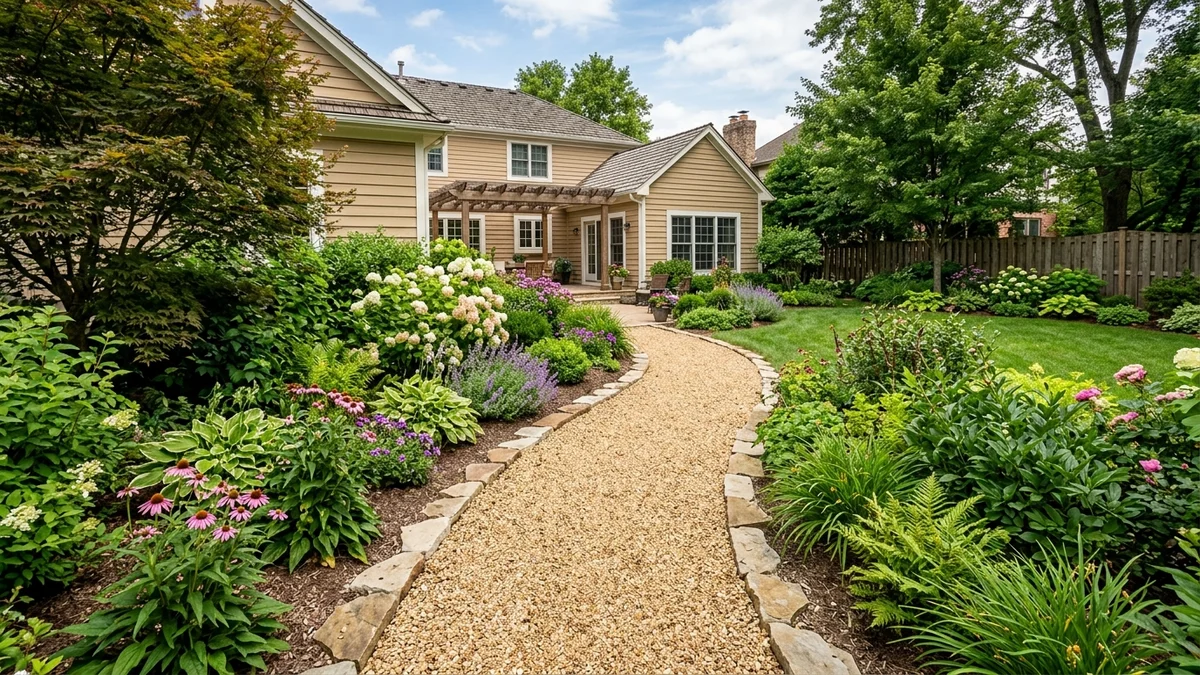
The 3-Inch Organic Moisture Blanket
Bare soil in summer direct sunlight can reach temperatures above 115°F, rapidly evaporating capillary water. A 3-inch layer of coarse organic mulch:
- Reduces surface evaporation by up to 60–70%.
- Cools root zone temperatures by 10°F to 18°F.
- Suppresses 80% of annual weed seed germination.
- Prevents surface soil crusting during heavy thunderstorms.
Mulch Selection: Organic Wood Chips vs. Gravel & Stone
Mulch is the protective blanket that shields plant root zones from wind and solar evaporation. However, choosing the wrong mulch material—like heavy stone in hot sunny beds—can actually increase plant water stress through radiant heat absorption. Compare your options below:
Coarse Arborist Wood Chips
Excellent cooling (-10°F to -18°F compared to bare ground). High insulating capacity.
Outstanding. Coarse, irregular particles trap humidity while allowing rainfall to penetrate freely.
Biology: Superior. Decomposes slowly over 2–3 years, building fungal networks (mycorrhizae) and rich topsoil.
Tree root zones, mixed shrub borders, perennial gardens, and sheet-mulched lawn conversions.
Keep 2–3 inches away from tree bark and house foundations to prevent moisture transfer and insect bridges.
Front Yard & Backyard Water-Smart Design Strategies
- •Define One Prominent Walkway: Create a wide, permeable flagstone or gravel path leading visitors directly to your front entrance.
- •Layer Structural Anchor Shrubs: Place evergreen and woody shrubs along foundation walls for four-season architectural presence.
- •Repeat Plant Drifts: Instead of planting one of twenty different flowers, plant drifts of 3, 5, or 7 of the same drought-tolerant perennial (e.g. Salvia, Coneflower, Little Bluestem) for visual rhythm.
- •Frame with Organic Mulch: Keep clean, crisp edges separating garden beds from the sidewalk to maintain manicured curb appeal.
- •Expand Permeable Patios: Extend outdoor living space using bluestone, concrete pavers, or decomposed granite for seating and fire pits.
- •Plant Strategic Shade Canopies: Plant deciduous trees on south and west exposures to shade patios and home windows from afternoon sun.
- •Central Functional Turf Oval: Keep a neat, compact circle or oval of high-efficiency turf in the center for children or dogs, framed by wide mulched borders.
- •Perimeter Native Pollinator Border: Fill fence lines with tough native flowering shrubs and berry-producing plants requiring zero supplemental water.
How Much Does Drought-Tolerant Landscaping Cost?
Costs for drought-tolerant landscaping vary widely based on property size, the amount of existing lawn removed, irrigation retrofits, and whether work is completed DIY or through professional contractors:
Includes free recycled cardboard, bulk arborist wood chips (\$25–\$45/yard), starter plug-sized perennials, and DIY drip conversion kits.
Includes mechanical turf stripping, subgrade grading, premium nursery shrubs/trees, commercial drip installation, smart controllers, and patio hardscaping.
Common Drought-Tolerant Landscaping Myths & Mistakes
Planning a Water-Wise Landscape Redesign in Peabody, MA?
While this water-smart planning system applies nationwide, homeowners located in Peabody, Danvers, Beverly, Salem, and surrounding North Shore Massachusetts communities can connect with licensed, vetted local landscaping professionals. Our dispatch team connects you with independent contractors for complete landscape design, site grading, patio hardscaping, and regional native plant installations suited to Essex County soils.
Answers
Frequently Asked Questions: Drought-Tolerant Landscaping
01What is drought-tolerant landscaping?
Drought-tolerant landscaping is an intentional, water-conserving design approach that matches plants to local climate and microclimate conditions, improves soil health, groups plants with similar water needs into hydrozones, uses protective mulch layers, and limits turfgrass to functional areas. It aims to create an attractive, resilient outdoor living space that thrives with significantly less supplemental irrigation than traditional lawns.
02Does drought-tolerant mean no watering at all?
No. Drought-tolerant does not mean zero water. Even the hardiest drought-adapted plants require regular establishment watering during their first 1 to 2 growing seasons while developing extensive root systems. Once established, drought-tolerant plants survive extended dry periods with little to no supplemental water, but they may still need occasional deep watering during severe heatwaves or prolonged rainless intervals.
03Is xeriscaping the same as drought-tolerant landscaping?
They are closely related, but xeriscaping is a specific, structured seven-principle methodology originally developed in 1981 by the Denver Water Department and Colorado State University. Xeriscaping encompasses planning and design, soil analysis, practical turf areas, appropriate plant selection, efficient irrigation, use of mulches, and appropriate maintenance. Drought-tolerant landscaping is a broader umbrella term for any landscape designed to function under lower water inputs.
04Do I have to remove all the grass in my yard?
No. Sustainable water-wise landscaping does not require removing every square foot of lawn. The agronomic principle is to keep turf where it serves a genuine functional purpose—such as recreation for children, pets, or outdoor entertaining. The goal is to eliminate non-functional turf, such as narrow driveway strips, steep slopes that cause runoff, and awkward, rarely used corners where sprinklers overspray onto pavement.
05Can a drought-tolerant yard still look green and lush?
Yes. Drought-tolerant landscaping does not mean a barren desert of crushed gravel and cactus. In regions like the Northeast, Midwest, and Southeast, water-wise landscapes are lush, layered gardens featuring flowering perennials (Coneflowers, Black-Eyed Susans, Salvia), deep-rooted ornamental grasses, flowering shrubs, and broadleaf shade trees that provide vibrant color, texture, and natural canopy cooling.
06Are all native plants drought tolerant?
No. Native status and drought tolerance are two distinct ecological characteristics. While many native prairie, meadow, and glade species are exceptionally drought hardy, native wetland, bog, or riparian species (such as Cardinal Flower or River Birch) require constant soil moisture. Plants must be matched to your specific site's soil moisture, sun exposure, and drainage rather than assuming every native is low-water.
07Does replacing my lawn with gravel or rocks save water?
While gravel does not require irrigation, turning an entire yard into bare rock (zeroscaping) creates intense thermal heat traps. Rocks absorb solar radiation and reach surface temperatures of 130°F to 150°F, heating surrounding foundation walls and raising home air conditioning costs. In contrast, true xeriscapes use living plant canopies and organic arborist wood chips that cool the soil surface by 10°F to 18°F.
08What is hydrozoning and why is it important?
Hydrozoning is the practice of grouping plants with similar water, sunlight, and soil requirements together on dedicated irrigation valves. By separating low-water native shrubs from thirsty turfgrass, you prevent the common failure of overwatering drought-adapted plants (causing root rot) just to keep a lawn patch green, or underwatering turf to satisfy drought-tolerant perennials.
09How long does it take for drought-tolerant plants to become established?
Perennials and ornamental grasses typically require 1 full growing season (3 to 6 months) of consistent moisture to establish deep root systems. Woody shrubs and small trees generally require 1 to 2 full growing seasons, and large canopy trees may take 2 to 3 years before their root systems can fully tap into subsoil reserves without supplemental irrigation.
10Can I make my existing landscape more drought resilient without replacing everything?
Yes. You can retrofit gradually without expensive demolition: (1) audit your irrigation system to fix leaks and install a WaterSense smart controller; (2) apply a 3-inch layer of organic arborist wood chips over bare soil beds; (3) convert narrow, water-wasting turf strips into mulched perennial beds using sheet mulching; and (4) raise your mower cutting height to 3.5 inches to shade turf roots.
Ready to Transform Your Landscape into a Resilient Oasis?
Speak with our North Shore landscape specialists for transparent estimates on grading, planting design, and water-smart outdoor living spaces.
Get connected with an independent local landscaping professional. Calls go to (877) 537-6896.