Native Plant Landscaping: How to Design an Ecological Residential Yard
A comprehensive nationwide guide for US homeowners on transforming lawn and garden beds into stunning, biodiverse native plant communities. Learn how to combine ecological science with high-curb-appeal landscape design.
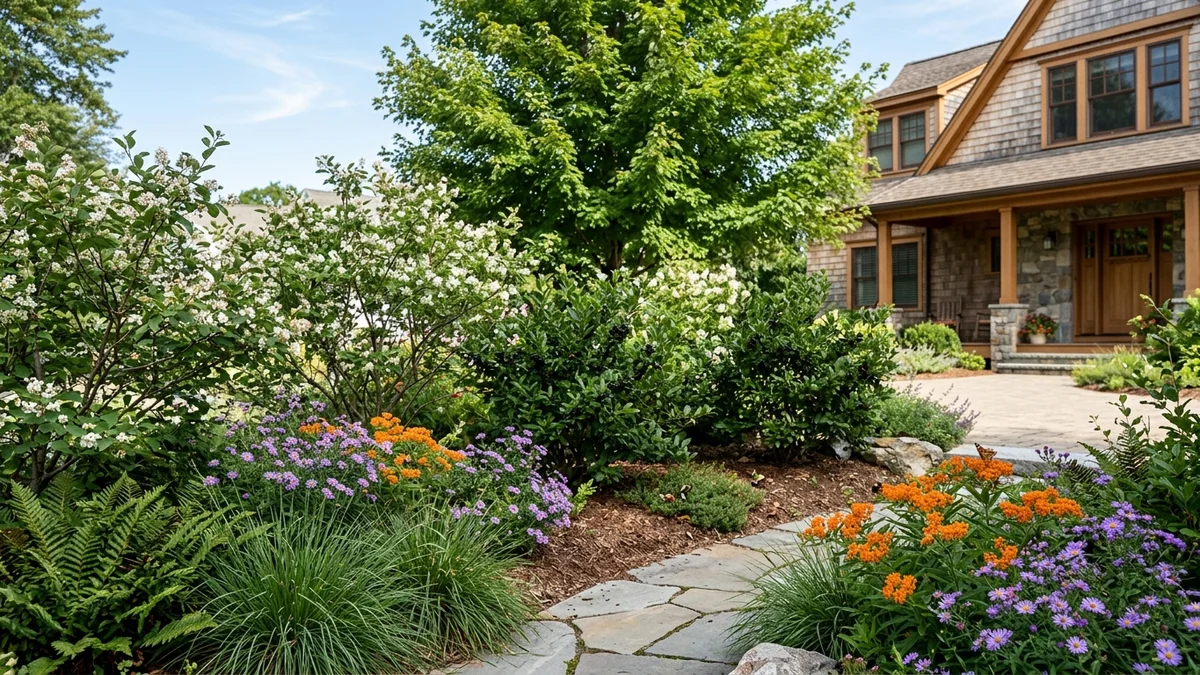
Direct Answer: What is Native Plant Landscaping?
In North America, residential lawns occupy over 40 million acres of land—an area roughly equivalent to the entire state of Florida—yet provide virtually zero food or shelter for native pollinators and songbirds. Native plant landscaping replaces non-functional turf and sterile exotic shrubs with species that co-evolved over thousands of years with local soils, rainfall cycles, and wildlife.
Critical Distinctions: Native vs. Naturalized vs. Invasive
Before purchasing plants at a big-box nursery, it is essential to understand the scientific differences between plant categories. Many commercial plant tags use the word "adapted" or "naturalized" to mask non-native origin:
Locally Native Species
A plant that occurred naturally in your specific geographic ecoregion prior to European settlement. Co-evolved with regional insect herbivores and mycorrhizal fungi.
Naturalized Non-Native
Plants introduced from Eurasia, Asia, or South America that reproduce in the wild without human assistance (e.g., Queen Anne's Lace, Dandelions).
Invasive Exotic
Aggressive non-native species with no natural insect predators that escape gardens and displace native ecosystems (e.g., Japanese Barberry, English Ivy, Callery Pear).
The Keystone Plant Principle: Why Not All Natives Are Equal
Groundbreaking research led by Dr. Doug Tallamy at the University of Delaware revealed a startling mathematical truth about native ecology: just 14% of native plant genera produce 90% of the caterpillar biomass that fuels terrestrial bird and insect food chains.
Over 96% of terrestrial North American songbirds feed their nestlings exclusively on insect protein—primarily soft-bodied moth and butterfly caterpillars. A single clutch of Carolina Chickadee chicks requires between 6,000 and 9,000 caterpillars to grow from egg to fledgling. Non-native trees like Ginkgo biloba support virtually zero caterpillar species, while a native oak tree hosts over 530 species.
The Keystone Plant Rule: 14% of Genera Drive 90% of Wildlife Food
Just as an arch collapses without its keystone stone, an ecological landscape fails if it lacks keystone plant genera. Research led by Dr. Doug Tallamy shows a small minority of native plants carry nearly the entire insect and bird food web.
Quercus (Oaks (White, Red, Bur, Swamp White, Live))
The undisputed king of biodiversity in North America. Produces enormous caterpillar biomass required by nesting songbirds; acorns provide calorie-dense winter fuel for mammals and birds.
Prunus (Native Cherries & Plums (Black Cherry, Chokecherry, Beach Plum))
High-value larval host for Eastern Tiger Swallowtail, Cecropia moth, and Red-Spotted Purple. Fragrant spring flowers fuel early bees; late-summer drupes are prized by 80+ bird species.
Salix (Native Willows (Pussy Willow, Black Willow, Prairie Willow))
One of the very first plants to bloom in early spring, saving queen bumblebees and solitary mining bees from starvation after winter dormancy. Massive caterpillar host.
Betula (Birches (River Birch, Paper Birch, Yellow Birch))
Hosts mourning cloaks and luna moths. Winter seeds feed winter finches, redpolls, and chickadees. Papery exfoliating bark shelters overwintering insects.
Vaccinium (Blueberries & Cranberries (Highbush, Lowbush))
Bell-shaped spring blossoms require 'buzz pollination' from native bumblebees and blueberry specialist bees. Produces sweet, antioxidant-packed summer berries.
Solidago (Goldenrods (Blue-Stemmed, Stiff, Zigzag, Seaside))
Late-season powerhouse. Does NOT cause hay fever (heavy sticky pollen is carried by insects, not wind; windborne ragweed is the true culprit). Crucial fall migratory fuel.
Symphyotrichum (Native Asters (New England, Smooth, Aromatic, Wood))
Blooms well into October and November, providing the final essential nectar and pollen resources before winter freeze. Host for Pearl Crescent butterfly caterpillars.
Helianthus (Native Sunflowers (Swamp, Ox-Eye, Woodland, Maximilian))
Hosts highest number of specialist native bee species of any herbaceous plant. High-oil seeds fuel goldfinches and nuthatches throughout snowy winter months.
Asclepias (Milkweeds (Butterfly Weed, Swamp Milkweed, Sullivant's))
The sole, obligate host genus for Monarch butterfly caterpillars (Danaus plexippus). Toxic cardenolides absorbed by caterpillars provide lifelong defense against bird predators.
Fragaria (Wild Strawberry (Fragaria virginiana))
Unsung hero of the forest floor. Hosts over 70 caterpillar species while providing dense living ground cover that cools the soil surface and shelters firefly larvae.
Entomological data synthesized from Tallamy, D.W., Narango, D.L., & Shropshire, K.J. (2020), "A Global Test of the Keystone Plant Species Hypothesis in Terrestrial Ecosystems", Entomological Society of America / National Wildlife Federation Research.
Overcoming the 'Messy' Stigma: Nassauer's Cues to Care
The single most common fear among homeowners exploring native plant landscaping is: "Will my yard look like an overgrown abandoned lot, and will the city or my HOA fine me?"
In 1995, University of Michigan landscape ecology professor Dr. Joan Iverson Nassauer published a landmark study titled "Messy Ecosystems, Orderly Frames." Her research proved that while humans often perceive unmanaged ecological vegetation as neglected or chaotic, they instantly appreciate native ecosystems when framed by unmistakable visual cues of human care and stewardship.
The "Cues to Care" Framework: Designing for HOA & Neighbor Approval
Pioneered by University of Michigan landscape ecology professor Dr. Joan Iverson Nassauer, "Cues to Care" reveals that human beings appreciate ecological landscapes when they see unmistakable signals of human stewardship.
Ragged, Undefined Edge
Wildflowers and native grasses flop directly onto the sidewalk or meet the neighboring lawn without any visual separation.
"Looks like the homeowner abandoned lawn mowing or neglected property upkeep."
Mowed Turf Frame or Crisp Stone Edging
A deliberate 3-to-4 foot manicured grass ribbon or clean stone border encircling the native bed, providing a razor-sharp frame.
"Clearly intentional botanical garden; frames the ecological plants as a planned feature."
Maintain a 3-inch clean trench edge or use steel/stone edging to prevent native clump grasses from creeping into pathways.
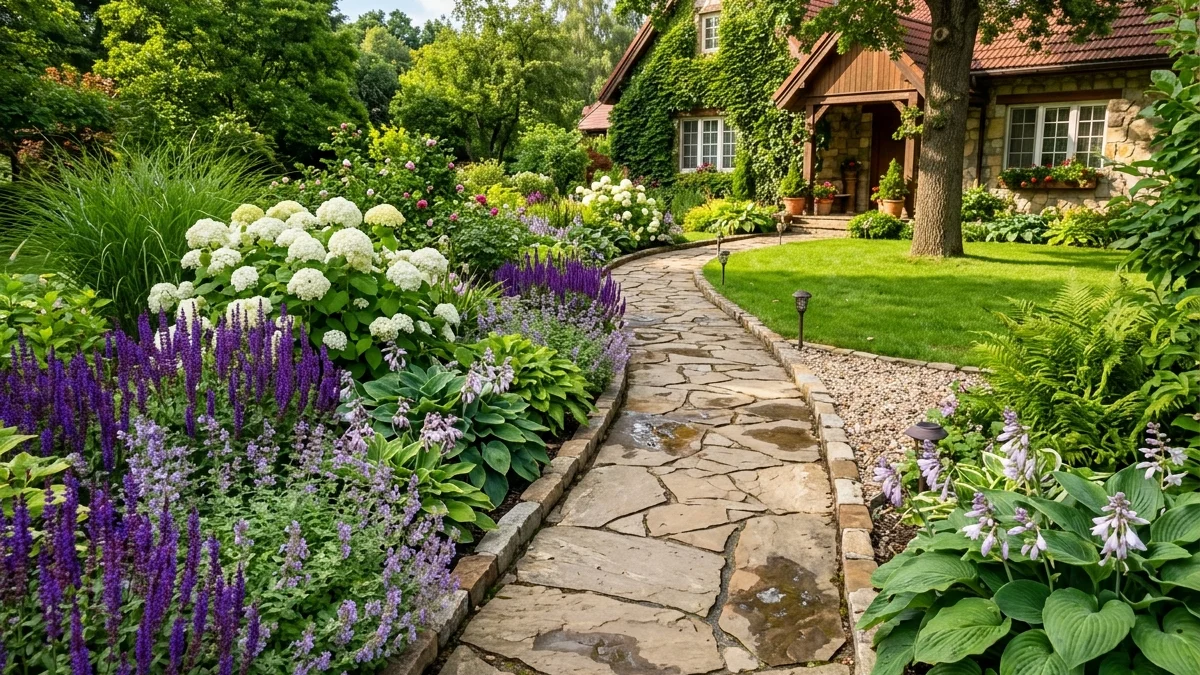
The 5-Tier Vertical Layering Model
Traditional landscaping treats plants as isolated objects floating in a sea of dyed wood chip mulch. In natural ecosystems, plants never grow as isolated individuals; they form dense, interlocked multi-tiered communities that cover 100% of the ground surface.
By planting in vertical tiers—from towering canopy shade trees down to dense living groundcover carpets—you optimize solar capture, prevent moisture evaporation, and create a self-sustaining miniature ecosystem that chokes out weeds naturally.
Vertical Structural Layering: How Natural Ecosystems Stack
In natural plant communities, species occupy specific vertical tiers to share sunlight, moisture, and root zones without competing. Click each layer to see how to replicate this multi-story architecture in your yard.
Ground Layer / Living Mulch (Sedges, Groundcovers & Leaf Litter)
The 'skin of the earth'. Prevents topsoil erosion, regulates soil moisture and temperature, builds fungal networks, and shields soil-nesting solitary bees and pupating fireflies.
Replaces the endless annual expense of dyed wood chip mulch with vibrant, self-repairing green foliage that knits borders together cleanly.
Plant densely as a matrix underneath shrubs and perennials. Once established, living green mulch chokes out weeds and eliminates 80%+ of weeding labor.
Living mulches never blow away in thunderstorms, never deplete soil nitrogen like fresh wood shavings, and create lush green borders year-round.
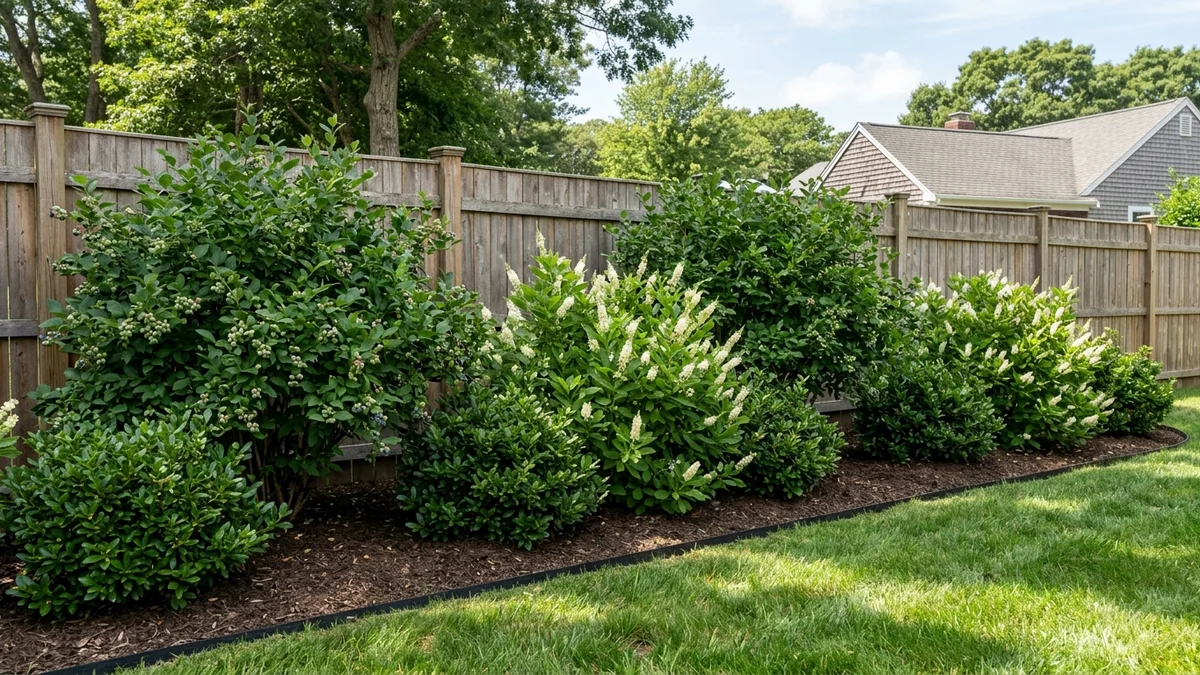
10-Step Planning Framework for Residential Native Landscaping
Designing a functional native landscape requires following a structured sequence. Never start by buying random perennials at a nursery; work methodically from site analysis down to living groundcovers.
Analyze Site Microclimates & Soil Drainage
Observe sun exposure across seasons (Full Sun = 6+ hours direct light; Partial Shade = 3–6 hours; Deep Shade = under 3 hours). Perform a percolation test: dig an 8-inch deep hole, fill with water, let drain, refill, and clock drainage speed (under 1" per hour = slow drainage/clay; 1–3" per hour = ideal loam; 4+" per hour = sharp-draining sand).
Establish Practical Human Goals First
Define how your family lives in the yard: Do you need a safe play area for dogs and children? A private outdoor dining nook? Shading for a hot western patio? Privacy screening from neighbors? Rainwater infiltration for soggy basement corners? Plan hardscape and circulation before plants.
Define Functional Turf vs Non-Functional Turf
Embrace the "Lawn as an Area Rug" concept. Keep lawn where human feet actually walk. Mark out narrow, unused lawn strips (along driveways, steep slopes, foundation perimeters, and under tree canopies) for conversion to deep-rooted native planting beds.
Identify Your Ecoregion & Reference Plant Communities
Ecosystems ignore political state borders. Identify your EPA Level III or IV Ecoregion (e.g., Northeastern Coastal Zone, Interior Plateau, Central Great Plains, Sonoran Desert). Research what natural plant community your property once hosted—oak-hickory woodland, tallgrass prairie, pine barrens, or riparian floodplain.
Anchor Keystone Trees & Structural Shrubs First
Begin planting with long-lived woody anchors. Position at least one keystone canopy tree (like a White Oak or Sugar Maple) where it can mature over decades. Layer understory trees (Serviceberry, Redbud) and dense structural shrubs (Viburnums, Ninebark, Winterberry) to establish wind protection and visual privacy.
Design in Sweeping Drifts & Masses (Rule of Odd Numbers)
Avoid buying one specimen of twelve different plants. Instead, choose 5 to 7 key perennial species and plant them in tight groupings of 3, 5, or 7. Repeat those drifts rhythmically across the bed to create visual coherence and make foraging easy for specialist pollinators.
Plan Continuous 4-Season Succession & Habitat
Ensure at least 3 distinct native species are in full bloom during every month from April through October. Select species with persistent winter seedheads (Echinacea cones, native bunchgrass plumes) to provide four-season visual sculpture and bird foraging above snow.
Carpet the Soil with Living Green Mulch
Fill the base layer between perennial crowns with native sedges (Carex), wild strawberries (Fragaria virginiana), or native violets. These dense groundcovers knit together within 1 to 2 growing seasons, eliminating annual bark mulch expenses, retaining soil moisture, and shielding subterranean bee nests.
Source Authentically Grown Local Ecotypes
Purchase strictly nursery-propagated stock from specialized native nurseries. Never dig plants from wild state parks or forests. Inquire whether plants were grown with neonicotinoid systemic insecticides (which poison nectar and pollen) and ask for regional ecotypes grown within 200 miles of your location.
Water Deeply During Establishment & Practice Thoughtful Stewardship
Provide 1 inch of water per week throughout the first growing season. Hand-pull non-native weeds before they produce seed. Once established, leave dried stalks standing all winter and cut back to 8–15 inches only when spring daytime temperatures consistently surpass 50°F.
The 4-Season Habitat & Bloom Succession Guide
A flourishing ecological garden changes character seamlessly across the four seasons. Below is the full annual lifecycle showing what blooms, what ecological milestones occur, and how homeowners manage beds for peak beauty.
Designing for Seasonal Succession: Continuous Blooms & Winter Habitat
A common beginner mistake is designing a garden that peaks only in June. Natural plant communities provide seamless floral transitions from March through November, followed by striking architectural seedheads that shelter wildlife all winter.
Spring: Queen Emergence & Awakening
Overwintered queen bumblebees emerge starving from underground burrows. Migrating warblers and vireos arrive needing thousands of caterpillars per brood. Soil life re-activates.
- Salix (Native Willows - vital first pollen source)
- Amelanchier (Serviceberry - delicate white clouds)
- Cercis canadensis (Eastern Redbud - magenta pea blossoms)
- Aquilegia canadensis (Wild Columbine - ruby nectar for hummingbirds)
- Mertensia virginica (Virginia Bluebells - woodland ephemerals)
- Zizia aurea (Golden Alexanders - black swallowtail host)
Delicate pastel woodland blooms, chartreuse new tree foliage, vibrant magenta redbud stems, and fluttering swallowtail butterflies.
Wait to clean up! Do not rake leaves or cut down old stems until daytime temperatures stay consistently above 50°F (10°C) for a full week, allowing sleeping solitary bees to emerge safely.
Interactive 50-State Native Plant & Extension Directory
Because plant communities vary drastically from Maine to Florida, and from Ohio to Washington, authentic native landscaping relies on local university research. Select your state below to access your State Cooperative Extension, State Native Plant Society, and regional keystone plant recommendations:
Find Your State's Cooperative Extension & Native Plant Society
Ecological landscaping begins with authentic local provenance. Select your state to access official university extension programs, native plant societies, and regional keystone plant recommendations.
For hyper-local species lists down to your exact county and ZIP code:
Massachusetts Native Landscaping Resources
Northeastern Coastal Zone & Berkshire Highlands (Glacial till, acidic loams, salt spray along Cape/Islands)
UMass Extension Landscape, Nursery & Urban Forestry
Native Plant Trust (Framingham / Garden in the Woods)
Home to Native Plant Trust, America's oldest plant conservation organization. Pair Pennsylvania Sedge as living lawn mulch under canopy oaks.
3 Proven Methods to Convert Lawn into Native Garden Beds
Converting lawn to native plantings does not require rototilling (which stirs up dormant weed seed banks and pulverizes delicate soil mycorrhizae) or toxic non-selective herbicides. For a full evaluation of which yard zones to convert versus where to retain recreational grass, explore our comprehensive guide to lawn alternatives. Choose one of these three agronomic conversion techniques:
The Soil-Building No-Till Smother Technique
Best For: Most residential lawn conversions; builds deep humus and preserves soil biology.
- Mow Low: Scalp the existing grass at the lowest mower deck setting and leave the clippings in place.
- Saturate: Water the lawn deeply to initiate rapid microbial decomposition of the turf thatch.
- Cardboard Barrier: Lay down 1 to 2 layers of thick, non-glossy, unwaxed corrugated cardboard (remove all plastic packing tape). Overlap all edges by at least 6 to 8 inches to prevent Bermuda grass or crabgrass from sneaking through seams.
- Topcoat: Spread 2 inches of rich organic compost, followed by 2 to 3 inches of coarse arborist wood chips over the cardboard.
- Planting: You can plant immediately! Simply use a hori-hori knife or trowel to cut an "X" through the wet cardboard layer, dig a hole in the native soil beneath, install the plant, backfill, and push mulch around the crown. Within 3 to 4 months, the cardboard decomposes completely into rich worm castings.
Using Solar Heat or Light Deprivation
Best For: Areas heavily infested with deep taproot perennial weeds (Canada Thistle, Bindweed, Nutsedge) or running warm-season grasses (Bermuda, Zoysia).
In sunny southern and midwestern climates, stretch clear UV-stabilized plastic film (1 to 2 mil) tightly over wet, scalped lawn for 6 to 8 weeks during June and July. Soil temperatures beneath clear plastic reach 120°F to 140°F, pasteurizing weed seeds. In cooler northern states, use heavy black silage tarps (occultation) for 8 to 12 weeks to starve root reserves via complete light deprivation.
Physical Removal for Immediate Installation
Best For: Front-yard curb appeal projects where grade elevation must remain flush with existing concrete sidewalks.
Rent a motorized sod cutter to slice the top 1.5 to 2 inches of turf roots. Roll up the turf strips and compost them upside down in a back corner of the yard to create nutrient-dense loam. While fast, this method removes the top inch of fertile topsoil, so you must topdress the exposed subsoil with 1 to 2 inches of compost before planting.
Native Cultivars ('Nativars') vs. Straight Wild Species
Visit any modern nursery and you will notice that most native plants carry trademarked cultivar names in single quotation marks—such as Echinacea purpurea 'Cheyenne Spirit' or Physocarpus opulifolius 'Summer Wine'. These are nativars: cultivars bred or cloned for aesthetic human preferences.
Are nativars ecologically equivalent to straight wild species? Rigorous scientific trials led by Dr. Annie White at the University of Vermont and the Mt. Cuba Center research team in Delaware provide clear answers:
Where Nativars Perform Well
- Compact Habit: Cultivars bred for shorter height (e.g., Solidago sphacelata 'Golden Fleece' or Aster oblongifolius 'October Skies') resist flopping in small suburban front yards without losing nectar value.
- Unchanged Flower Anatomy: Nativars that preserve original floral shape and natural petal coloration generally attract identical numbers of native bees and butterflies as wild types.
- HOA Acceptance: Tighter, more uniform growth habits help skeptical neighbors and HOA boards embrace native designs.
Red Flags & Problematic Nativar Traits
- Altered Leaf Color (Purple/Bronze Foliage): Breeding green leaves into dark purple or burgundy foliage dramatically increases anthocyanin chemicals, rendering leaves inedible or toxic to native caterpillars.
- Double-Flowered Mutations: Doubled blossoms convert pollen-producing stamens into extra decorative petals, blocking nectar glands and starving native pollinators.
- Lack of Genetic Diversity: Cloned cultivars are genetically identical; they lack the epigenetic resilience needed to withstand novel climate shifts or pests.
4 Ready-to-Plant Residential Native Landscape Recipes
To help you visualize how to combine these plants, here are four field-tested residential design templates adaptable to properties across the country:
The High-Curb-Appeal Front Walkway Border
Design Concept: Symmetrical height gradation along an entry path. Keeps tall plants at the rear against the foundation, positioning tidy clump grasses and vibrant seasonal blooms in front of a crisp 3-inch spade-cut trench edge.
The Monarch & Songbird Pollinator Sanctuary
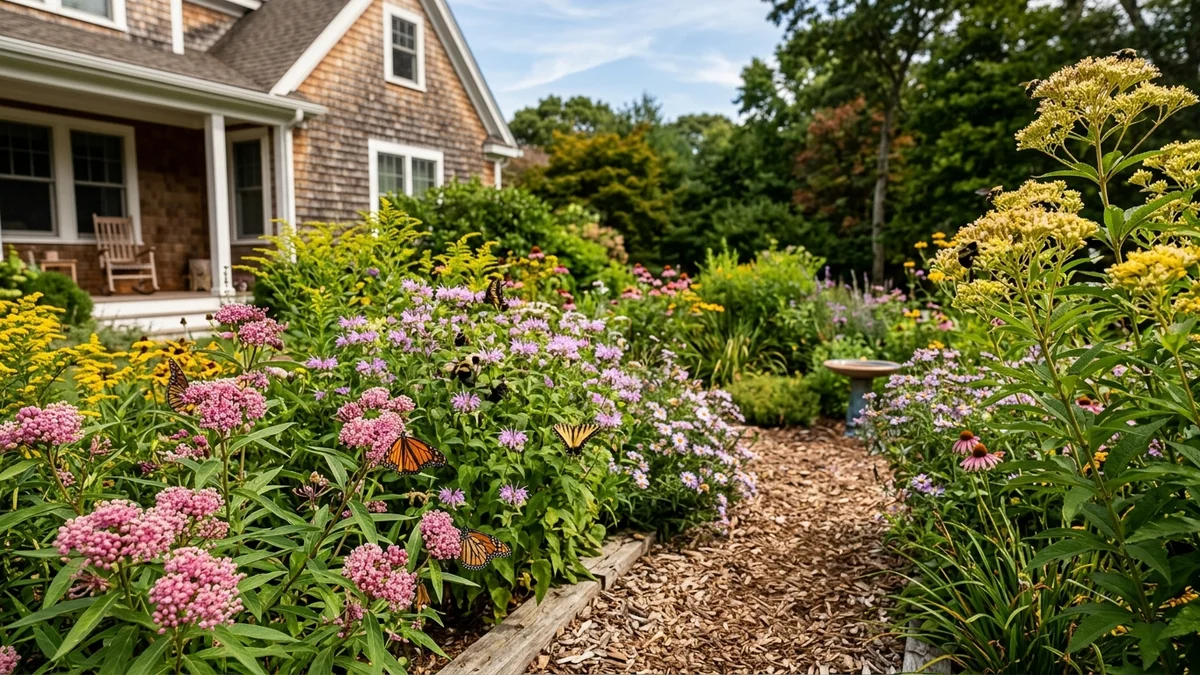
Plant Palette: Swamp Milkweed (Asclepias incarnata) for monarch larvae, Dense Blazing Star (Liatris spicata) for swallowtails, Wild Bergamot (Monarda fistulosa) for bumblebees, Golden Alexander (Zizia aurea) for black swallowtail caterpillars, and Highbush Blueberry (Vaccinium corymbosum) for spring pollination and autumn berries.
The Woodland Understory & Shade Haven
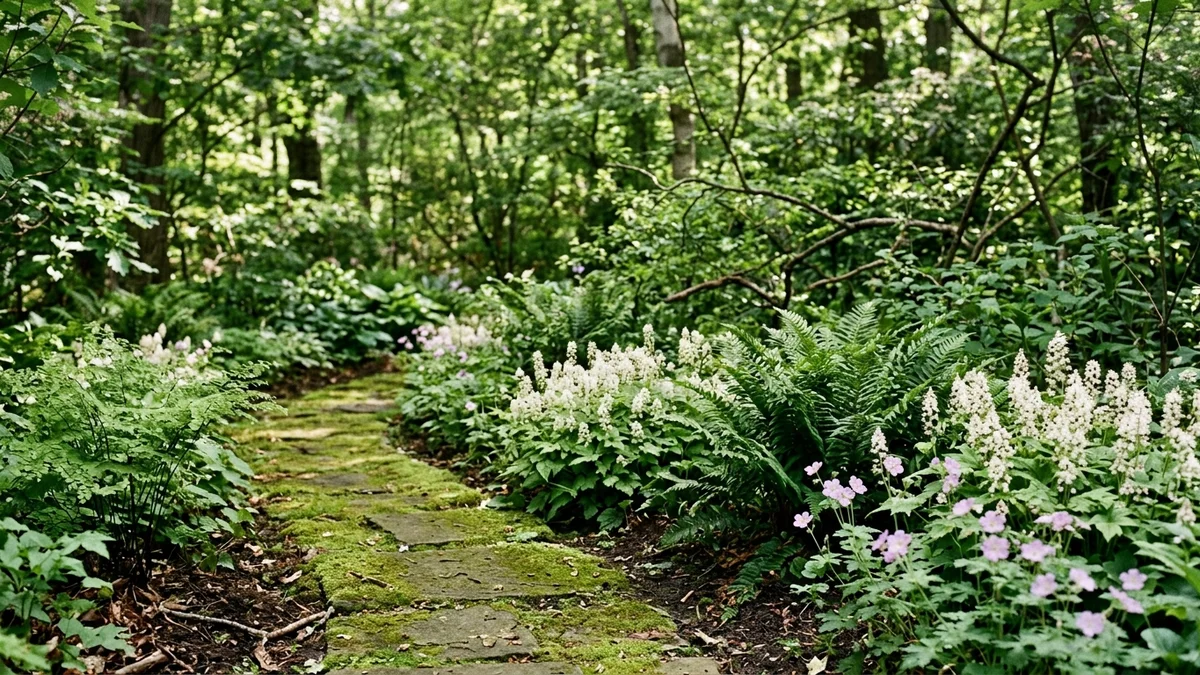
Plant Palette: Pagoda Dogwood (Cornus alternifolia) or Serviceberry (Amelanchier) for graceful horizontal branching; Cinnamon Fern (Osmundastrum cinnamomeum) or Western Sword Fern; Wild Columbine (Aquilegia canadensis); Foamflower (Tiarella cordifolia); and Plantain-Leaf Sedge (Carex plantaginea). Leaves are allowed to decompose naturally to feed tree mycorrhizae.
The Residential Rain Garden / Bioswale
Design Concept: A shallow depression that intercepts roof downspout or driveway runoff, allowing water to infiltrate within 24 to 48 hours. Uses plants that thrive with both periodic flooding and temporary dry periods.
Debunking 5 Common Myths About Native Landscaping
Myth 1: "Native plants never need watering."
Reality: All newly planted container stock requires deep weekly watering during their first 1 to 2 growing seasons while developing extensive root networks. Only once established can upland native plants thrive primarily on natural precipitation.
Myth 2: "Native gardens look dead and ugly in the winter."
Reality: When designed intentionally, native gardens feature striking winter silhouettes: architectural black coneflower seedheads, golden native grass plumes catching morning frost, rich exfoliating birch bark, and vivid scarlet winterberries.
Myth 3: "Goldenrod causes severe fall hay fever allergies."
Reality: Goldenrod (Solidago) has heavy, sticky pollen that can only be transported by insects, not the wind. The actual cause of fall hay fever is wind-pollinated Ragweed (Ambrosia), which blooms at the exact same time with inconspicuous greenish flowers.
Myth 4: "Native yards harbor disease-carrying ticks and mosquitoes."
Reality: Mosquitoes cannot breed in native gardens without standing water lasting 7+ days; native rain gardens infiltrate within 24 to 48 hours. Ticks flourish primarily in dense non-native shrub thickets like Japanese Barberry (which creates high humidity). Wide sunny native borders with mowed path setbacks actually discourage tick questing.
Myth 5: "You must convert your entire property all at once."
Reality: Successful ecological landscaping is almost always phased gradually over 2 to 4 years. Start by converting a single non-functional corner or front walkway border. Learn your plants' behaviors, expand when comfortable, and enjoy the process.
Frequently Asked Questions About Native Plant Landscaping
Answers
Frequently asked questions
01What is native plant landscaping?
Native plant landscaping is an intentional design approach that uses plant species indigenous to your specific ecoregion—plants that co-evolved over millennia with local soils, climate cycles, and wildlife. Unlike leaving a property unmanaged, native landscaping uses professional design principles (such as defined borders, structural layering, and repeating plant drifts) to create a beautiful residential landscape that fuels local food webs and requires fewer chemical inputs.
02Will a native plant yard look messy or trigger HOA complaints?
Not if you design with intentional 'Cues to Care' (a framework established by landscape ecology professor Dr. Joan Nassauer). By incorporating a crisp 3-to-4-foot mowed turf edge or stone border, massing plants in repeating drifts of 3 to 7 rather than random scatter, maintaining height gradation, and adding human elements like stepping stones or an official habitat plaque, native plantings look like high-end curated botanical gardens that satisfy HOA standards.
03Do native plants need watering or maintenance?
Yes. The idea that native plants require 'zero water and zero maintenance' is a widespread myth. All native perennials, shrubs, and trees require regular establishment watering during their first 1 to 2 growing seasons until root systems anchor deeply. While established native plantings need far less supplemental irrigation than traditional turf lawns, they still benefit from seasonal stewardship: late-spring cutbacks, spot-weeding of non-native invaders, and occasional structural pruning.
04What is a keystone native plant?
A keystone native plant belongs to a small group of plant genera that carry a disproportionately huge share of the local ecological food web. Entomologist Dr. Doug Tallamy discovered that just 14% of native plant genera support 90% of butterfly and moth caterpillars. For example, native oaks (Quercus) host over 500 species of caterpillars that songbirds need to feed their nestlings, whereas non-native ornamentals support virtually none.
05What is the difference between a native plant and a 'nativar'?
A straight native species is the wild genetic form that evolved naturally in an ecoregion, providing authentic nectar, pollen, and leaf chemistry. A 'nativar' (native cultivar) is a cultivated variety selected or bred by humans for traits like unusual flower color, dwarf height, or variegated leaves. Research from Mt. Cuba Center and the University of Vermont shows that while compact size nativars often provide good nectar, cultivars with altered leaf color (such as purple or bronze foliage) or double petals frequently provide far less food for native insects.
06Do I have to eliminate all grass from my yard?
No. Sustainable ecological landscaping encourages 'functional turf.' Keep turfgrass in areas where it serves an active human purpose—such as play areas for children and dogs, outdoor dining lawns, and walking paths. The goal is to eliminate 'non-functional turf,' such as awkward side yards, steep erosion-prone slopes, and narrow sidewalk strips where grass serves no recreational purpose and wastes water and mowing labor.
07Are all native plants drought-tolerant?
No. Native status and drought tolerance are two distinct ecological attributes. Plants are native to specific habitats within an ecoregion. Upland glade and prairie natives (like Coneflowers, Little Bluestem, and Butterfly Weed) are drought-adapted, but wetland, bog, or riparian natives (like Cardinal Flower, River Birch, or Winterberry Holly) require consistent soil moisture. You must match plants to your yard's specific soil moisture and light conditions.
08How does native landscaping help control stormwater runoff?
Traditional turfgrass has shallow root systems that penetrate only 2 to 4 inches into compacted soil, causing heavy rainfall to sheet off into storm sewers. In contrast, deep-rooted native perennials and prairie grasses send roots 5 to 15 feet into the subsoil. These extensive root channels act like living sponges, filtering contaminants, loosening compacted clay, and drastically increasing soil water infiltration.
09Will planting natives attract ticks, mosquitoes, or unwanted pests to my house?
No, when designed correctly. Mosquitoes require standing water to breed, not plants; rain gardens designed with native plants drain within 24 to 48 hours, which is too fast for mosquito larvae to mature (which takes 7 to 10 days). Ticks thrive in dense, humid leaf litter and humid invasive shrub thickets (like Japanese Barberry). Keeping sunny native borders, using a 3-foot gravel or mowed strip along walkways and foundation walls, and attracting tick-eating songbirds makes yards safer.
10What is the easiest way to kill grass to start a native bed?
Sheet mulching (lasagna composting) is the most effective, ecologically sound method. Mow the existing turf at the lowest blade setting, soak the soil, cover it with overlapping layers of thick unwaxed cardboard (overlapping 6 to 8 inches), and top it with 3 inches of arborist wood chips or compost. The cardboard smothers the grass and weed seeds over 2 to 3 months, breaks down naturally, and enriches soil microbiology without tilling or herbicides.
Planning a Native Landscape Conversion in Essex County or North Shore Massachusetts?
While this guide provides nationwide ecological planning principles, executing a full lawn-to-native transformation requires heavy grading, sod removal, soil preparation, and sourcing vetted local ecotypes.
If you own a home in Peabody, Danvers, Beverly, Salem, Lynnfield, Marblehead, Topsfield, or surrounding North Shore Massachusetts communities, our team at Peabody Landscapers can help you design and install custom native plantings, bio-retention rain gardens, and low-maintenance residential borders.
Ready to Transform Your Landscape into an Ecological Haven?
Connect with our landscape designers for site evaluations, soil assessments, native plant selections, and residential installation throughout the North Shore.
Get connected with an independent local landscaping professional. Calls go to (877) 537-6896.