20 Xeriscape Ideas for a Beautiful, Water-Wise Yard
Xeriscaping is not a barren gravel lot or a cactus-only desert aesthetic. It is a comprehensive, living landscape design system that cuts outdoor water consumption by 50% to 75% through smart zoning, soil health, and climate-adapted plants.
Direct Answer: What Is Xeriscaping and How Does It Work?
Xeriscaping is a water-wise approach to landscape design that places the right plants in the right water zones, reduces unnecessary high-water turf, improves soil and mulch strategy, and irrigates efficiently. A xeriscape can be lush, colorful, and shaded—not just gravel and cactus. The best design depends on your climate, yard use, sun, soil, available water, and regional plant palette.
The Core Thesis: Xeriscape Is a Design System, Not an Aesthetic
The word Xeriscape was coined in 1981 by Denver Water, combining the Greek word xeros (meaning dry) with landscape. Far from demanding that homeowners pave their property with rock or fill beds exclusively with desert cacti, Denver Water developed xeriscaping as a scientifically backed 7-step water management framework. It applies just as effectively to a colonial home in New England or a suburban ranch in the Midwest as it does to an adobe residence in Arizona.
Living plants, shade trees, and organic mulches are central; rock-only yards create damaging urban heat islands.
New plants require 1 to 2 seasons of establishment watering; efficient irrigation is a core foundation.
Turfgrass is right-sized for play and pets rather than eliminated dogmatically across the entire parcel.
Principles are universal across all 50 states, while plant palettes are strictly tuned to regional USDA hardiness zones.
Xeriscape vs. a Rock-Only Yard ('Zeroscape')
In popular consumer home-improvement searches, the term "zeroscape" is frequently conflated with xeriscape. In reality, "zeroscape" is an informal slang term commonly associated with removing all vegetation, installing landscape fabric, and dumping tons of gravel across the yard.
Horticultural scientists and urban forestry researchers strongly discourage rock-blanket landscaping. Crushed stone and river gravel possess high thermal mass, absorbing intense sunlight and driving surface temperatures up to 140°F or higher. This creates an urban heat island immediately adjacent to your home, driving up summer air conditioning costs, killing beneficial subterranean soil microbes, and baking the lower foliage of foundation shrubs.
Side-by-Side Comparison: Living Xeriscape vs. Rock-Only Yard
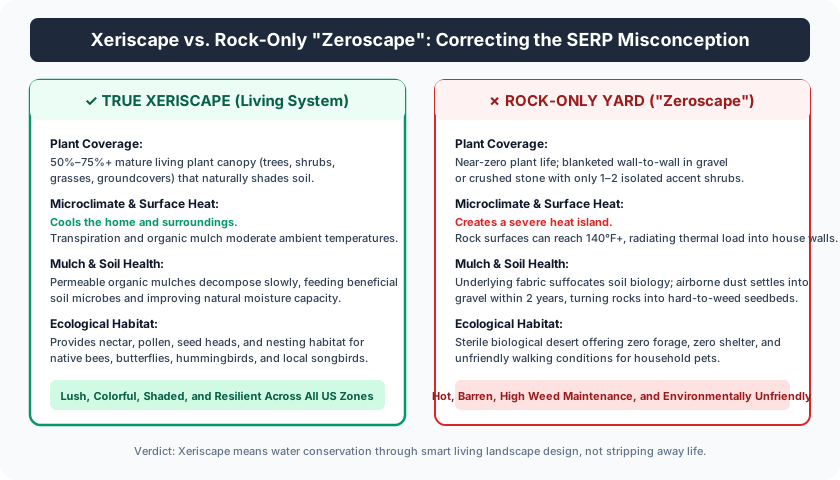
Source: Denver Water Xeriscape Principles & Colorado State University Department of Horticulture.
The 7 Principles of Xeriscape Design
Rather than prescribing specific plant species, Denver Water established seven comprehensive landscape planning principles. Successful water-wise landscapes follow this exact hierarchy:
The 7 Core Xeriscape Principles Architecture
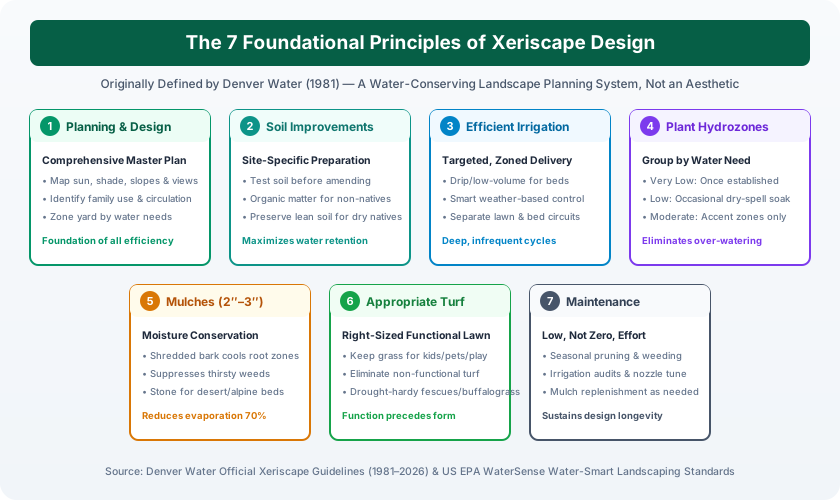
Official Reference: Denver Water Xeriscape Principles (1981–2026) & EPA WaterSense Guidelines.
Hydrozoning: Grouping Plants by Water Needs
The single most common mistake in residential landscaping is scattering plants randomly based on bloom color without regard for water requirements. When a thirsty plant is placed beside a drought-adapted native shrub, either the thirsty plant withers from underwatering, or the native shrub rots from excess soil moisture.
Hydrozoning solves this by dividing the property into distinct irrigation zones:
- Zone 1 (Very Low Water): Outlying property borders, parking strips, and sunny perimeter slopes planted with deeply rooted native trees, shrubs, and ornamental bunchgrasses that survive on natural rainfall alone once established.
- Zone 2 (Low Water): Foundation beds, walkway borders, and flowering perennial borders that thrive on occasional deep soakings during extended summer heatwaves (saving 50% to 70% water vs. turf).
- Zone 3 (Moderate Water Accent): High-traffic entry stoops, patio container pots, or culinary herb boxes confined to less than 10% of the total yard area, irrigated with targeted micro-drip emitters.
- Functional Turf Zone: A right-sized geometric lawn island for children and pets, irrigated on its own dedicated sprinkler valve so runoff never drowns adjacent perennial beds.
Schematic Residential Hydrozone Mapping
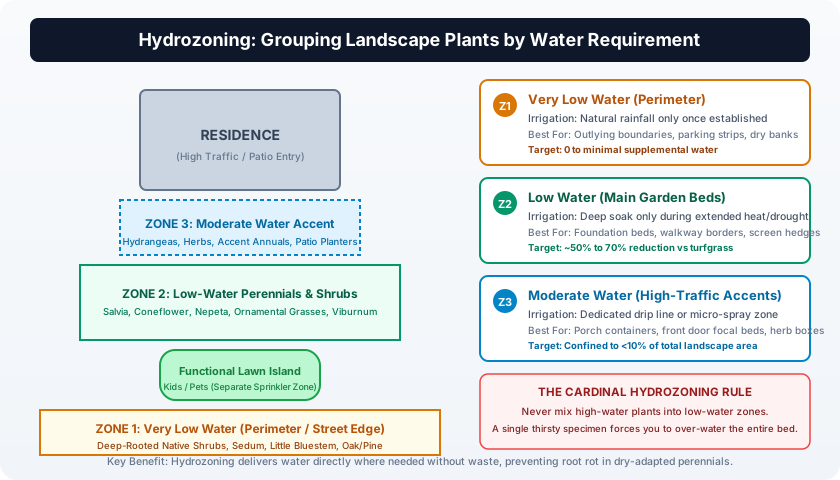
Source: EPA Water-Smart Landscaping & University Extension Irrigation Best Practices.
20 Xeriscape Ideas for Your Yard
Explore All 20 Xeriscape Design Ideas
Filter by yard zone, water strategy, aesthetic style, maintenance tolerance, or small-space suitability.
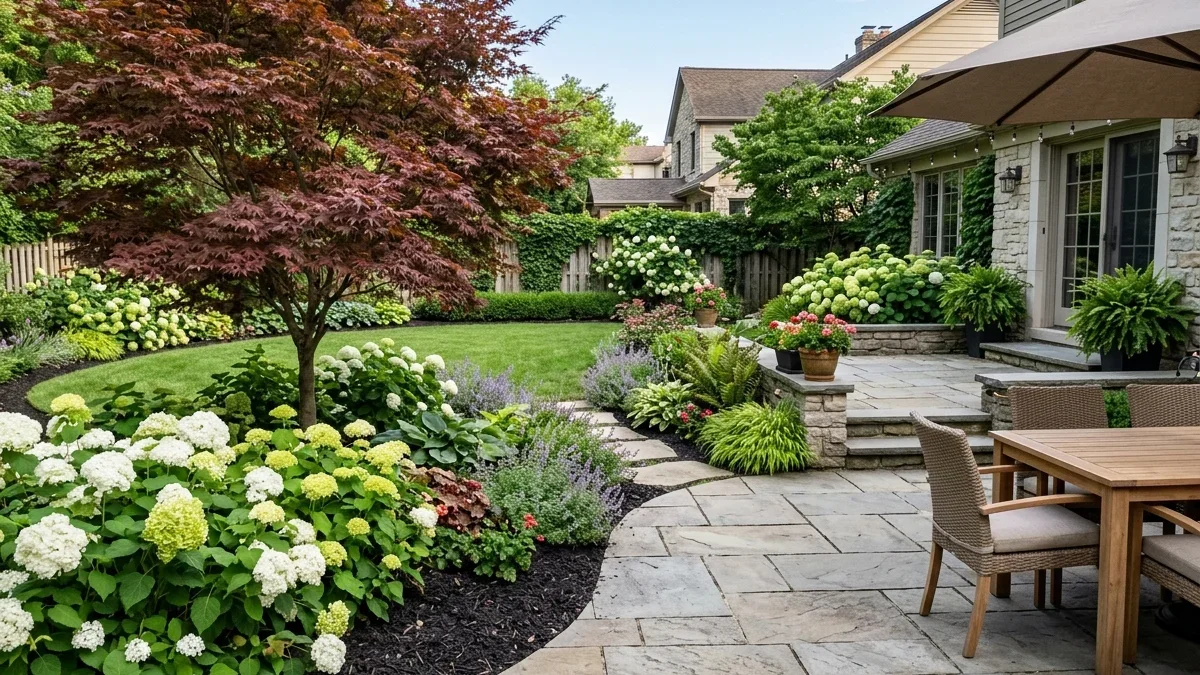
1. Water-Wise Front Entry with Layered Structure
Creates a welcoming, polished arrival sequence combining compact drought-adapted shrubs, repeated perennial drifts, low-growing groundcovers, and an unblocked permeable walkway that keeps the front door in full view.
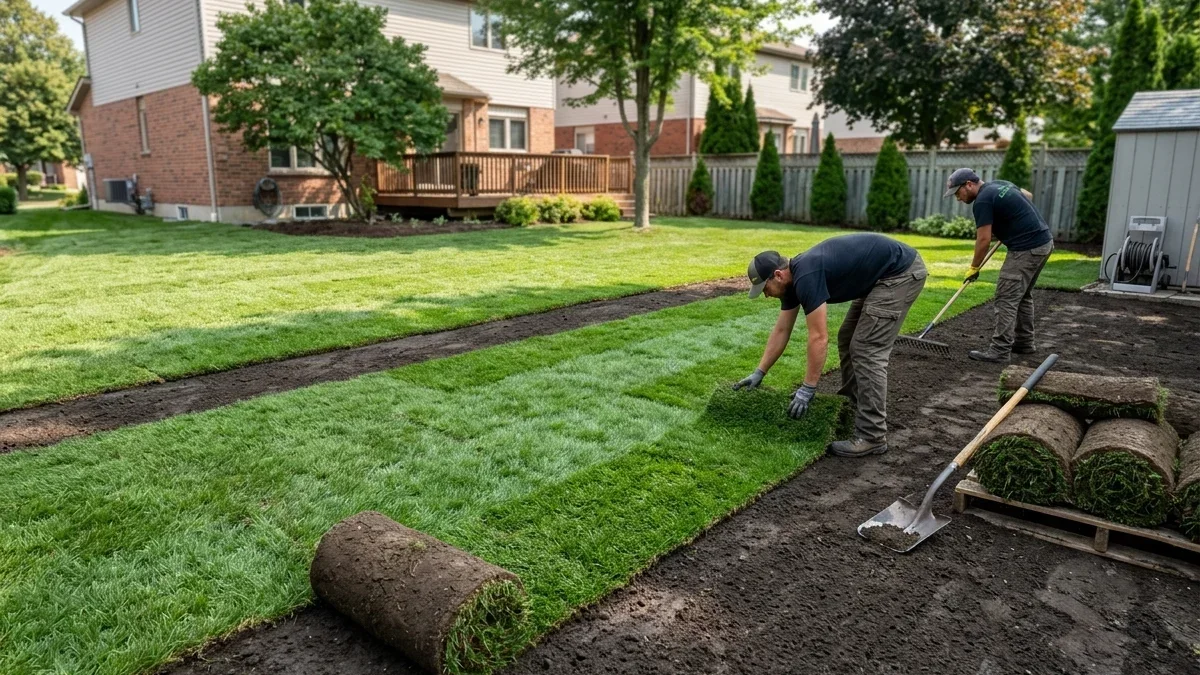
2. Reduce the Lawn, Don't Automatically Remove All of It
Retains a compact, right-sized functional turf circle or oval for recreation and pets, while converting neglected perimeter grass into high-efficiency water-wise planting beds and organic mulch zones.
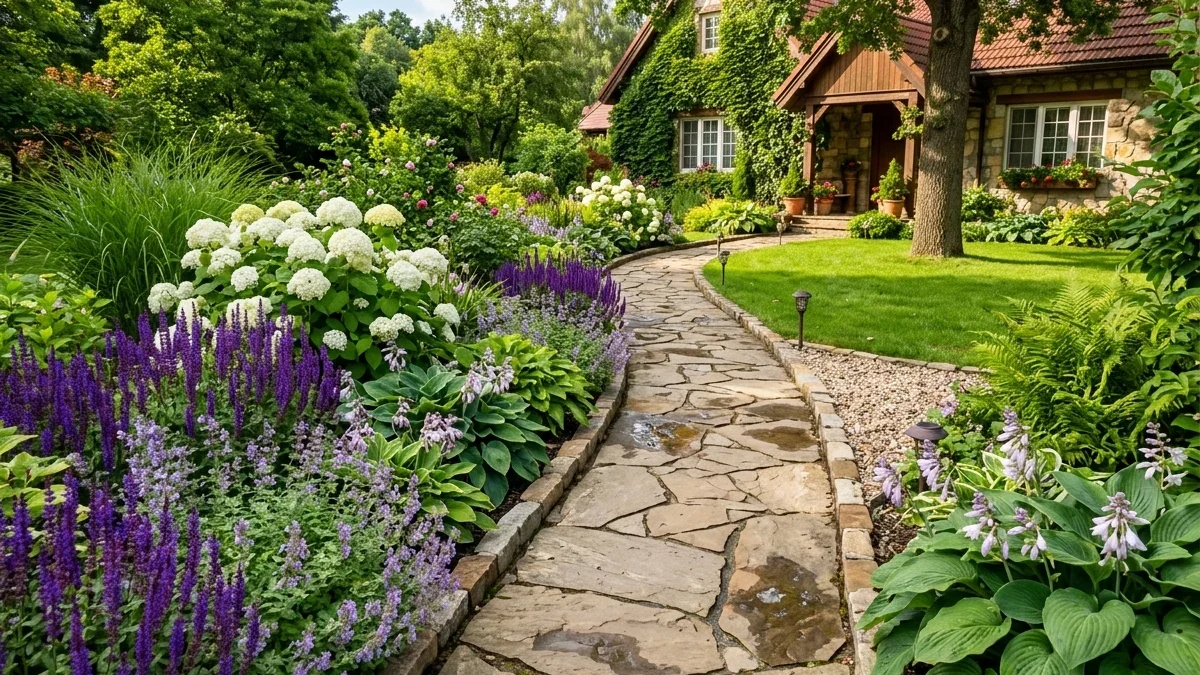
3. Create Hydrozone Planting Beds
Groups landscape specimens strictly by their botanical water requirements into Very Low, Low, and Moderate moisture zones, ensuring every plant gets what it needs without over- or under-watering neighboring species.
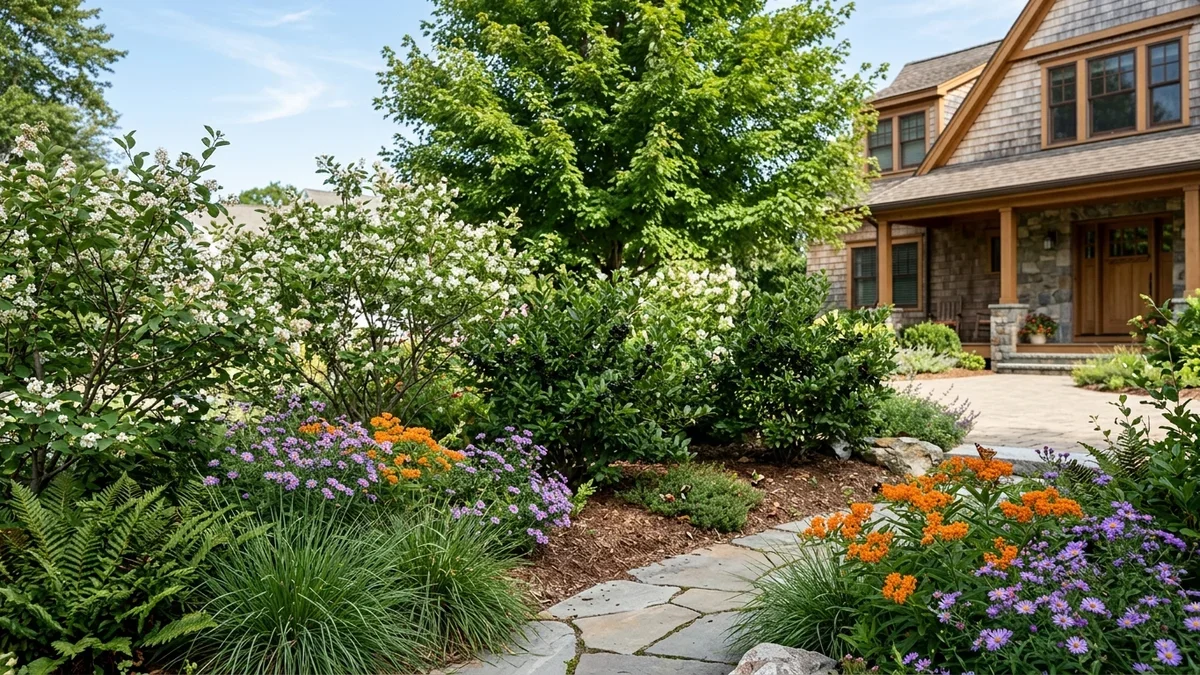
4. Use Regionally Native Plant Masses
Deploys rhythmic mass plantings of 5 to 9 specimens of regionally indigenous shrubs, grasses, and wildflowers that have evolved to thrive naturally in your state's rainfall patterns and soil chemistry.
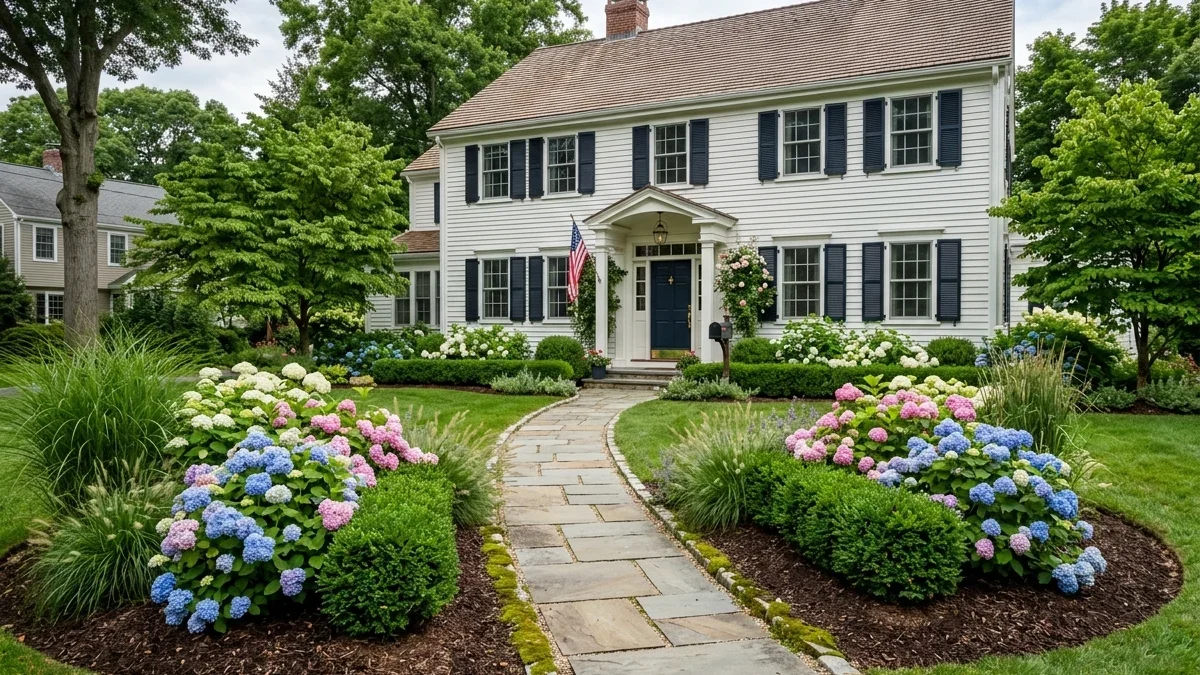
5. Build a Modern Xeriscape with Clean Geometry
Combines rectilinear bed lines, contrasting organic bark and river stone bands, architectural succulents or grass plumes, and minimalist paver paths into a high-end contemporary landscape.
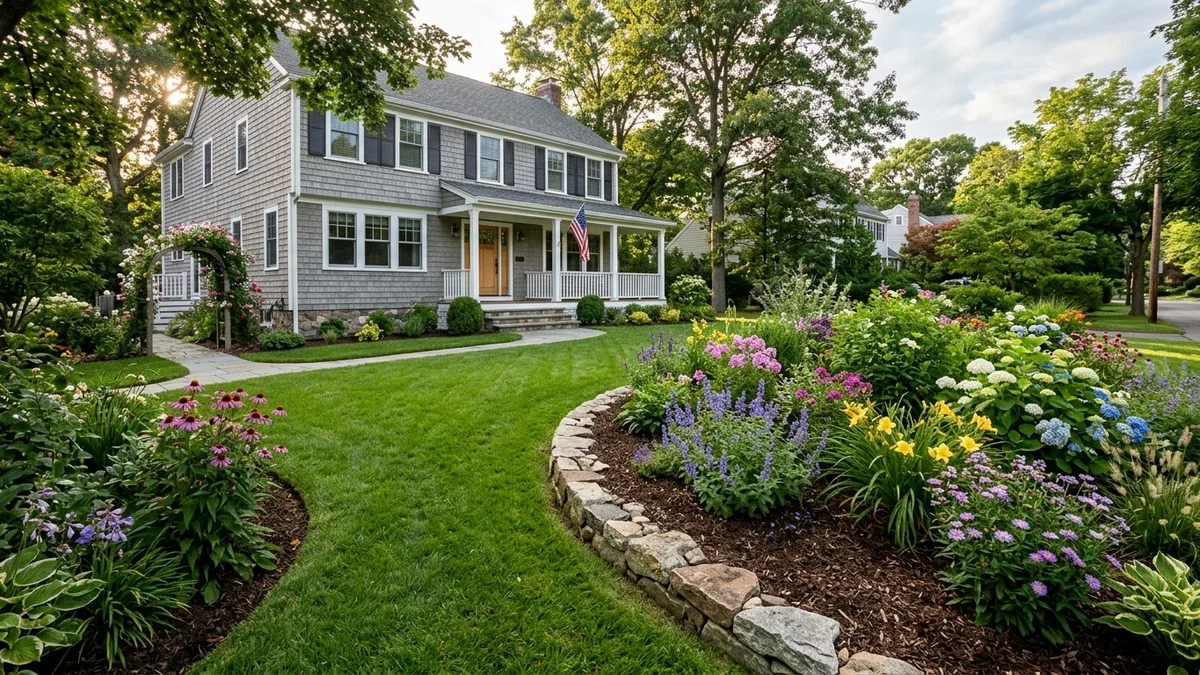
6. Create a Colorful Pollinator Xeriscape
Features an intentional sequence of water-wise flowering perennials, nectar-rich shrubs, and host species that provide continuous blooms and forage for native bees and butterflies from spring through frost.
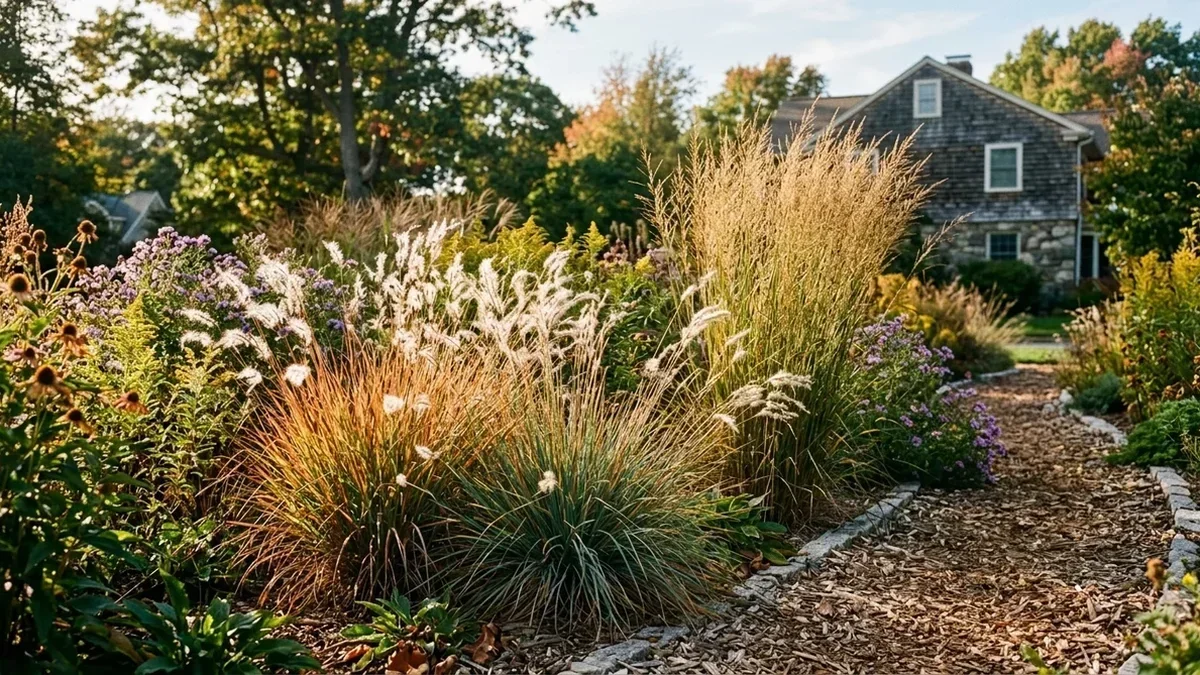
7. Use Ornamental Grasses & Grass-Like Plants
Utilizes deep-rooted, drought-tolerant bunchgrasses and sedges to add dynamic wind movement, tactile texture, soft golden autumn hues, and persistent winter structural interest to water-conserving beds.
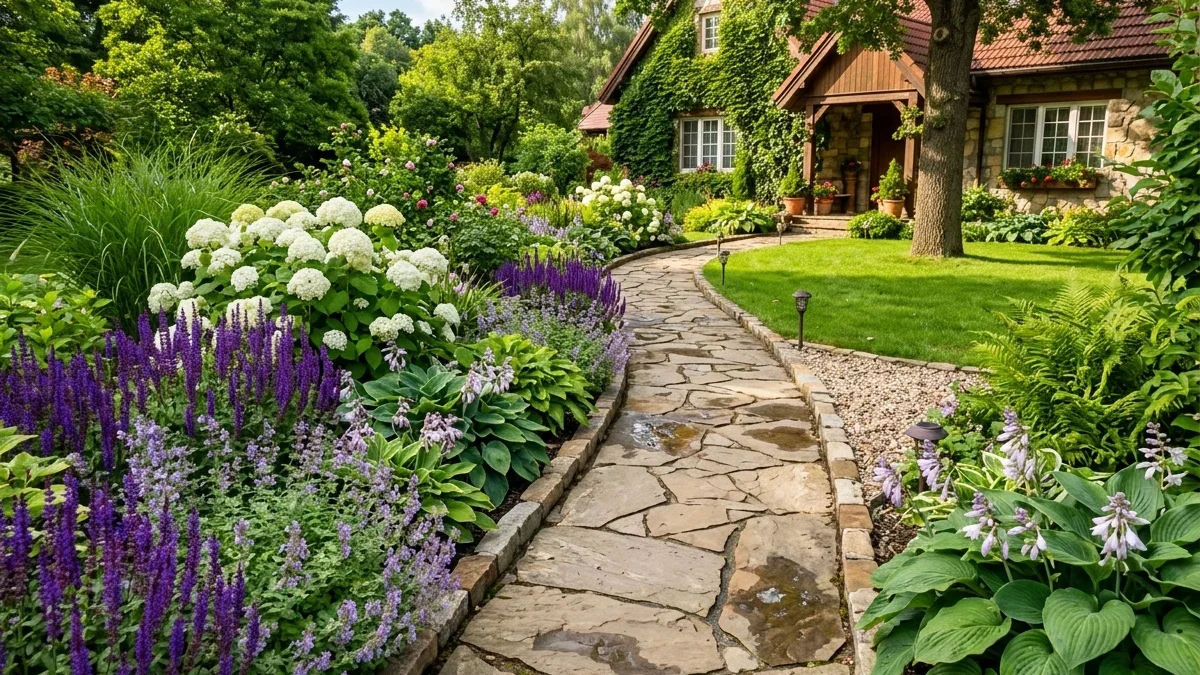
8. Create a Xeric Groundcover Layer ('Living Mulch')
Replaces vulnerable bare soil and thirsty turfgrass with a dense, spreading carpet of low-water groundcovers like creeping thyme, sedum, manzanita, or bearberry that shades the earth and locks in moisture.
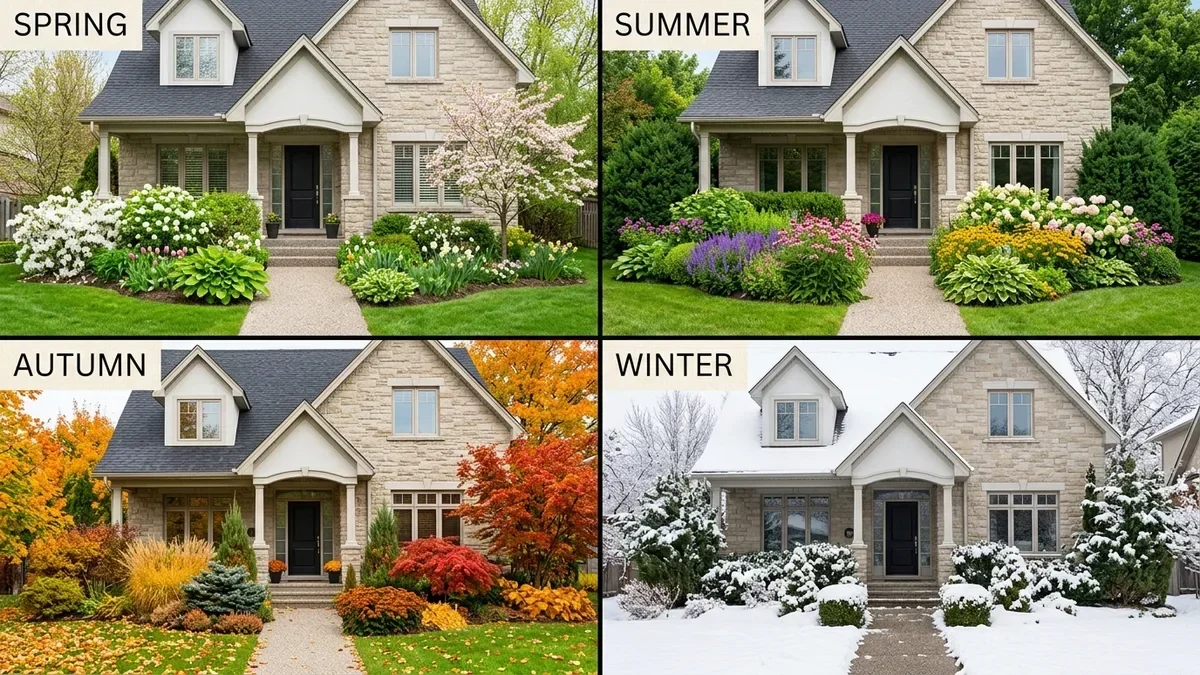
9. Add Drought-Adapted Shrub Structure
Anchors the yard with multi-stemmed, climate-adapted woody shrubs that provide permanent perimeter screening, winter silhouettes, bird nesting structure, and year-round architectural mass.
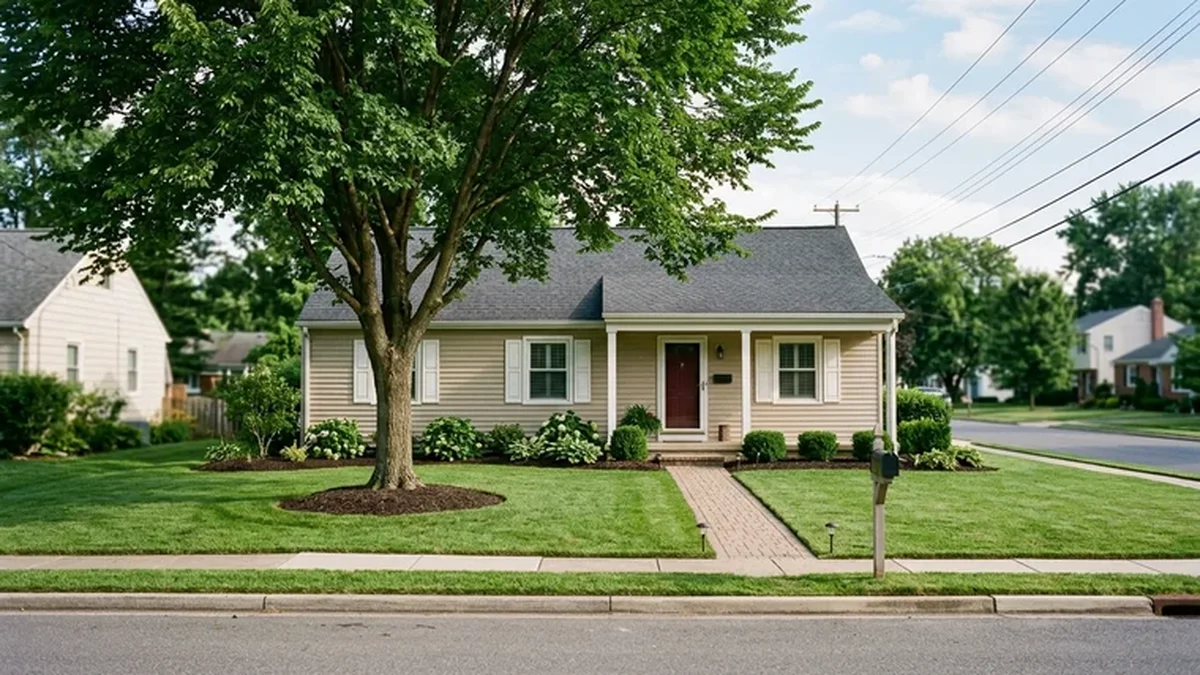
10. Add a Small Water-Wise Shade Tree
Integrates a well-selected, climate-appropriate shade or flowering specimen tree to cast cooling canopy shade over south- or west-facing hardscape and garden beds, dramatically reducing soil evaporation.
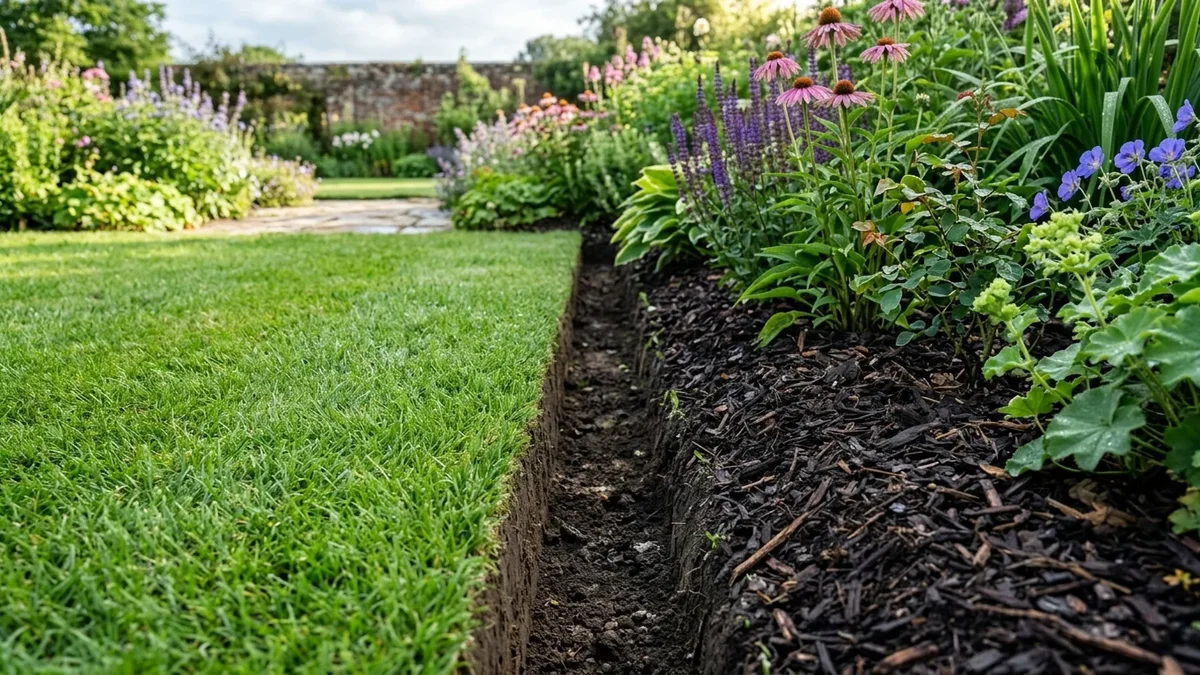
11. Create a Mulch-First Planted Garden
Applies a uniform 2- to 3-inch layer of coarse, shredded organic bark or wood chips around grouped perennial masses to insulate soil, suppress moisture-stealing weeds, and slash surface evaporation by up to 70%.
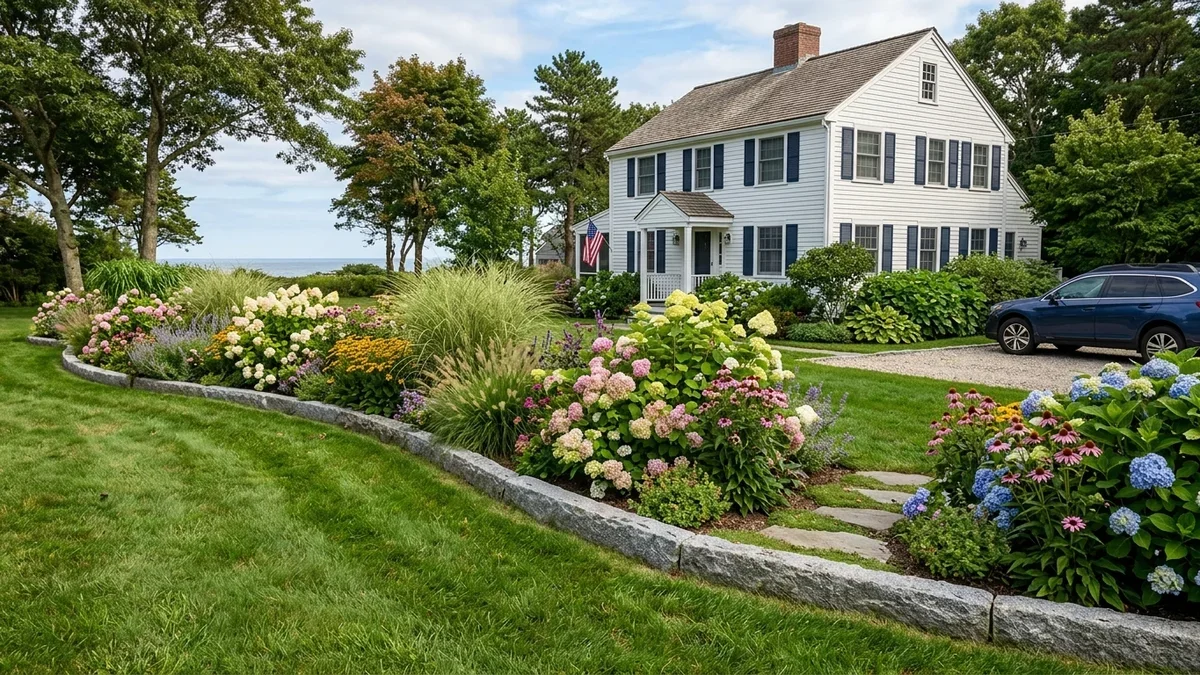
12. Use Rocks as Accents, Not as the Whole Landscape
Positions sculptural natural boulders, granite fieldstone clusters, and dry river wash cobble selectively as geological accents nestled within lush living plants, rather than blanketing the entire yard in gravel.
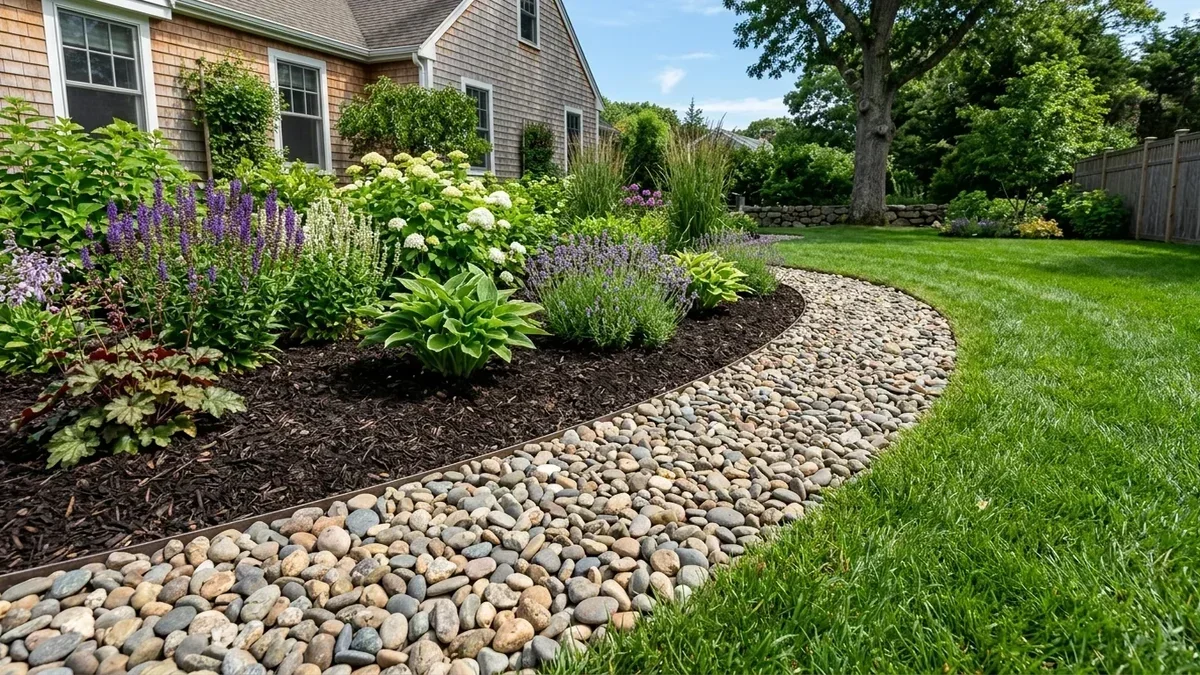
13. Design a Water-Wise Driveway Border
Transforms hot, heat-baked strips flanking asphalt or concrete driveways into resilient ribbons of heat-tolerant shrubs, ornamental grasses, and low-growing groundcovers that withstand vehicle exhaust and tire heat.
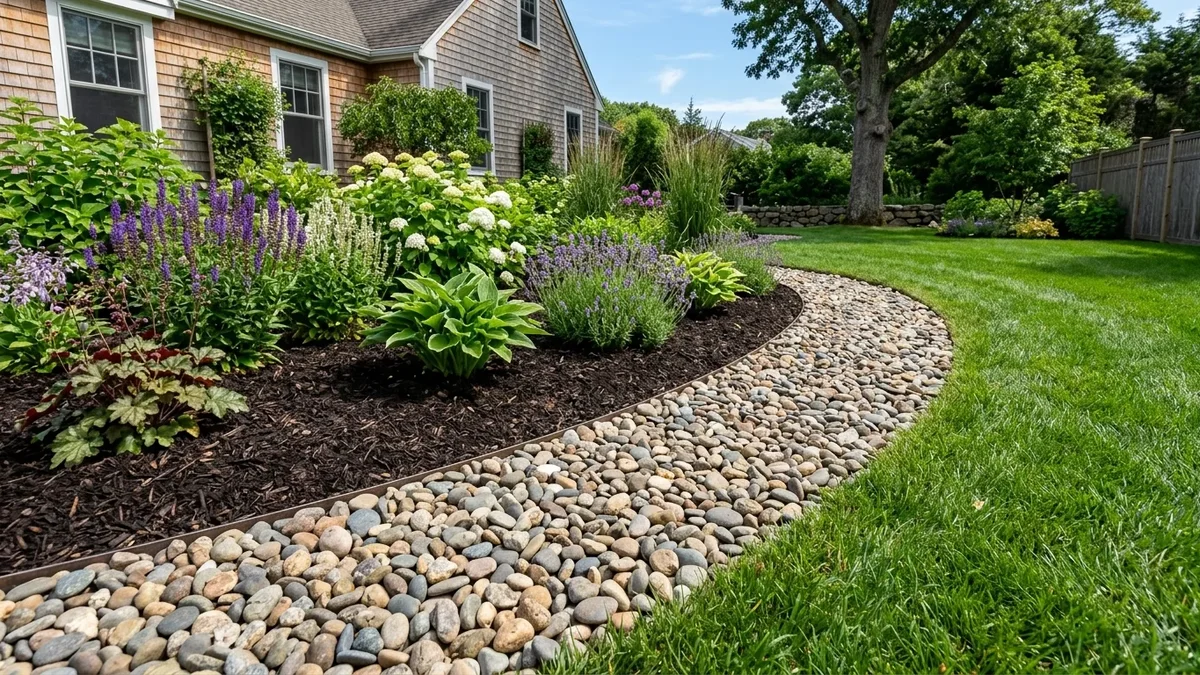
14. Transform a Curb / Parking Strip (Hellstrip)
Replaces unmanageable, oversprayed curb strips between the sidewalk and street with tough, salt-hardy, drought-resistant perennials, step-over groundcovers, and a clean stone access landing for car passengers.
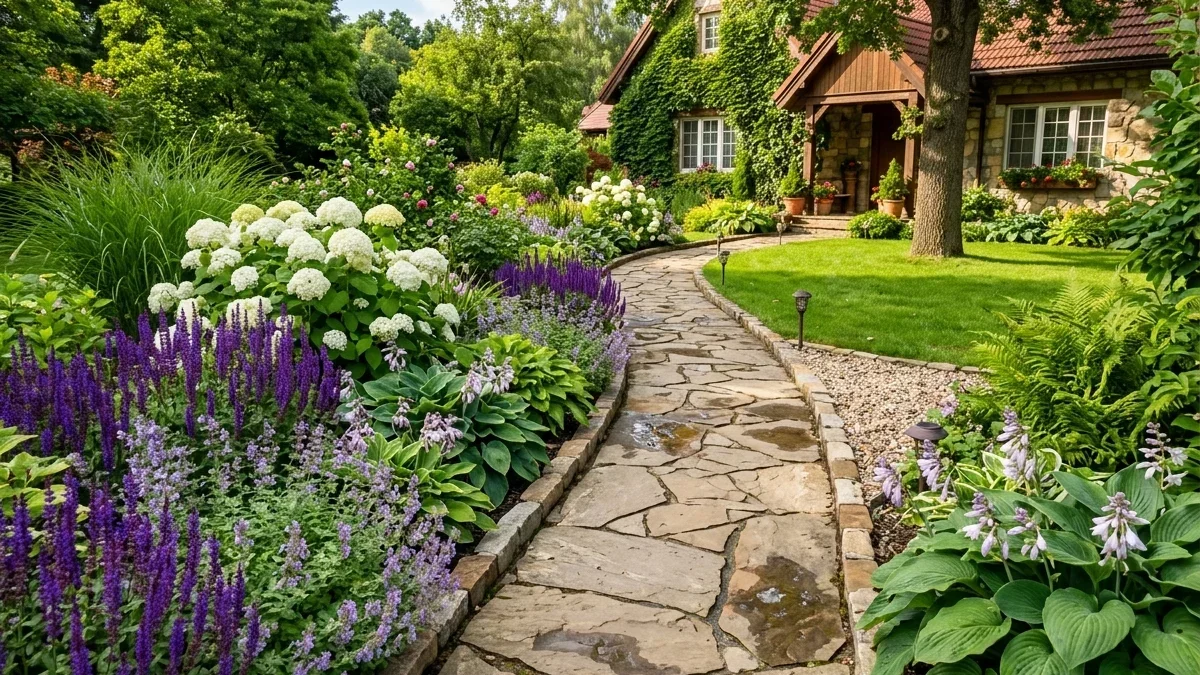
15. Create a Dry-Shade Xeriscape Beneath Trees
Employs shade-tolerant, root-competitive ferns, barrenworts, native wild ginger, hostas, and shade sedges to clothe bare, water-deprived ground beneath mature tree canopies where turfgrass chronically fails.
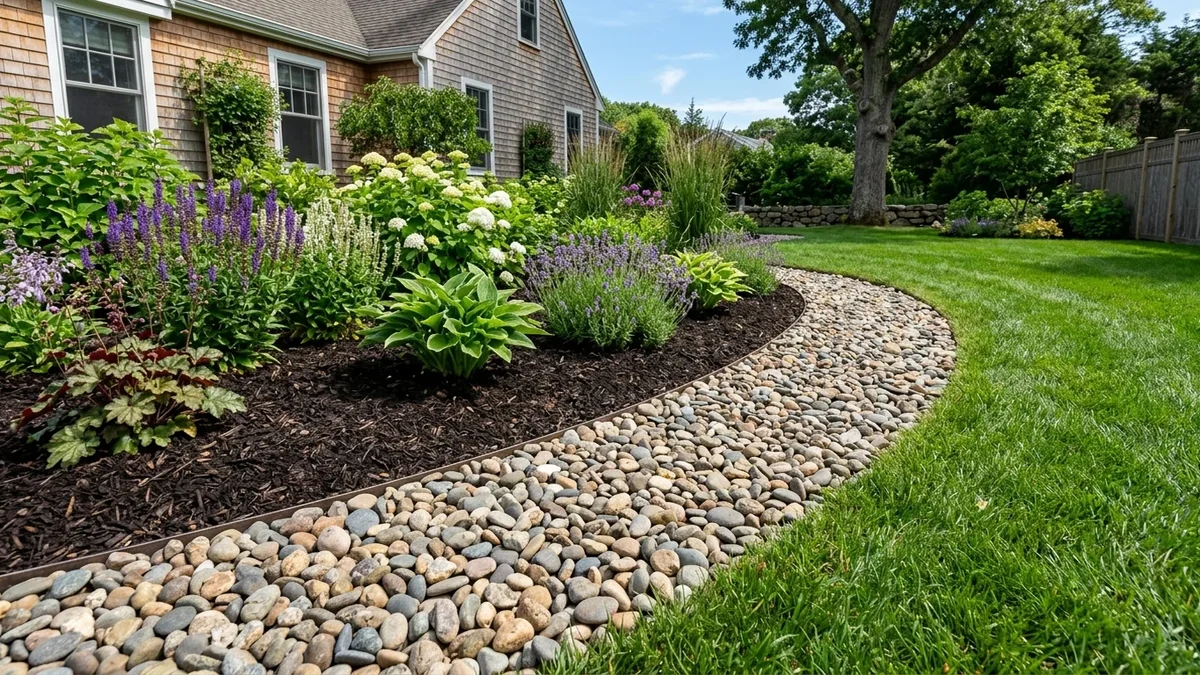
16. Build a Small-Yard Xeriscape with Tight Spacing
Maximizes compact urban townhome or cottage backyards by restricting the plant palette to 4 to 5 disciplined species, utilizing vertical screening, and creating a single high-impact gravel or paver seating courtyard.
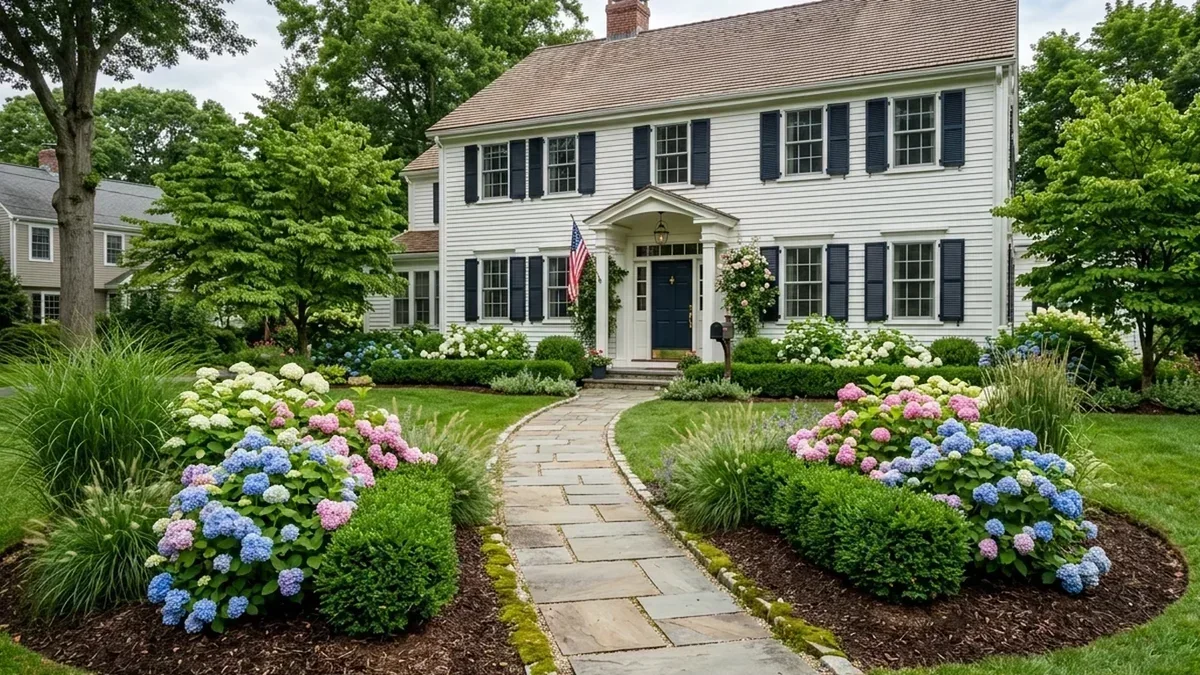
17. Create a Cottage-Style Xeriscape with Dense Layering
Achieves an informal, romantic, abundant cottage-garden aesthetic using drought-hardy old-fashioned perennials like Russian sage, catmint, coneflowers, yarrow, and shrub roses that look lush while needing minimal water.
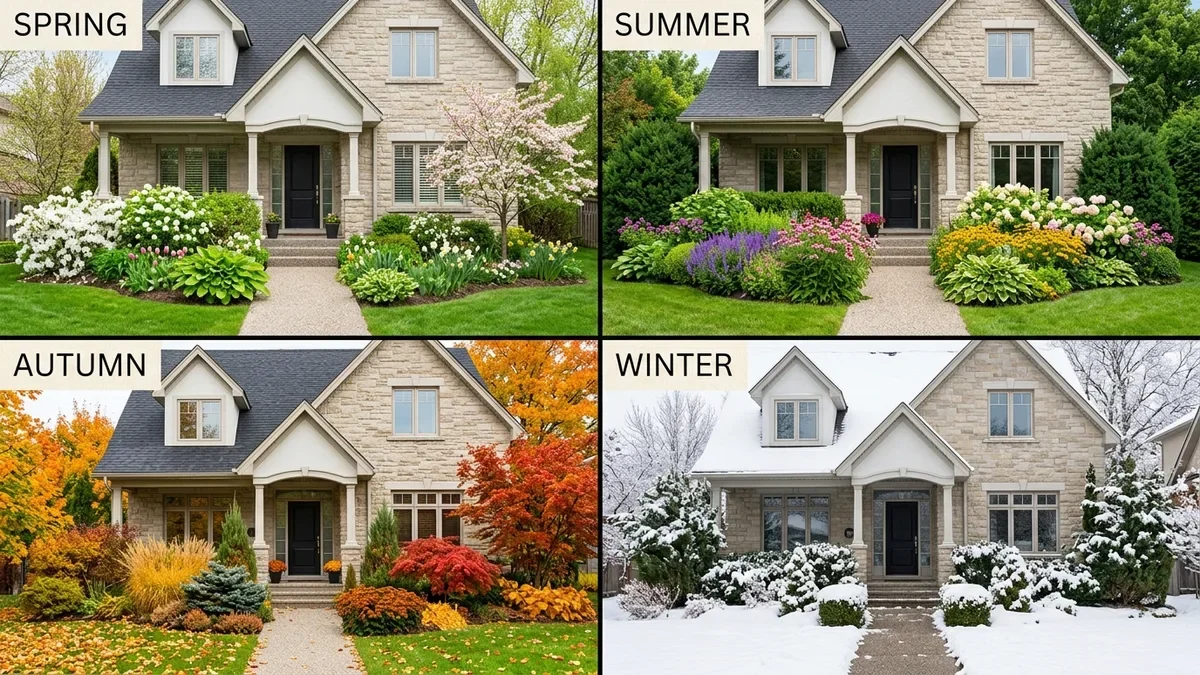
18. Create a Four-Season Xeriscape with Winter Structure
Plans for 365-day beauty by orchestrating spring flowering bulbs, summer pollinator blooms, warm autumn grass seedheads, and evergreen coniferous architecture with colorful winter bark and berries.
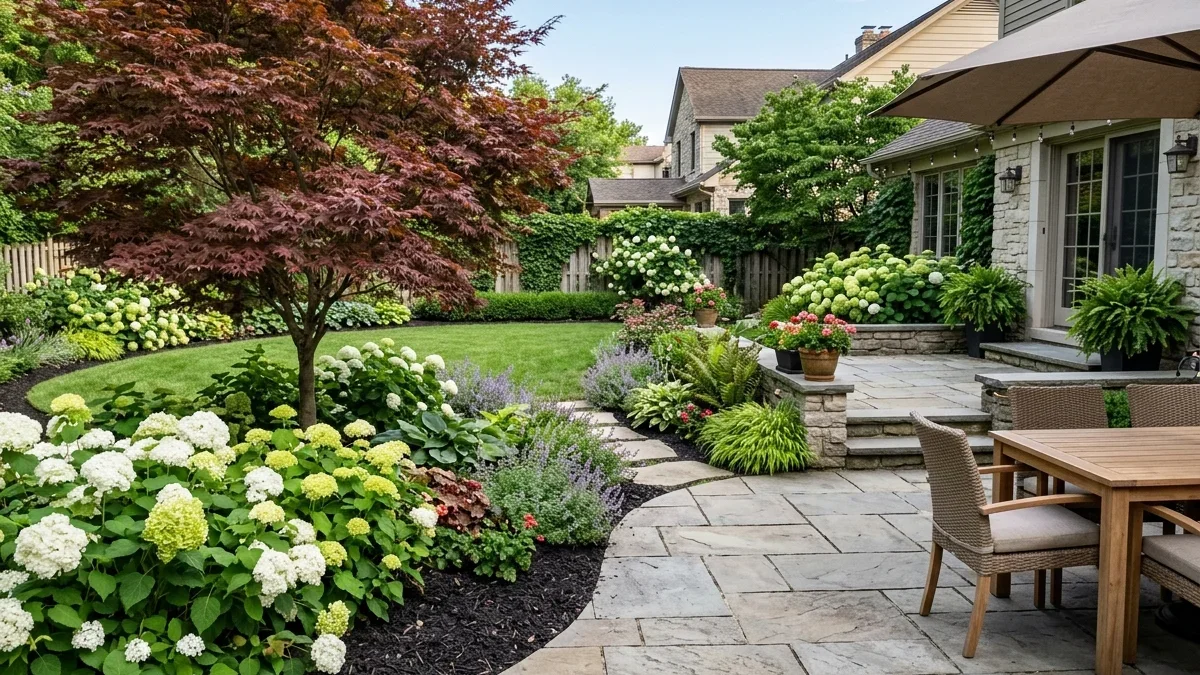
19. Create a Xeriscape Around a Patio or Seating Area
Frames outdoor paver patios, dining spaces, and fire pits with fragrant, low-water herbs and perennials (lavender, thyme, salvia, alliums) that release soothing aromas when brushed by outdoor guests.
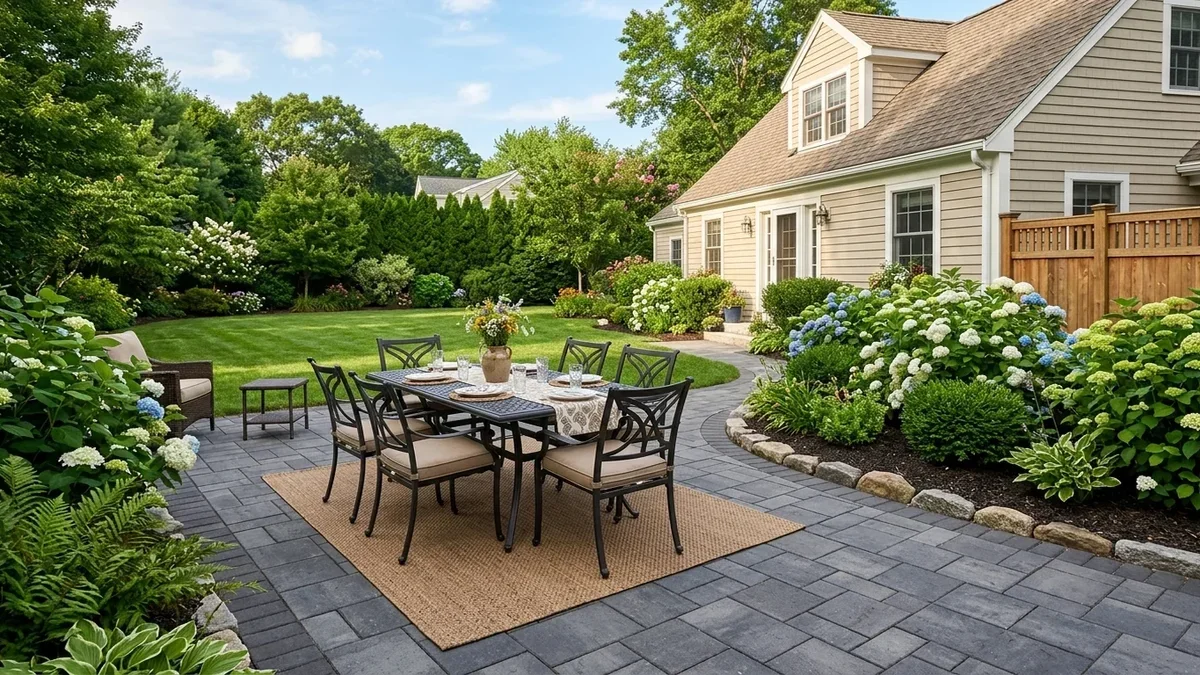
20. Design a Functional, Coherent Xeriscape Backyard
Unifies the entire backyard into a harmonious living environment combining an outdoor gathering patio, a compact functional lawn patch, deep perimeter pollinator beds, shade trees, and permeable connecting pathways.
Quick Comparison: All 20 Xeriscape Ideas
| # | Idea Concept | Best For | Water Strategy | Maintenance | Small Yard? | Visual Style |
|---|---|---|---|---|---|---|
| 01 | Water-Wise Front Entry with Layered Structure | Front entryways and street-facing yards needing instant curb appeal without high irrigation demands. | Low Water | Low | Yes | Architectural |
| 02 | Reduce the Lawn, Don't Automatically Remove All of It | Families with young children or active dogs who need usable turfgrass but want to cut landscape water bills significantly. | Mixed Water Zones | Moderate | Yes | Four-Season |
| 03 | Create Hydrozone Planting Beds | Mixed residential properties with diverse site conditions, varying slopes, and distinct microclimates across sun and shade. | Mixed Water Zones | Low | Yes | Architectural |
| 04 | Use Regionally Native Plant Masses | Ecologically conscious homeowners seeking maximum drought resilience, lower fertilizer needs, and local pollinator habitat. | Very Low Water | Low | Yes | Naturalistic |
| 05 | Build a Modern Xeriscape with Clean Geometry | Contemporary homes, mid-century ranches, and new builds where clean sightlines and architectural simplicity are paramount. | Low Water | Low | Yes | Modern |
| 06 | Create a Colorful Pollinator Xeriscape | Sunny front borders, south-facing slopes, and garden beds where homeowners want vibrant floral color without heavy watering. | Low Water | Low | Yes | Naturalistic |
| 07 | Use Ornamental Grasses & Grass-Like Plants | Borders, wind-exposed slopes, modern massings, and transitional zones between hardscaping and garden beds. | Very Low Water | Low | Yes | Four-Season |
| 08 | Create a Xeric Groundcover Layer ('Living Mulch') | Steep slopes, sunny walkways, rock garden pockets, and wide planting beds where mowing is dangerous or impractical. | Very Low Water | Low | Yes | Naturalistic |
| 09 | Add Drought-Adapted Shrub Structure | Property boundaries, foundation plantings, and street screening where year-round visual density is needed without heavy irrigation. | Low Water | Low | No | Architectural |
| 10 | Add a Small Water-Wise Shade Tree | Residential yards suffering from intense summer thermal load, sun-scorched patios, and unshaded lawn areas. | Low Water | Low | Yes | Four-Season |
| 11 | Create a Mulch-First Planted Garden | Broad garden beds, shrub borders, foundation foundations, and newly installed xeriscape plantings transitioning from turf. | Low Water | Low | Yes | Naturalistic |
| 12 | Use Rocks as Accents, Not as the Whole Landscape | Sloped gardens, drainage swales, corners of patios, and front yard focal beds where natural topography and stone texture add character. | Very Low Water | Low | Yes | Naturalistic |
| 13 | Design a Water-Wise Driveway Border | Driveway margins, vehicle turnarounds, and garage side strips where lawn constantly browns out and suffers heat scorch. | Very Low Water | Low | Yes | Architectural |
| 14 | Transform a Curb / Parking Strip (Hellstrip) | Urban and suburban streetscapes with awkward, narrow turf strips that sprinkler heads wastefully overspray into the street gutter. | Very Low Water | Low | Yes | Modern |
| 15 | Create a Dry-Shade Xeriscape Beneath Trees | Underneath mature maple, oak, or pine canopies and along north-facing foundation walls where shade and root competition combine. | Low Water | Low | Yes | Naturalistic |
| 16 | Build a Small-Yard Xeriscape with Tight Spacing | Small urban lots, townhomes, courtyard gardens, and narrow side yards where space is limited and clutter must be avoided. | Low Water | Low | Yes | Modern |
| 17 | Create a Cottage-Style Xeriscape with Dense Layering | Historic properties, Cape Cod homes, craftsman bungalows, and homeowners who dislike minimalist desert or modern architectural aesthetics. | Low Water | Moderate | Yes | Cottage |
| 18 | Create a Four-Season Xeriscape with Winter Structure | Northern and continental climates with cold, snowy winters where brown summer-only xeriscapes look desolate for 5 months of the year. | Low Water | Low | Yes | Four-Season |
| 19 | Create a Xeriscape Around a Patio or Seating Area | Backyard living zones, outdoor entertaining spaces, and perimeter seating areas where homeowners spend relaxed leisure time. | Low Water | Low | Yes | Architectural |
| 20 | Design a Functional, Coherent Xeriscape Backyard | Complete whole-yard backyard transformations seeking balance between family utility, pet recreation, entertaining, and dramatic water reduction. | Mixed Water Zones | Moderate | No | Four-Season |
Xeriscape Ideas by US Region
One of the most damaging mistakes in residential xeriscaping is attempting to replicate a desert southwest cactus aesthetic in humid or snowy regions. A xeriscape in Massachusetts should reflect New England coastal barrens and oak savannas; a xeriscape in Georgia must withstand torrential subtropical downpours and red clay; while a California xeriscape must endure 6 months of rainless Mediterranean summer.
| Region & Zones | Climate Reality | Core Xeriscape Strategy | Plant Selection Principle | Critical Watch-Out | Authoritative Source |
|---|---|---|---|---|---|
Northeast & New England USDA Zones 4–7 | Humid continental climate with freezing winters, heavy spring rainfall, and periodic severe mid-summer droughts on rocky/sandy soils. | Focus on storm drainage infiltration and drought-hardy native woodland and meadow species that tolerate both freeze-thaw cycles and dry July–August spells. | Select cold-hardy, moisture-tolerant perennials and shrubs that do not demand supplemental summer irrigation once established (e.g. Bearberry, Little Bluestem, Inkberry, Eastern Redbud). | Do not plant rot-susceptible desert cacti, agaves, or humidity-intolerant Mediterranean gray-leafed shrubs that suffer fungal decay in damp New England winters. | UMass Amherst Center for Agriculture, Food and the Environment & Native Plant Trust |
Mid-Atlantic USDA Zones 6–8 | Four distinct seasons with hot, humid summers, moderate winters, and sudden 4- to 6-week summer rain deficits. | Layer native prairie perennials, deciduous shade trees, and deep organic hardwood mulch to keep root zones cool while buffering heavy summer storms. | Favor species native to eastern shale barrens and upland meadows (e.g. Purple Coneflower, Black-Eyed Susan, Switchgrass, Virginia Sweetspire). | Avoid planting in poorly draining heavy clay subsoils without core aeration or selecting rot-prone dry-desert specimens. | Penn State Extension & University of Maryland Extension Home and Garden Information Center |
Southeast & Piedmont USDA Zones 7–9 | High summer heat, intense humidity, torrential downpours punctuated by rapid drying cycles on dense red clay soils. | Emphasize elevated planting beds for sharp drainage, organic pine straw mulches, and drought-hardy native shrubs adapted to southern heat. | Choose humidity-tolerant, heat-adapted natives (e.g. Oakleaf Hydrangea, Southern Wax Myrtle, Muhly Grass, Amsonia hubrichtii). | Mediterranean species (lavender, sage) often succumb to root rot from combination of wet clay and intense humidity; sharp drainage is mandatory. | NC State Extension Gardener & University of Georgia Cooperative Extension |
Florida & Coastal Gulf USDA Zones 9–11 | Subtropical climate with distinct dry winter/spring season followed by intense summer rainy/hurricane season on porous sandy soils. | Utilize Florida-Friendly Landscaping™ principles, grouping deep-rooted native coastal species that withstand both sandy droughts and seasonal saturation. | Select salt-tolerant, wind-resilient coastal natives (e.g. Coontie, Saw Palmetto, Muhly Grass, Blanket Flower, Simpson's Stopper). | Standard western xeriscape plants rot rapidly during 60-inch annual tropical summer rains; use Florida-Friendly certified native plant lists only. | University of Florida IFAS Extension Florida-Friendly Landscaping™ Program |
Midwest USDA Zones 4–6 | Wide temperature extremes (-20°F in winter to 95°F in summer), rich loam/clay soils, and summer dry spells during peak corn-growing months. | Leverage tallgrass and shortgrass prairie ecosystems; deep taproots break clay soil, infiltrate storm water, and survive severe droughts unscathed. | Rely heavily on deep-rooted native prairie classics (e.g. Prairie Dropseed, Compass Plant, Purple Coneflower, Bur Oak, Leadplant). | Shallow gravel mulches freeze heave during winter frost heaves; use dense shredded wood or leaf mulch to protect perennial crowns. | University of Illinois Urbana-Champaign Extension & Missouri Botanical Garden |
Great Plains USDA Zones 3–6 | Semi-arid continental climate with persistent high drying winds, intense hail storms, scorching summers, and freezing winters. | Wind-break hedge buffers, water-conserving shortgrass prairie turf alternatives (Buffalograss, Blue Grama), and coarse crushed stone or pea gravel accents. | Specify rugged shortgrass prairie natives with low profiles that resist wind shearing (e.g. Blue Grama, Pasqueflower, Blanketflower, Silver Buffaloberry). | High wind blows lightweight wood chips away; use heavier double-shredded hardwood or gravel mulch with wind-break shrub borders. | Nebraska Extension & Kansas State Research and Extension |
Texas & South-Central USDA Zones 7–9 | Brutal prolonged summer heatwaves exceeding 100°F, low humidity in west vs high humidity in east, alkaline limestone soils, and sudden flash freezes. | Earth-Kind® and Texas SmartScape methods; extensive use of native limestone accents, permeable gravel courtyards, and deep-soaking drip lines. | Select calciphilic, heat-bombproof species (e.g. Texas Sage, Red Yucca, Blackfoot Daisy, Texas Mountain Laurel, Mealy Cup Sage). | Acid-loving plants (azaleas, hydrangeas) fail in high-pH limestone soils; amend or stick exclusively to alkaline-tolerant native species. | Texas A&M AgriLife Extension Earth-Kind® Landscaping & Lady Bird Johnson Wildflower Center |
Mountain West & Intermountain USDA Zones 4–7 | Birthplace of Xeriscape (Denver Water, 1981); semi-arid, high UV solar radiation, rapid elevation changes, low humidity, and dry sandy/clay loam. | The classic 7 Denver Water principles; rigorous 3-tier hydrozoning, replacing bluegrass lawns with low-water fescue or buffalograss, drip irrigation. | Specify Rocky Mountain native and steppic adapted plants (e.g. Rocky Mountain Penstemon, Apache Plume, Russian Sage, Blue Mist Spirea, Ponderosa Pine). | Thin mountain soils dry quickly; maintain 3 full inches of mulch and install smart rain-sensor shutoffs on all drip systems. | Denver Water Official Guidelines & Colorado State University Extension |
Desert Southwest (Sonoran & Chihuahuan) USDA Zones 8–10 | Arid desert with under 8 inches of annual rain, summer temperatures over 110°F, intense sun, alkaline caliche soil layers, and low humidity. | Deep drip emitters on desert trees, contoured earth basins that capture monsoon cloudbursts, architectural succulents, and decomposed granite mulches. | Sonoran and Chihuahuan desert specialists (e.g. Saguaro, Agave americana, Desert Willow, Palo Verde, Ocotillo, Brittlebush, Creosote). | Caliche hardpan layers must be breached with a post-hole digger for tree taproots; over-watering native cacti during winter causes fatal stem collapse. | University of Arizona Cooperative Extension & Desert Botanical Garden (Phoenix) |
California (Mediterranean & Central Valley) USDA Zones 8–10 | Mediterranean climate with cool, wet winters and 6 months of rainless, bone-dry summer heat; coastal fog vs inland valley baking sun. | Summer-dry gardening principles; shutting off irrigation to established California natives in summer to prevent fungal pathogen blooms. | Select chaparral, coastal sage scrub, and oak woodland natives (e.g. Ceanothus, Manzanita, California Poppy, Salvia apiana, Western Redbud). | Summer watering can kill mature California native oaks and ceanothus by promoting deadly Phytophthora root rot in warm wet soils. | UC Davis Arboretum All-Stars Program & California Native Plant Society (CNPS) |
Pacific Northwest (Summer-Dry) USDA Zones 7–9 | Mild, rainy winters (40+ inches) followed by 8 to 12 weeks of intense summer drought with virtually zero rainfall in July and August. | Design beds with exceptional winter drainage (gravel/grit amended soil) so drought-tolerant plants survive damp winters while coasting through dry summers. | Combine drought-hardy Pacific Coast natives with Mediterranean dry-summer perennials (e.g. Kinnikinnick, Oregon Grape, Salvia, Cistus, Pacific Madrone). | Plants must tolerate soaking wet roots from November through March without rotting before enduring total drought in July and August. | Washington State University Extension & Oregon State University Extension Service |
Can a Xeriscape Have Grass? (The Right-Sizing Strategy)
The short answer is yes. Both Denver Water and the US EPA WaterSense program recognize turfgrass as a legitimate landscape component when it serves an active function.
The problem with traditional residential landscaping is not the grass itself, but how it is deployed: broad swaths of Kentucky bluegrass planted in areas that nobody ever walks on—such as steep slopes, awkward fence corners, and narrow sidewalk strips. These non-functional turf zones consume massive quantities of potable water, fertilizer, and gasoline mowing hours while providing zero recreational utility.
- Children play games, sports, or toss balls
- Family dogs exercise and relieve themselves
- You host backyard outdoor gatherings or tents
- It forms a simple geometric shape (circle, oval, rectangle) easily irrigated on a single valve
- Narrow strips between driveway, sidewalk, and curb
- Steep slopes where mowing is hazardous
- Dense shade beneath mature trees where turf thins into mud
- Perimeter corners where sprinkler overspray hits pavement
Explore deep lawn-replacement strategies in our comprehensive Lawn Alternatives Guide.
How to Choose Plants for a Xeriscape (Planting Matrix)
Golden Rule: Native to the United States does NOT mean native to your yard. A species native to the arid desert washes of Arizona (such as Agave or Ocotillo) will quickly succumb to root rot in Massachusetts or Georgia.
When selecting plants, structure your beds by functional landscape roles rather than buying whatever happens to be blooming in the nursery:
| Landscape Role | Example Species | Water Category | Sun Exposure | Mature Dimensions | Regional Range | Seasonal Role | Authoritative Source |
|---|---|---|---|---|---|---|---|
| Shade Tree | Bur Oak Quercus macrocarpa | Very Low Water | Full Sun | 60–80′ H × 60–80′ W | Midwest, Great Plains, Northeast (Zones 3–8) | Stately canopy, cooling summer shade, rugged winter branching architecture | USDA NRCS & University of Minnesota Extension |
| Shade Tree | Honey Mesquite Prosopis glandulosa | Very Low Water | Full Sun | 20–30′ H × 25–35′ W | Southwest, Texas, South-Central (Zones 7–11) | Dappled light shade, fragrant spring catkins, exceptional heat endurance | Lady Bird Johnson Wildflower Center & Texas A&M AgriLife |
| Small Tree | Eastern Redbud Cercis canadensis | Low Water | Full Sun to Part Shade | 20–25′ H × 25–30′ W | Eastern US, Midwest, Mid-Atlantic (Zones 4–9) | Magenta early spring flowers, heart-shaped summer foliage, yellow fall color | UMass Extension & Missouri Botanical Garden |
| Small Tree | Desert Willow Chilopsis linearis | Very Low Water | Full Sun | 15–25′ H × 15–20′ W | Southwest, California, Texas (Zones 7–11) | Showy orchid-like summer blooms, hummingbird magnet, willow-like fine texture | University of Arizona Cooperative Extension |
| Evergreen Shrub | Inkberry Holly (Compact Cultivars) Ilex glabra ('Densa', 'Gem Box') | Low Water | Full Sun to Part Shade | 3–4′ H × 3–4′ W | Northeast, Mid-Atlantic, Southeast (Zones 5–9) | Dense dark-green winter foliage, native boxwood alternative, non-invasive | University of Maryland Extension & UMass Landscape Program |
| Evergreen Shrub | Texas Sage (Cenizo) Leucophyllum frutescens | Very Low Water | Full Sun | 4–6′ H × 4–6′ W | Southwest, Texas, Southern California (Zones 8–11) | Silvery-gray foliage, explosive lavender summer/fall blooms triggered by humidity | Texas A&M AgriLife Extension |
| Flowering Shrub | New Jersey Tea Ceanothus americanus | Very Low Water | Full Sun to Part Shade | 3–4′ H × 3–5′ W | Northeast, Midwest, Mid-Atlantic (Zones 4–8) | Fluffy white summer flower clusters, deep taproot, nitrogen-fixing soil benefits | Penn State Extension & Lady Bird Johnson Wildflower Center |
| Flowering Shrub | Red-Yucca Hesperaloe parviflora | Very Low Water | Full Sun | 3–4′ H foliage (5′ flower stalks) × 3–4′ W | Southwest, Texas, Southeast, Mid-Atlantic (Zones 5–10) | Evergreen arching leaves, coral-red hummingbird flower spires from May to frost | Denver Water Xeriscape Plant Guide & Colorado State University |
| Perennial | Purple Coneflower Echinacea purpurea | Low Water | Full Sun | 2–3′ H × 1.5–2′ W | Nationwide Adapted / Eastern & Central US Native (Zones 3–9) | Long summer blooms, goldfinch seed food in winter, exceptional drought tolerance | Denver Water ColoradoScape & NC State Extension |
| Perennial | Russian Sage Salvia yangii (Perovskia atriplicifolia) | Very Low Water | Full Sun | 3–4′ H × 3–4′ W | Intermountain West, Northeast, Midwest, Southwest (Zones 4–9) | Billowing lavender-blue summer spires, aromatic foliage, deer & rabbit resistant | Colorado State University Extension Fact Sheet 7.229 |
| Grass/Sedge | Little Bluestem Schizachyrium scoparium | Very Low Water | Full Sun | 2–3′ H × 1.5–2′ W | Nationwide Native (Zones 3–9 across 48 states) | Blue-green summer blades, radiant copper-orange fall color, standing winter seeds | USDA Natural Resources Conservation Service |
| Grass/Sedge | Pennsylvania Sedge Carex pensylvanica | Low Water | Part Sun to Full Dry Shade | 6–8″ H × 12″ W (spreading) | Northeast, Midwest, Mid-Atlantic (Zones 3–8) | Soft fine-textured lawn alternative for dry shade, needs zero mowing | Mt. Cuba Center Research & UMass Extension |
| Groundcover | Bearberry / Kinnikinnick Arctostaphylos uva-ursi | Very Low Water | Full Sun to Part Sun | 6–12″ H × 3–6′ W (mat-forming) | Northern US, Rocky Mountains, Coastal Northeast & PNW (Zones 2–7) | Glossy evergreen leaves, reddish bronze winter hue, red berries, thrives in poor sandy soil | Colorado State University Extension & University of Maine Cooperative Extension |
| Groundcover | Creeping Thyme Thymus serpyllum | Low Water | Full Sun | 2–3″ H × 12–18″ W | Nationwide Adapted (Zones 4–9) | Aromatic step-over groundcover, purple summer flower sheets, weed suppression | Denver Water Residential Plant List & EPA WaterSense |
How to Xeriscape on a Budget
Keep Healthy Mature Trees & Shrubs
Do not clear-cut your existing yard. Established shade trees and hardy shrubs already have deep root systems adapted to native soils. Preserving them saves thousands in nursery stock, provides immediate cooling shade, and anchors your new design.
Convert Lawn in Manageable Phases
Do not attempt to overhaul an entire acre in a single weekend. Start with high-visibility or high-water trouble spots: the hellstrip along the street, hot driveway borders, or sun-baked foundation beds. Master one bed before expanding.
Use Sheet Mulching Instead of Sod Cutters
Renting heavy sod cutters and hauling away topsoil is backbreaking and expensive. Instead, use "lasagna sheet-mulching": lay down 2 to 3 layers of plain corrugated cardboard over scalped turf, soak with water, and cover with 3 to 4 inches of wood chips. The grass smothers and composts naturally into rich organic soil.
Buy Plugs and 1-Gallon Pots
Large 5-gallon shrubs and 15-gallon trees cost 3× to 5× more and suffer higher transplant shock in lean soils. Deep-rooting native perennials and grasses purchased in 4-inch pots or landscape plugs adapt faster, establish deeper root systems, and often catch up in size within 2 seasons.
How Much Maintenance Does a Xeriscape Need?
Denver Water explicitly established Maintenance as principle #7 for a reason: no living landscape is maintenance-free. While a mature xeriscape eliminates weekly mowing, edge-trimming, and heavy synthetic fertilizer schedules, it still requires seasonal horticultural care:
Cut back dormant ornamental grasses and perennial stems before new shoots emerge. Inspect drip emitters and test valve seals.
Monitor new plantings during heat waves. Pull occasional weeds before they seed. Top off mulch bare spots to maintain a 2- to 3-inch depth.
Leave native seed heads standing for songbirds. Plant spring-flowering bulbs and new woody shrubs. Shut down and winterize irrigation lines.
Enjoy the architectural winter silhouettes of ornamental grasses and evergreen conifer structures. Plan next season's expansions.
10 Common Xeriscaping Mistakes to Avoid
Blanketing the Entire Yard in Rock and Calling It a Xeriscape
Covering an entire residential yard in crushed stone or gravel creates a severe 'urban heat island.' Rock surfaces absorb solar radiation, heating up to 140°F and radiating intense heat into home windows and walls. Denver Water explicitly designed xeriscaping as a living plant system—lush with trees, shrubs, and mulch—not an unshaded gravel pit.
Assuming 'Drought-Tolerant' Means Zero Water on Day One
Even the toughest desert or prairie native requires regular establishment watering during its first 1 to 2 growing seasons while its root system expands into native soil. Turning off the hose immediately after planting causes high transplant shock and unnecessary plant mortality.
Randomly Mixing High-Water and Low-Water Plants in the Same Bed
Violating the hydrozoning principle by planting a thirsty hydrangea next to a drought-hardy lavender forces an impossible dilemma: either you over-water the bed and rot the lavender's roots, or under-water and scorch the hydrangea. Always group plants strictly by identical moisture needs.
Eliminating Lawn Ideologically When It Serves Real Function
Denver Water and EPA WaterSense advocate for 'appropriate turf,' not dogmatic grass eradication. If children play soccer, pets exercise, or families host outdoor gatherings on turf, keep a right-sized, geometric patch. Remove only non-functional turf like narrow driveway strips and steep mow-hazard slopes.
Over-Amending Soil with Rich Compost for Drought-Hardy Natives
Many iconic xeriscape plants (such as Little Bluestem, Penstemon, and Blackfoot Daisy) evolved in lean, rocky, nutrient-poor soils. Adding rich compost or nitrogen fertilizer causes weak, leggy, floppy stems, reduces flower count, and shortens the plant's lifespan. Test your soil before adding amendments.
Planting Invasive Exotics Marketed as 'Vigorous Drought Survivors'
Certain nurseries sell aggressive exotic spreaders (such as English ivy, periwinkle, Russian olive, or bamboo) touting their drought resilience. These invasive plants escape cultivation, choke out regional ecosystems, and degrade local biodiversity. Always check your state invasive plant council list before buying.
Installing Landscape Fabric Under Rock and Expecting Zero Weeds
Weed fabric under gravel is a short-lived myth. Within 2 to 3 years, windborne dust and decomposing leaves settle into the rock crevices on top of the fabric, creating an ideal seedbed where weed seeds germinate and root directly into the fabric mesh, making removal nearly impossible.
Copying a Desert Aesthetic in Cold, Humid, or Snowy Climates
A xeriscape in New England, the Midwest, or the Mid-Atlantic should look like a healthy regional woodland or meadow, not an Arizona cactus garden. Agaves, prickly pears, and cold-sensitive succulents rot in humid freeze-thaw winters. Respect your regional climate palette.
Ignoring Mature Plant Dimensions and Planting Too Close to Foundations
Homeowners often plant tiny 1-gallon nursery pots tightly together for immediate fullness. Three years later, overgrown shrubs block front windows, push against siding, and crowd walkways, requiring constant destructive shearing that destroys natural branch architecture and stresses plants.
Designing Only for July Blooms and Forgetting Winter Structure
A xeriscape that features only summer-blooming perennials looks like a barren patch of dirt and cut-back sticks from November through April. A resilient four-season design incorporates drought-hardy evergreen conifers, structural ornamental grasses, decorative boulders, and colorful winter twigs.
Frequently Asked Questions About Xeriscaping
Answers
Frequently asked questions
01What exactly is xeriscaping, and how does it save water?
Xeriscaping is a comprehensive, water-efficient landscape planning approach coined by Denver Water in 1981 (from the Greek 'xeros,' meaning dry). It combines seven foundational principles: comprehensive planning, soil improvement, efficient irrigation, grouping plants by water needs (hydrozoning), mulching, right-sizing functional turf, and routine maintenance. When properly designed, a xeriscape reduces landscape irrigation by 50% to 75% compared to a conventional lawn-heavy yard.
02Is xeriscaping the same as zeroscaping or a rock yard?
No. 'Zeroscape' is a common misnomer and misconception. True xeriscaping is a living, biodiverse landscape rich with shade trees, flowering shrubs, perennials, groundcovers, and organic mulch. Blanketing an entire yard in barren rock or gravel creates an 'urban heat island' that raises surface temperatures up to 140°F, bakes exterior walls, and damages soil biology. Rocks should serve as selective natural accents, not a total plant replacement.
03Can you have green grass or turf in a xeriscape?
Yes! Denver Water and EPA WaterSense principles both include 'appropriate turf.' The goal of xeriscaping is not the ideological elimination of all grass, but rather eliminating non-functional turf—such as awkward parking strips, steep banks, and unused corner patches. If you have children, dogs, or outdoor recreation needs, keeping a right-sized, geometric turf patch on a dedicated irrigation zone is perfectly consistent with xeriscaping.
04How much water does a xeriscape actually need once established?
Water requirements vary by climate, soil type, and plant selection, but established xeriscape beds generally require 50% to 80% less water than traditional bluegrass lawns. Many native and regionally adapted perennials and shrubs need zero supplemental watering once established, relying entirely on natural precipitation, while others need only an occasional deep soaking during extended heatwaves.
05Do drought-tolerant plants need to be watered when first planted?
Yes. This is one of the most critical rules in horticulture. Drought-tolerant plants are not drought-tolerant on the day they are installed from a nursery container. They require regular establishment irrigation for their first 1 to 2 growing seasons while their root systems branch out into the surrounding soil. Once established, supplemental watering can be systematically phased down.
06Is xeriscaping only suitable for dry Southwestern states?
No. Xeriscape principles apply to all 50 US states across every USDA plant hardiness zone. While the design principles (hydrozoning, mulching, turf right-sizing, efficient watering) are universal, the plant palette is strictly regional. A New England xeriscape uses native oaks, coneflowers, and bearberry; a Midwest xeriscape uses deep-rooted prairie grasses; and a Southwest xeriscape uses desert succulents and mesquite.
07What is hydrozoning, and why is it essential for xeriscaping?
Hydrozoning is the practice of grouping plants with identical water and sunlight requirements into shared landscape beds served by the same irrigation valve. Dividing a yard into Very Low Water, Low Water, and Moderate Water zones ensures that drought-hardy plants never receive excess moisture that causes root rot, while preventing thirsty accent plants from withering.
08Does a xeriscape require zero maintenance?
No. 'Zero maintenance' is an unrealistic landscape myth. Denver Water explicitly includes ongoing maintenance as principle #7. While a mature xeriscape eliminates weekly summer lawn mowing and heavy fertilizing, it still requires seasonal weeding, annual mulch replenishment, late-winter cutbacks of perennial grasses, and occasional drip system inspection.
09Is organic wood mulch or crushed rock better for xeriscaping?
For most plants and temperate climates, coarse organic shredded bark or arborist wood chips are far superior. Organic mulch insulates soil root zones, moderates soil temperature, conserves moisture, and decomposes into beneficial organic matter. Crushed rock is suitable primarily for true desert succulents, alpine rock gardens, and fire-defensible zones immediately adjacent to building foundations in wildfire-prone regions.
10How can I transition an existing lawn to a xeriscape on a budget?
Transition in planned phases: (1) Preserve healthy existing shade trees and mature shrubs. (2) Stop watering and sheet-mulch (cardboard plus 4 inches of wood chips) the highest-water, lowest-use turf areas first. (3) Purchase smaller 1-gallon containers or 4-inch perennial plugs rather than mature specimens, as young plants adapt faster to native soil. (4) Repeat a focused palette of 5 to 7 proven regional native species.
11Are all native plants drought-tolerant, and are all xeriscape plants native?
No to both. Plants native to riverbanks, bogs, and wetlands (such as Cardinal Flower or Bald Cypress) require substantial moisture and are not drought-tolerant. Conversely, xeriscapes can incorporate well-behaved, non-invasive climate-adapted plants from other Mediterranean or steppic climates (like Russian Sage or Lavender) alongside regional natives.
12How do I start planning a xeriscape landscape for my yard?
Start with a site analysis: (1) Observe your yard's sun, shade, and wind patterns throughout the day. (2) Test your soil drainage using a simple percolation test. (3) Identify functional zones—where you need patio seating, dog runs, or walking paths. (4) Create a hydrozone plan grouping plants by water need. (5) Check your local water utility for turf-replacement rebates or consult a licensed local landscape professional.
Planning a Water-Wise Landscape in Peabody, MA?
Between municipal summer water restrictions on the North Shore, rocky glacial till soils, and humid coastal freeze-thaw cycles, creating a resilient New England xeriscape requires localized expertise. We help homeowners across Essex County right-size non-functional turf, install permeable stone hardscapes, and deploy drought-hardy native plant palettes that thrive without constant watering.
Ready to Transform Your Yard into a Resilient Water-Wise Oasis?
Connect with local landscaping professionals who understand regional soils, native plant selection, and high-efficiency hydrozoning.
Get connected with an independent local landscaping professional. Calls go to (877) 537-6896.