Rain Garden Ideas for Beautiful, Water-Smart Landscaping
How to transform roof and driveway stormwater runoff into an intentional, high-curb-appeal landscape feature using three wet-to-dry planting zones, native regional perennials, and smart overflow planning.
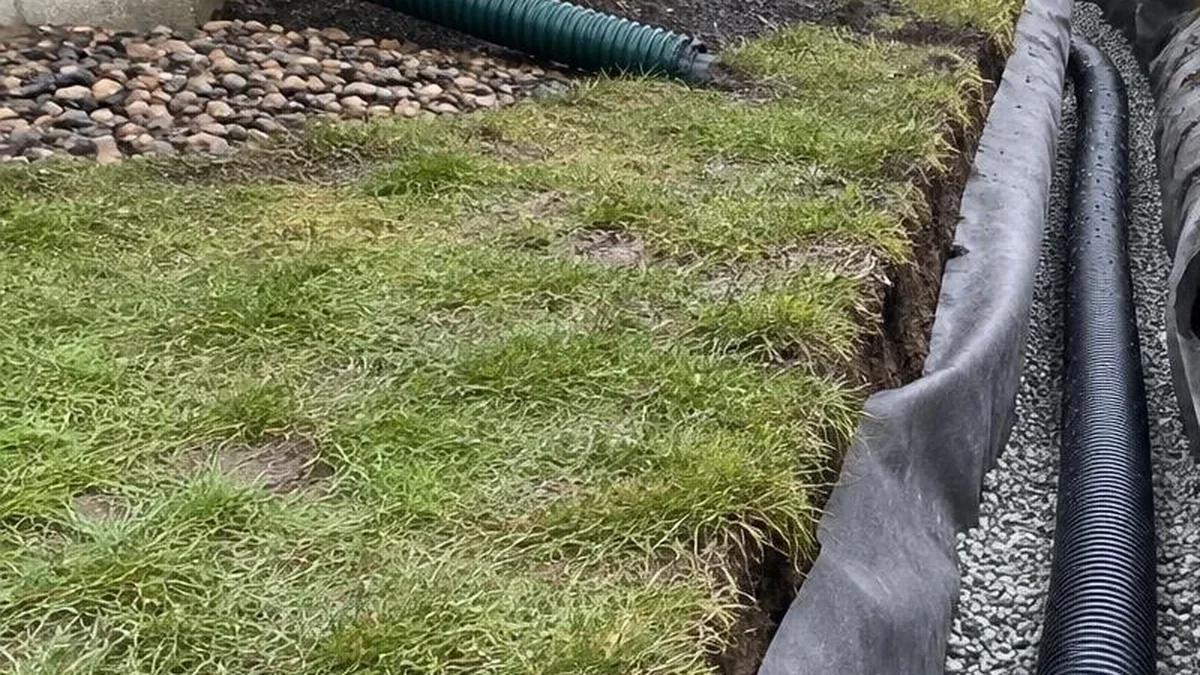
What Makes a Great Rain Garden Design?
A good rain garden looks like an intentional planting bed but is positioned and planted to temporarily receive runoff from a roof, driveway, walkway, or other hard surface. The best designs combine a suitable drainage location, a clear inflow and overflow strategy, plants matched to wet-to-dry zones, regional native species where appropriate, and enough structural architecture to remain attractive when the weather is dry.
The 10-Step Rain Garden Planning Sequence
Every successful residential rain garden follows a strict hydrological and ecological progression. Never skip steps or begin by randomly purchasing moisture-loving plants:
Runoff Source
Identify roof, drive, or path
Site Suitability
10+ ft setback & 811 verify
Safe Inflow
Energy-dissipating stone pad
Temporary Basin
4″ to 8″ concave storage
Infiltration
Drains within 24–48 hours
Safe Overflow
Rock weir relief for storms
Plant Zones
Basin, slope, and drier rim
Regional Natives
Species adapted to wet & dry
Landscape Style
Modern, cottage, or prairie
Maintenance
Clear inlets & manage sediment
Rain Garden ≠ The Permanently Soggy Spot in Your Yard
One of the most persistent and damaging landscape myths online is the advice: "Find the wettest, swampiest corner of your yard that never dries out and turn it into a rain garden."
This is fundamentally incorrect. Authoritative research from University of Maryland Extension and Penn State Extension confirms that a functioning rain garden is designed to drain completely within 24 to 48 hours after rainfall. It is an infiltration feature, not a wetland.
If a depression in your yard remains waterlogged for 4 or 5 days after rain, that site has either a high seasonal water table, an underground spring, or severely compacted impermeable hardpan subsoil. Planting a rain garden there will create a stagnant mud puddle, drown standard rain-garden roots, and create a mosquito breeding ground. Chronic standing water requires broader site regrading, French drains, or specialized wetland planting.
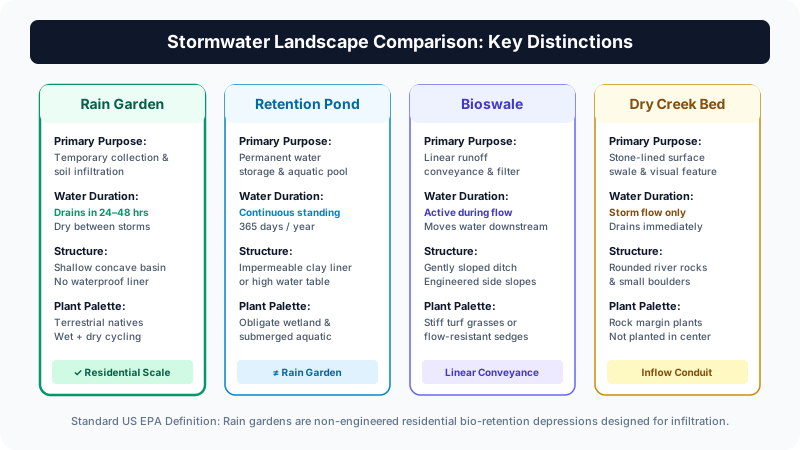
Rain Garden vs. Pond vs. Bioswale vs. Dry Creek Bed
US EPA and municipal green infrastructure standards distinguish small residential rain gardens from more engineered retention ponds and conveyance channels. Review these key functional boundaries:
Is Your Yard Suitable for a Rain Garden? (8-Point Checklist)
Before purchasing plants or planning bed edges, audit your proposed location against these 8 field standards. Safety, utility protection, and building foundations always take priority over aesthetics:
Identified Runoff Source
Do you have a clear, identifiable source of clean water (such as a roof downspout, driveway slope, or walkway)?
Critical Site ConstraintSafe Foundation Separation
Is the proposed location safely separated from your home foundation (typically 10+ feet away on a downhill grade)?
Critical Site ConstraintDrains within 24 to 48 Hours
Does the location naturally drain between storms? (A perpetually soggy spot indicates high groundwater or impermeable clay requiring different solutions).
Critical Site ConstraintClear of Underground Utilities
Have you confirmed that the excavation area is completely free of underground gas, electric, water, and cable lines (via 811)?
Critical Site ConstraintSafe Separation from Septic & Wells
Is the rain garden located safely away from septic tanks, leach drain fields, and private drinking water wells per local health codes?
Critical Site ConstraintGentle Slope (Under 10%)
Is the yard slope gentle enough that water pools without overflowing berms? (Steep slopes require specialized terracing).
Safe Emergency Overflow Destination
If an extreme 50-year storm fills the basin to capacity, can excess water overflow safely away from structures into a lawn or storm drain?
Critical Site ConstraintAdequate Sunlight for Target Species
Does the location receive the necessary sunlight (full sun, partial shade, or shade) matched to your selected plant palette?
Safety & Procedural Notice:
Always call 811 (or submit a local utility location request) before digging anywhere on your property. Never position a rain garden over unknown underground pipes, electrical conduits, private septic tanks, or leach drain fields. Maintain appropriate setbacks from building foundations according to current local Extension guidance (typically 10+ feet away on a downhill grade).
The 3 Moisture Zones: Why Wetland Plants Often Fail
Because a rain garden drains quickly and is dry for most of the year, obligate wetland plants often die of drought during July and August. The most successful rain gardens utilize plants specifically adapted to both temporary inundation and intervening dry spells, distributed across three distinct moisture elevations:
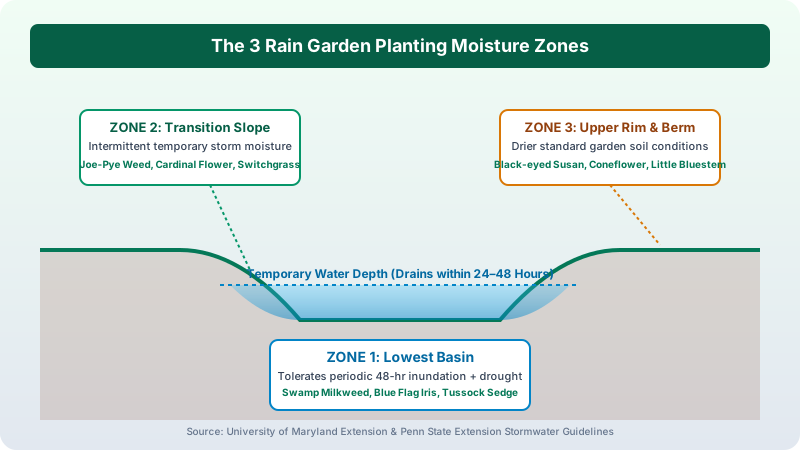
Periodic Submergence + Drought
Receives the deepest standing water during rain (4″ to 8″) but dries completely between storms. Plants must tolerate temporary anaerobic wet roots AND dry summer soils.
Top Species: Swamp Milkweed, Blue Flag Iris, Cardinal Flower, Tussock Sedge.
Occasional Storm Moisture
Covered by water only during larger storm events. Soil is intermittently moist but drains rapidly. Ideal for flexible deep-rooted prairie and meadow perennials.
Top Species: Joe-Pye Weed, Great Blue Lobelia, Switchgrass, Virginia Sweetspire.
Standard Drier Garden Soil
Sits above high-water ponding level. Soil rarely becomes saturated. Plants should match typical upland garden conditions and tie into surrounding lawn or perennial beds.
Top Species: Black-Eyed Susan, Purple Coneflower, Little Bluestem, Dwarf Conifers.
Explore 22 Residential Rain Garden Ideas
Filter by yard location, sunlight exposure, runoff source, landscape design style, or maintenance needs.
Downspout Inflow Rain Garden with Curved River-Rock Apron
Captures clean roof runoff discharged from a downspout, directing it through an energy-dissipating stone splash pad into a shallow concave planting basin placed safely away from building foundations.
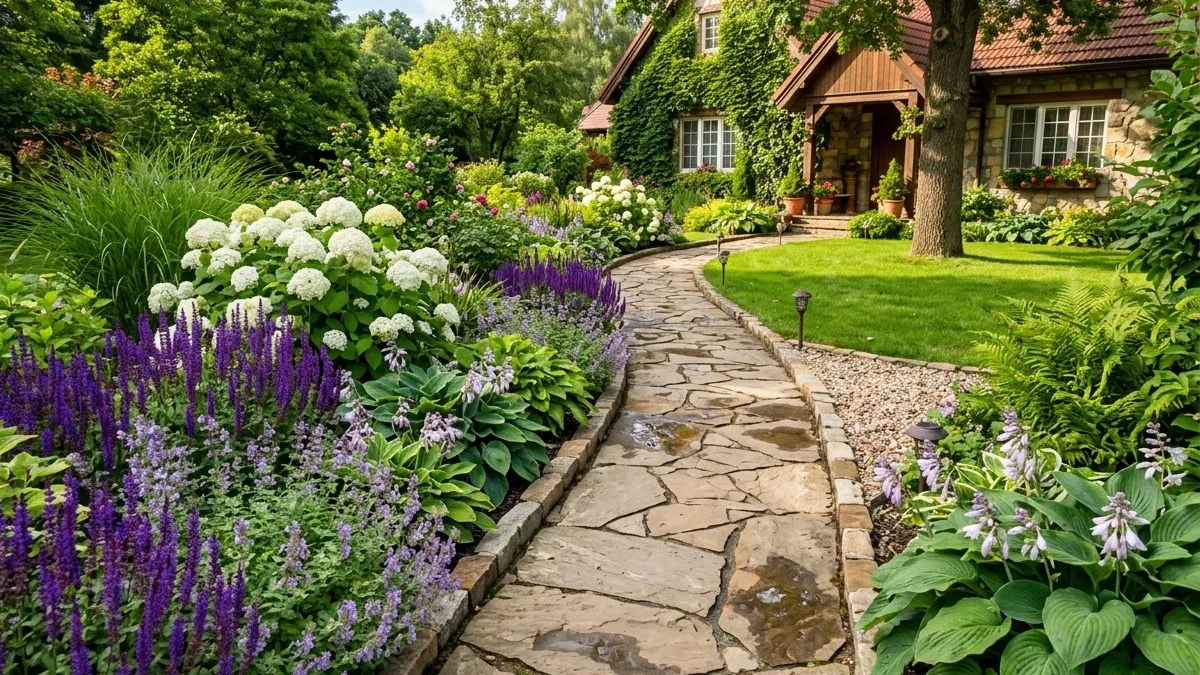
Front-Yard Curb-Appeal Rain Garden with Structured Edging
Integrates stormwater infiltration into the formal front yard aesthetic using a crisp spaded trench edge, repeating plant masses, and four-season structural perennials that look intentional year-round.
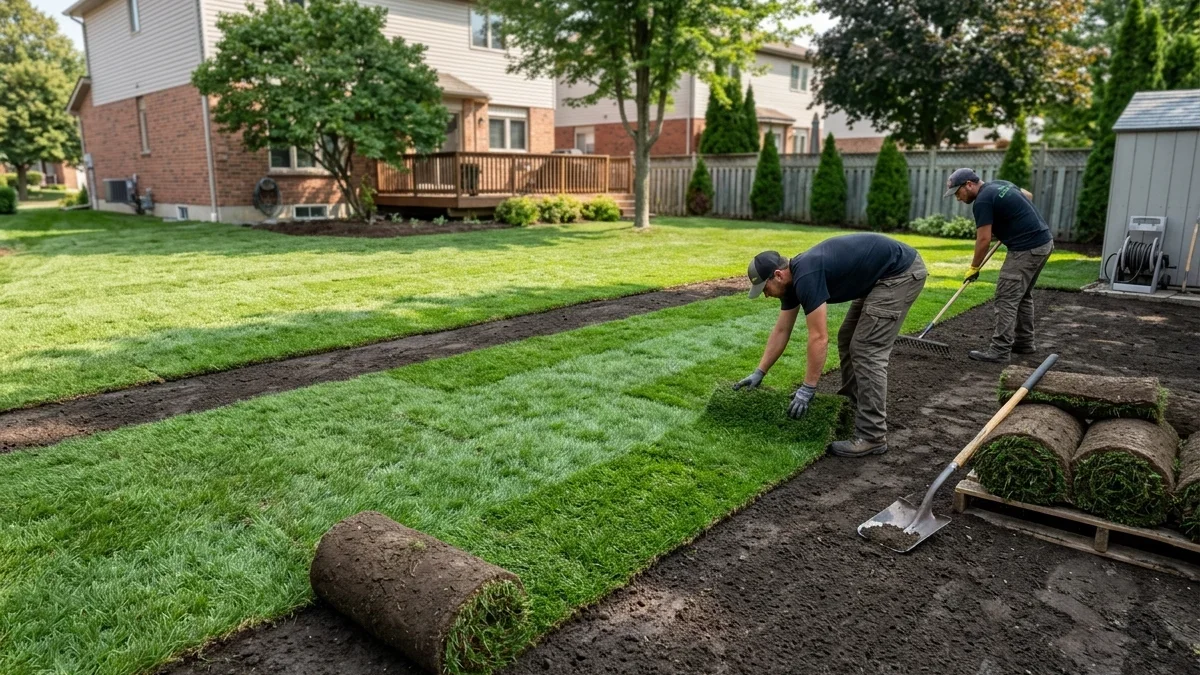
Driveway-Edge Linear Infiltration Garden
Positions a narrow, elongated rain garden along the downhill shoulder of an asphalt or concrete driveway, intercepting sheet flow before it washes into street gutters or neighbors' yards.
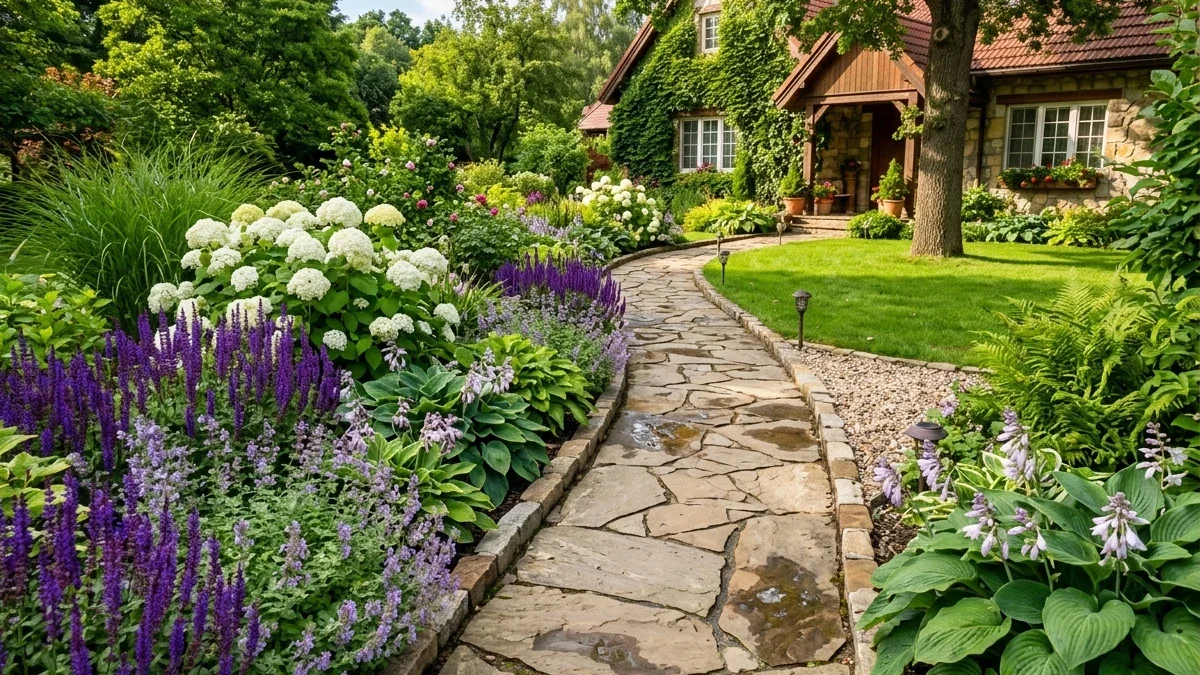
Compact Urban Rain Garden for Townhomes & Small Lots
A tightly edited 50-to-80-square-foot rain garden that manages runoff from a single downspout section using a restrained palette of just 3 high-performance native species.
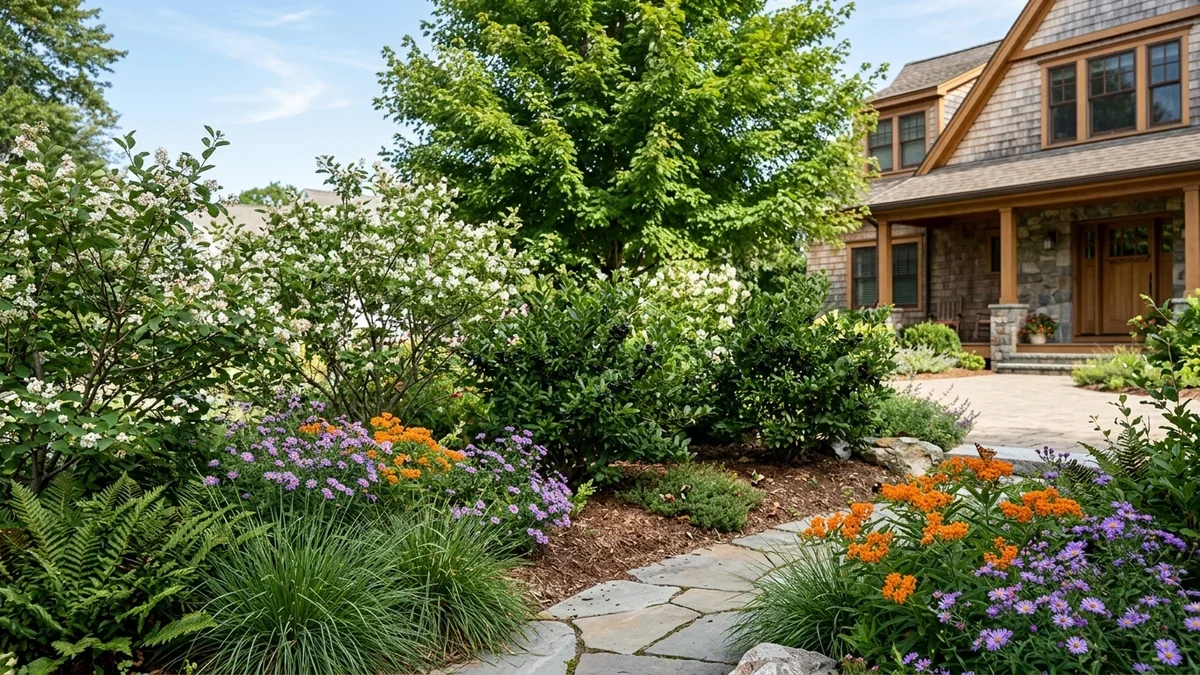
Regional Native Plant Rain Garden with Wet-to-Dry Layering
Exclusively utilizes regionally indigenous perennials, sedges, and shrubs whose evolutionary root systems create deep vertical channels that accelerate stormwater infiltration naturally.
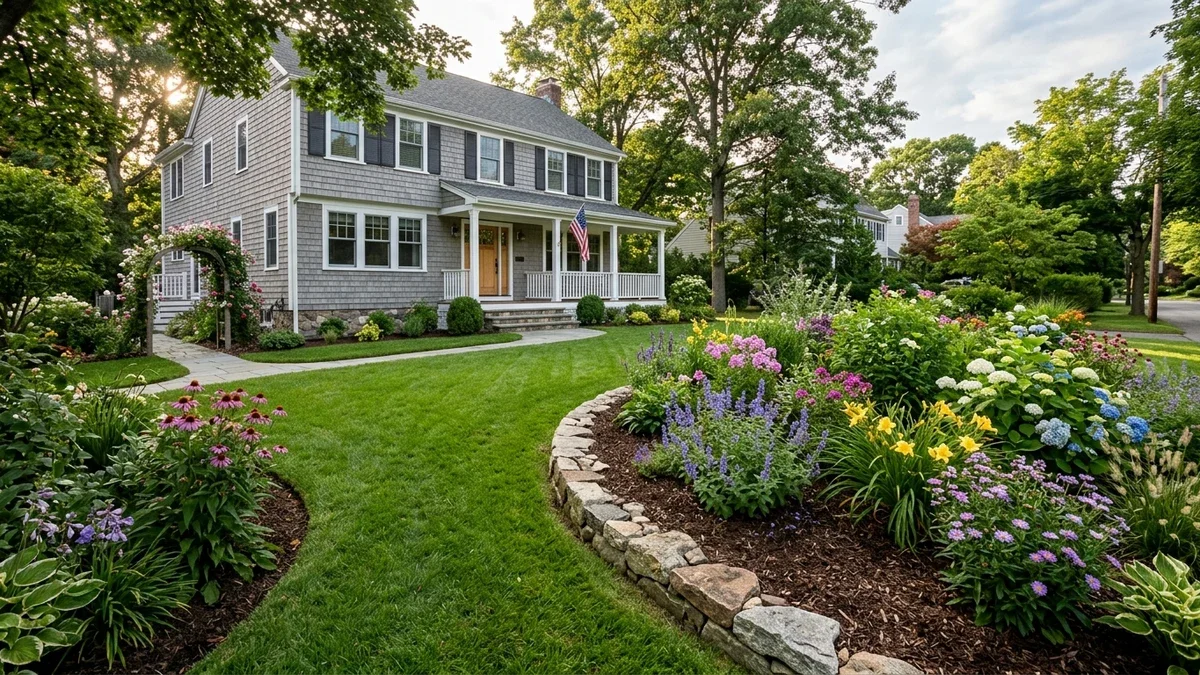
Pollinator-Sanctuary Rain Garden with Staggered Nectar Blooms
Pairs moisture-adapted nectar perennials with upland host plants to sustain native solitary bees, bumblebees, and butterflies from early May through late October.
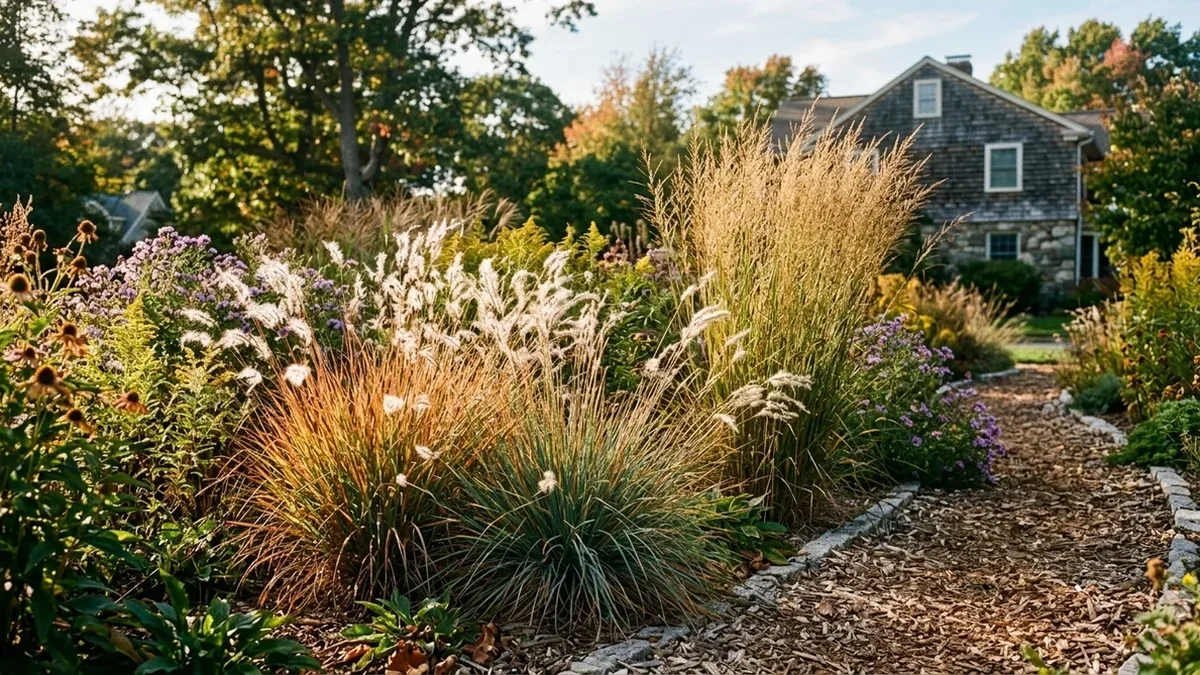
Prairie-Style Rain Garden with Clumping Grasses & Coneflowers
Inspired by North American tallgrass prairies, weaving upright warm-season grasses with long-lived composite wildflowers that maintain striking winter silhouettes.
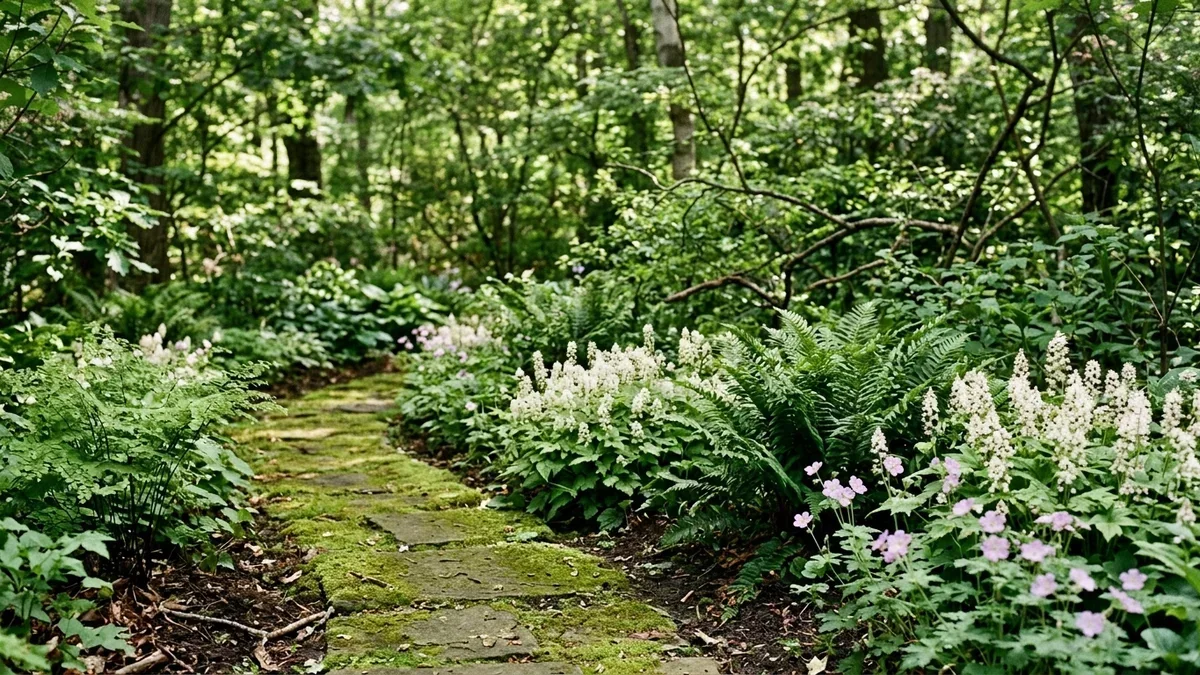
Woodland-Edge Rain Garden for Dappled Partial Shade
Embraces dappled shade beneath mature tree canopies using moisture-tolerant native ferns, wild gingers, and broadleaf sedges that mimic a natural forest hollow.

Modern Minimalist Rain Garden with Geometric Concrete Edging
Frames the natural sunken basin with rectilinear concrete retaining borders, black basalt river stones, and repeated architectural matrix blocks of horsetail reed and sedge.
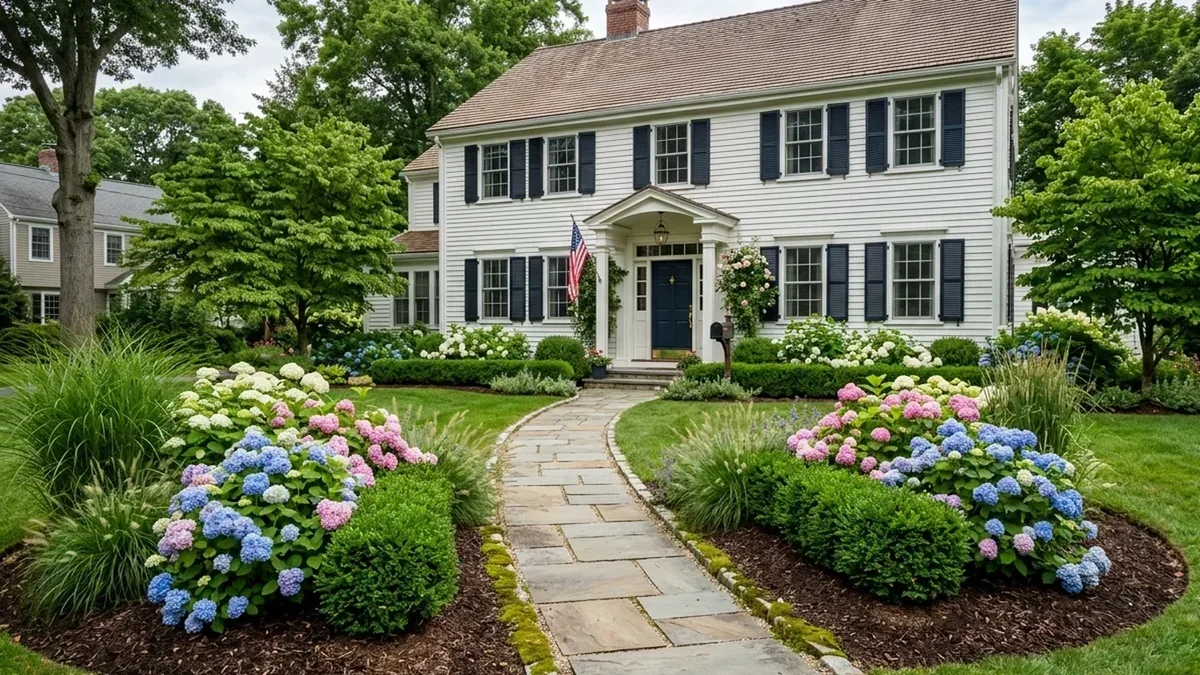
Cottage Garden Rain Border with Soft Flowering Spills
Disguises stormwater infiltration within a romantic, abundant cottage border featuring daylilies, Siberian iris, purple coneflower, and sweetspire spilling over gentle stone edges.
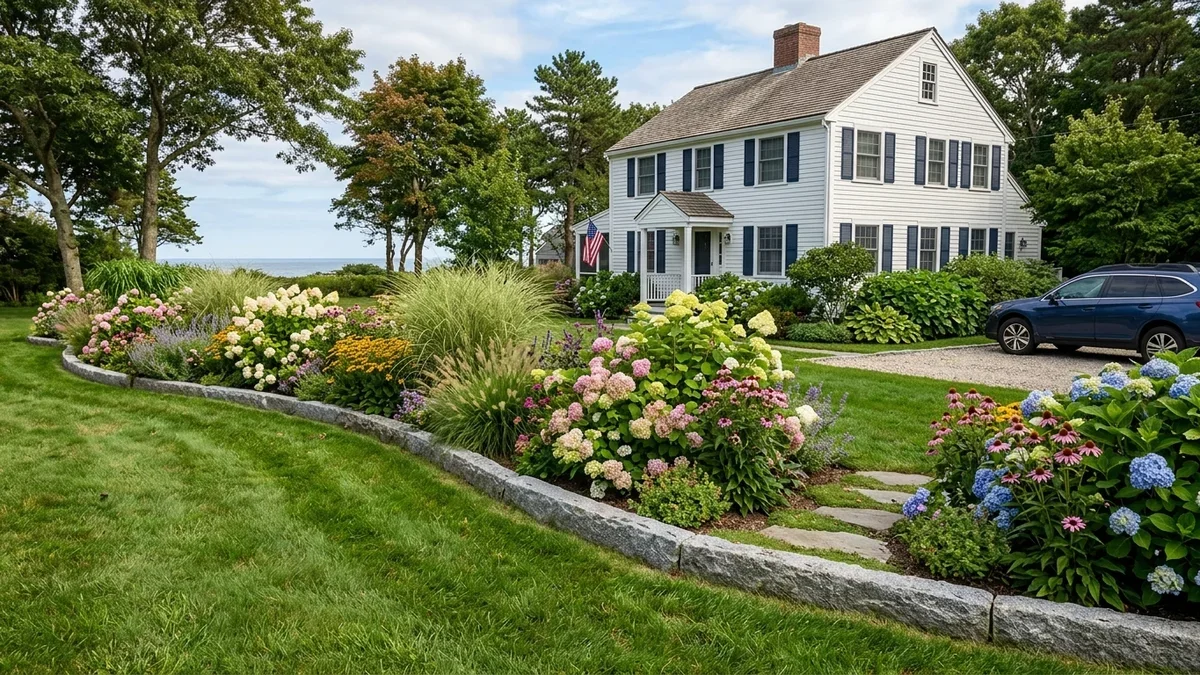
Rain Garden with Glacial Boulders & River-Rock Accents
Integrates natural rounded river rocks and partially buried accent boulders along the basin rim to stabilize inflow transitions and create visual weight during dry periods.
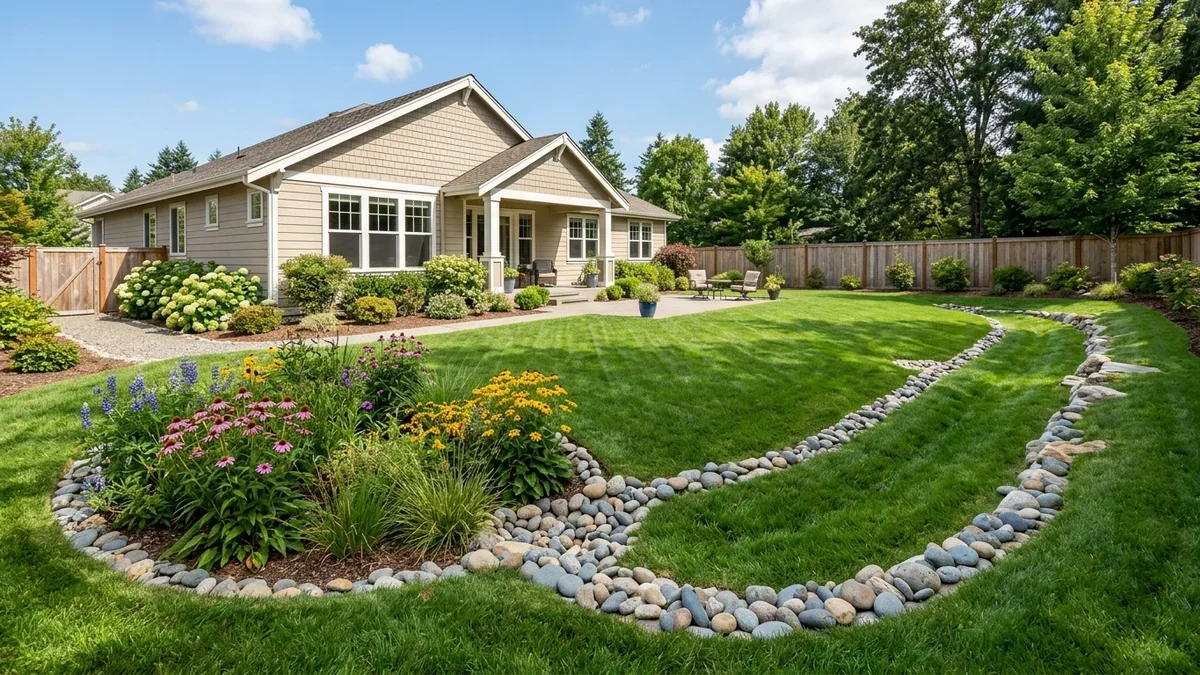
Dry Creek Bed Inflow Conduit Leading to Rain Garden Basin
Connects a distant house downspout to an infiltration rain garden via a meandering, dry river-rock channel that looks like a natural streambed in dry weather and conveys water during storms.
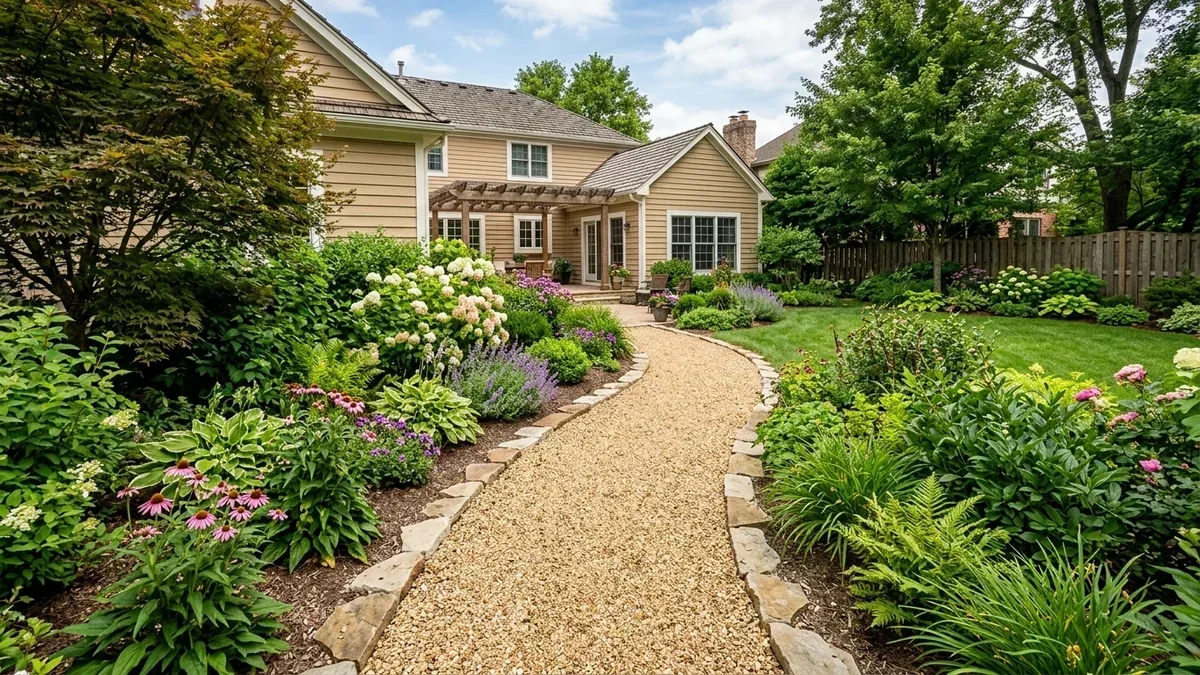
Walkway-Adjacent Rain Garden with Raised Stepping Stones
Positions a shallow, lush rain garden immediately flanking a front entry path, creating an immersive pedestrian boardwalk feel without splashing water onto pavement.
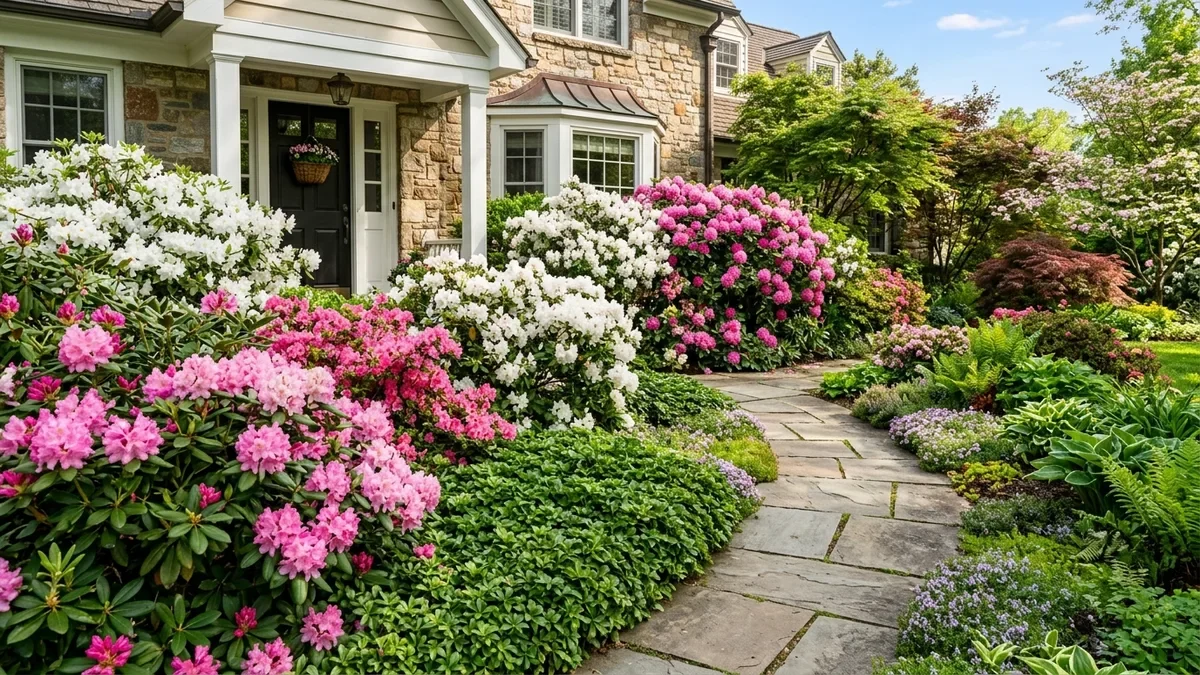
Woody Shrub-Structured Rain Garden with Winterberry & Sweetspire
Anchors the rain garden with compact, water-tolerant native deciduous shrubs that provide three-dimensional height, seasonal berries, and woody winter architecture.
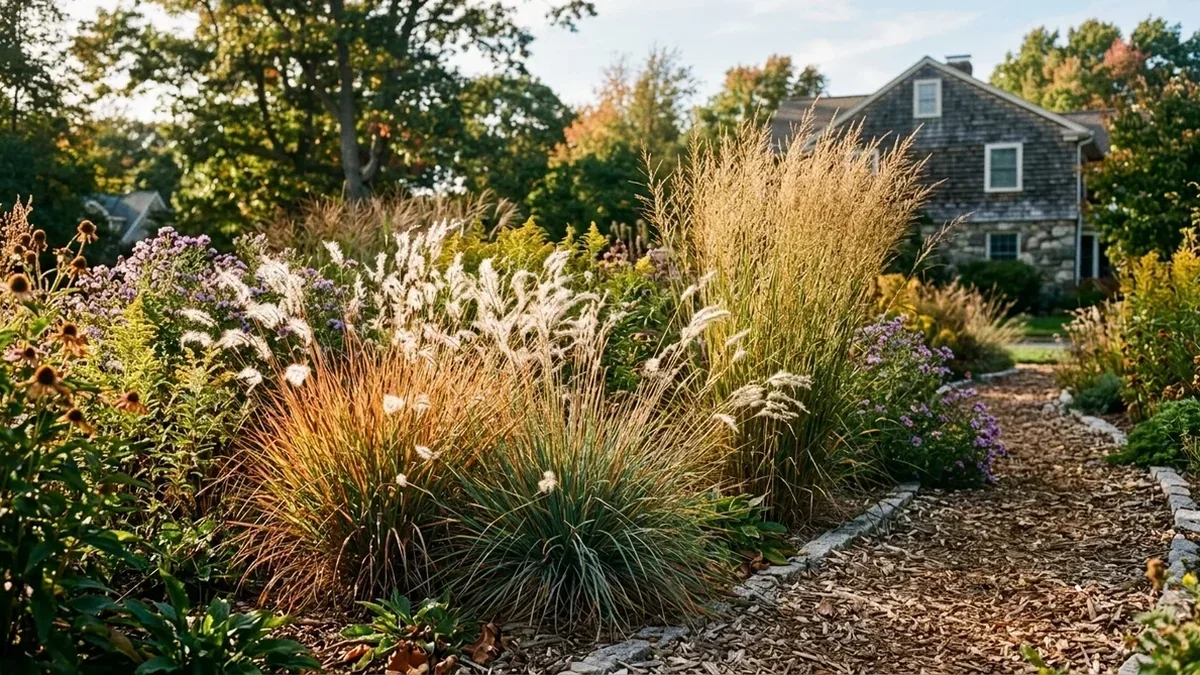
Grasses & Sedges Kinetic Rain Garden for Wave-Like Movement
Prioritizes architectural foliage texture over showy flowers, massing native Carex sedges in the basin and fine-textured bluestem along the rim to create a breezy, modern movement.
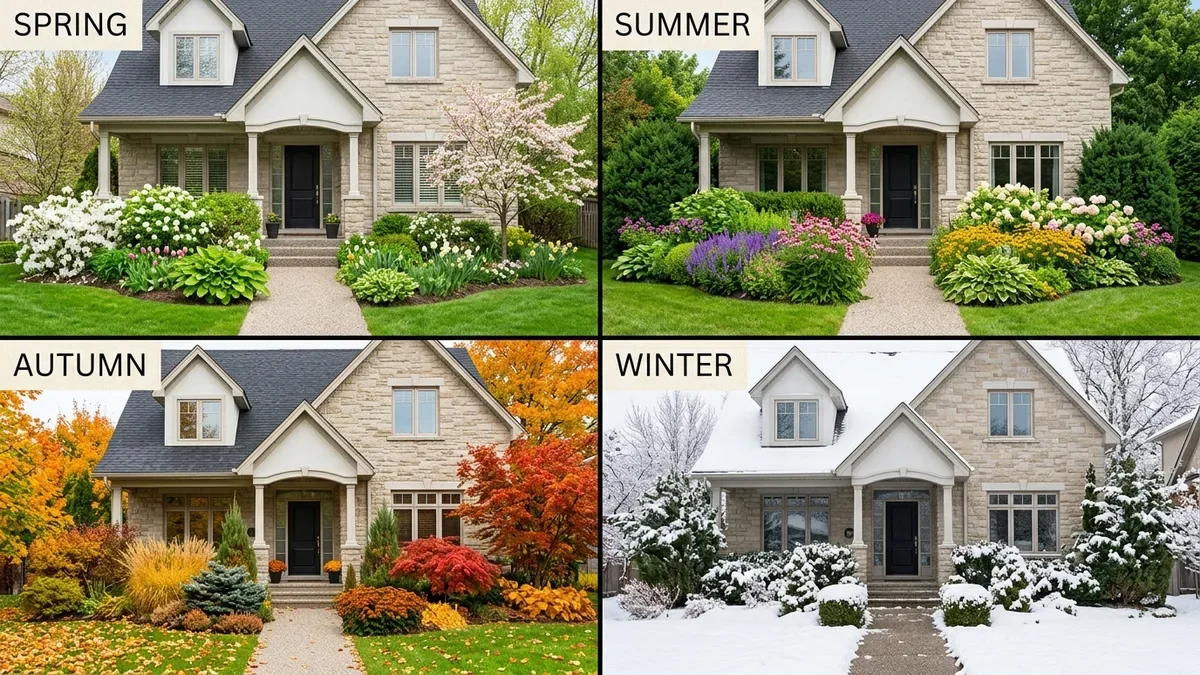
Four-Season Multi-Tiered Rain Garden with Winter Silhouette
Planned intentionally for all 12 months: spring iris blooms, lush summer perennials, fiery autumn foliage, and standing seedheads that look striking against winter snow.
Rain Garden Integrated into a Reduced-Lawn Front Yard
Replaces half of an oversized front lawn with an expanded mulch bed system that integrates a rain garden basin smoothly into wider perennial borders and gravel pathways.
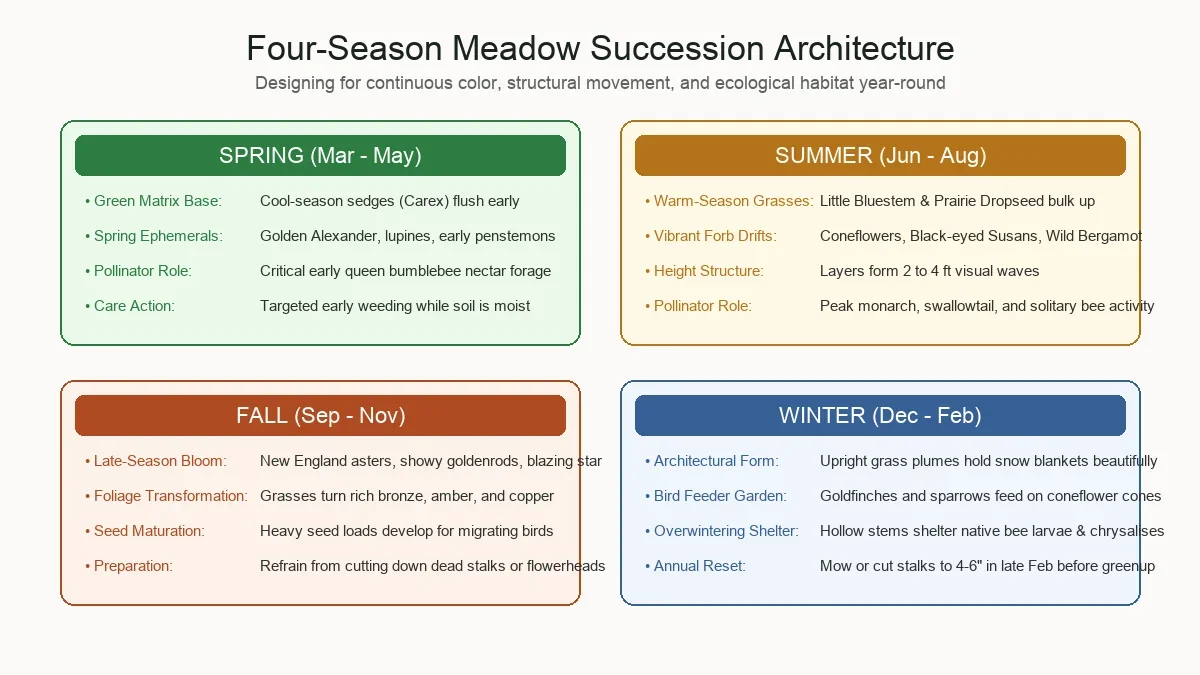
Rain Garden to Upland Meadow Gradient Transition
Transitions seamlessly from water-loving sedges in the basin out to dry-soil drought-tolerant prairie grasses and wildflowers along the upper perimeter berm.
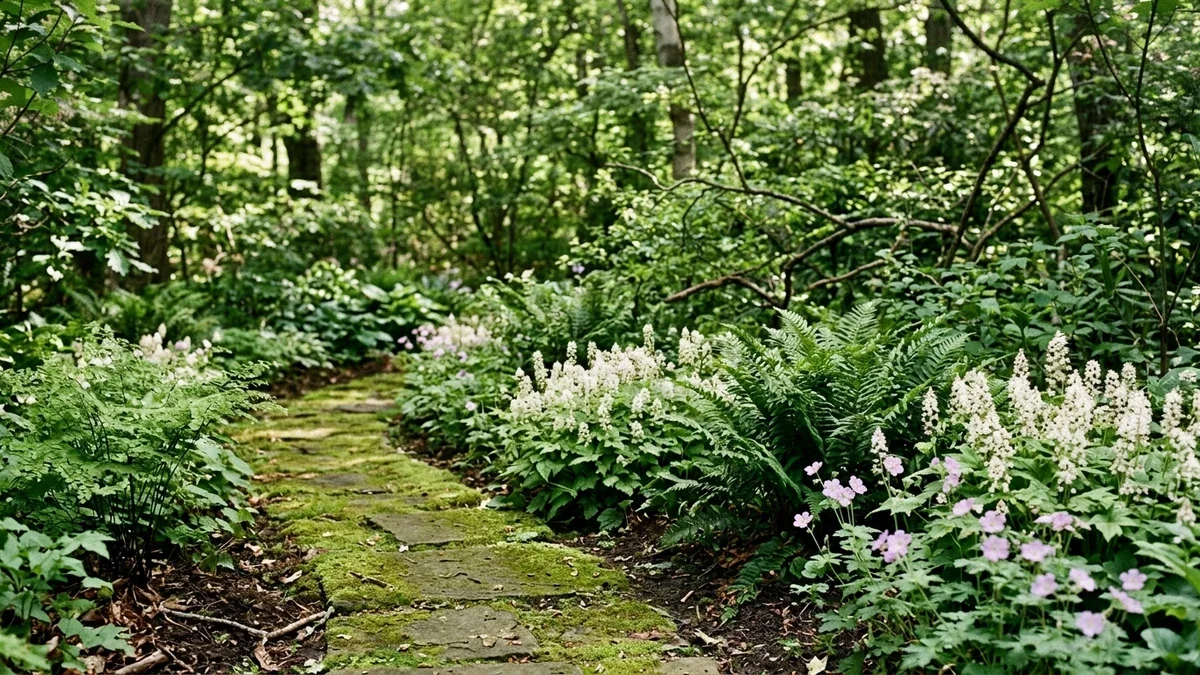
Shade-Tolerant Rain Garden for Understory Light
Specifically designed for north-facing home exposures or yards receiving under 3 hours of direct sunlight, utilizing shade-hardy ferns, astilbes, and broadleaf hostas.
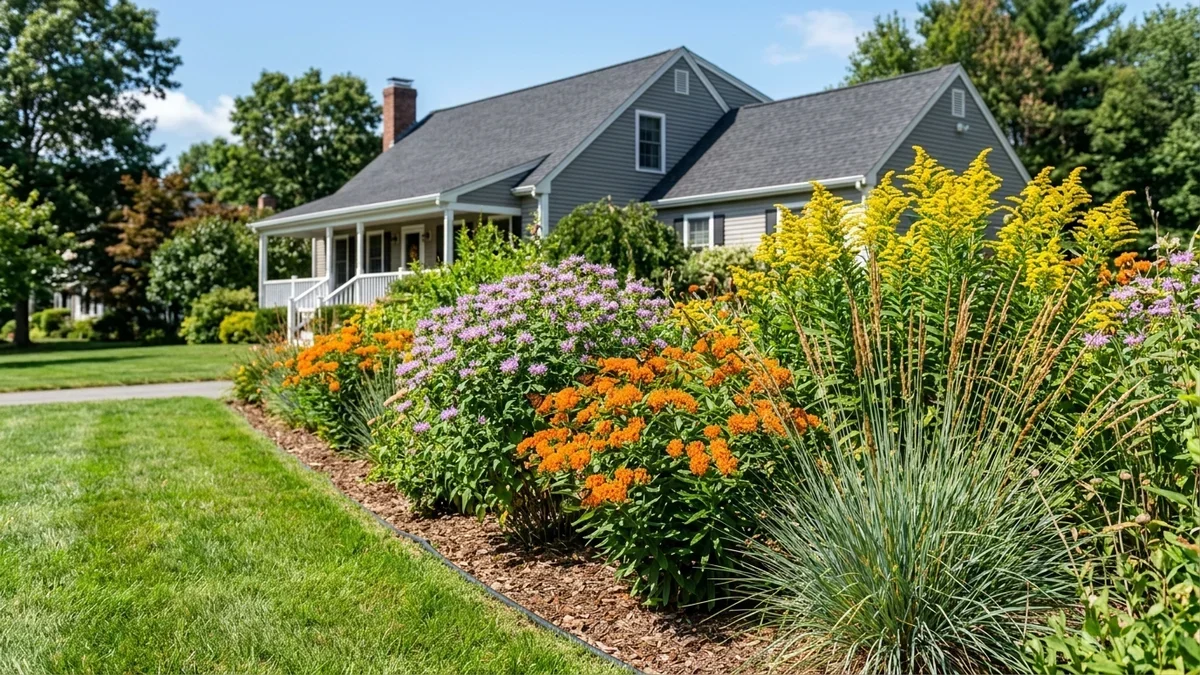
Sunny Flowering Rain Garden for Maximum Color Impact
Basking in 6+ hours of full summer sun, featuring brilliant blooms of Cardinal Flower, Blue Flag Iris, Yellow Tickseed, and Swamp Sunflower that thrive in wet-dry cycles.
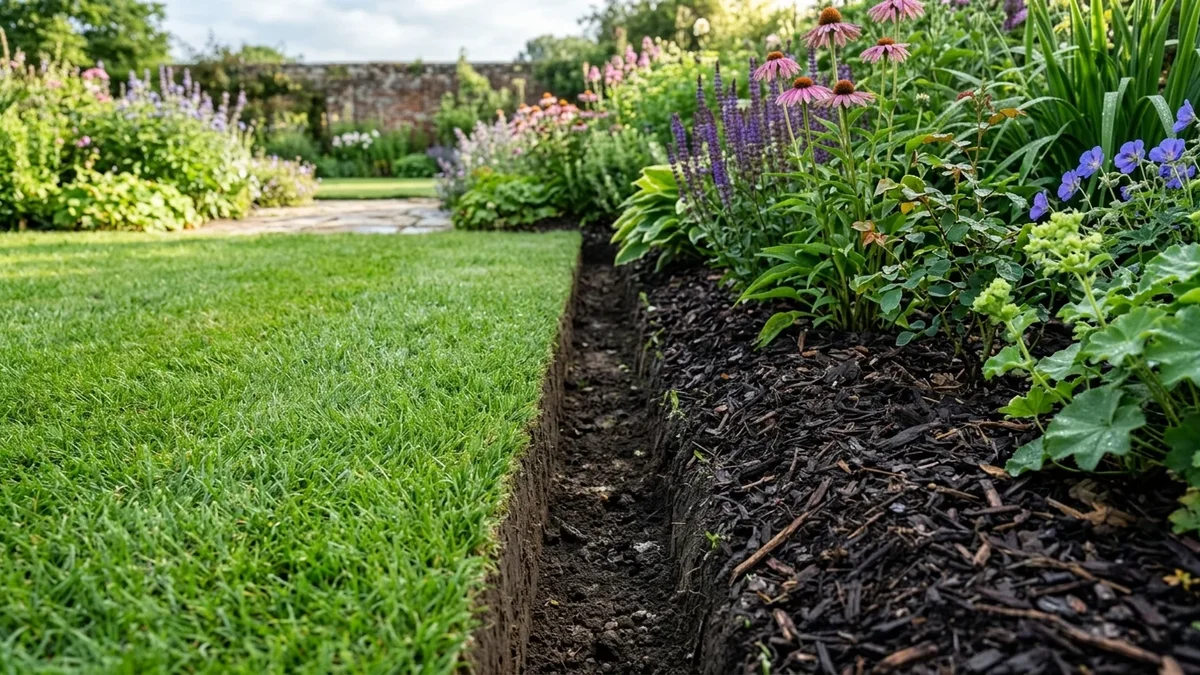
Zero-Fuss Low-Maintenance Rain Garden with Tough Native Clumps
Engineered for busy homeowners, using just 4 bulletproof, slow-spreading native workhorses that form dense canopies to choke out weeds and require only one annual spring haircut.
Integrated Rain Garden as Part of a Comprehensive Drainage Plan
Positions the rain garden as the primary infiltration hub within a layered system including buried smooth downspout extensions, permeable walkways, and an emergency daylight overflow.
Visualize how a rain garden fits into your front or back yard
Upload a photo of your lawn into our AI Landscape Generator to explore planting styles, stone accents, and curved bed boundaries.
Note: Visual concept only. AI visualization cannot determine soil infiltration rates, underground utility clearances, or engineered drainage volumes.
How a Rain Garden Handles Runoff: Inflow to Emergency Overflow
A rain garden is not an infinite holding tank. When a severe 50-year storm delivers 3 inches of rain in two hours, the garden must possess a planned, safe exit route for excess water:

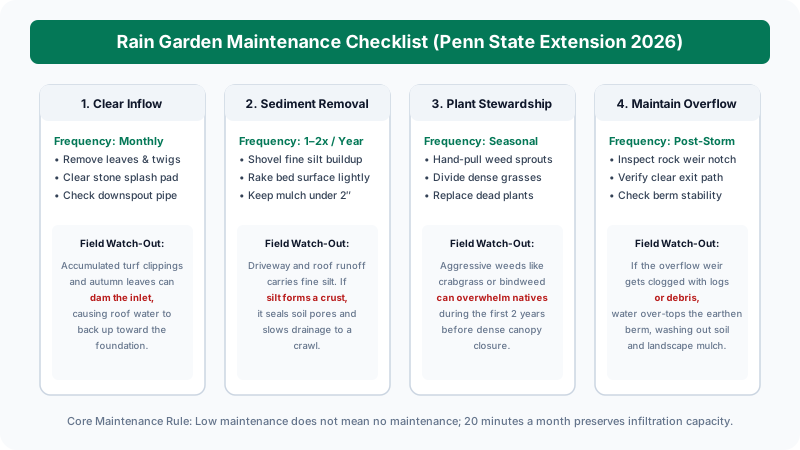
Rain Garden Maintenance: Preserving Long-Term Infiltration
According to Penn State Extension's updated Best Practices for Rain Gardens (May 18, 2026), neglecting seasonal maintenance is the primary cause of rain garden failure. Follow this 4-part seasonal care routine:
Crawlable Rain Garden Planting Matrix: 12 Workhorse Species
Every plant in this table has been verified through Extension and USDA botanical databases for proven tolerance of temporary storm flooding combined with typical residential summer dry periods:
| Plant & Botanical Name | Moisture Zone | Sun & Size | Ecological / Pollinator Value | Field Watch-Out | Authoritative Source |
|---|---|---|---|---|---|
| Swamp MilkweedAsclepias incarnata | Zone 1 (Basin) | Full Sun 3–5′ H × 2–3′ W | Primary Monarch butterfly caterpillar host plant; high nectar value for native bees | Unlike Butterfly Weed (A. tuberosa), this species demands temporary moisture; will suffer in dry sand. | Lady Bird Johnson Wildflower Center / USDA Plants |
| Blue Flag IrisIris versicolor | Zone 1 (Basin) | Full Sun to Part Sun 2–3′ H × 1.5–2′ W | Attracts bumblebees, hummingbirds, and early season beneficial pollinators | Rhizomes must be planted shallowly (just below soil surface); do not bury too deeply in heavy clay. | University of Maryland Extension HGIC |
| Cardinal FlowerLobelia cardinalis | Zone 1 (Basin) | Full Sun to Part Shade 2–4′ H × 1–2′ W | Number-one native perennial magnet for Ruby-throated Hummingbirds | Short-lived perennial that sustains itself through basal offshoots and self-seeding; do not heavily mulch over crowns. | Penn State Extension Rain Garden Manual |
| Fox SedgeCarex vulpinoidea | Zone 1 (Basin) | Full Sun to Light Shade 1.5–3′ H × 1.5–2′ W | Larval host for several native skipper butterflies; seeds feed songbirds | Clump-forming native that does not spread aggressively; cut back old foliage in early spring. | USDA NRCS Plant Guide |
| Joe-Pye WeedEutrochium maculatum / fistulosum | Zone 2 (Slope) | Full Sun to Part Sun 4–6′ H × 3–4′ W | Exceptional late-season fuel for migrating monarchs, swallowtails, and honeybees | Can grow tall (5–7 ft) in rich soil; use dwarf cultivars like 'Gateway' or 'Baby Joe' for compact front yards. | University of Minnesota Extension |
| Great Blue LobeliaLobelia siphilitica | Zone 2 (Slope) | Full Sun to Partial Shade 2–3′ H × 1–1.5′ W | Long tube-shaped blooms are specialized for native bumblebee pollination | More drought-tolerant than red Cardinal Flower, but still requires moisture during hot summer dry spells. | Purdue University Extension |
| SwitchgrassPanicum virgatum | Zone 2 (Slope) | Full Sun 3–6′ H × 2–3′ W | Host plant for grass-skippers; deep roots prevent soil erosion along rain garden slopes | Extremely deep root system (up to 8 ft); once established, it is very difficult to dig up or relocate. | Penn State Extension Stormwater BMPs |
| Virginia SweetspireItea virginica | Zone 2 (Slope) | Full Sun to Full Shade 3–5′ H × 3–5′ W (Cultivar 'Little Henry' stays 2–3′) | Spring flowers attract native bees, butterflies, and nectar foragers | Spreads slowly via root suckers to form a dense colony; ideal for stabilizing slopes, but trim suckers if space is tight. | NC State University Extension |
| Winterberry HollyIlex verticillata | Zone 2 (Slope) | Full Sun to Part Shade 5–8′ H × 5–8′ W | Critical winter food resource for native cedar waxwings, robins, and bluebirds | Dioecious plant: you must plant at least one male pollinator shrub (e.g. 'Jim Dandy') nearby to get female berries. | UMass Amherst Center for Agriculture |
| Black-Eyed SusanRudbeckia fulgida / hirta | Zone 3 (Rim) | Full Sun 2–3′ H × 1.5–2′ W | High pollen/nectar value; seedheads feed American goldfinches through winter | Do NOT plant in Zone 1 (basin floor); roots will rot in standing water. Reserve strictly for Zone 3 rim. | University of Maryland Extension |
| Purple ConeflowerEchinacea purpurea | Zone 3 (Rim) | Full Sun to Light Shade 2–4′ H × 1.5–2′ W | Magnetic nectar source for butterflies; winter seeds feed native songbirds | Thrives in well-drained upland soil; crown rot occurs if planted where water ponds for more than a few hours. | Purdue University Extension |
| Little BluestemSchizachyrium scoparium | Zone 3 (Rim) | Full Sun 2–3′ H × 1–1.5′ W | Larval host for 9 native skipper butterfly species; nesting habitat for bumblebees | Demands lean, well-drained soil in full baking sun; will flop over if given heavy nitrogen fertilizer or excess water. | USDA NRCS Plant Materials |
US Regional Rain Garden Resource Matrix (10 Climate Zones)
Because a plant native to the Midwest tallgrass prairie may be completely unsuitable in coastal New England or the arid Southwest, always reference your regional cooperative extension recommendations:
| US Geographic Region | Climate & Soil Consideration | Rain Garden Design Focus | Plant Selection Principle | Authoritative Regional Resource |
|---|---|---|---|---|
| Northeast & New England (Zones 4–6) | Humid continental; heavy winter snowpack, freeze-thaw cycles, coastal storms, acidic soils. | Infiltration depth must resist winter freezing; protect inlet from snow-shoveling piles and road salt. | Focus on salt-tolerant riparian natives (Winterberry, Inkberry, Blue Flag Iris, Tussock Sedge). | University of New Hampshire Cooperative Extension / UMass Clean Water Program |
| Mid-Atlantic & Chesapeake (Zones 6–7) | Hot, humid summers with frequent intense convective thunderstorms; clay-heavy Piedmont subsoils. | Soil percolation testing is essential; amend heavy clay with coarse sand and compost if percolation is under 0.5″/hr. | Combine moisture-tolerant wetland herbs (Lobelia, Hibiscus moscheutos) with drought-hardy rim grasses. | University of Maryland Extension HGIC / Penn State Extension Stormwater Team |
| Southeast & Coastal Plain (Zones 7–9) | Subtropical climate; long growing season, torrential tropical storm deluges, sandy or heavy gumbo clay. | Larger basin surface area needed to handle high-volume rainfall without excessive ponding depth. | Use heat-tolerant species: Sweetspire, Buttonbush (Cephalanthus), Cherokee Sedge, and Muhly Grass. | NC State Extension Stormwater Group / Clemson University Carolina Rain Garden Program |
| Midwest & Great Lakes (Zones 4–6) | Cold winters, hot summers, severe spring thunder deluges, dense glacial till and clay soils. | Incorporate deep-rooted prairie plants whose taproots break through stubborn compacted subsoil over time. | Tallgrass prairie natives: Prairie Dropseed, Joe-Pye Weed, Blazing Star (Liatris), Big Bluestem. | University of Minnesota Extension / University of Wisconsin Sea Grant Rain Garden Guide |
| Great Plains & Central (Zones 3–6) | Extreme temperature swings, drying winds, periodic flash deluges followed by weeks of severe drought. | Plants must possess extreme drought tolerance; basin acts as moisture harvesting depression for prairie plants. | Select facultative prairie species: Switchgrass, Purple Prairie Clover, Sideoats Grama, Western Ironweed. | Kansas State Research and Extension / Nebraska Extension Stormwater |
| South-Central & Texas (Zones 7–9) | Intense baking summer heat, flash floods, highly alkaline limestone soils, and expansive cracking clay. | Avoid plants sensitive to high soil pH; design wide, shallow swales with heavy rock energy dissipation at inlets. | Texas native performers: Inland Sea Oats, Texas Star Hibiscus, Gulf Muhly, Blackfoot Daisy on rims. | Texas A&M AgriLife Extension / City of Austin Watershed Protection |
| Mountain West & Intermountain (Zones 3–6) | High altitude, short growing season, low humidity, alkaline soils, spring snowmelt surges followed by arid heat. | Passive water harvesting design (swale basin) capturing roof melt to sustain landscape without irrigation. | Cold-hardy riparian species: Red-Osier Dogwood, Tufted Hairgrass, Rocky Mountain Penstemon, Woods Rose. | Colorado State University Extension / Utah State University Forestry Extension |
| Southwest & Arid (Zones 8–10) | Arid desert climate; monsoon storm downpours, extreme summer heat, rapid evaporation. | Termed 'passive rainwater harvesting basins'; contoured depressions that funnel storm pulses directly to tree basins. | Desert-adapted legumes and grasses: Desert Willow, Apache Plume, Deer Grass, Agave on upper rims. | University of Arizona Cooperative Extension / Watershed Management Group |
| California & Mediterranean (Zones 8–10) | Wet winters with atmospheric river storms, followed by 5 to 6 months of absolute summer drought. | Must tolerate wet roots during December–February and total drought during July–September without irrigation. | California natives: Douglas Iris, California Fescue, Deer Grass (Muhlenbergia rigens), Juncus patens. | UC Master Gardener Program / California Department of Water Resources |
| Pacific Northwest (Zones 7–9) | Mild maritime climate; prolonged low-intensity winter rains, heavy maritime cloud cover, dry summer window. | Focus on continuous slow infiltration throughout winter; gravel and sand-enriched bioretention soil mixes. | Pacific temperate species: Slough Sedge (Carex obnupta), Red-Twig Dogwood, Sword Fern, Douglas Spirea. | Washington State University Extension / Oregon State University Extension Rain Garden Guide |
How Much Does a Rain Garden Cost? (Realistic Tiers)
Project costs depend on square footage, soil percolation, hardscape integration, plant container sizes, and whether you perform hand excavation yourself or hire a professional landscape contractor:
Weekend Homeowner Project
Homeowner handles shallow shovel excavation for a 50–100 sq ft basin. Purchases native plugs or 1-quart perennials, utilizes existing downspout conductors, and sources bulk organic compost.
- Best for small downspout sections and light soils
- Minimal stone accents; reliance on seed and plugs
- Requires significant physical labor and soil hauling
Enhanced Design & Stone Inflow
Combines 1-gallon established perennials with decorative river rock splash aprons, a shallow dry-creek approach swale, custom spaded trench borders, and compost-amended bioretention soil.
- Immediate 1st-year visual fullness and weed suppression
- River stone energy dissipation at the inlet
- Engineered overflow spillway notch with granite weir
Comprehensive Drainage Integration
Turnkey installation by a licensed landscape contractor: mini-excavator grading, subsoil percolation amendments, buried smooth PVC conductors, specimen shrubs, and municipal drainage tie-in.
- Ideal for large roofs, driveway runoff, or tricky clay soils
- Guaranteed safe building and utility setbacks
- May qualify for municipal stormwater utility fee credits
10 Costly Rain Garden Mistakes Homeowners Make
Placing the Garden in a Permanently Saturated Swamp
A spot that never dries has an impermeable water table or spring. Rain gardens require draining soil.
Siting the Basin Too Close to the House Foundation
Placing a basin within 10 feet of foundation walls risks basement moisture seepage and structural shifting.
Digging Over Unknown Underground Utilities
Never excavate without calling 811. Striking gas, power, or water lines creates catastrophic hazards.
Forgetting the Emergency Overflow Spillway
When a 50-year storm exceeds basin storage, water without an overflow weir washes out earthen berms.
Using Obligate Wetland Plants in the Basin
Basins dry out during hot summer weeks. Water lilies, cattails, and bog plants will shrivel and die.
Planting Drought-Only Species in the Basin Floor
Species that demand dry soil (like lavender or butterfly weed) will rot if submerged for 36 hours.
Piling Excess Wood Mulch into the Basin
Flooding water floats shredded bark mulch away, clogging the emergency overflow and smothering plants.
No Energy Dissipation at the Inflow Entry
High-speed downspout water entering bare soil carves deep erosion gullies and dislodges plant roots.
Buying Plants Based on a Single National List
A plant native to the Georgia coast will freeze in Minnesota. Always check state native ranges.
Assuming Rain Gardens Require Zero Maintenance
Leaves, silt, and weed sprouts must be cleared seasonally to preserve infiltration capacity over time.
Expert Answers: Rain Garden Planning, Plants & Maintenance
Answers
Frequently asked questions
01What is a rain garden and how does it work?
A rain garden is a shallow, landscaped depression positioned and planted to temporarily collect stormwater runoff from roofs, driveways, or patios. Instead of rushing polluted water into municipal storm drains, the garden holds the water temporarily, allowing it to filter naturally through soil and deep plant root systems within 24 to 48 hours, recharging local groundwater aquifers.
02Does a rain garden stay wet all the time?
No. A functioning rain garden is NOT a permanent wetland or pond. Authoritative guidance from University of Maryland Extension and Penn State Extension establishes that a properly sited and sized rain garden drains completely within 24 to 48 hours following a storm event. If a proposed site stays perpetually saturated or muddy for days, it is not an appropriate location for a standard residential rain garden without specialized drainage intervention.
03Where is the best place to locate a rain garden in a residential yard?
Locate a rain garden where water naturally flows from an upstream runoff source (like a roof downspout or driveway slope), but keep it safely separated from building foundations (typically at least 10 feet away on a gentle downward slope per local Extension standards). Siting must avoid underground utilities (verify via 811 before digging), septic drain fields, and private drinking water wells.
04Do rain gardens attract mosquitoes?
No. Mosquitoes require 7 to 10 days of continuous standing, stagnant water to complete their breeding cycle from egg to flying adult. Because a well-designed rain garden drains completely within 24 to 48 hours, standing water does not persist long enough for mosquito larvae to mature.
05What is the difference between a rain garden, a retention pond, and a bioswale?
A rain garden is a shallow, non-engineered residential depression that infiltrates water into the ground within 48 hours. A retention pond is an engineered basin with an impermeable liner designed to hold permanent, standing open water year-round. A bioswale is a gently sloped, linear vegetated channel designed primarily to convey and filter moving stormwater along a gradient rather than ponding and infiltrating it in a central bowl.
06Can I put a rain garden in my front yard without hurting curb appeal?
Yes. The key to high front-yard curb appeal is intentionality: use a crisp, spade-cut bed edge or stone border, arrange plants in structured, repeating drifts of 3 to 5 matching specimens rather than an unmanaged wildflower scatter, and use low-growing species along front walkway sightlines so the entrance to your home remains open and inviting.
07Can a rain garden handle heavy roof downspout runoff?
Yes. Roof downspouts are the most common and effective runoff source for residential rain gardens. To prevent soil erosion and mulch blowouts, route the downspout into an energy-dissipating river stone splash apron or shallow dry-creek swale that slows water velocity before it enters the planting basin.
08Are rain gardens suitable for clay soil?
Rain gardens can function in clay soils, but site infiltration must be tested before planting. In dense or compacted clay where water drains slower than 0.5 inches per hour, homeowners may need to incorporate coarse sand and organic compost into the top 12 to 18 inches of planting media or create a slightly shallower, wider basin to provide adequate surface storage volume.
09What happens when a rain garden fills up during an extreme storm?
Every functional rain garden must incorporate a designated safe overflow route—such as a slightly lower rock-armored spillway notch or vegetated weir. When a 10-year or 50-year storm delivers more water than the basin can temporarily hold, excess water spills safely through the overflow path away from building foundations and toward daylight or municipal drainage.
10What plants should you NOT plant in a rain garden?
Avoid two primary plant categories: (1) Obligate wetland plants that require permanent standing water (such as water lilies or cattails), because the basin will dry out between rainstorms; and (2) Upland, drought-only plants with taproots sensitive to wet feet (such as lavender, butterfly weed, or Russian sage), which will develop root rot if submerged during a 48-hour storm.
11Are rain gardens low maintenance?
Rain gardens are manageable once established, but they are not zero-maintenance. Per Penn State Extension 2026 best practices, essential upkeep includes removing autumn leaves and turf clippings from the inlet splash pad, lightly weeding during the first two growing seasons, clearing accumulated sediment, and checking that the overflow weir remains unobstructed.
12Can a rain garden be built in full shade or under mature trees?
Yes, but you must select shade-tolerant native understory plants like Christmas Fern, Cinnamon Fern, and native sedges. Crucially, never excavate a rain garden directly over the Critical Root Zone of mature trees, as severing structural roots damages tree health and destabilizes canopies. Position the garden beyond the outer branch drip line.
Planning Yard Drainage & Rain Gardens in Peabody & Essex County, MA
In Peabody, Danvers, Beverly, Salem, and throughout coastal Essex County (USDA Hardiness Zone 6b), stormwater landscaping must handle distinct New England conditions: winter road de-icing salt sprays, dense glacial till subsoils with slow natural percolation, high coastal water tables near salt marshes, and torrential nor'easter deluges.
Before installing a rain garden on the North Shore, perform a simple 24-hour percolation test to confirm whether your subsoil requires sandy loam amendments. Incorporate cold-hardy, salt-tolerant Massachusetts natives like Winterberry Holly (Ilex verticillata), Blue Flag Iris (Iris versicolor), and Tussock Sedge (Carex stricta).
Need Help Managing Stormwater on Your Property?
Connect with experienced local yard drainage, regrading, and planting professionals in Peabody and across the North Shore. Get straightforward advice, clear pricing, and prompt on-site consultations.
Get connected with an independent local landscaping professional. Calls go to (877) 537-6896.