40 Curb Appeal Landscaping Ideas for a More Welcoming Front Yard
From architectural front-entry sightlines and multi-layered foundation beds to four-season evergreen structure, discover 40 field-tested landscape design ideas that elevate your home's curbside presence while keeping maintenance manageable.
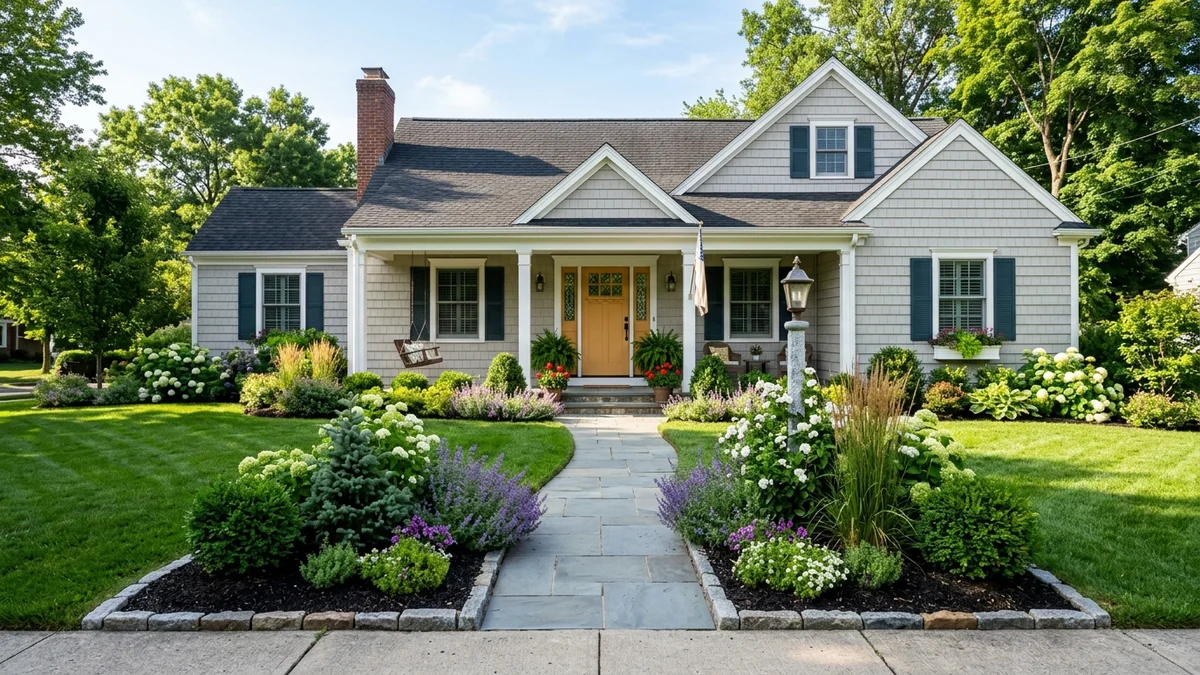
What Creates Exceptional Front-Yard Curb Appeal?
Curbside landscape design is an intentional architectural arrival sequence. Outstanding curb appeal is achieved through four core principles: (1) An unmistakable front door focal point with unobstructed sightlines; (2) A generous, 48-to-60-inch wide walkway connecting street or driveway to entrance; (3) Deep, multi-layered foundation beds (6 to 8 feet wide) with at least 18 inches of air buffer from siding; and (4) A balanced 40/60 evergreen-to-deciduous plant ratio ensuring rich structure across all four seasons.
The 6-Layer Curb Appeal Framework
Professional landscape architects do not simply purchase random perennials at a big-box nursery and space them evenly in front of a wall. High-impact front yard design follows a rigorous 6-layer depth sequence that transitions smoothly from the public street edge to the private interior of your home.
The 6-Layer Curb Appeal Composition Framework
Exceptional curb appeal occurs when every front-yard element reads as a single unified sequence directing attention from the street to the front door.
The 10-Question Street-View Checklist
Stand across the street directly in front of your home with a clipboard or phone. Audit your current front elevation against these 10 field standards before planting a single new shrub:
Can a first-time visitor instantly identify your front door from the street curb?
High Priority Safety / Design StandardIs the walkway wide enough (minimum 48") for two adults to walk without brushing shrubs?
High Priority Safety / Design StandardAre your first-floor windows completely unobscured by overgrown foundation evergreens?
High Priority Safety / Design StandardAre your house address numbers illuminated and clearly visible from approaching vehicles?
High Priority Safety / Design StandardDo foundation shrubs have at least 12 to 18 inches of breathing room from exterior siding?
Does the landscape possess at least 40% evergreen structure for December and January interest?
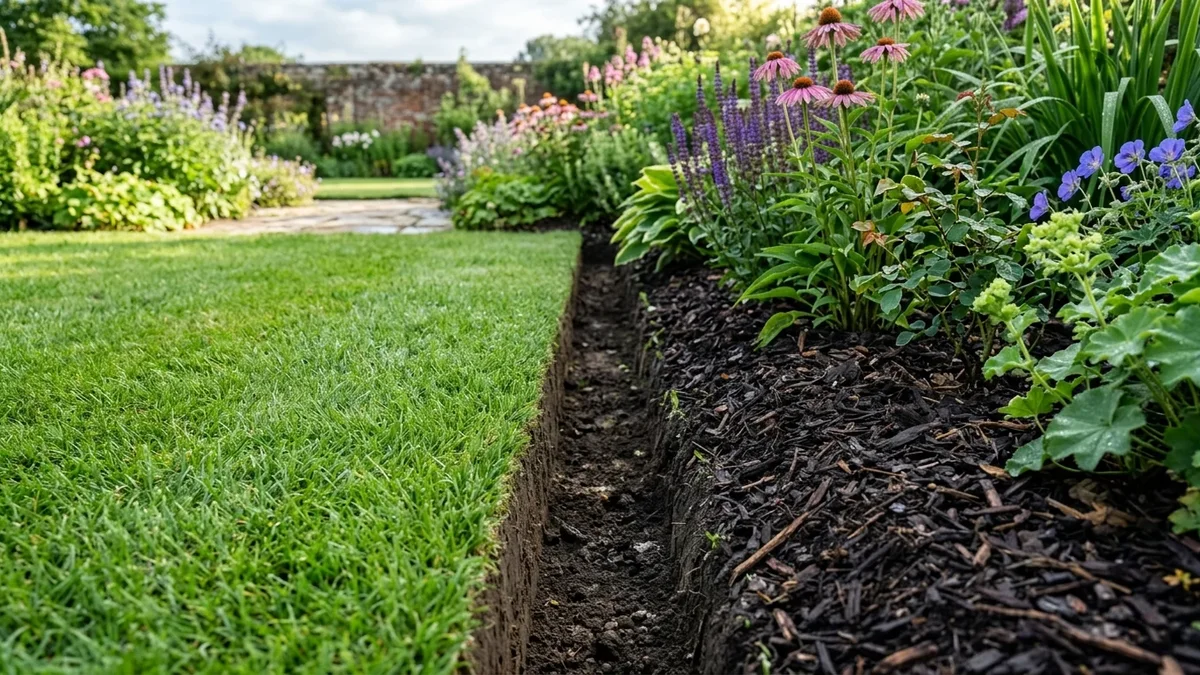
Are bed edges defined by a clean 3-to-4-inch spaded trench or permanent rigid stone/metal edge?
Are plant species repeated in clusters of 3 to 5 rather than single isolated specimens?
Does the planting style and color palette genuinely complement your home's exterior architecture?
Are driveway sightlines 100% clear of tall, obstructing shrubs when backing out onto the street?
High Priority Safety / Design StandardCurb Appeal Priority Planner: Solve Your Yard Dilemma
Every front yard begins with distinct architectural limitations or maintenance frustrations. Use this decision matrix to identify the ideal starting point for your property's specific challenge:
| Homeowner Challenge | Best Starting Idea | Effort Level | Maintenance | Best Suited For |
|---|---|---|---|---|
| Front door gets lost from the street | #1 Idea 1: Make Front Door the Focal Point | Weekend Project | Low ongoing care | Homes where the garage dominates or trees hide the entry |
| Foundation shrubs overgrown and blocking windows | #8 Idea 8: Replace Overgrown Shrub Row | 1–2 Weekends | Saves hours of monthly hedge shearing | Older 1960s–1990s homes with massive yews or junipers |
| Front yard feels flat and lacks depth | #9 Idea 9: Layer Foundation Plants in 3 Tiers | Moderate | Medium | Two-story homes with stark vertical walls |
| Tired of mowing a huge, unused front lawn | #24 Idea 24: Reduce Unused Front Lawn | Phased project | Dramatically cuts weekly mowing & watering | Sloped front yards, water-conscious regions, dry soil |
| Walkway is cracked, narrow, or unclear | #2 Idea 2: Create a Clear Front Walkway | Major Upgrade | Very low once installed | Any home where visitors struggle to find the front steps |
| Strict small budget under $300 | #36 Idea 36: Focus Small Budget on Entry First | Single Afternoon | Low | New homeowners, renters, quick resale staging |
| Want curb appeal but hate yard work | #38 Idea 38: Simplify for Lower Maintenance | Weekend Setup | Under 30 minutes a month | Busy professionals, seniors, rental homes |
| Yard looks completely dead and bare all winter | #10 Idea 10: Add Year-Round Evergreen Structure | Weekend Planting | Low | Northeast, Midwest, and Mountain West snow zones |
| Very small compact front yard | #15 Idea 15: Small Ornamental Tree as Focal Point | Moderate | Low | Urban cottages, bungalows, and compact suburban lots |
Explore the 40 Curb Appeal Ideas
Filter by zone of your front yard, home architectural style, maintenance tolerance, or project budget.
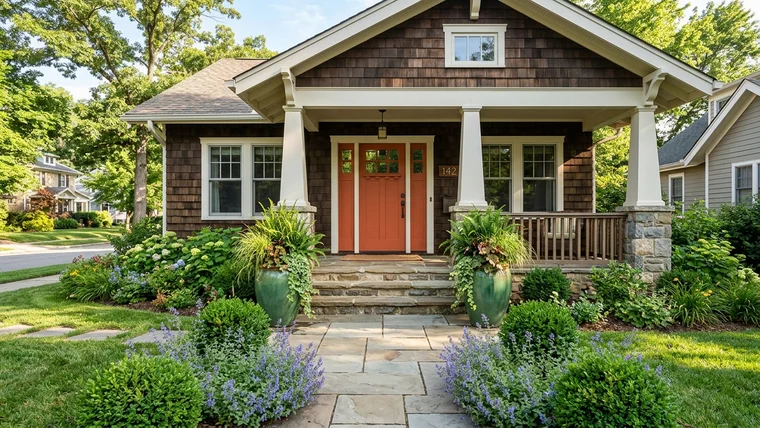
Organize the entire front-yard landscape composition so sightlines, walkway paths, and foundation plant heights naturally direct the eye straight to the front door.
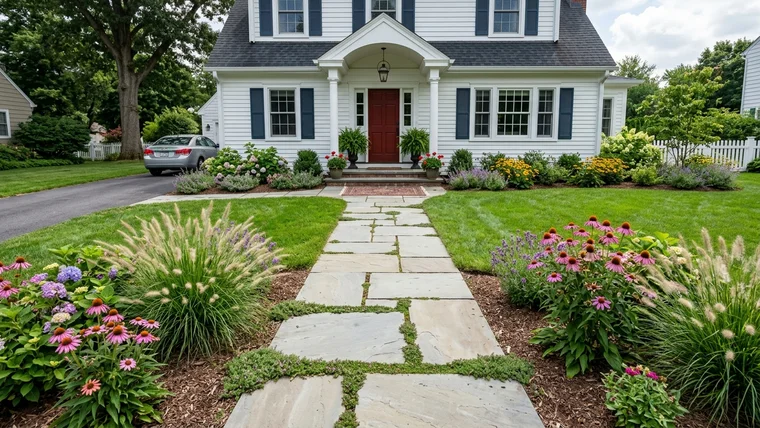
Establish a wide, obvious walking route connecting the primary parking or street curb directly to the porch steps without ambiguous wanderings.
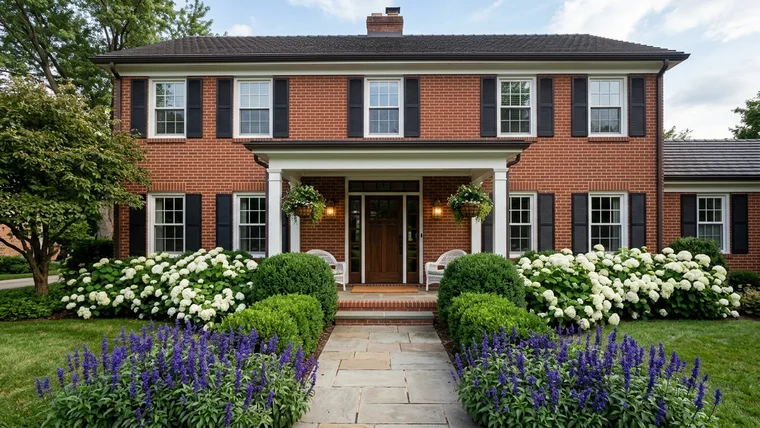
Flank the front porch steps with matching clusters of evergreen shrubs, flowering perennials, or architectural planters to create formal balance.
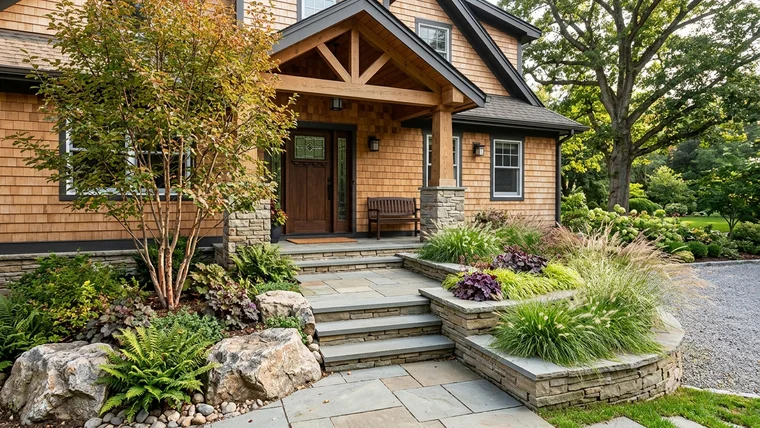
Balance an off-center front door with a substantial planting mass or small specimen tree on the opposite side to achieve dynamic equilibrium.
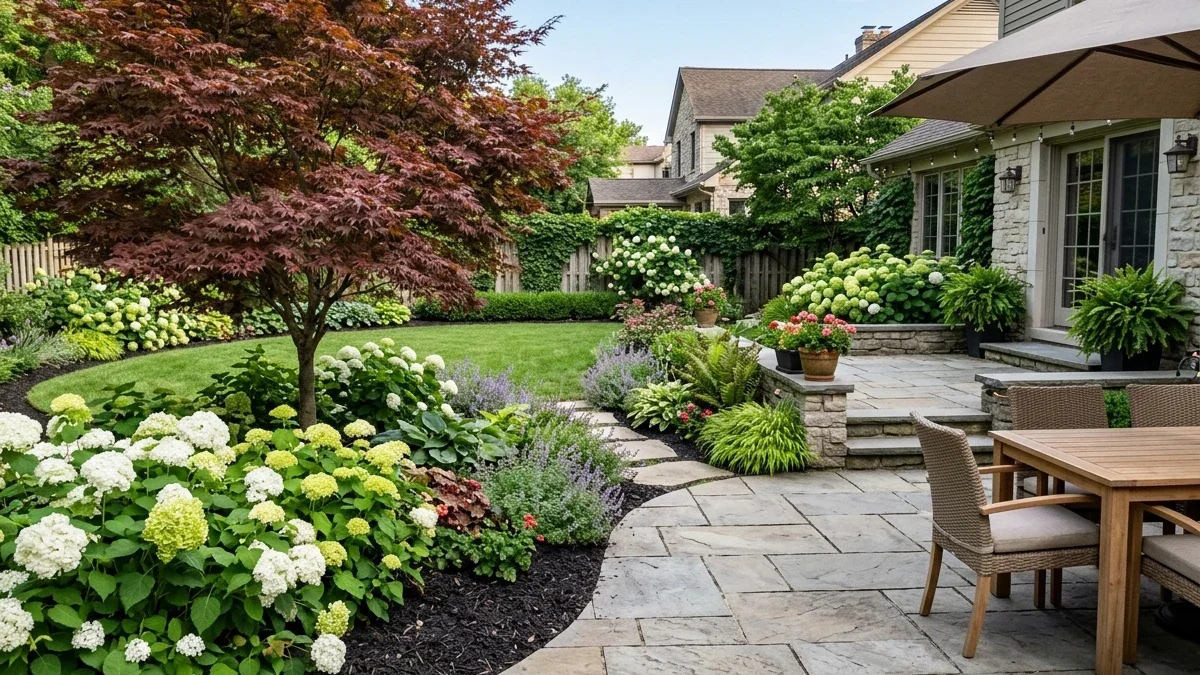
Position high-quality architectural planters on porch steps or flanking the threshold to deliver instant seasonal color and structural polish.
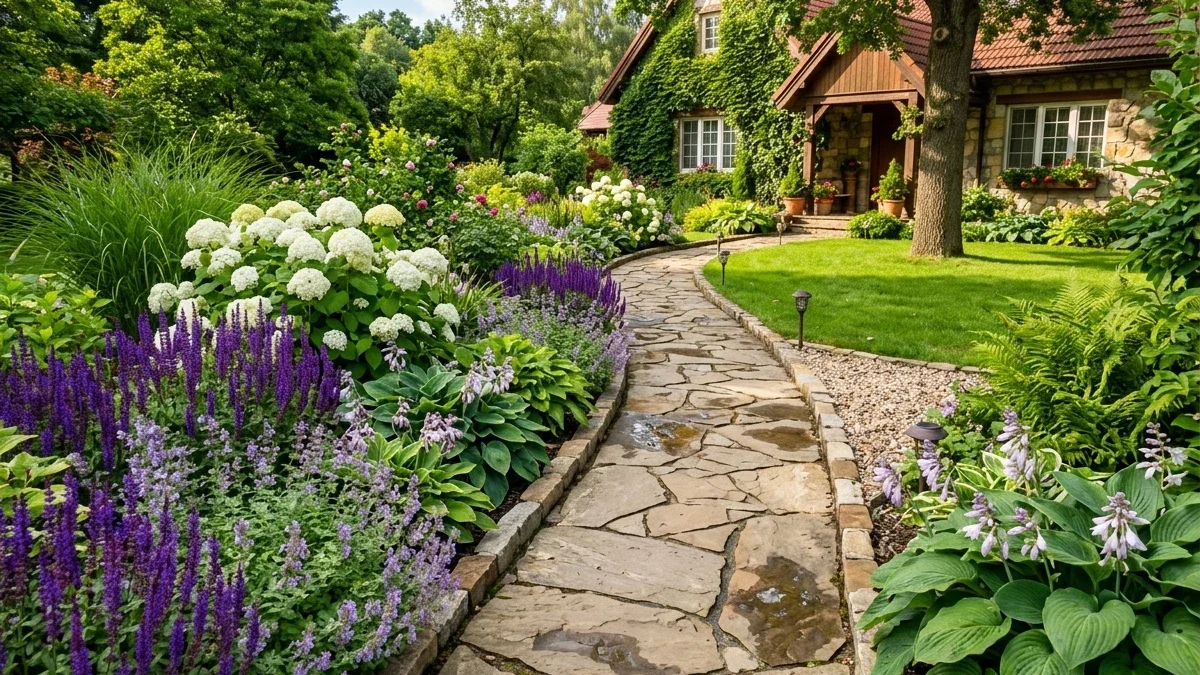
Carve out an intimate 6-to-10-foot garden alcove wrapping the porch landing with tactile perennials, fragrant blooms, and compact shrubs.
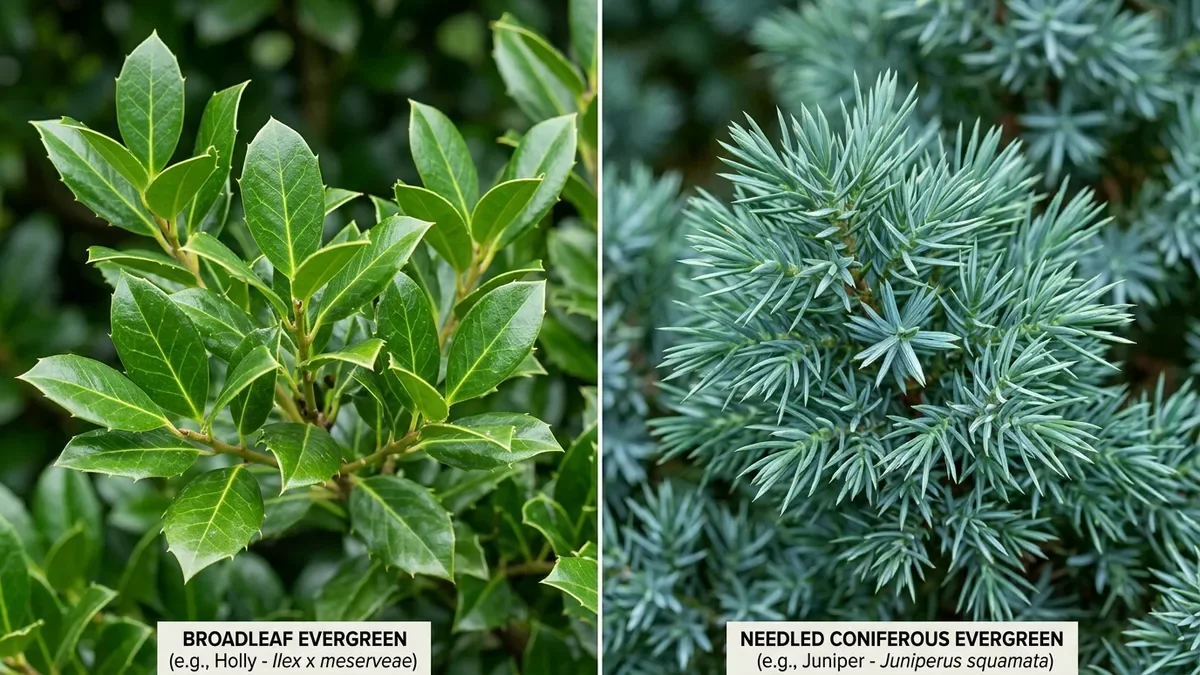
Expand shallow 2-to-3-foot foundation strips out to 6 to 8 feet deep, allowing plants to step down in natural, graceful tiers away from house siding.
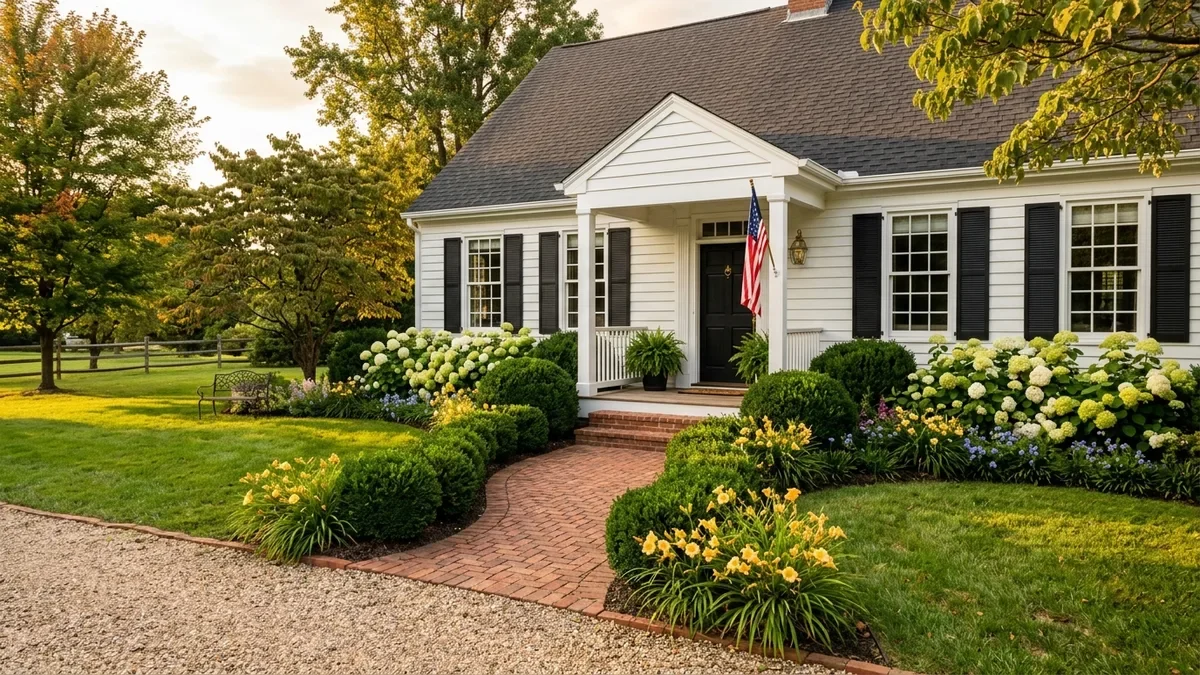
Remove aged, leggy yews, overgrown junipers, or sheared green meatballs that swallow first-floor windows, replacing them with properly scaled species.
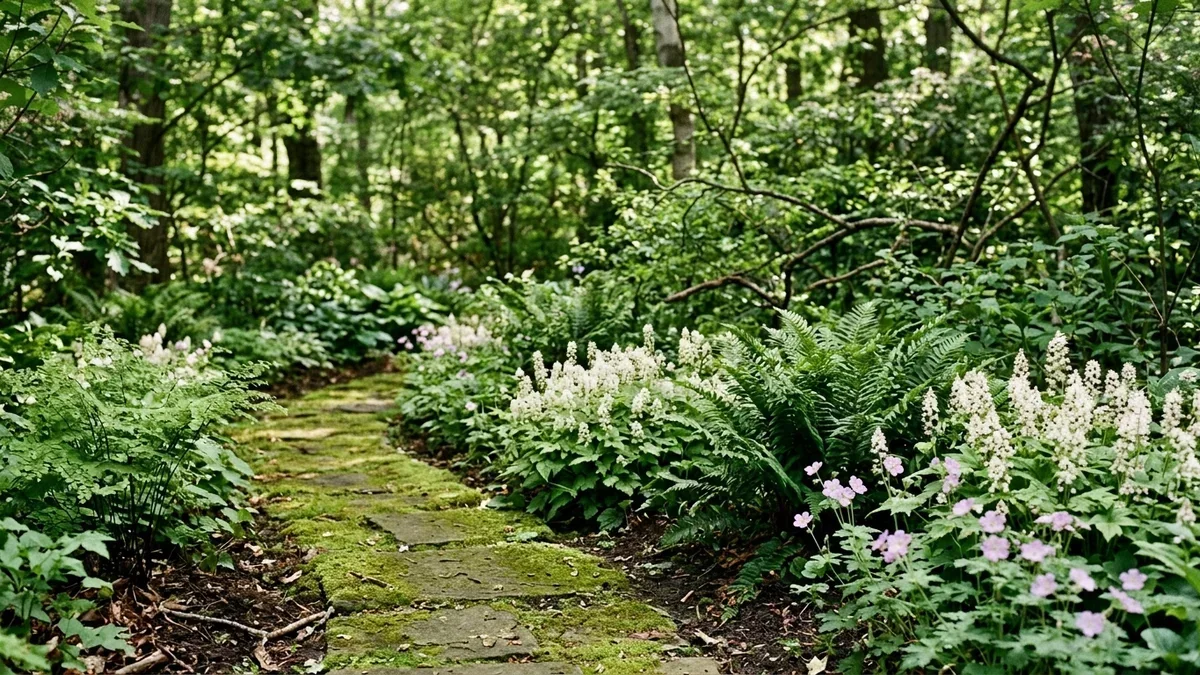
Build visual depth by arranging plants in three height tiers: structural evergreen anchors in back, medium flowering shrubs in middle, and low groundcovers in front.
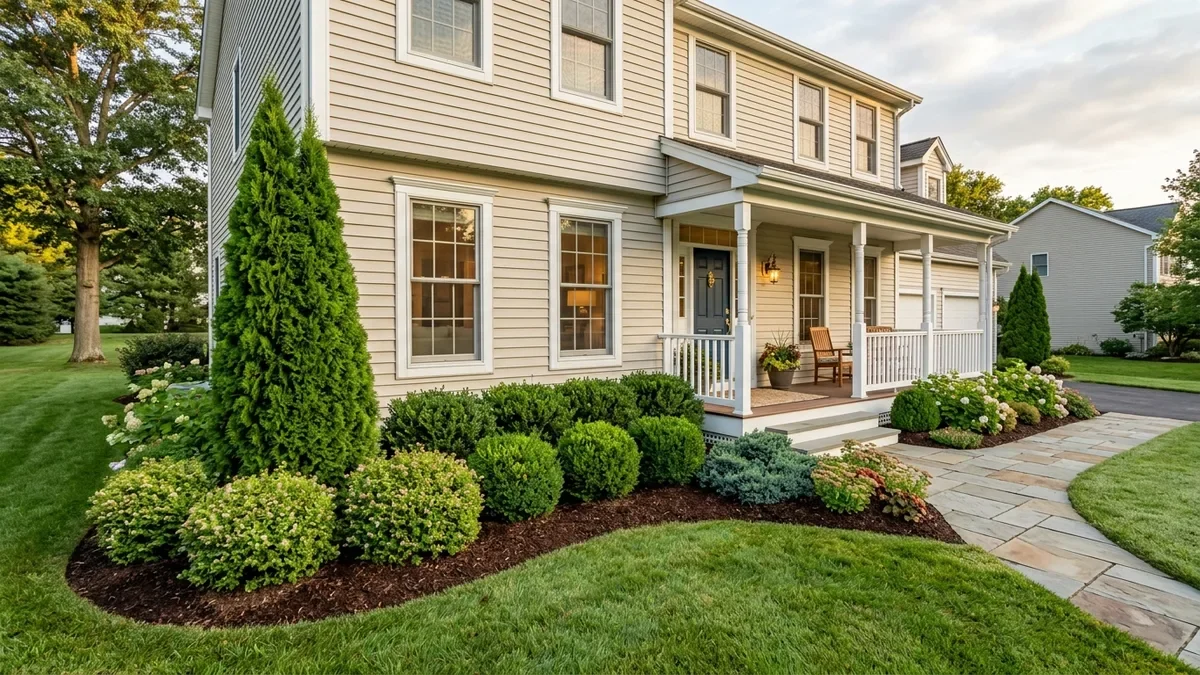
Establish a permanent architectural backbone using compact evergreen shrubs that retain rich green foliage and form through winter months.
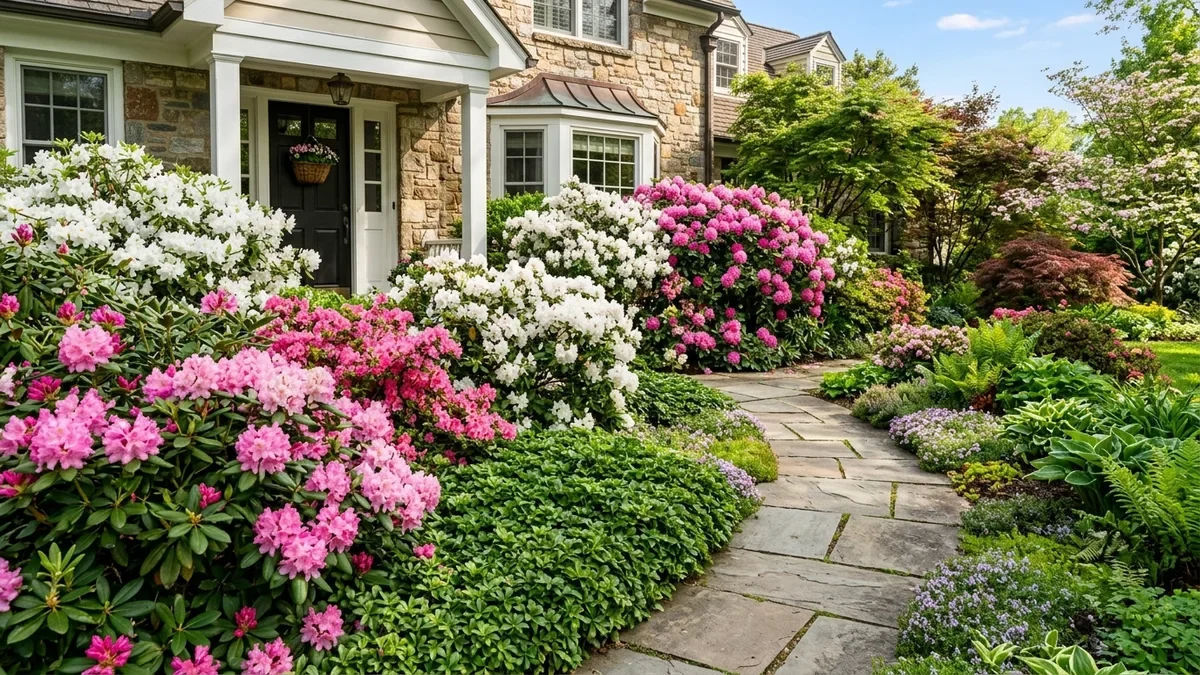
Plant grouped clusters of 3 to 5 matching flowering shrubs rather than scattering isolated single specimens across the foundation.
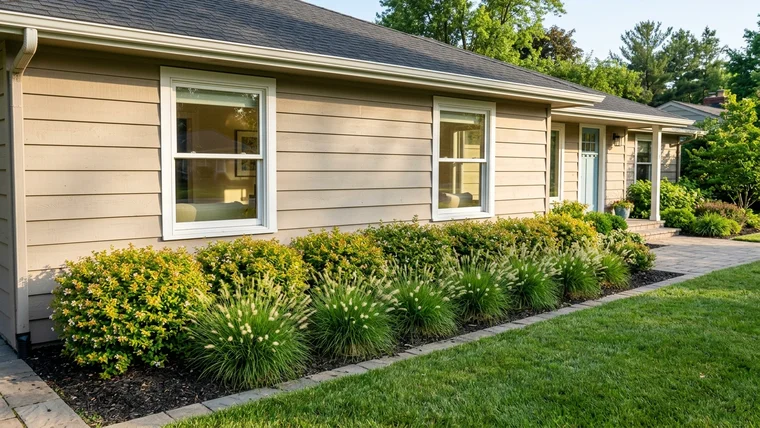
Select dwarf shrub varieties whose natural mature height tops out at least 12 inches below the bottom of front-facing window sills.
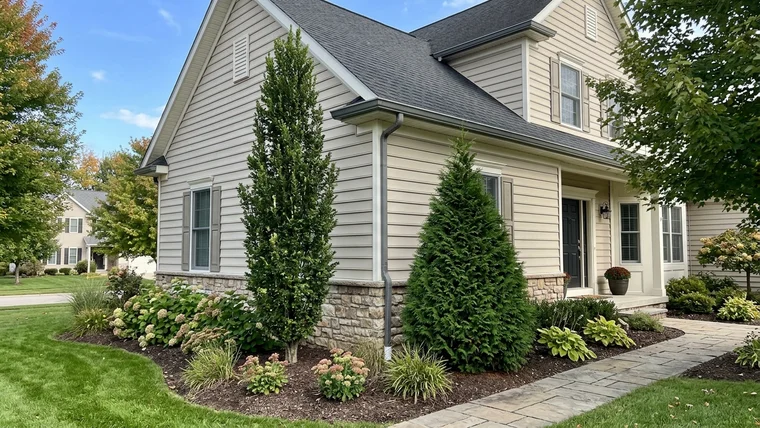
Position pyramidal or vase-shaped structural shrubs at exterior house corners to soften sharp vertical siding edges into the surrounding landscape.
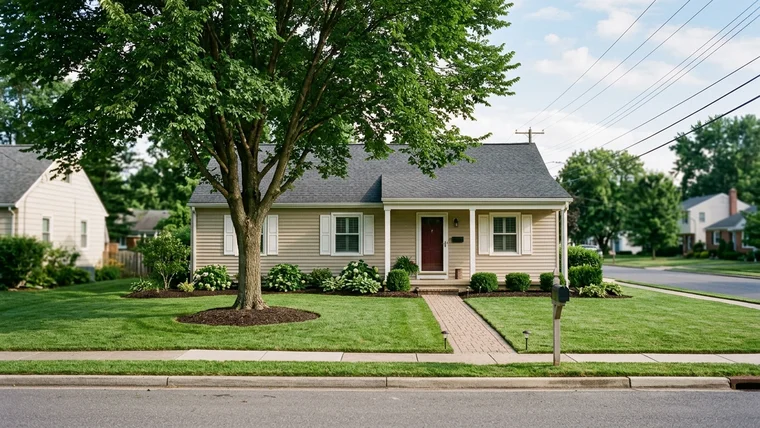
Plant a single well-proportioned shade or canopy tree positioned to frame the house facade without obscuring the front entry or overhead power lines.
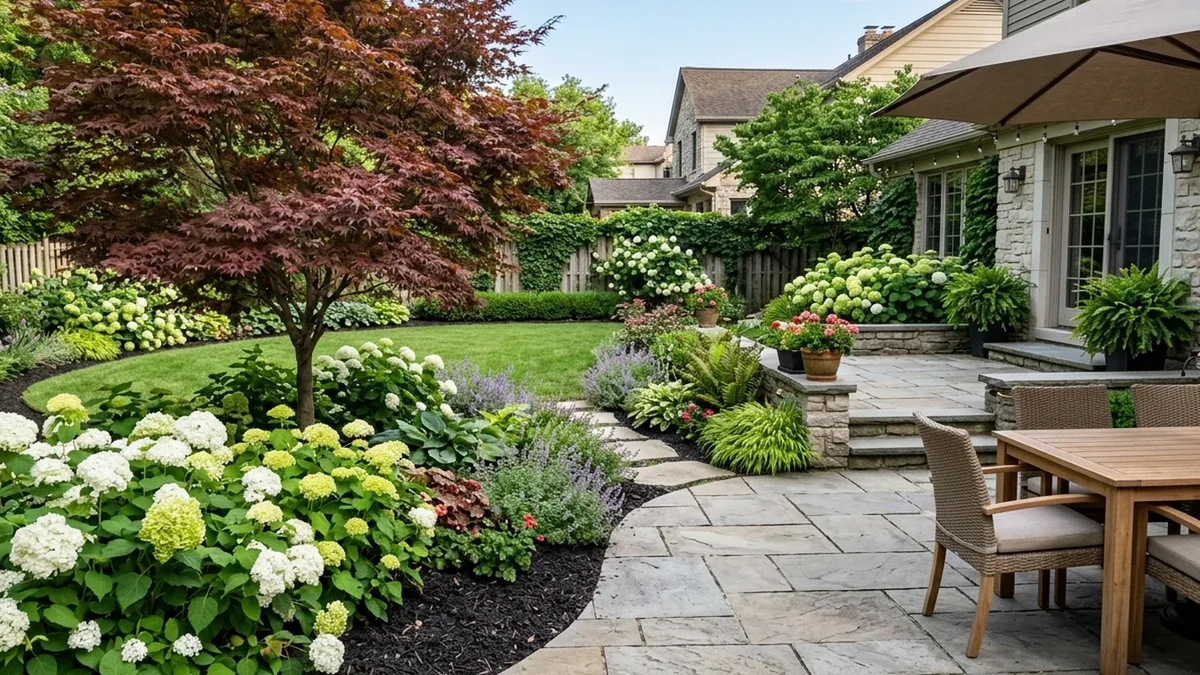
Feature an artistic understory tree (maturing under 20 feet) boasting sculptural branching, showy spring blossoms, or fiery autumn foliage.
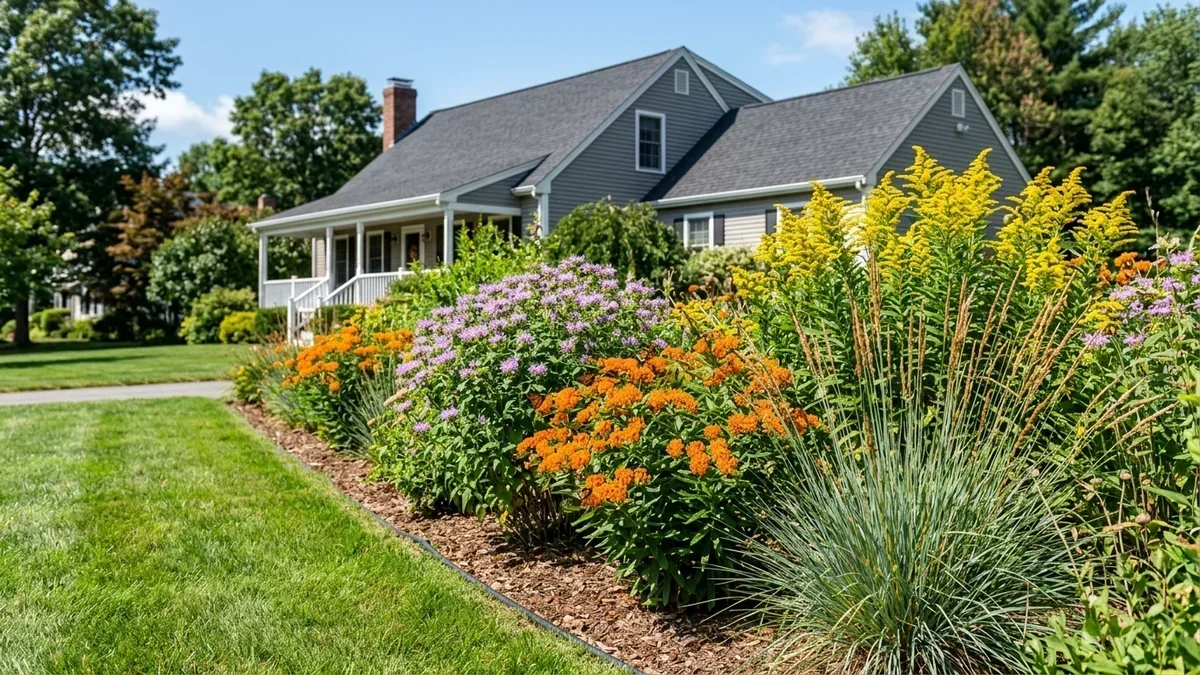
Weave together a tapestry of broadleaf evergreens, deciduous flowering shrubs, and textured foliage along side lot lines or front lawn perimeters.
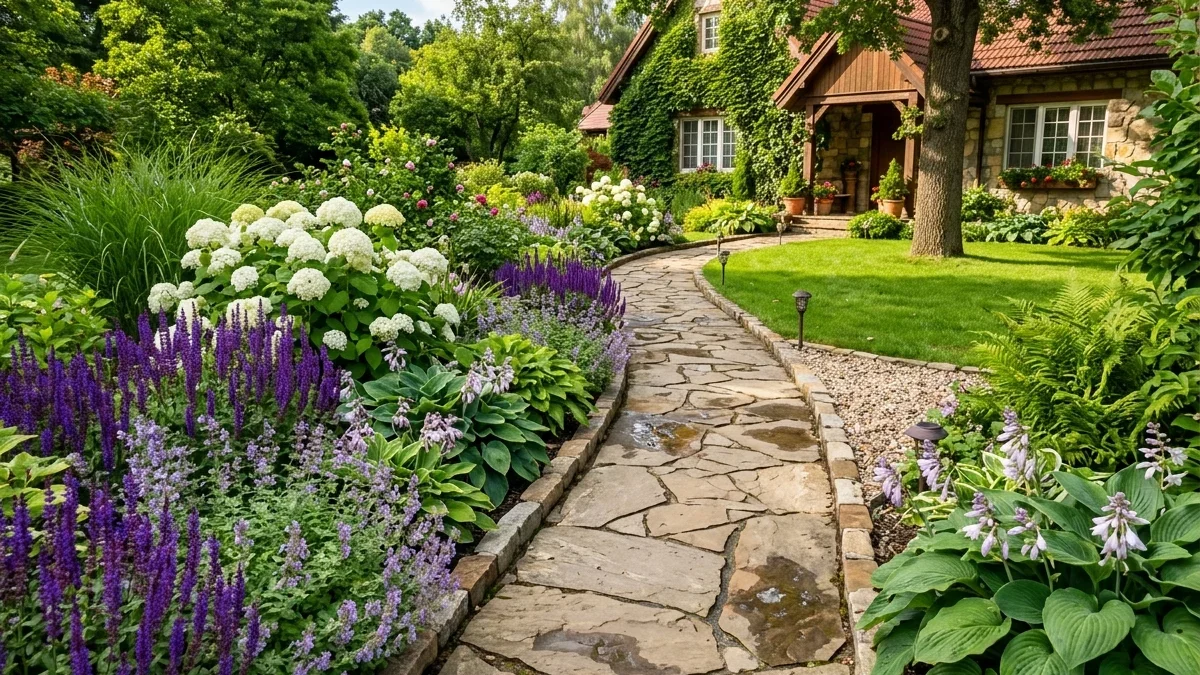
Integrate high-biodiversity native perennials and shrubs inside a razor-sharp physical border (crisp trench or stone edge) so the garden looks intentional.
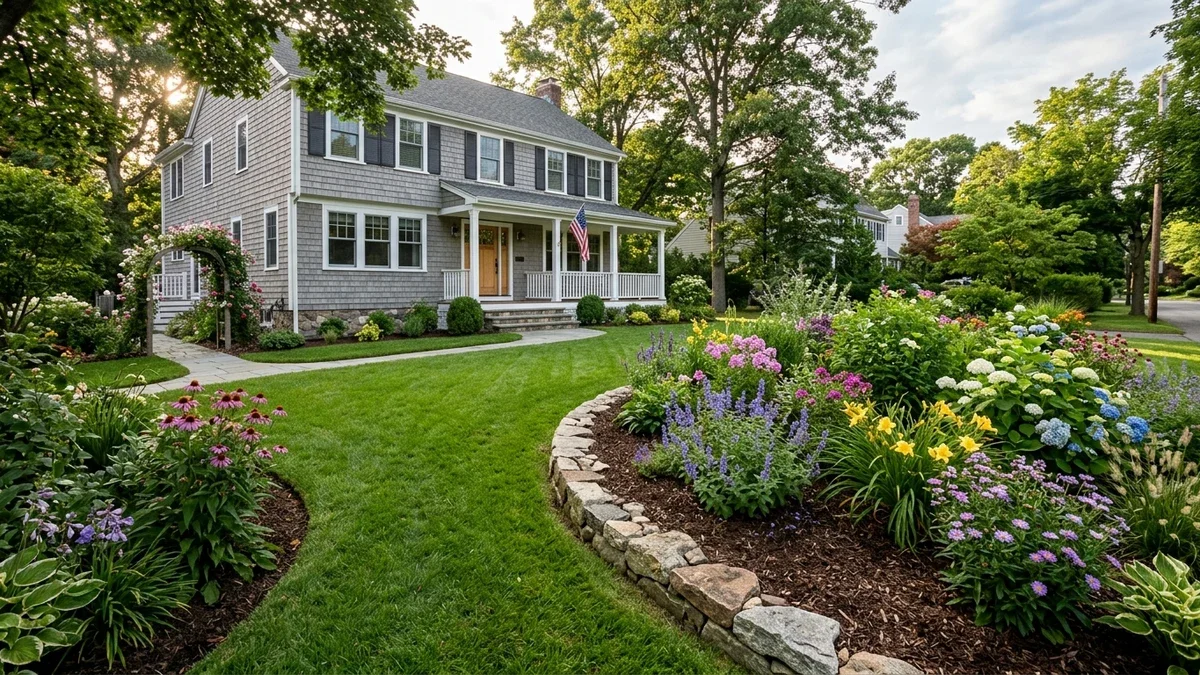
Curate a vibrant nectar corridor of long-blooming perennials and host shrubs that feed native bumblebees, honeybees, and hummingbirds.
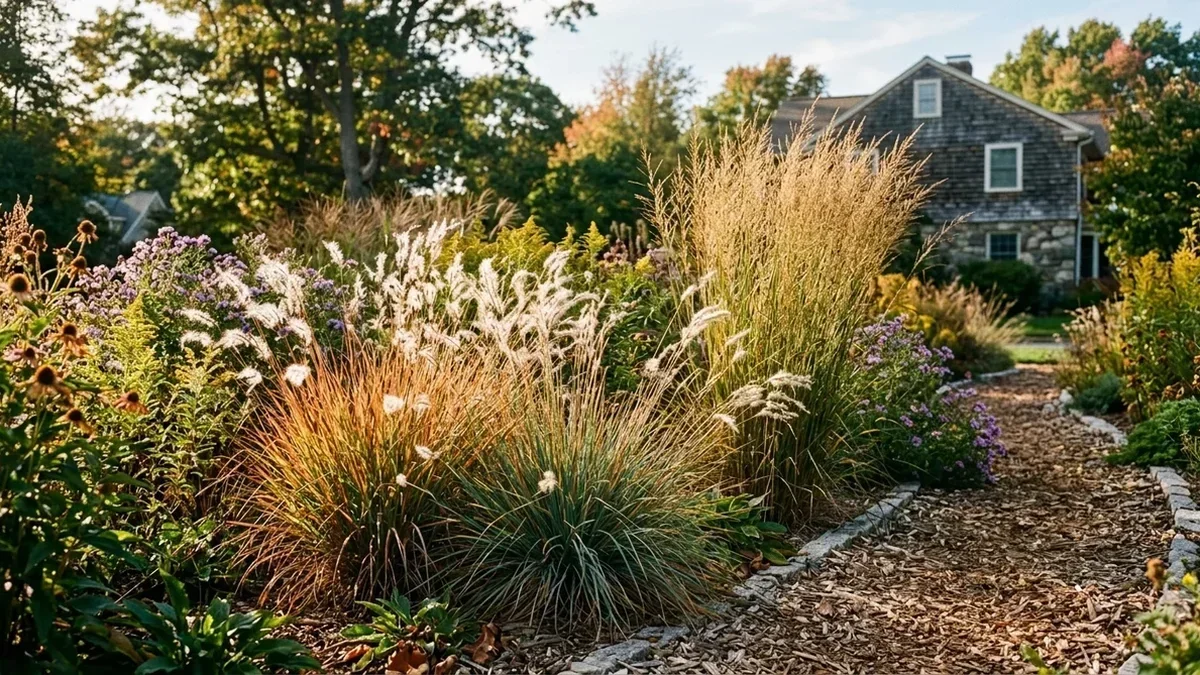
Incorporate clumping ornamental grasses whose fine, linear blades catch sunlight, rustle in breezes, and provide architectural plumes into winter.
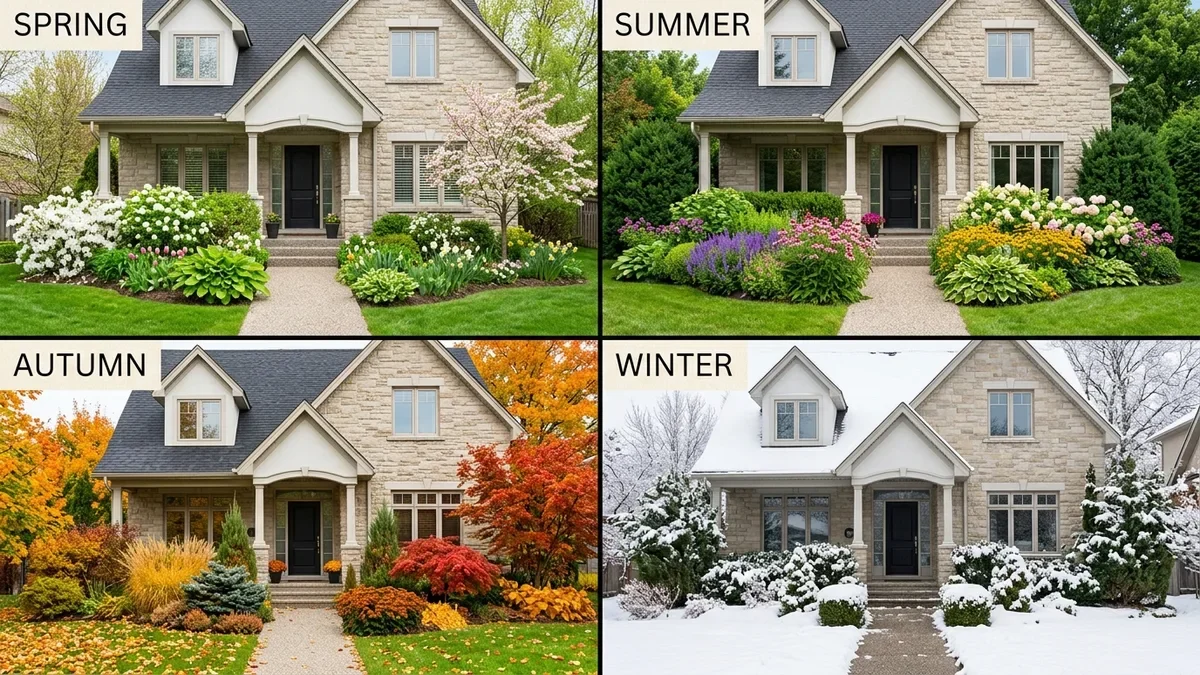
Select shrubs that deliver distinct seasonal highlights: spring flowers, summer lushness, vibrant autumn foliage, and persistent winter berries or colored bark.
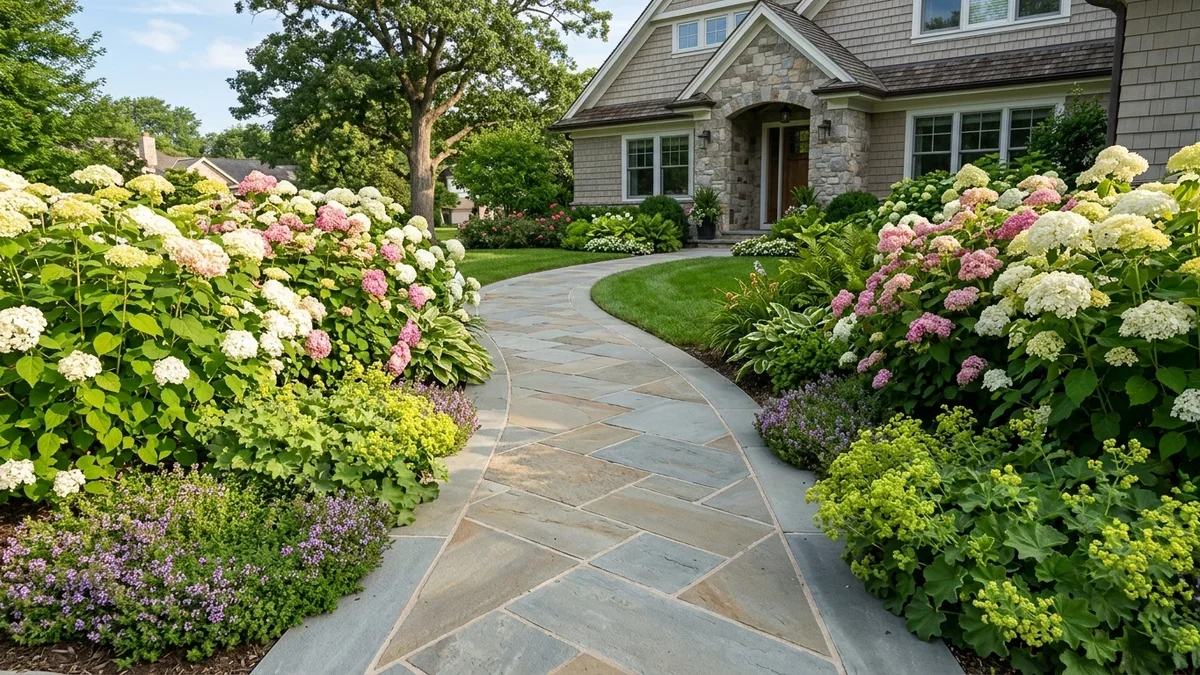
Feature lush drifts of panicle or smooth hydrangeas that generate massive, romantic flower heads from mid-summer well into autumn.
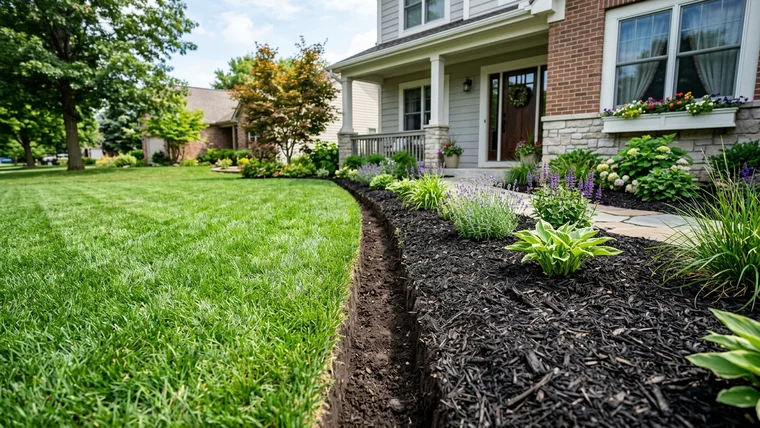
Cut a clean, vertical 3-to-4-inch hand-spaded trench or install steel/stone edging between your green lawn and dark mulch beds.
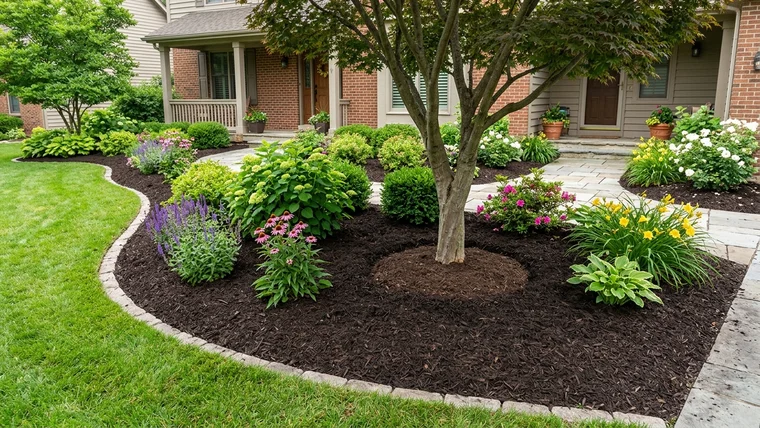
Apply a uniform 2-to-3-inch layer of natural dark shredded bark or wood chips across all planting beds, avoiding dyed red mulch or trunk volcanoes.
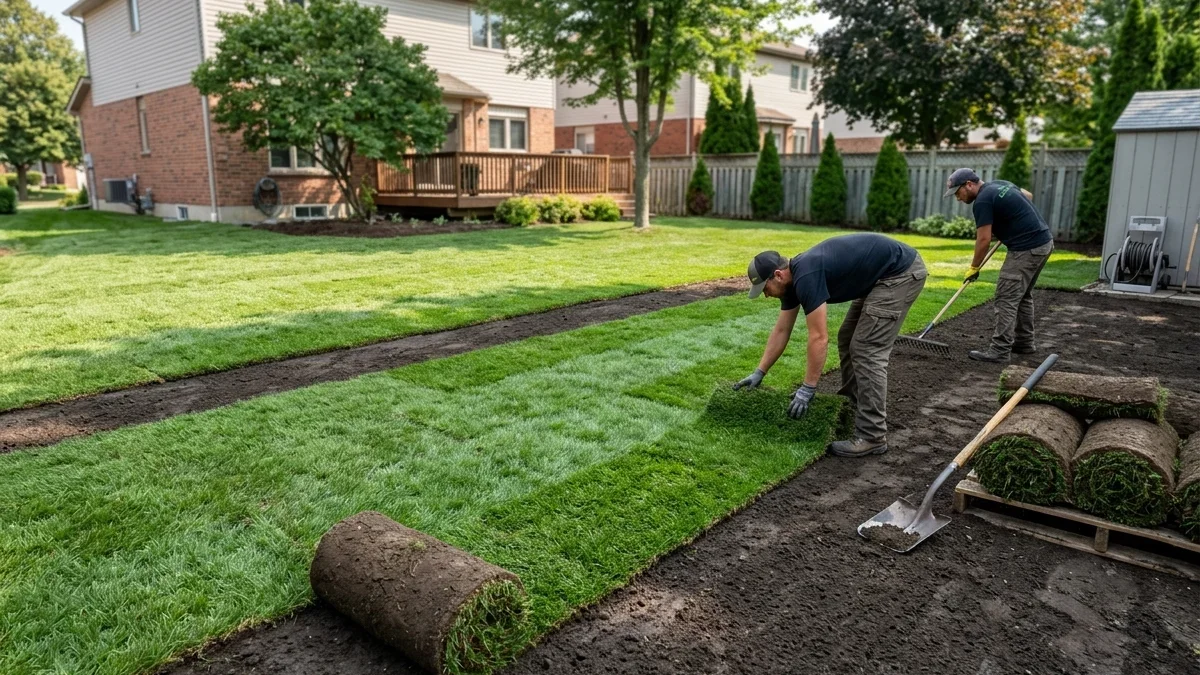
Convert awkward, difficult-to-mow turf corners or steep slopes into expansive perennial beds, native groundcovers, or permeable gravel courtyards.
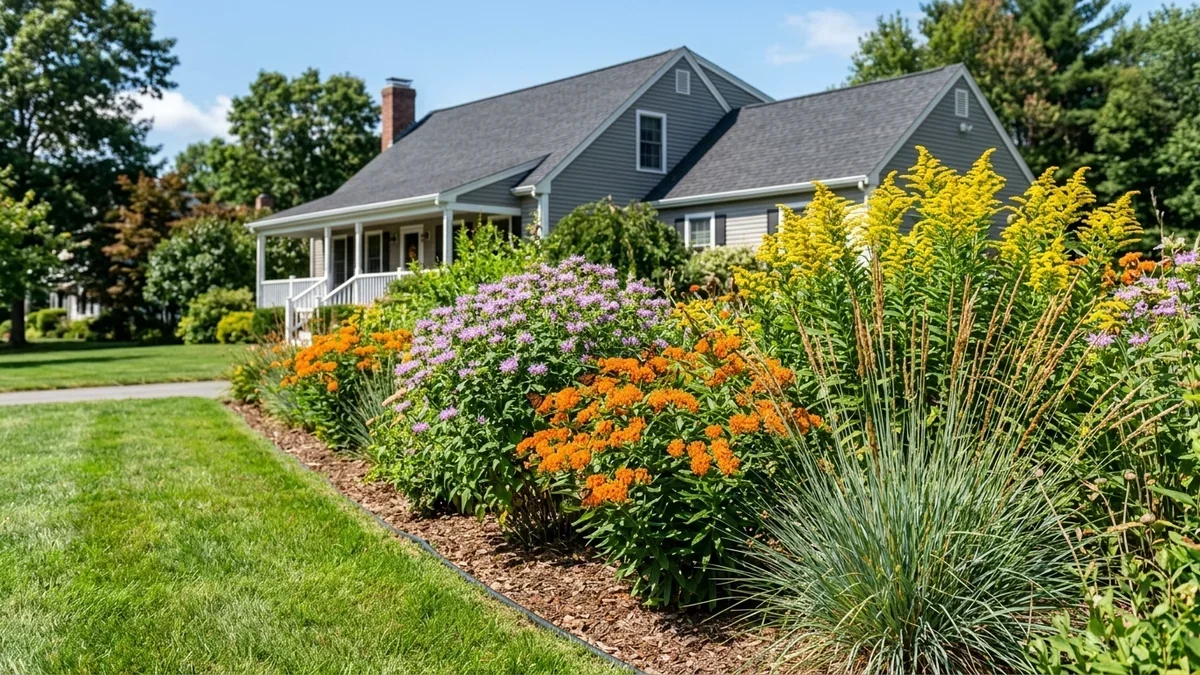
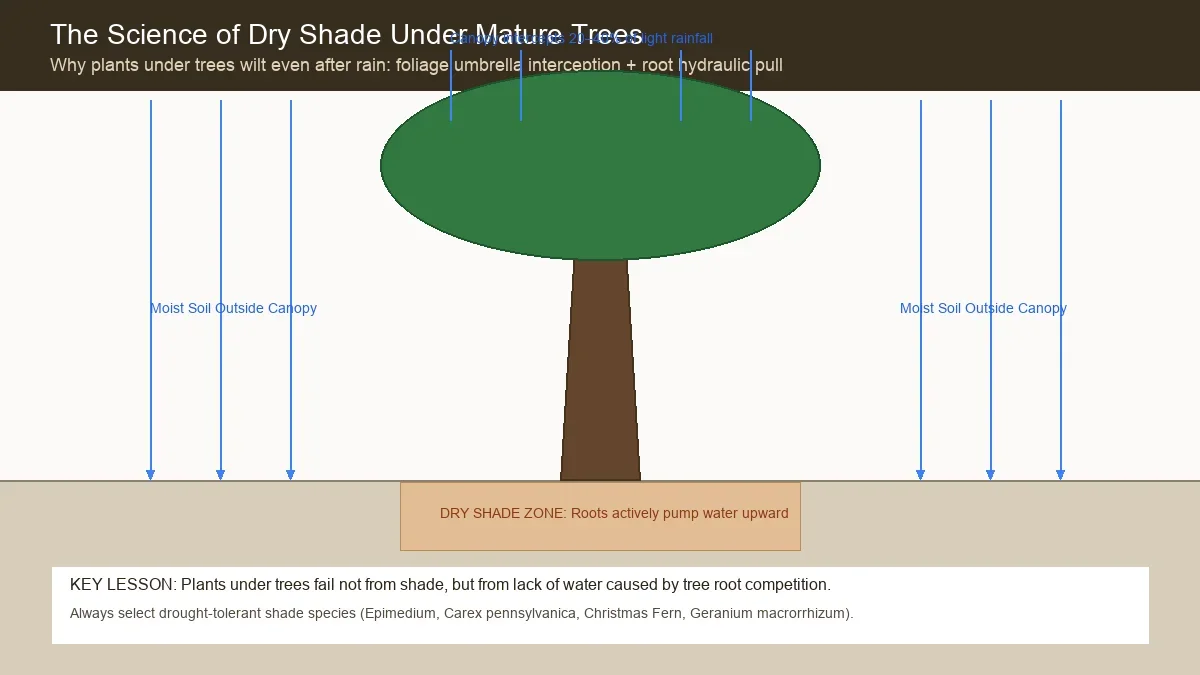
Blanket dry shade under large trees, erosion-prone slopes, and narrow sidewalk strips with tough, low-spreading perennial groundcovers.
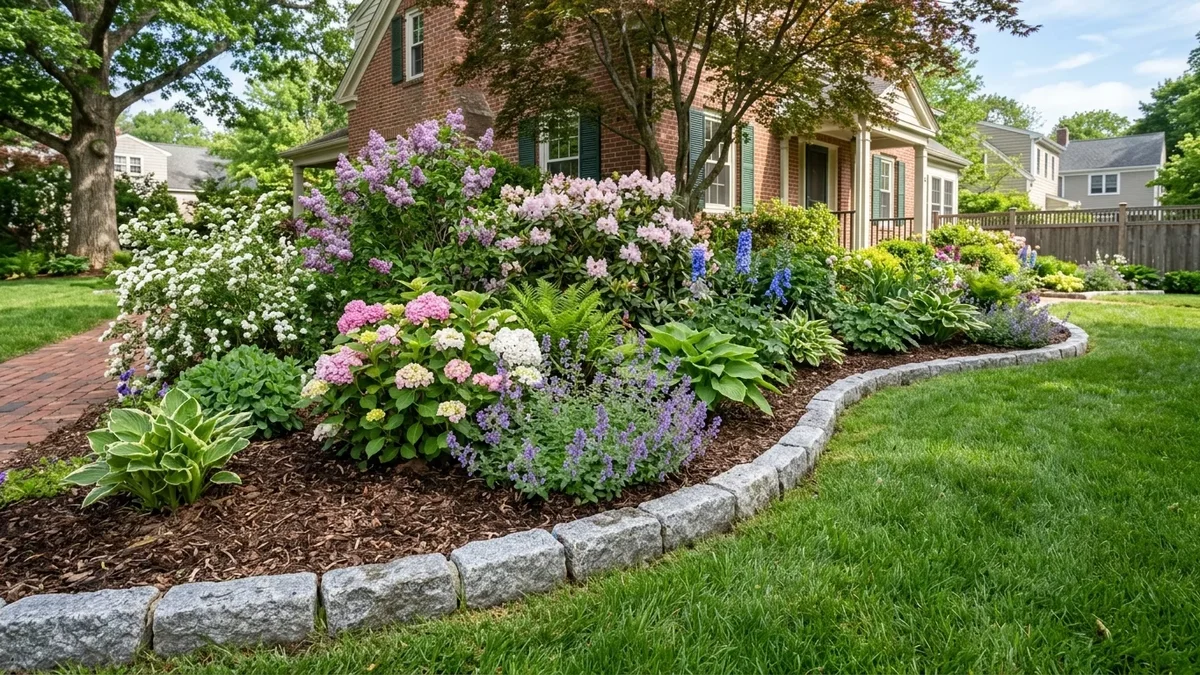
Install a curated perennial island or wide border anchored with structural evergreen accents, repeat-blooming flowers, and architectural grasses.
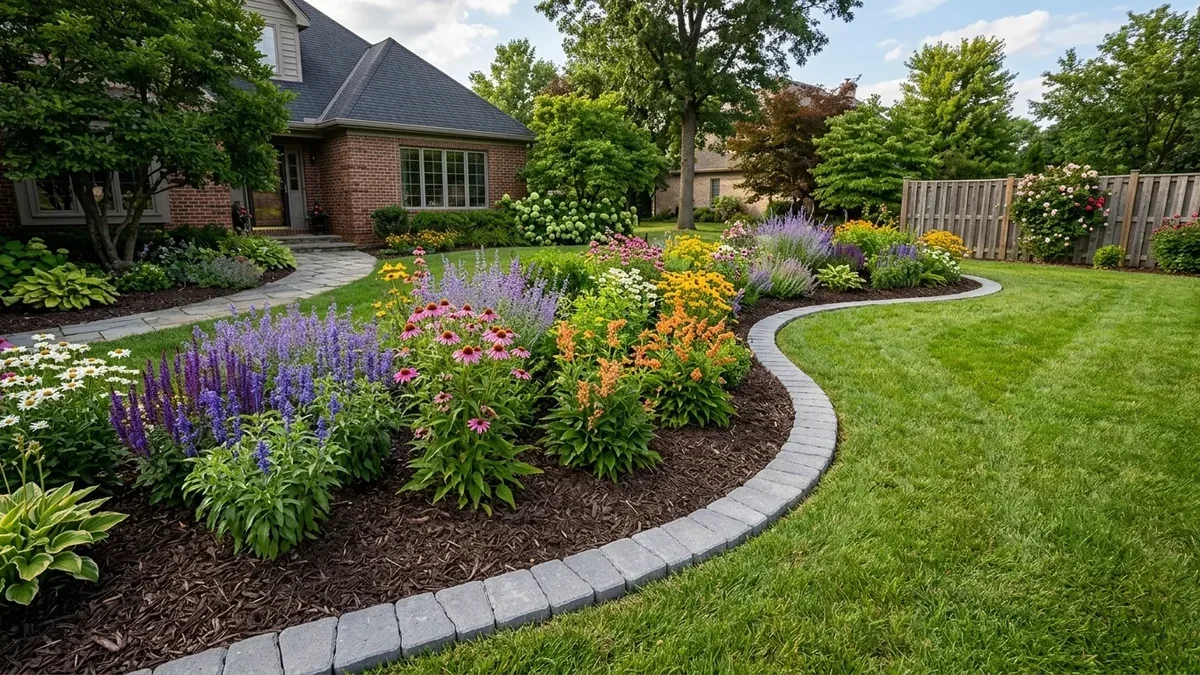
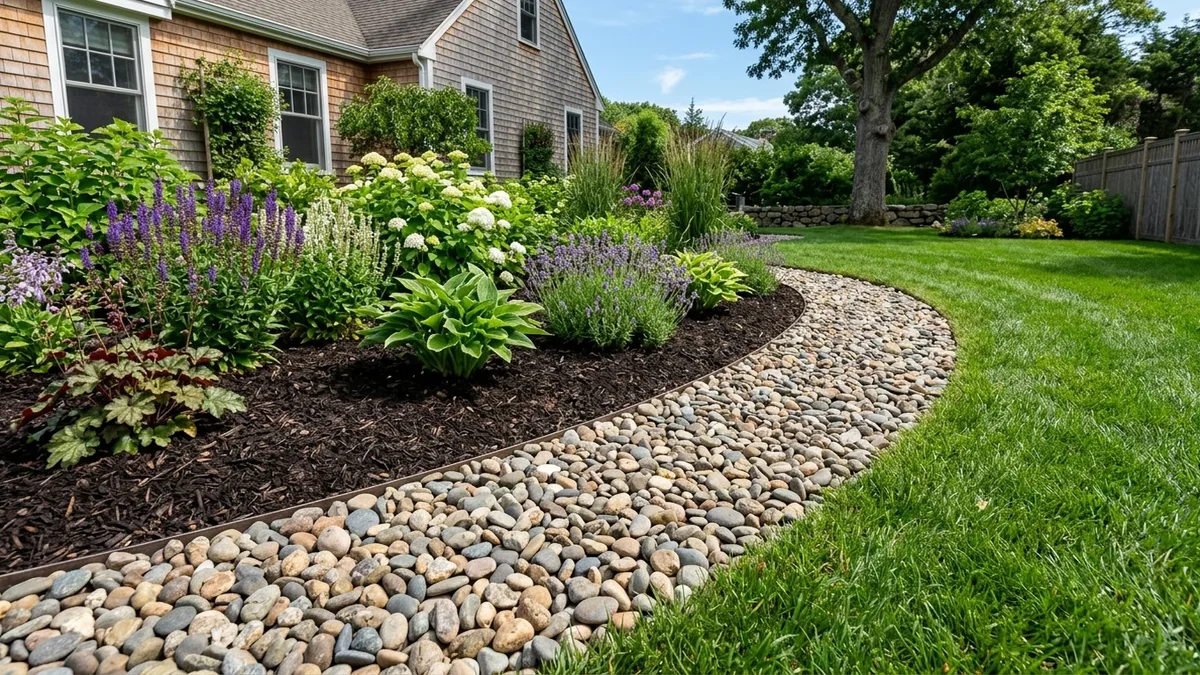
Sculpt sweeping, generous bed lines that curve gracefully across the lawn to soften sharp 90-degree boxy house angles and rectangular driveways.
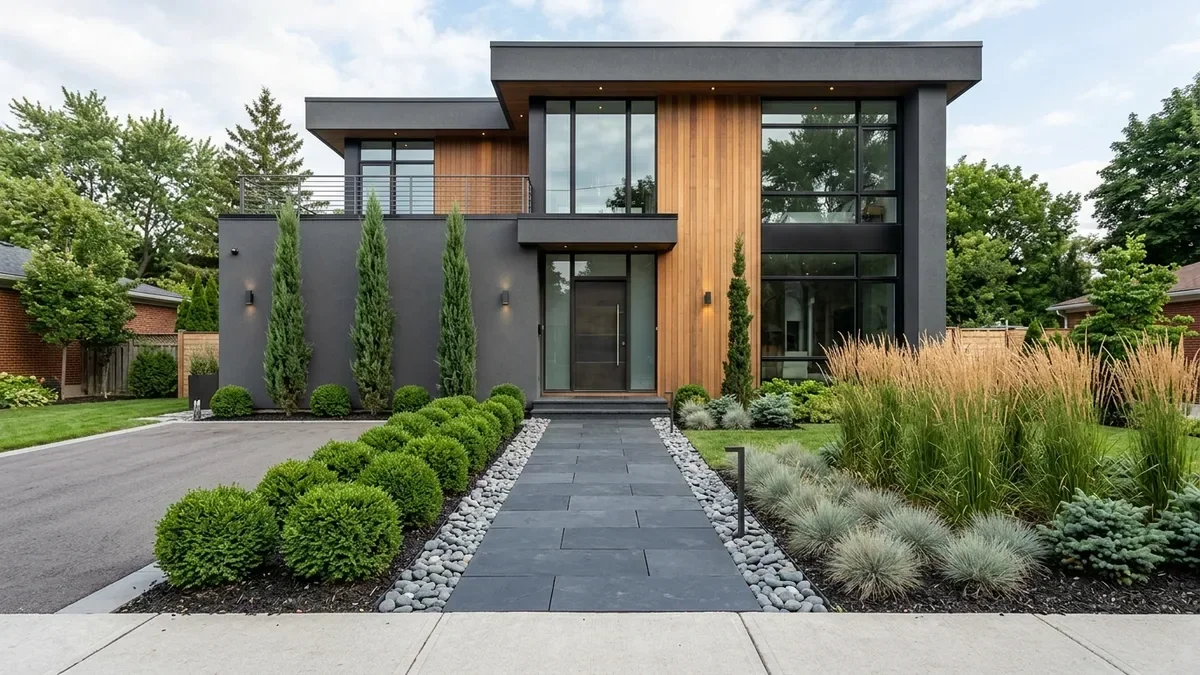
Deploy crisp linear geometries, right-angle planting beds, and razor-sharp metal edging that mirror the clean geometry of contemporary architecture.
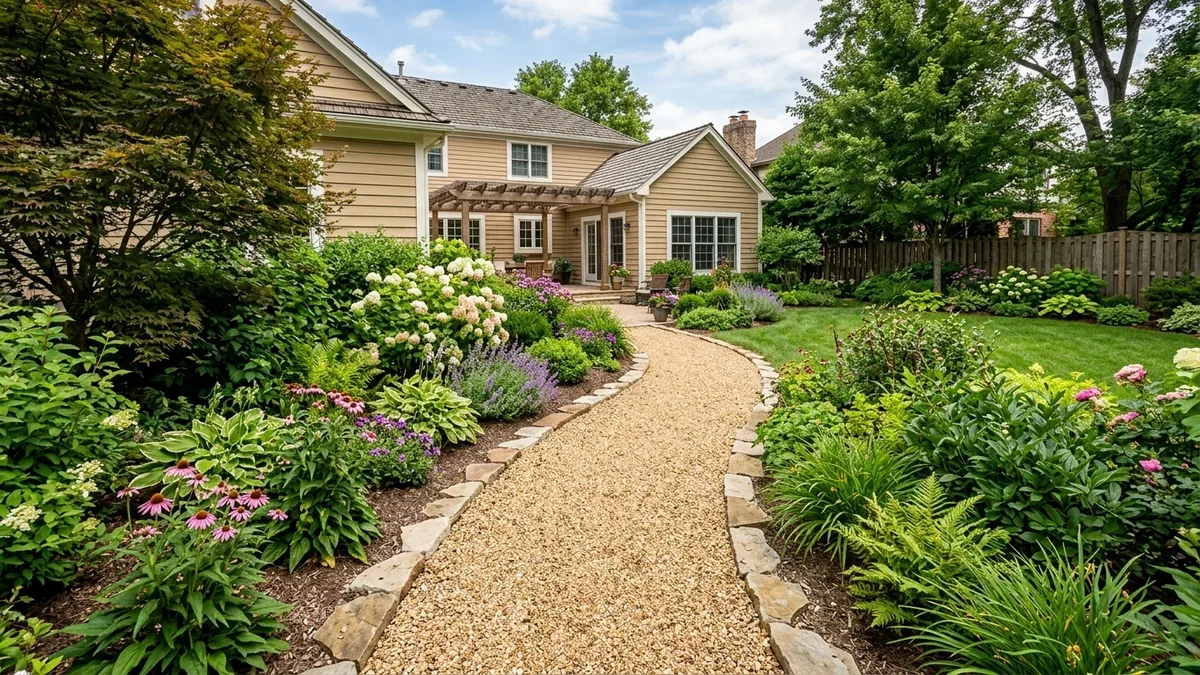
Completely eliminate high-maintenance turfgrass in favor of an integrated landscape of decomposed granite paths, boulders, drought-hardy shrubs, and groundcovers.
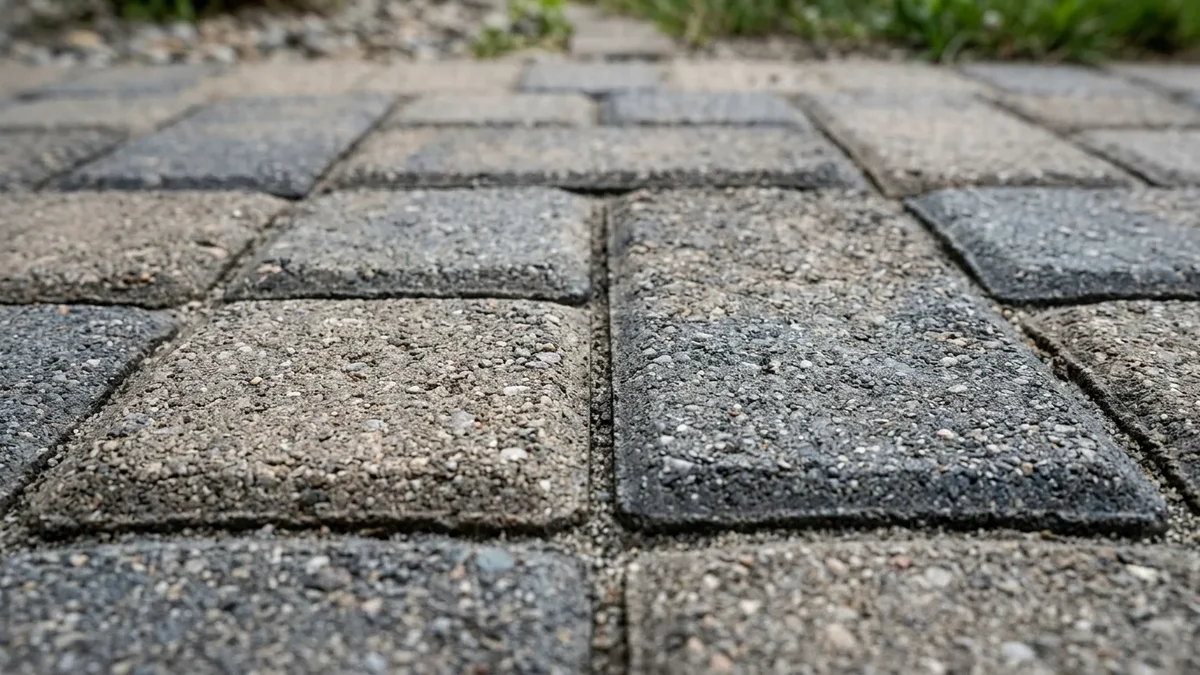
Replace cracked poured concrete with dimensional bluestone, clay brick pavers, or textured interlocking pavers featuring contrasting soldier course borders.
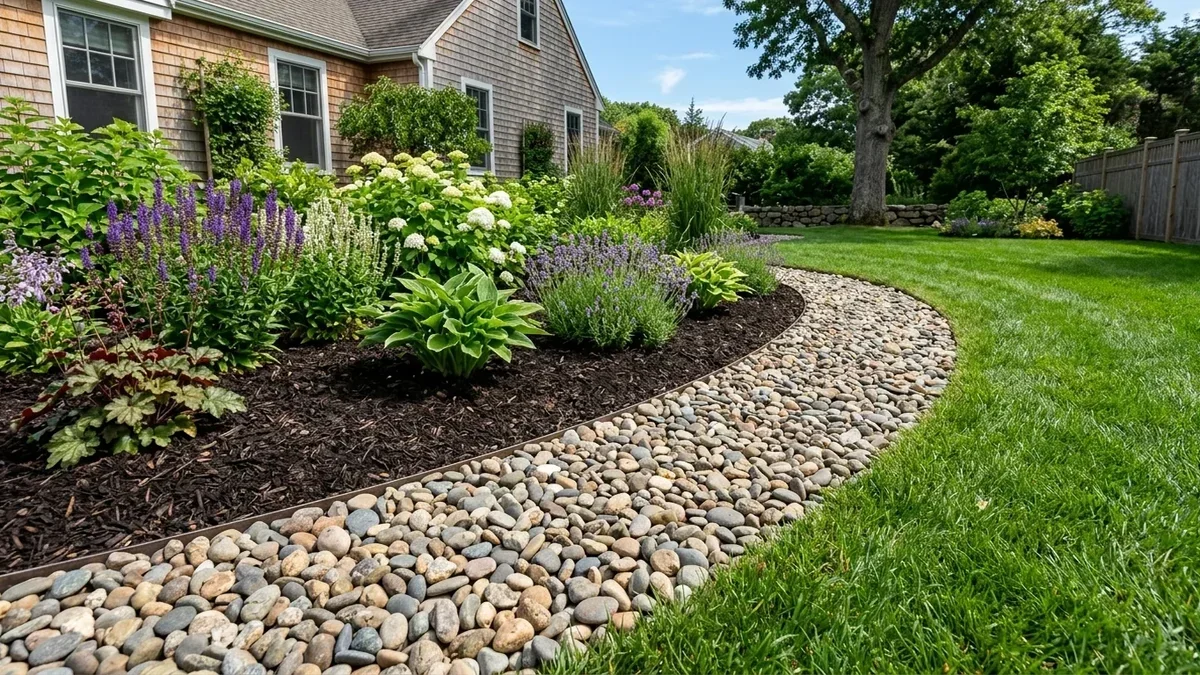
Line the asphalt or concrete driveway edge with low-profile cobblestone ribbons, drought-tough daylilies, and creeping groundcovers that soften the pavement.
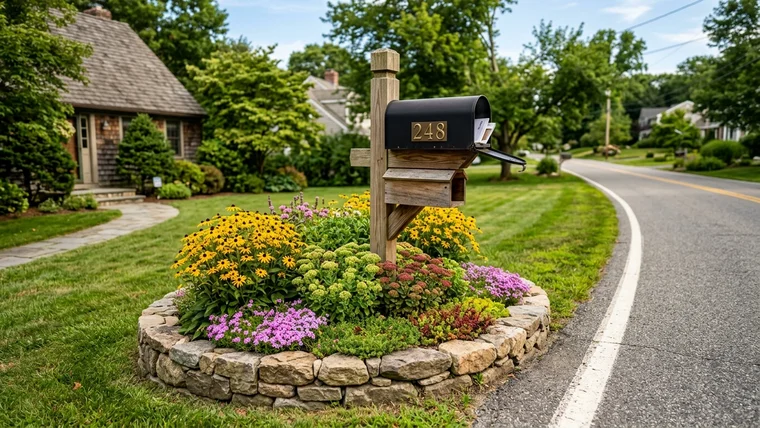
Transform an isolated curbside mailbox post into an attractive micro-garden using stone edging, drought-tough perennials, and climbing clematis.
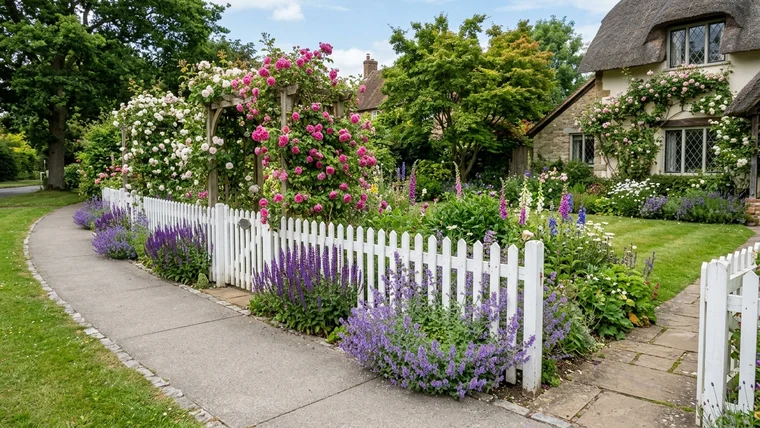
Layer mixed perennials, compact flowering shrubs, and climbing roses along a front picket or split-rail fence to create classic American street charm.
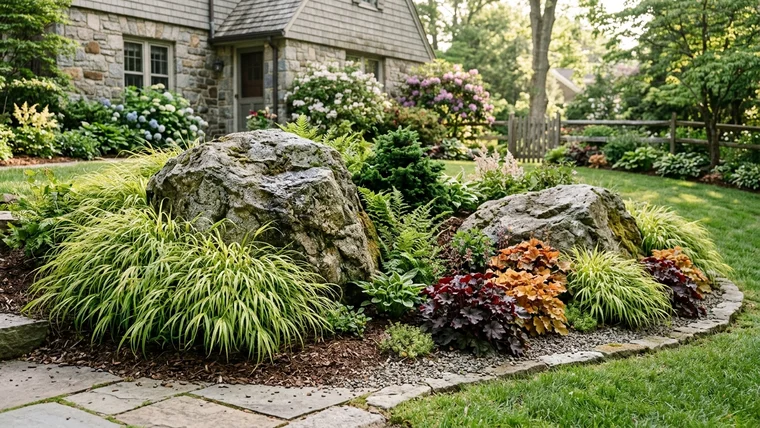
Bury one or two large, character-rich natural boulders one-third into the soil inside a garden bed to anchor plantings with geological weight.
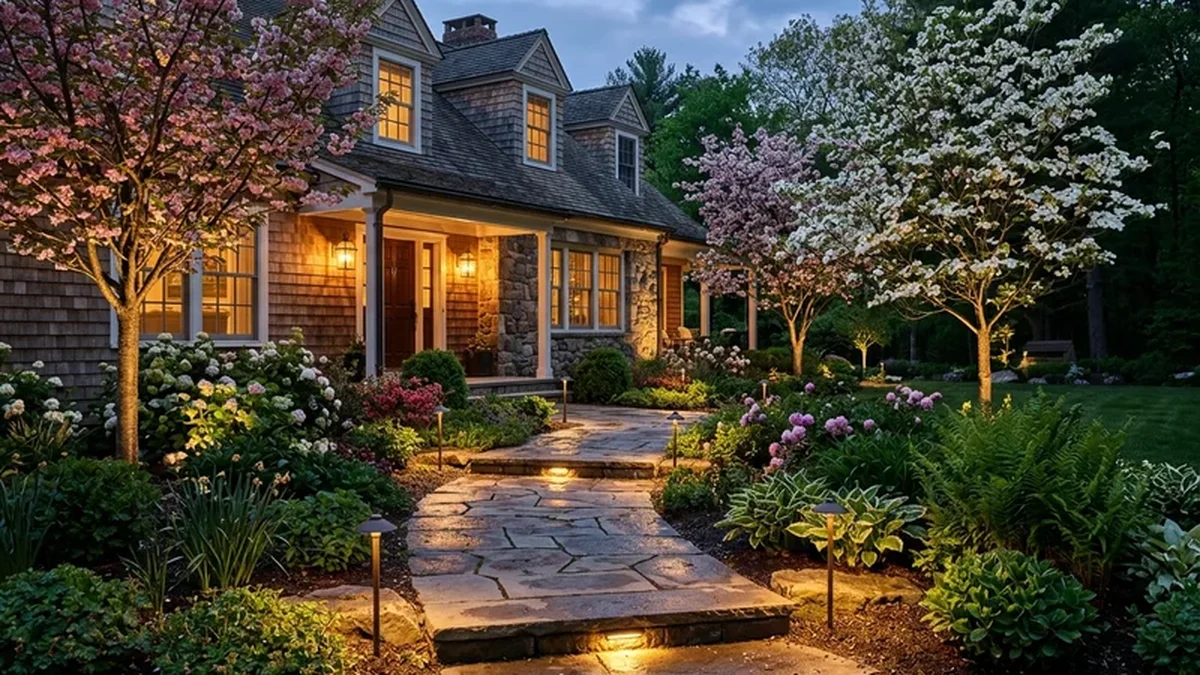
Install warm 2700K low-voltage LED path lights and tree uplights that guide evening arrival safely while highlighting key architectural textures.
Concentrate 80% of limited landscaping funds directly around the front door, porch steps, and entry walk rather than spreading thin dollars across the entire yard.
Preserve, selectively prune, or relocate established mature trees, Japanese maples, and healthy evergreen shrubs rather than clear-cutting the yard.
Reduce plant diversity down to 4 or 5 proven, slow-growing varieties planted in wide repeated drifts with clean, simple bed geometries.
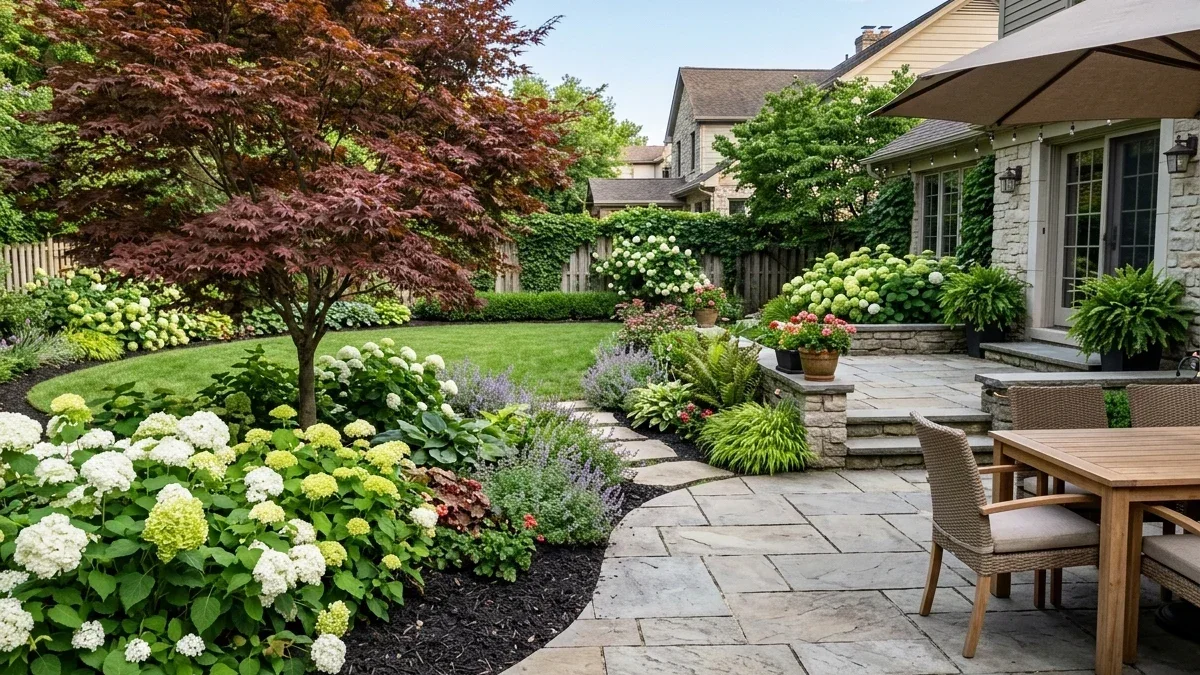
Cluster high-energy seasonal flowers (spring bulbs, summer annuals, autumn mums, winter pansies) strictly in high-visibility focal zones.
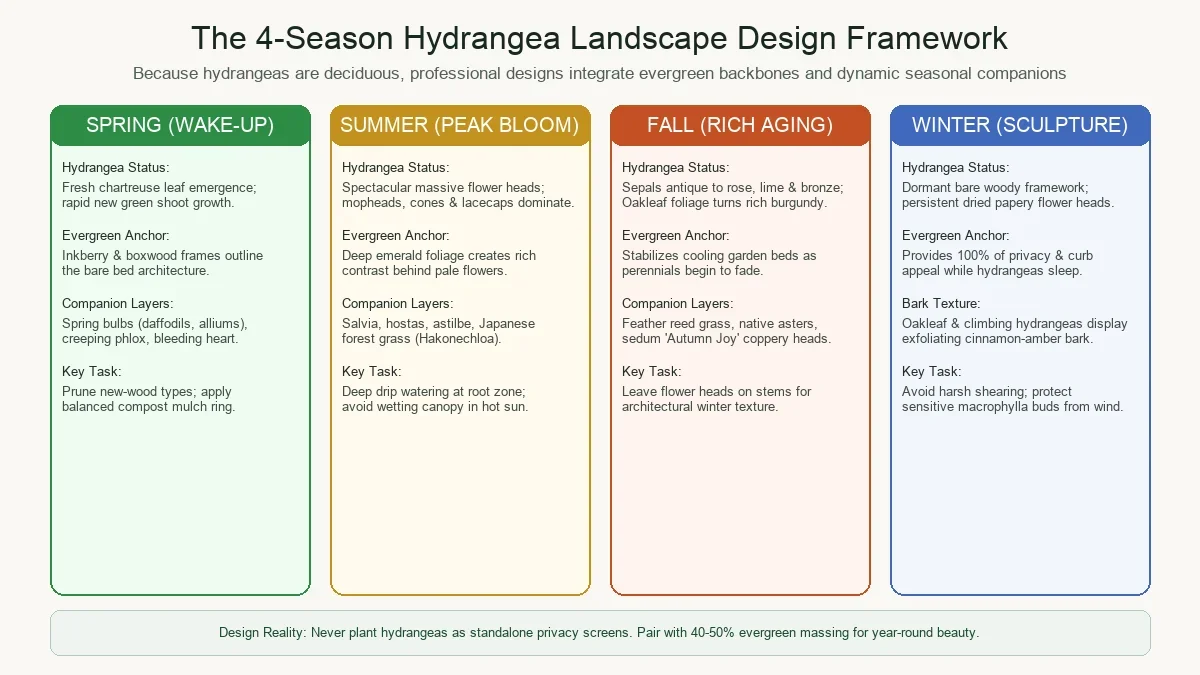
Synthesize spring blooms, lush summer foliage, fiery autumn leaves, and winter evergreen silhouettes into a front yard that looks gorgeous 365 days a year.
Want to see these curb appeal ideas on your actual home?
Upload a front-yard photo into our AI Landscape Design Generator. Instantly visualize new stone walkways, widened foundation beds, layered flowering shrubs, and modern color palettes tailored to your facade.
Mature Size Clearance Rules: Protecting Siding & Foundation
The single most destructive curb appeal error in North American residential landscaping is planting shrubs based on their 1-gallon nursery container size rather than their 10-year mature dimensions. When branches press tightly against exterior clapboards, brick, or stucco, they trap humidity, rot siding, invite carpenter ants, and void pest-control warranties.
Mature Plant Sizing & Architectural Clearance Standards
Planting according to mature height and spread prevents windows from being swallowed, preserves siding inspection corridors, and keeps walkways clear.
The 18-Inch Air Gap
Maintain at least 18 inches of unobstructed airspace between exterior wall siding and the mature foliage canopy. This permits routine painting, power washing, gutter cleaning ladder placement, and prevents moisture from condensing on framing.
12-Inch Window Buffer
A shrub whose mature height exceeds the bottom window sill creates a claustrophobic interior and blocks natural southern light. Choose dwarf cultivars whose documented mature height stays at least 12 inches below the sill.
The 50% Setback Rule
To calculate planting distance from the foundation: take the shrub's published mature width, divide by two, and add 18 inches. A shrub with a 6-foot mature spread must be planted 4.5 feet out from the wall.
Front Entry Hierarchy: Visual Eye-Tracking from Curb to Door
When a guest or prospective homebuyer pulls up to the curb, their eyes naturally scan the property within the first 7 seconds. A cohesive landscape acts as visual signage, guiding the visitor smoothly through three distinct focal zones:
Front Entry Visual Hierarchy: Guiding the Street View
Visual hierarchy organizes color, hardscape, and plant heights into a directional arrow directing visitor attention straight to the front door.
The Four-Season Landscape Architecture Matrix
A front yard that dazzles in June but looks completely bleak and abandoned in January loses half its curb appeal value. Professional landscape plans reserve 40% of foundation bed space for evergreen structure, layering flowering deciduous shrubs and textural perennials over a permanent green framework. To plan exact outdoor sowing windows, indoor seed starting lead times, and frost-relative transplant dates for every season, explore our comprehensive month by month flower planting guide, or consult our foundational guide to planting flowers for beginners if starting your very first flower bed.
365-Day Front Yard Design: The Four-Season Balance
True curb appeal does not vanish when summer annuals fade. Balance evergreen architecture, vibrant blooms, autumn seedheads, and winter branch color.
Emergence & Fresh Blooms
- Flowering dogwood & redbud blossoms
- Daffodils & allium bulb emergence
- Creeping phlox carpets bed edges
- Bright lime-green new evergreen growth
Peak Volume & Color
- Lush panicle & smooth hydrangeas
- Coneflowers, black-eyed susans & salvia
- Dense green lawn panels & container thrillers
- Dappled shade under full canopy trees
Foliage Drama & Textures
- Golden feather reed grass plumes
- Burgundy oakleaf hydrangea leaves
- Scarlet winterberry holly fruit clusters
- Heirloom pumpkins & potted bronze mums
Evergreen Architecture
- 40% conifer & broadleaf evergreen frame
- Red-osier dogwood brilliant red stems
- Peeling river birch & paperbark maple
- Warm low-voltage lighting on snowscapes
House Architecture & Landscape Style Compatibility Guide
The most successful front landscapes look like an organic extension of the house itself. Review this architectural breakdown to select materials and plant shapes that honor your home's specific era and lines:
| Architectural Style | Landscape Direction | Recommended Planting Character | Hardscape Character | Main Design Watch-Out |
|---|---|---|---|---|
| Modern & Contemporary | Asymmetrical balance, bold architectural lines, restrained material palette | Massed ornamental grasses, columnar evergreens, weeping specimen trees, monochromatic greens | Geometric concrete pavers, black basalt rock mulch, steel metal edging, minimalist lighting | Avoid fussy circular flower beds, country cottage knick-knacks, or crowded multi-color annual mixes. |
| Mid-Century Modern | Low horizontal lines that accentuate flat/sloped eaves, open airy sightlines | Sculptural Japanese maples, horsetail reed, yucca, dwarf conifers, creeping groundcovers | Exposed aggregate paths, floating concrete steps, stacked dry-laid stone, gravel courtyards | Do not plant tall pyramidal conifers directly against windows that block iconic floor-to-ceiling glass. |
| Ranch & Split-Level | Sweeping horizontal drifts and gentle bed curves that anchor long facades | Low-profile flowering shrubs (abelia, spirea), massed daylilies, dwarf conifers under windows | Wide entry walkways, stone seat walls near porch, cobblestone driveway ribbons | Never install tall hedge rows straight across the front that cut the single-story elevation in half. |
| Colonial & Federal | Formal bilateral symmetry, strong central axial walk, crisp orderly geometry | Matched flanking evergreen shrubs (inkberry, yew), classic hydrangeas, clipped hedge borders | Red clay brick pavers, traditional bluestone slabs, cast stone urns, wrought iron accents | Avoid wild, unmanaged prairie plantings directly against formal symmetrical brick entries. |
| Craftsman & Bungalow | Natural organic materials, rich layered textures, welcoming porch garden transitions | Native flowering perennials, serviceberry trees, woodland ferns, dwarf conifers, coneflowers | River rock or granite boulder accents, heavy cedar trellises, flagstone stepping paths | Avoid overly manicured formal topiary spheres that clash with the home's handcrafted rustic ethos. |
| Cottage & Cape Cod | Dense, romantic floral tapestries spilling softly over borders and picket fences | Bigleaf and panicle hydrangeas, climbing roses, lavender, catmint, salvia, foxgloves | Weathered pea gravel paths, aged brick borders, white cedar picket fences, vintage planters | Prevent vigorous perennial sprawlers from smothering walkway surfaces or creating slippery moss. |
| Modern Farmhouse | Crisp white/black architectural contrast grounded by warm natural grasses and wood accents | Feather reed grasses, white flowering hydrangeas, lavender, boxwood spheres, dwarf birch | Light grey concrete pavers, black metal edging, dark shredded bark mulch, galvanized steel tubs | Do not repeat the identical white-house-plus-hydrangea formula without unique regional native accents. |
| Traditional Brick Suburban | Harmonious layered foundation beds that complement red or earth-toned masonry | Glossy broadleaf evergreens, white and soft pink flowering shrubs, creeping evergreen phlox | Natural bluestone landings, curved mortared brick walkways, low landscape lighting | Avoid red-dyed wood mulch that visually clashes with natural architectural brick undertones. |
Front Yard Sizing Rules: Small vs. Medium vs. Large Properties
Restraint & Simplicity
- Limit Palette: Use no more than 3 to 4 plant species repeated in small drifts.
- Vertical Specimen: Choose one delicate, slender ornamental tree (e.g. Serviceberry or Japanese Maple) instead of a broad shade tree.
- Walkway Scale: Keep the path minimum 42 to 48 inches wide so it doesn't look like a narrow trench.
- Bed Depth: Avoid 2-foot foundation strips; push beds out to 5 feet with low groundcovers.
Depth & Layering
- Deep Beds: Expand foundation beds to 6 to 8 feet, creating true 3-tier layering.
- Curvilinear Edges: Introduce gentle, generous curves that connect walkway landings to driveway edges.
- Off-Center Framing: Plant a mid-sized flowering shade tree 15 to 20 feet off-center to frame the house without blocking the front door.
- Crisp Turf Panel: Maintain an emerald turf panel bordered by deep mulch beds for clean contrast.
Massing & Sequencing
- Plant in Masses: Never plant single individual perennials; install bold drifts of 7 to 15 matching plants for legible highway-speed impact.
- Intermediate Beds: Introduce island beds or native meadow zones between the road and house to break up monotonous turf.
- Architectural Lighting: Uplight mature tree canopies and illuminate driveway entry pillars with low-voltage brass fixtures.
- Hardscape Landings: Create an expanded secondary porch landing or courtyard bluestone terrace.
7 Costly Curb Appeal Mistakes Homeowners Make
Mulch Volcanoes Smothering Tree Trunks
Piling organic mulch into cone-shaped mounds directly against tree trunks suffocates bark tissues, encourages fungal decay, promotes girdling surface roots, and kills specimen front yard trees within 4 to 8 years.
The Fix: Keep mulch pulled back 3 to 4 inches away from trunk bark, exposing the natural root flare.
Shearing Flowering Shrubs into 'Meatballs'
Using electric hedge shears to prune natural flowering shrubs (like hydrangeas, lilac, and viburnum) into rigid spheres strips off next season's flower buds, creates dense outer twiggy shells with dead leafless interiors, and clashes with organic home lines.
The Fix: Practice selective hand-pruning at lateral branches to maintain loose, natural, flowering forms.
Planting Shrubs in a Tight, Single-File Row
Aligning shrubs in a rigid 2-foot straight line directly against siding looks like a military formation, exposes ugly bare lower legs, and leaves zero depth for seasonal flowers.
The Fix: Widen beds to 6–8 feet and stagger plants in gentle zigzag triangles for multi-layered depth.
Hiding the Front Entry Behind Tall Corner Trees
Placing upright arborvitae or fast-growing spruce trees directly between the street curb and the front door creates an uninviting bunker feel that obscures entry sightlines and creates home security blindspots.
The Fix: Keep plant canopies under 3 feet along direct diagonal sightlines between street and front door.
Ignoring Winter Architecture
Relying 100% on deciduous perennials and summer annuals results in a gorgeous June landscape that turns into a barren sea of dead brown sticks and mud from November through April.
The Fix: Anchor every bed with at least 40% evergreen structure (broadleaf inkberries, dwarf conifers, and boxwoods).
Glaring Landscape Lighting that Blinds Pedestrians
Directing high-wattage solar or line-voltage spotlights directly toward the street or walkway creates blinding glare, deep harsh shadows, and detracts from home architecture.
The Fix: Use warm 2700K low-voltage fixtures directed downward onto walkways or upward into tree canopies.
Narrow, Claustrophobic Walkways Under 36 Inches
A 30-inch concrete path forces couples and guests to walk single-file and causes pedestrians to brush against wet, dewy shrub leaves after morning rain.
The Fix: Ensure primary front walkways measure a generous 48 to 60 inches wide from edge to edge.
Expert Answers: Curb Appeal Landscaping & Maintenance
Answers
Frequently asked questions
01What are the most impactful curb appeal landscaping ideas for immediate return?
The three highest-impact front yard upgrades are: (1) Defining razor-sharp bed edges with a 3-to-4-inch hand-spaded English trench and replenishing 2 inches of dark, undyed organic hardwood mulch; (2) Establishing an unmistakable front door focal point using contrasting door paint, twin substantial planters, and pruned entry sightlines; and (3) Removing overgrown, leggy foundation evergreens that block windows and replacing them with right-sized, layered shrubs.
02How much does a front yard curb appeal landscaping makeover cost?
A basic DIY weekend refresh (edging, fresh mulch, two entry planters, and 5 to 7 flowering perennials) costs between $300 and $700. A mid-tier partial renovation (pruning mature trees, extending foundation beds to 6–8 feet, adding 10 to 15 layered shrubs, and installing low-voltage solar path lights) ranges from $1,200 to $3,500. A comprehensive professional transformation (custom paver walkway, re-graded foundation beds, specimen ornamental tree, sod renewal, and hardwired brass low-voltage lighting) typically costs $6,000 to $18,000 depending on front-yard square footage and regional labor rates.
Estimate hardscape project costs with our interactive calculator →
03How do I choose plants that won't outgrow my front yard?
Always look up the mature spread and mature height on nursery tags or botanical extension databases—never plan around 1-gallon container sizes. Apply the 50% Rule: calculate the plant's mature width, divide by two, and add 12 to 18 inches of air clearance from house siding or walkway edges. For foundation plantings beneath first-floor windows, choose compact or dwarf cultivars (such as 'Gem Box' Inkberry Holly or 'Little Henry' Sweetspire) whose mature height naturally stops at least 12 inches below the bottom window sill.
04What is the 3-layer foundation planting rule?
The 3-layer rule arranges plants by graduated mature height from the house outward: Layer 1 (Back) features tall evergreen structural anchors at corners and blank wall spaces (6–10 feet tall), set at least 3 feet out from siding; Layer 2 (Middle) contains mid-height flowering or textured deciduous shrubs (3–5 feet tall) that soften mass and provide seasonal color; Layer 3 (Front) consists of low-growing mounding perennials, groundcovers, or dwarf evergreen spheres (under 2 feet tall) that cascade gently along the bed edge.
Explore our complete 3-tier front yard flower bed ideas and design formulas →
05How far should shrubs be planted from my house foundation?
Foundation shrubs must be positioned so their mature drip line maintains at least 12 to 18 inches of open airspace from exterior siding or foundation walls. For a shrub that matures to a 6-foot spread, plant the center of the root ball at least 4.5 feet away from the wall (3 feet for half the radius plus 1.5 feet of maintenance clearance). This air gap prevents insect intrusion, prevents mildew rot on siding, allows ladder access for home maintenance, and protects the building's drainage waterproofing.
06Can I improve curb appeal without ripping out my entire lawn?
Yes. Rather than eliminating turf entirely, reduce lawn area strategically by carving out deep, sweeping foundation bed curves (widening beds to 6–8 feet) and replacing high-maintenance turf along property lines with layered perennial borders. A smaller, well-edged, deep-green turf panel framed by rich mulch beds looks substantially more intentional, elegant, and high-end than a sprawling, patchy, weed-infested full front lawn.
07How do I create curb appeal for a small front yard?
In compact front yards (under 800 sq ft), avoid giant shade trees and wide foundation hedges that crowd the space. Instead, use vertical architecture: a single delicate specimen tree (like a Japanese Maple or Eastern Redbud), an open 48-inch flagstone walkway, oversized container planters flanking the door, and repetition of just 3 to 4 cohesive plant species. Fewer varieties planted in rhythmic clusters create visual serenity and make small spaces feel expansive.
08What are the best low-maintenance shrubs for front yard curb appeal?
Top low-maintenance performers that maintain tidy natural forms without requiring electric hedge shears include: Inkberry Holly ('Gem Box' or 'Strongbox'), Dwarf Korean Lilac, 'Little Spire' Russian Sage, Virginia Sweetspire ('Little Henry'), Knock Out or Drift Shrub Roses, Dwarf Globe Blue Spruce, and Dwarf Mugo Pine. In warmer southern zones (Zones 7–9), Dwarf Yaupon Holly, Abelia 'Kaleidoscope', and Loropetalum provide effortless year-round structure.
09How do I design front yard landscaping for a ranch-style house?
Ranch and mid-century split-level homes have long, low horizontal rooflines. Avoid tall, rigid hedge rows across the front, which visually slice the home in half. Instead, embrace sweeping, curvilinear bed shapes that extend 8 to 12 feet into the yard, anchor outer corners with small multi-stemmed ornamental trees, and use low-profile, mounding shrubs (under 3 feet) under windows to preserve horizontal architectural elegance.
10Does curb appeal landscaping increase home value?
According to research from Michigan State University and the National Association of Realtors (NAR), high-quality, mature residential landscape design increases property perceived value by 5% to 12% compared to homes with minimal or overgrown landscapes. Beyond appraised value, curb appeal dramatically shortens days on market by creating an immediate positive emotional response before buyers step inside.
11What are the biggest curb appeal landscaping mistakes homeowners make?
The most common mistakes are: (1) Planting shrubs too close to the house so they rub siding and choke foundation air circulation; (2) Letting fast-growing shrubs block first-floor windows; (3) Piling mulch into 'volcanoes' against tree trunks; (4) Making foundation beds too narrow (under 4 feet), leaving no room for plant layering; (5) Installing a narrow, obstacle-ridden front walkway; and (6) Neglecting winter evergreen architecture, leaving the yard bleak for five months.
12When is the best time of year to update front yard landscaping?
Early autumn (September to mid-October) is the gold-standard planting window across USDA Zones 4 through 8. Soil temperatures remain warm, promoting rapid root growth, while cool air temperatures reduce transpiration stress. Winter precipitation settles root balls before summer heat arrives. Early spring (April to May) is the second-best window, particularly for bare-root trees and warm-season ornamental grasses.
Designing Front Yard Curb Appeal for Peabody & Essex County, MA
In Peabody, Danvers, Salem, Beverly, and throughout Coastal Massachusetts (USDA Hardiness Zone 6b), front yard landscapes must withstand specific regional conditions: heavy winter snowpack shoveled onto foundation beds, winter road de-icing salt sprays along front walkways, acidic glacial till soils, and humid coastal summers.
When planning curb appeal in Essex County, prioritize salt-tolerant native shrubs like Inkberry Holly (Ilex glabra), Bayberry (Myrica pensylvanica), and Winterberry Holly (Ilex verticillata). Ensure hardscapes feature a 4-to-6-inch compacted ASTM crushed stone base to resist New England frost-heave cycles, and center shrubs at least 2 feet beyond typical municipal snow-storage zones.
Ready to Elevate Your Home's Curb Appeal?
Connect with seasoned local landscape design, planting, and hardscape professionals across Peabody and the North Shore. From fresh foundation bed design to custom bluestone walkways, get upfront pricing and prompt service.
Get connected with an independent local landscaping professional. Calls go to (877) 537-6896.